Is Cybersecurity Hard? An Honest Look at the Reality
Quick answer: Cybersecurity is challenging but learnable — it is not reserved for math geniuses or elite coders. The hard parts are…
Quick answer: Cybersecurity is challenging but learnable — it is not reserved for math geniuses or elite coders. The hard parts are…
Quick answer: CISSP (from ISC2) is a broad, technical security credential built for engineers and architects moving toward senior and leadership roles,…
Quick answer: A SOC (Security Operations Center) analyst is a cybersecurity professional who monitors an organization's systems for threats, investigates security alerts,…
Quick answer: To become a security engineer, build a technical foundation in systems and networking, often by starting as a security analyst,…
SIEM collects, normalizes, and correlates security data to detect threats. Learn how SIEM works, how it compares to SOAR and UEBA, and…
SOC analysts detect and respond to threats; security engineers build the defenses. Compare roles, skills, salary, and career paths to choose yours.
Zero trust means never trust, always verify. Learn the NIST SP 800-207 tenets, key components, and how organizations adopt this security model.
CEH, OSCP, and CompTIA PenTest+ each test a different aspect of penetration testing competency. Here is how to decide which one—or which…
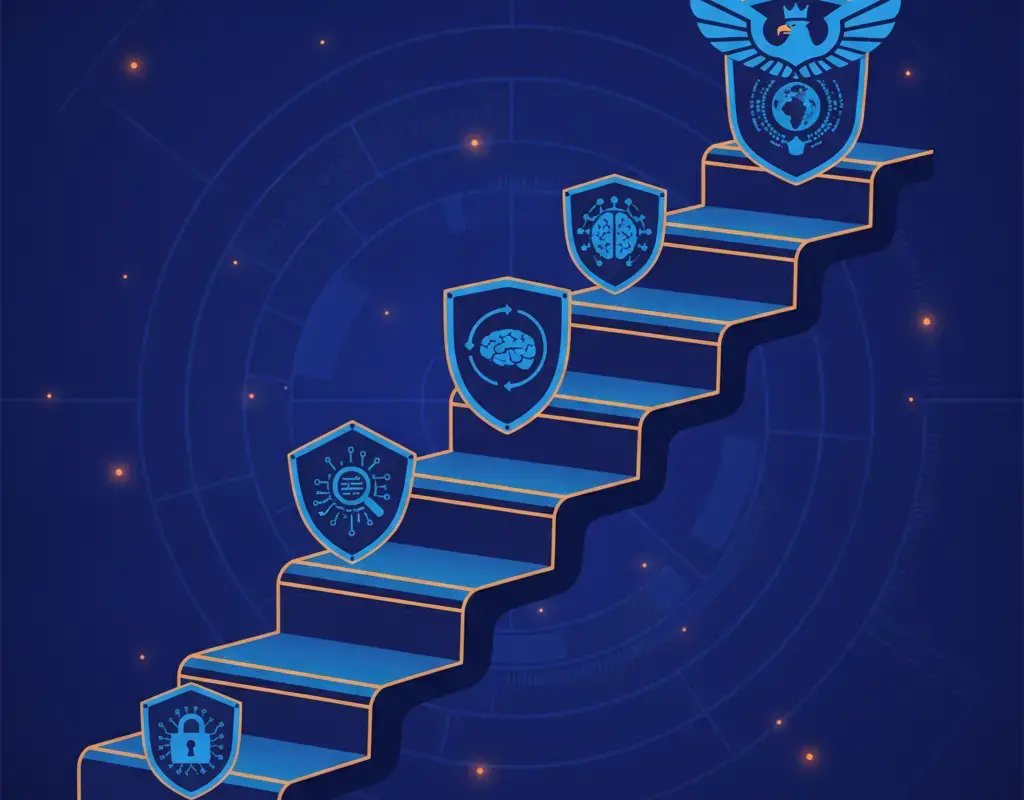
Not every cybersecurity certification belongs at every point in a career. This guide maps the most respected credentials—CompTIA, (ISC)², EC-Council, and more—to…


