The Best Cybersecurity Certifications by Career Stage
Not every cybersecurity certification belongs at every point in a career. This guide maps the most respected credentials—CompTIA, (ISC)², EC-Council, and more—to early, mid, and advanced career stages so you can invest your study time where it counts.
In this guide
- Why Career Stage Matters for Certification Choices
- Entry-Level Certifications (0–3 Years Experience)
- Mid-Level Certifications (3–7 Years Experience)
- Advanced Certifications (7+ Years Experience)
- Building Your Certification Path
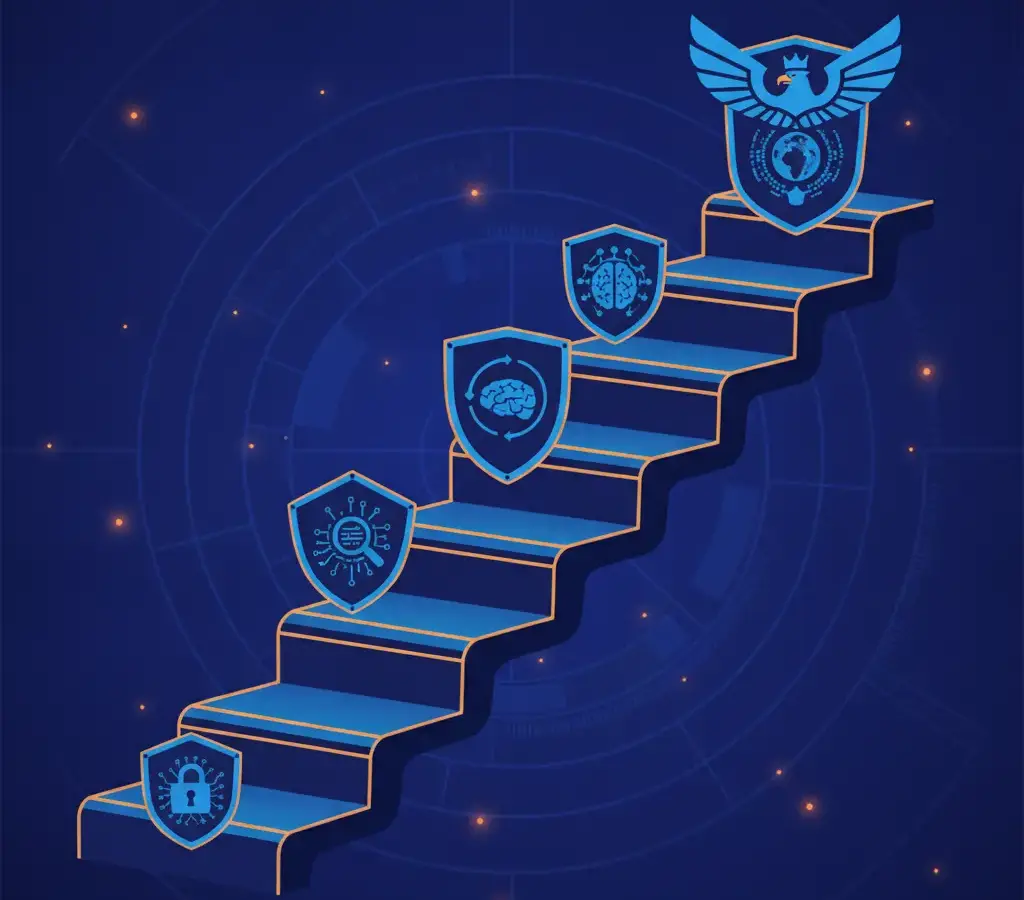
The cybersecurity certification landscape can feel overwhelming. Dozens of credentials compete for your attention, vendors release new exams regularly, and employers list a different mix of acronyms in almost every job posting. The missing piece is usually sequencing: knowing which certification fits where you are right now, not just which ones look impressive on a résumé.
This guide cuts through the noise by mapping proven credentials to three distinct career stages. Whether you are stepping into your first security role or managing a security operations center, you will find a clear, defensible path forward.
Why Career Stage Matters for Certification Choices
Certification exams test different depths of knowledge. An entry-level candidate who attempts a CISSP before establishing foundational skills will almost certainly fail—and waste exam fees, study time, and confidence in the process. Conversely, a ten-year veteran spending months on Security+ is an inefficient use of senior expertise.
Matching credential to career stage also matters for employers. Hiring managers use certifications as a signal of relevant, current knowledge. A well-sequenced certification journey tells a coherent story about deliberate professional growth.
Entry-Level Certifications (0–3 Years Experience)
CompTIA Security+
Security+ is the most widely recognized entry-level cybersecurity certification in the industry. It covers threat management, cryptography, identity management, network security, and compliance fundamentals. Many organizations list it as a minimum baseline for security analyst roles.
Who it is for: IT generalists moving into security, recent graduates, and helpdesk or sysadmin professionals building a security specialization.
Exam details: Maximum 90 questions, 90-minute exam, 750/900 passing score. No formal prerequisites, though CompTIA recommends two years of IT experience with a security focus.
CompTIA CySA+ (Cybersecurity Analyst)
CySA+ sits one step above Security+ on the CompTIA pathway. It emphasizes threat and vulnerability analytics, security operations, and incident response—skills directly aligned with SOC analyst and threat intelligence roles.
Who it is for: Candidates with Security+ who are targeting a SOC Tier 1 or Tier 2 analyst role.
CC — Certified in Cybersecurity by (ISC)²
The CC is a newer entry-point credential from (ISC)², the organization behind CISSP. It is intentionally accessible, with free training available, and validates foundational security concepts for candidates with no prior experience.
Mid-Level Certifications (3–7 Years Experience)
CISSP — Certified Information Systems Security Professional
CISSP remains the most recognized advanced certification in the field. It covers eight domains—from security and risk management to software development security—and is explicitly designed for practitioners who develop and manage security programs, not just implement controls.
Prerequisites: Five years of cumulative paid work experience in two or more of the eight CISSP domains. Candidates without the experience can earn the Associate of (ISC)² designation.
Who it is for: Security managers, architects, consultants, and senior analysts who own security strategy, not just execution.
Boost eLearning’s cybersecurity courses include instructor-led CISSP preparation with domain-by-domain coverage and practice exam review.
CEH — Certified Ethical Hacker
EC-Council’s CEH is the dominant mid-level certification for penetration testing and ethical hacking. It covers reconnaissance, scanning, exploitation, malware threats, and social engineering within a structured ethical and legal framework.
Who it is for: Security professionals moving from defensive to offensive security roles, including penetration testers, red team members, and vulnerability assessment engineers.
CompTIA CASP+ (Advanced Security Practitioner)
CASP+ occupies an interesting position: it is a practitioner-level certification aimed at technical security engineers who implement solutions rather than manage them. It complements CISSP for engineers who want to stay hands-on at a senior level.
Advanced Certifications (7+ Years Experience)
CISM — Certified Information Security Manager
ISACA’s CISM is the leading certification for security managers and executives. Its four domains—information security governance, risk management, security program development, and incident management—are designed for professionals who align security programs with organizational objectives.
Who it is for: CISOs, security directors, and managers responsible for enterprise security governance.
OSCP — Offensive Security Certified Professional
OSCP is the most demanding and most respected hands-on penetration testing certification available. It requires passing a 24-hour practical exam in which candidates must compromise a series of live machines in an isolated lab environment. There is no multiple-choice component.
Who it is for: Experienced penetration testers and red team professionals who need to demonstrate real offensive capability, not just theoretical knowledge.
CCSP — Certified Cloud Security Professional
As infrastructure shifts to cloud, the CCSP from (ISC)² has become the benchmark credential for cloud security architects and engineers. It covers cloud concepts, architecture, data security, platform and infrastructure security, and legal compliance.
Building Your Certification Path
The most effective cybersecurity certification journeys share a common structure: validate fundamentals first, develop specialized depth second, and demonstrate strategic capability third. Rushing through this sequence rarely pays off.
Hands-on practice is non-negotiable at every level. Boost eLearning’s Live Labs give learners access to real hardware and cloud environments so they practice the same tasks they will face in the exam and on the job—not simulations with limited interactivity.
Browse the full range of cybersecurity courses at Boost eLearning to find instructor-led and self-paced options aligned to every stage of the career path described above.
Related Boost eLearning Courses
- Pelatihan Online & Persiapan Sertifikasi CompTIA Security+ (SY0-701) — Live Labs & Pass Guarantee included
- تدريب عبر الإنترنت وشهادة تحضيرية لـ CompTIA Security+ (SY0-701) — Live Labs & Pass Guarantee included
- CompTIA Security+ (SY0-701) ऑनलाइन ट्रेनिंग और प्रमाणन तैयारी — Live Labs & Pass Guarantee included
Ready to earn your certification?
Boost eLearning offers Live Labs, a Pass Guarantee, and online, live virtual, and on-site delivery.