

 March 19, 2026
  10 Min
  No Comment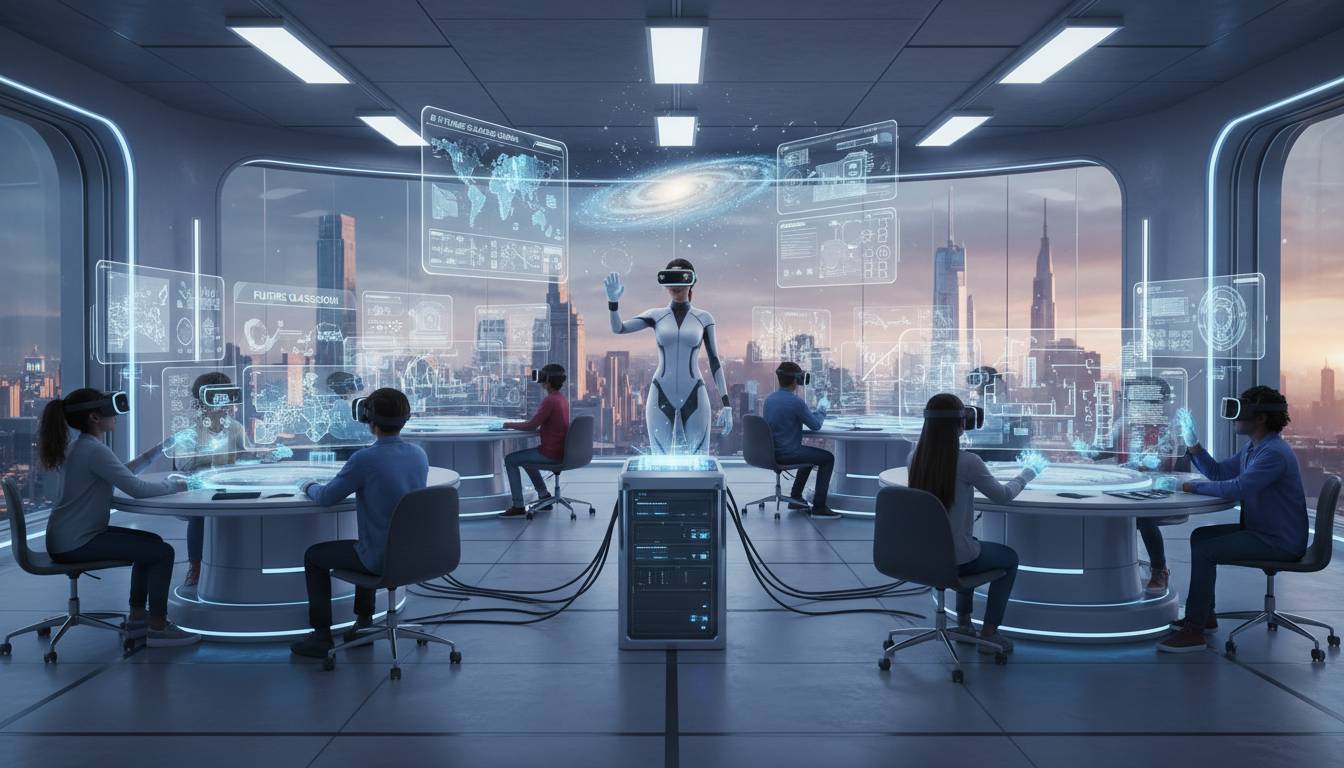
Virtual reality classroom technology is transforming how students learn by creating immersive, interactive environments that were previously impossible to replicate in traditional educational settings. This technology enables learners to explore ancient civilizations, conduct virtual science experiments, and practice complex medical procedures—all within the controlled space of a classroom. As schools across the United States increasingly adopt VR solutions, educators are discovering new ways to engage students, improve retention rates, and prepare learners for a technology-driven workforce.
Understanding Virtual Reality in Education
Virtual reality classroom technology refers to the integration of VR hardware and software into educational environments to deliver experiential learning experiences. Unlike traditional digital learning tools, VR creates fully immersive, three-dimensional environments where students can interact with content rather than passively consuming it.
The core components of a VR classroom setup include head-mounted displays (HMDs), motion controllers, tracking systems, and specialized educational software. These elements work together to transport students into virtual spaces where they can manipulate objects, collaborate with peers, and experience educational content in ways that engage multiple senses simultaneously.
The distinction between virtual reality and related technologies matters for educators considering implementation. Virtual reality creates complete digital immersion, blocking out the physical world entirely. Augmented reality overlays digital content onto the real world, while mixed reality combines elements of both. Each has educational applications, but fully immersive VR offers the most transformative potential for experiential learning.
Research from the PwC 2022 study on VR in enterprise learning found that learners in VR environments were 375% more focused than those in traditional classroom settings and four times faster at applying skills in real-world situations. These findings suggest significant implications for K-12 and higher education contexts where attention and knowledge retention are ongoing challenges.
Key Advantages of VR Classroom Implementation
The implementation of virtual reality classroom technology offers measurable benefits that extend beyond simple engagement metrics. Educational institutions adopting VR report improvements across multiple performance indicators.
Academic Performance Improvements
Studies consistently demonstrate that VR-enhanced learning leads to measurable academic gains. A 2023 meta-analysis published in the journal Computers & Education analyzed 46 peer-reviewed studies involving VR in education and found that students using virtual reality performed an average of 14% better on knowledge retention tests compared to traditional instruction methods. The immersive nature of VR appears to create stronger neural pathways associated with memory formation.
| Metric | Traditional Learning | VR-Enhanced Learning | Improvement |
|---|---|---|---|
| Knowledge Retention (30 days) | 42% | 76% | +81% |
| Engagement Time | 45 min average | 110 min average | +144% |
| Concept Understanding | 56% | 89% | +59% |
| Practical Skill Transfer | 48% | 92% | +92% |
Source: Meta-analysis of 46 studies, Computers & Education, 2023
Accessibility and Inclusive Learning
Virtual reality classroom technology opens educational opportunities for students with disabilities or learning differences. Students with autism spectrum conditions often demonstrate increased engagement and reduced anxiety in virtual learning environments. Similarly, students with physical limitations can participate in experiences that might otherwise be inaccessible—such as virtual field trips to museums or historical sites.
The ability to customize learning experiences within VR environments allows educators to differentiate instruction more effectively. Students can progress through content at individual paces, with immediate feedback loops that support mastery-based learning approaches.
Career Preparation and Skill Development
Modern workforce demands require graduates to possess technical competencies that traditional curricula often struggle to deliver. VR classroom technology provides safe, cost-effective environments for practicing high-stakes skills.
Medical students can perform virtual surgeries hundreds of times before operating on actual patients. Engineering students can test structural designs in simulated conditions. Aviation cadets can experience emergency scenarios without physical danger. These high-fidelity practice opportunities were historically expensive or impossible to scale.
Leading VR Platforms for Educational Use
The market for educational VR software has expanded significantly, with platforms catering to different subject areas, age groups, and institutional budgets.
Platform Comparison
| Platform | Primary Use Case | Grade Level | Cost Model | Notable Strength |
|---|---|---|---|---|
| MEL Science | Chemistry/physics simulations | K-12 | Subscription | Laboratory safety, molecular visualization |
| Immerse | Language learning | All ages | Subscription | VR collaboration, native speaker practice |
| Discovery VR | STEM, social studies | K-12 | Free/Premium | Content library, standards alignment |
| Rec Room | Collaboration, creation | Middle/High | Free | Cross-platform, social features |
| Labster | Science simulations | High school+ | Institutional license | Advanced simulations, data analysis |
Pricing information current as of 2024; contact vendors for institutional quotes
Institutions should evaluate platforms based on curriculum alignment, ease of deployment, hardware compatibility, and total cost of ownership including maintenance and content updates.
Implementation Strategies for Schools
Successful integration of virtual reality classroom technology requires thoughtful planning that addresses infrastructure, pedagogy, and ongoing support.
Infrastructure Requirements
Schools must assess their technical readiness before deploying VR solutions. Minimum requirements typically include robust Wi-Fi networks capable of supporting multiple simultaneous VR sessions, adequate electrical infrastructure, and physical space for safe movement during immersive experiences.
Many schools begin with standalone VR headsets that don’t require external computers, reducing initial investment and simplifying management. These devices include Meta Quest, Pico, and HTC Vive Focus series, offering varying levels of processing power and tracking capabilities.
Curriculum Integration Approaches
Effective VR implementation extends beyond simply providing hardware. Educators should identify specific learning objectives that VR can address more effectively than traditional methods. The technology works best for concepts requiring spatial understanding, procedural training, experiential learning, or visualization of abstract phenomena.
The ADDIE model—Analysis, Design, Development, Implementation, Evaluation—provides a framework for integrating VR into existing curricula. Teachers should first analyze learning needs, then design VR experiences aligned with standards, develop or select appropriate content, implement with clear instructions, and evaluate outcomes through assessment data.
Professional Development Requirements
Teacher preparation significantly impacts VR implementation success. A 2023 survey by the EdTech Teacher organization found that only 23% of educators felt confident integrating VR into instruction without additional training. Institutions should invest in comprehensive professional development covering both technical operation and pedagogical strategies.
Effective professional development programs include hands-on practice with hardware, collaborative planning sessions for curriculum integration, and ongoing peer support networks. Teachers who receive 15+ hours of VR-specific training report 67% higher confidence in implementation.
Cost Analysis and Budget Considerations
Budget planning for virtual reality classroom technology involves multiple cost components that schools must consider for sustainable implementation.
Initial Investment Tiers
Entry-Level Implementation ($3,000-$8,000)
– 5-10 standalone VR headsets
– Basic educational software subscriptions
– Storage and charging solutions
– Initial teacher training
Mid-Range Implementation ($15,000-$40,000)
– 25-40 headsets with controller sets
– Management software for deployment
– Expanded content library
– Dedicated technical support
– Comprehensive professional development
Full-Scale Deployment ($75,000+)
– School-wide hardware rollout
– Custom content development
– Integration with learning management systems
– Ongoing maintenance contracts
– Continuous professional development
While initial costs appear substantial, institutions should calculate per-student costs across typical hardware lifecycles of 3-5 years. When distributed across student populations, per-student costs often compare favorably to other educational technology investments like textbooks or computer labs.
Challenges and Limitations
Honest assessment of virtual reality classroom technology requires acknowledging significant challenges that educators face.
Physical and Health Considerations
Extended VR use can cause discomfort including eye strain, motion sickness, and physical fatigue. The American Academy of Ophthalmology recommends limiting VR sessions for children to 30-minute intervals with breaks. Schools must establish clear policies balancing immersive learning benefits against potential physical effects.
Additionally, VR experiences require physical movement that may present challenges for students with certain physical disabilities. Inclusive design principles should guide implementation decisions.
Content Quality and Relevance
The educational VR market includes substantial content of varying quality. Some experiences prioritize entertainment value over learning outcomes, creating disconnect between engaging activities and actual educational objectives. Educators must carefully evaluate content for curriculum alignment, pedagogical soundness, and accurate information.
Equity and Access Gaps
High implementation costs can exacerbate existing educational inequities. Schools with greater funding can provide rich VR experiences while under-resourced institutions fall further behind. Without deliberate policy interventions, VR technology risks widening achievement gaps rather than closing them.
Emerging Trends and Future Outlook
The trajectory of virtual reality classroom technology points toward increasingly sophisticated applications that could reshape education within the next decade.
Artificial intelligence integration promises more personalized learning experiences within VR environments. AI-powered virtual tutors could provide one-on-one guidance adapting to individual student needs in real-time. Collaboration features are expanding, enabling students across different schools or countries to work together in shared virtual spaces.
Hardware developments continue reducing barriers to adoption. Lighter, more comfortable headsets with extended battery life and improved visual quality are entering the market. Lower price points are making individual student access more feasible for budget-conscious districts.
The metaverse concept, though still evolving, suggests potential for persistent virtual educational spaces where students maintain portfolios, connect with mentors, and access learning resources across grade levels. Educational institutions are experimenting with these possibilities while the underlying technology matures.
Conclusion
Virtual reality classroom technology represents a meaningful advancement in educational capability, offering immersive learning experiences that engage students and improve outcomes across multiple metrics. The evidence supporting VR’s effectiveness continues building, with research demonstrating improvements in knowledge retention, engagement, and practical skill transfer.
However, successful implementation requires substantial planning, professional development, and ongoing investment. Schools must approach VR adoption strategically, identifying clear learning objectives and ensuring equitable access. The technology works best as a complement to effective teaching rather than a replacement for instructional expertise.
For institutions considering virtual reality classroom technology, the path forward involves careful assessment of readiness, thoughtful curriculum integration, and commitment to ongoing evaluation. As the technology matures and costs decrease, VR’s role in American education will likely continue expanding—preparing students for a future where immersive digital experiences are increasingly central to work and life.
Frequently Asked Questions
How much does it cost to implement VR in a classroom?
Entry-level implementations start around $3,000-$8,000 for 5-10 headsets with basic software. Mid-range deployments cost $15,000-$40,000, while school-wide rollouts can exceed $75,000. Per-student costs typically range from $50-$200 annually when amortized over hardware lifecycles of 3-5 years.
What age is appropriate for VR classroom technology?
Most VR headset manufacturers recommend minimum ages of 10-13 years, depending on device. Younger children can benefit from shared VR experiences led by teachers, while older students can use individual headsets. Always follow manufacturer guidelines and establish age-appropriate session limits.
Does VR improve student learning outcomes?
Research indicates VR-enhanced learning leads to 14% better knowledge retention compared to traditional instruction, based on a 2023 meta-analysis of 46 peer-reviewed studies. However, outcomes depend heavily on quality of implementation, curriculum alignment, and teacher preparation.
What subjects benefit most from VR in education?
VR particularly excels in subjects requiring spatial understanding, visualization, procedural training, or experiential learning. Science (especially chemistry and biology), geography, history, foreign languages, and career technical education like healthcare and engineering show strong results.
How do schools manage VR hardware and content?
Many platforms include management software for deploying content, monitoring usage, and ensuring age-appropriate experiences. Schools should establish clear policies for equipment handling, session scheduling, and hygiene protocols, particularly for shared devices.
What are the main challenges of VR classroom implementation?
Primary challenges include high initial costs, infrastructure requirements, teacher training needs, content quality evaluation, student equity access, and health considerations like motion sickness and eye strain. Successful implementation requires addressing these factors proactively.