

 February 12, 2026
  8 Min
8 Min  No Comment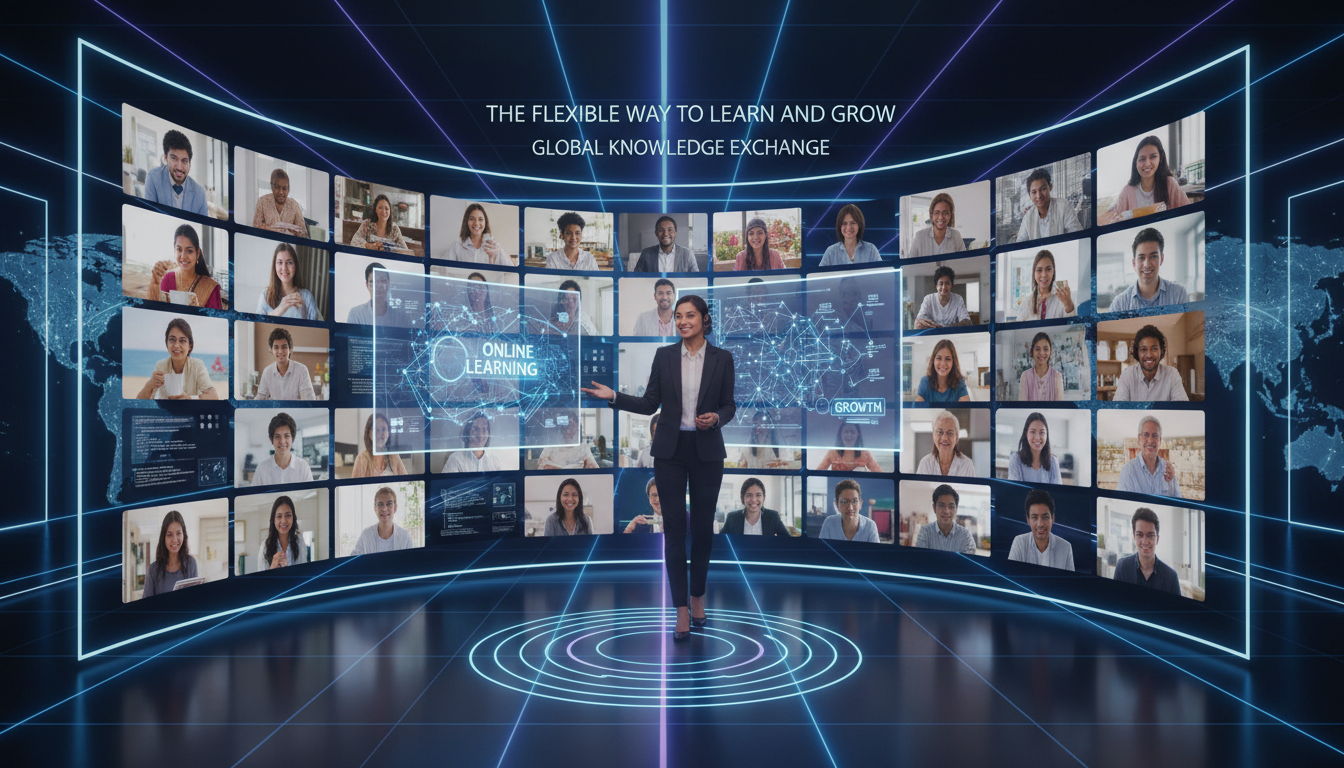
The global eLearning market has grown by approximately 900% since 2000, fundamentally reshaping how people access education. What began as a convenient alternative has become essential infrastructure for workforce development, academic advancement, and lifelong learning. Through my analysis of educational trends, I’ve observed that this transformation represents more than technological adoption—it’s a fundamental shift in how societies value and deliver knowledge.
In practice, online learning occasionally presents challenges: technical difficulties, inconsistent video quality, or moments of disconnection. These imperfections remind us that digital education serves real people navigating real lives. The human element persists despite the medium.
The Rise of Online Learning: A Shift in How We Learn
Online learning isn’t just growing—it’s experiencing unprecedented expansion. According to UNESCO Institute for Statistics data, nearly half of learners globally have completed some form of online course. The eLearning market has surged by approximately 900% since 2000, reflecting a fundamental reorientation toward digital education delivery.
In the United States, National Center for Education Statistics (NCES) data indicates that more than 50% of college students enrolled in at least one online course by 2022, with approximately 26% attending exclusively online institutions. Research from Online Learning Consortium shows that 98% of universities now provide online course offerings, demonstrating widespread institutional commitment to digital education.
The primary driver behind this adoption remains flexibility. Studies from Babson Survey Research Group consistently indicate that learners prioritize the ability to access materials anytime, anywhere—a particularly critical factor for working professionals and parents managing competing responsibilities.
Why It Works (and Occasionally Falters): Benefits & Pitfalls
Efficiency and Retention at a Glance
Research published in the Journal of Asynchronous Learning Networks demonstrates that online learners achieve comparable or superior outcomes while investing 40–60% less time. Themeta-analysis conducted by the Department of Education found that retention rates can increase by up to 60% compared to traditional classroom instruction. These gains stem from on-demand access to materials, self-paced progression, and multimedia reinforcement of concepts.
Engagement, Soft Skills, and Outcomes
Beyond knowledge retention, assessments from LinkedIn Workplace Learning Reports indicate that digital learning programs enhance transferable skills including communication, time management, and critical thinking. Corporate training data from ATD State of the Industry reports demonstrates that organizations investing in structured online development see measurable performance improvements, with revenue per employee increasing by over 200% at companies with mature learning cultures.
Barriers to Bridge: The Digital Divide
Despite progress, access disparities persist. Pew Research Center studies indicate that lower-income households and rural communities face significant connectivity challenges, with approximately 15% of U.S. adults lacking reliable internet access. Without targeted interventions, the flexibility that defines online learning risks excluding those who could benefit most.
Trends Shaping the Future: Adaptive, Collaborative, Tech-Driven
AI and Personalization Take the Stage
Emerging research from Stanford’s Human-Centered AI Institute indicates that AI-powered adaptive learning systems can provide personalized scaffolding that improves learner outcomes by 20–30%. These systems analyze performance patterns in real-time, adjusting content difficulty and delivery to match individual needs—creating pathways previously impossible at scale.
Wearables, Analytics, and Real-Time Insight
Investigations into physiological monitoring during learning sessions show promise. Studies from MIT Media Lab exploring biosensor integration suggest potential for detecting attention lapses through heart rate variability and eye tracking, enabling immediate content adjustments. This multimodal approach to engagement measurement represents an evolving frontier in learning optimization.
Gamification and Collaboration Reimagined
Contemporary approaches to game-based learning have evolved beyond simple point systems. Research in the Journal of Educational Psychology indicates that narrative-driven, intrinsically motivating designs produce superior engagement compared to extrinsic reward structures. Collaborative platforms now leverage AI to pair learners with complementary knowledge bases, creating dynamic peer-learning opportunities that adapt to group dynamics.
Real-World Examples and Institutional Responses
Institutional Innovation: Streaming Enrollment and Equity
Texas Education Agency enrollment data shows that public virtual school participation grew by over 1,200% over a decade, reaching more than 62,000 students during the 2024–25 academic year. This rapid scaling prompted legislative responses aimed at maintaining academic standards while preserving expanded access.
Hybrid and HyFlex Classrooms Take Center Stage
Higher education institutions are implementing AV and IT infrastructure to support HyFlex delivery models. EDUCAUSE research documents how campuses integrate learning analytics, immersive technologies, and collaborative digital environments to create engaging flexible learning ecosystems that serve diverse learner needs.
Executive Education: A Balanced Rebound
While online program enrollment normalized following pandemic peaks, executive education offerings maintain robust digital components. Case studies from Harvard Business School indicate that hybrid formats now constitute the predominant delivery model, combining synchronous in-person intensive experiences with asynchronous digital preparation and reflection.
Brief Case Study: Alamo Colleges and Online Cohesion
Alamo Colleges District consolidated fragmented digital offerings by establishing a dedicated School for Online Learning, coordinating over 160 programs under unified governance. This structural integration improved accessibility metrics for working adults, student parents, and learners from economically disadvantaged backgrounds. Institutional assessments documented improvements in completion rates and student satisfaction following implementation.
The initiative represents a significant institutional investment in coordinated online delivery, prioritizing consistent quality and support across distributed campus locations.
Bridging the Gap: Pedagogical Models Enabling Flexibility
Instructional frameworks that balance learner autonomy with appropriate support structures have demonstrated effectiveness across diverse contexts:
Flex Model (Flexibility with On-Site Support)
This approach combines online, self-directed content with in-person availability of educators for targeted intervention. RAND Corporation evaluations of blended learning implementations indicate that this model produces particularly strong outcomes for students requiring additional academic support.
Self-Blended Model (Learner-Led Hybridization)
Students supplement traditional coursework with self-selected online offerings, creating personalized learning trajectories. Clayton Christensen Institute research documents sustained adoption of this model following initial pandemic-era expansion, valued for its adaptability to individual schedules and interests.
Blended Learning (Instructor-Guided Integration)
Traditional instruction integrates digital components, allowing students to control pace and sequence while maintaining instructor guidance. SRI International meta-analyses confirm that well-implemented blended models outperform both purely online and purely traditional approaches on standardized assessments.
Advantages, Complexities, and Strategic Suggestions
Key Benefits:
- Time efficiency combined with improved retention maximizes learning impact per hour invested.
- Structured digital tools develop both subject mastery and transferable professional competencies.
- Technology-enabled personalization delivers relevant content at scale.
Challenges to Navigate:
- Connectivity and device access disparities limit participation for vulnerable populations.
- Quality variance across platforms requires systematic evaluation and oversight.
- Self-directed formats demand intentional strategies for motivation and community building.
Strategic Recommendations:
- Implement hybrid models that combine technological efficiency with human mentorship.
- Address equity gaps through infrastructure investment, offline content options, and device lending programs.
- Integrate adaptive technologies and learning analytics for continuous improvement.
- Design engagement strategies incorporating narrative elements, gamification principles, and collaborative features.
Conclusion: Flexibility Isn’t the Destination—It’s the Journey
Online learning represents an evolving landscape rather than a finished product. Its trajectory includes productive periods and setbacks, technological advances and persistent challenges. The flexibility it offers serves diverse populations with varying needs, backgrounds, and goals.
Effective implementation requires balancing innovation with equity, personalization with community, and autonomy with structure. As educational institutions continue developing digital offerings, the measure of success lies in genuine learner empowerment—and sustainable growth.
FAQs
How widespread is online learning among students today?
UNESCO data indicates that nearly half of global learners have completed online courses. In the United States, NCES reports that over 50% of college students enrolled in at least one online course by 2022, with approximately one-quarter attending exclusively online institutions.
Does online learning improve retention compared to traditional methods?
U.S. Department of Education meta-analyses demonstrate that online learners retain 25% to 60% more information on average. The same research indicates that students often complete material 40–60% faster than in traditional classroom settings.
Are employers seeing benefits from online training?
ATD Industry Data indicates that structured online training programs correlate with up to 25% improvements in employee performance metrics. Organizations with mature digital learning cultures report significant gains in engagement and productivity.
What major challenges still affect online learning?
Pew Research Center studies identify persistent access gaps affecting approximately 15% of American adults. Additionally, maintaining learner motivation and ensuring consistent quality outcomes across diverse platforms requires ongoing attention and resources.
How do models like flex and blended learning support flexibility?
Research from Clayton Christensen Institute and RAND Corporation confirms that these hybrid approaches combine self-directed online learning with structured support, providing autonomy while maintaining accountability. Effectiveness varies based on implementation quality and learner characteristics.
What innovations are shaping the future of online learning?
Stanford HAI research documents advancing capabilities in AI-driven personalization, while MIT and other institutions explore physiological monitoring for engagement optimization. Immersive technologies, sophisticated gamification, and collaborative AI platforms continue evolving the digital learning experience.
