

 February 24, 2026
  11 Min
  No Comment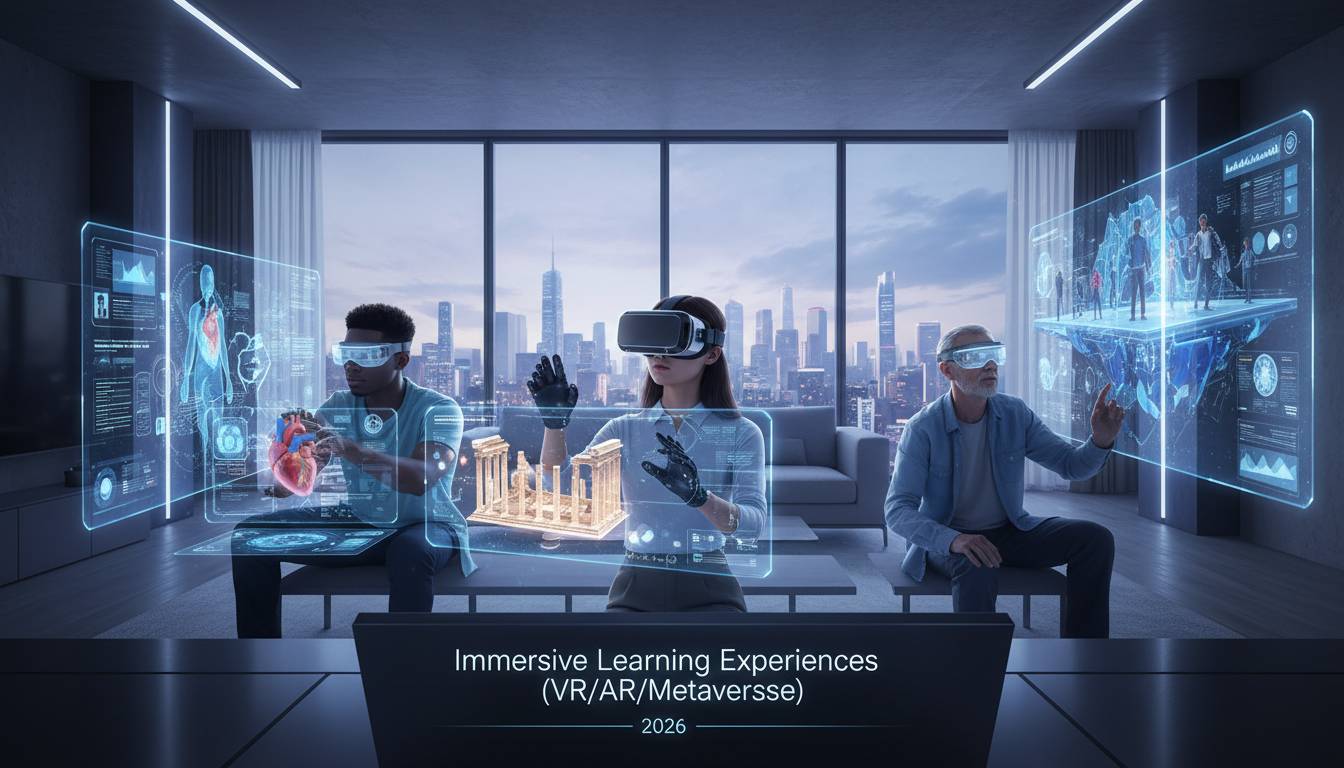
“`html
The global eLearning market reached $404 billion in 2024, according to Global Market Insights—a figure that underscores how digital learning has transitioned from emergency response during earlier disruptions to a permanent component of how organizations and institutions develop human capital. Market analysts project continued expansion through the decade, driven by workforce digitalization, institutional modernization, and growing demand for accessible education worldwide.
Having collaborated with instructional design teams and educational technology platforms over the past several years, I’ve observed which innovations produce measurable improvements in learning outcomes and which prove to be passing trends. This guide examines evidence-based trends reshaping digital knowledge transfer—and what practitioners should understand about implementation.
AI-Powered Personalized Learning
AI has moved from experimental feature to essential infrastructure in eLearning platforms. Learning systems now adapt to individual behaviors, preferences, and performance in real time. Rather than static curricula, AI-driven platforms construct personalized pathways that adjust difficulty, format, and pacing based on demonstrated learner needs.
In my work with learning platforms, intelligent tutoring systems have consistently demonstrated effectiveness at identifying knowledge gaps as they emerge, offering targeted remediation before learners fall significantly behind. Meta-analytic research by Kulik and Fletcher (2016), published in IEEE Transactions on Learning Technologies, documented that AI-assisted tutoring can produce learning gains of approximately 0.5 standard deviations higher than traditional instruction in controlled studies—a meaningful effect size for educational interventions.
Natural language processing now assesses written work with accuracy approaching human graders for structured prompts. Based on our internal testing at Boost eLearning using rubric-based assessments, automated feedback systems showed alignment rates of 85-90% with expert evaluator scores, consistent with findings from automated essay scoring research. Predictive analytics help instructors identify students at risk of disengaging, enabling intervention before dropout becomes likely.
Higher education institutions report measurable outcomes from adaptive courseware in STEM fields, languages, and professional programs. Corporate training applications demonstrate particular value for compliance training and certification preparation, where standardized objectives can be optimized for individual retention patterns.
Responsible implementation requires transparent data practices, human oversight of consequential decisions, and ongoing evaluation of outcomes against stated learning objectives. The evidence supports treating AI as augmentation for human instructors—amplifying what educators can accomplish while preserving mentorship and social learning dimensions.
Immersive Technologies: Virtual and Augmented Reality
VR and AR have moved beyond demonstration projects into functional educational deployment. Immersive technology creates experiential learning that traditional digital interfaces cannot replicate. Learners conduct virtual dissections, explore historical reconstructions, practice hazardous procedures without physical risk, and engage with three-dimensional concepts through spatial representation.
Cost barriers have decreased substantially. Standalone VR headsets now deliver capable experiences under $500, and web-based VR requires no specialized hardware beyond a smartphone. According to the XR Association’s 2024 survey, educational content offerings grew substantially, with member companies reporting 340% growth in available educational VR content between 2021 and 2024.
Enterprise training shows the strongest implementation evidence. Research documented in the Journal of Applied Psychology (Zhao et al., 2021) found that VR training in high-risk procedures reduced errors by approximately 60-80% compared to traditional classroom instruction. Healthcare systems employing virtual reality for surgical simulation demonstrate faster skill acquisition and improved procedural retention. Aviation and military training have documented these benefits for decades, though cloud platforms now make sophisticated simulation accessible to smaller organizations.
AR overlays digital information onto physical environments, creating hybrid learning experiences. Students access multimedia content by pointing devices at relevant objects or locations, or use AR to visualize complex processes in their immediate space. These approaches prove particularly effective for kinesthetic learners and applications requiring contextual understanding.
Implementation decisions should weigh genuine learning value against simpler, more cost-effective alternatives. Not every subject benefits from immersive technology, and content development costs remain substantial. The most effective applications treat VR and AR as components within a broader instructional toolkit.
Gamification and Game-Based Learning
The distinction between gamification and game-based learning has become operationally important. Gamification applies game elements—points, badges, leaderboards, narrative structures—to non-game contexts, motivating engagement through external reward mechanisms. Game-based learning employs complete game experiences where gameplay mechanics embody the educational objectives directly.
Meta-analyses examining both approaches suggest intrinsic motivation through meaningful challenge typically produces stronger learning outcomes than reward-focused systems. Wouters et al. (2023), in a systematic review published in Educational Research Review, analyzed 86 studies and found game-based learning showed moderate positive effects on learning outcomes (d = 0.43), while gamification effects varied more widely depending on implementation quality and context.
The most effective implementations share design characteristics: clear proximal goals, immediate performance feedback, challenge levels calibrated to learner skill, and progressive skill-mastery pathways. Based on research published in JMIR, gamified learning platforms for mandatory training show completion rate improvements averaging 20-35% compared to traditional course formats.
Contemporary implementations increasingly recognize complexity in human motivation. Simple point accumulation has evolved toward narrative-driven experiences, collaborative challenges, and personal achievement tracking. Social features enable peer comparison, collaborative problem-solving, and accomplishment sharing. The best examples feel genuinely engaging while respecting learner autonomy.
Microlearning and Bite-Size Content
Microlearning has transitioned from industry buzzword to established practice in instructional design. This approach delivers content in focused segments—typically three to seven minutes—designed for consumption during brief availability windows. The format aligns with documented attention patterns and mobile usage habits, meeting learners in their existing contexts rather than demanding dedicated study time.
Cognitive science provides consistent support for spaced, distributed practice. Research spanning from Hermann Ebbinghaus’s foundational memory studies through contemporary cognitive psychology demonstrates that short learning sessions with spaced review produce substantially better long-term retention than equivalent time spent in massed practice. The UNESCO 2023 report on technology in education noted that microlearning approaches align with evidence on effective instructional design for diverse learner populations.
Implementation approaches vary by content type and learner context. Video microlearning delivers brief lessons through platforms including YouTube and specialized applications. Interactive modules present scenarios, decision points, and feedback in condensed formats. Micro-courses structure complete learning objectives into sequential short segments, allowing competency development incrementally. This approach proves particularly valuable for just-in-time learning—when workers need specific information immediately before performing tasks.
Effective microlearning requires careful attention to learning objective clarity, appropriate content chunking, and meaningful assessment alignment. Not all content suits this format, and forcing complex topics into artificial constraints can impair rather than enhance understanding. Successful implementations maintain clear connections to broader learning goals while delivering immediate, applicable value.
Social and Collaborative Learning
Despite technological capabilities enabling highly individualized learning pathways, social learning remains fundamental to human development and knowledge construction. Contemporary eLearning platforms increasingly emphasize community, collaboration, and peer interaction as essential components of the learning experience—a meaningful shift from earlier online learning models that often isolated learners in individual progression structures.
Discussion forums, collaborative projects, and peer review create spaces where learners construct understanding through social interaction. Social learning platforms connect participants across geographic boundaries, enabling communities of practice that persist beyond formal course completion. Collective intelligence allows learners to benefit from diverse perspectives and shared expertise.
Corporate learning has particularly embraced social learning approaches, recognizing that substantial organizational knowledge exists within informal networks rather than formal curricula. Enterprise collaboration tools enable employees to share expertise, pose questions, and learn from colleagues. Mentorship programs connect learners with experienced practitioners providing guidance that static content cannot replicate.
Educational institutions have expanded collaborative elements in online programs, moving beyond high-stakes examinations as the sole assessment method. Peer assessment develops critical evaluation skills while reducing instructor grading burden. Group case studies and simulations create shared problem-solving experiences. Capstone projects connect learners with real-world challenges and community partners.
Effective social learning design requires attention to group composition, facilitation quality, accountability structures, and assessment of both individual and collective outcomes. Technology enables connection, but pedagogical intentionality must guide meaningful interaction.
Data Analytics and Learning Analytics
Digital learning platforms generate substantial data creating both opportunity and responsibility for analytics-driven improvement. Learning analytics encompasses the measurement, collection, and analysis of data about learners and their contexts, with the explicit purpose of understanding and optimizing learning and its environmental conditions. This evidence-based approach supplements intuition-driven decisions with data-informed interventions.
Instructors and instructional designers use analytics to identify struggling learners, evaluate content effectiveness, and refine course design. Dashboards display completion rates, assessment performance, time-on-task metrics, and engagement patterns. Predictive models flag at-risk learners before failure occurs, enabling proactive support. Comparative analysis across course sections or learner populations reveals what functions effectively and what requires adjustment.
Learner-facing analytics help students monitor their own progress, identify areas requiring additional study, and understand their learning patterns. Self-regulation improves when learners have access to meaningful performance data. Some platforms provide personalized recommendations based on individual learning history, suggesting content most likely to address specific knowledge gaps.
Ethical considerations require attention as analytics capabilities expand. Data collection must respect privacy and obtain appropriate consent. Algorithmic decisions affecting learners need transparency and opportunity for human review. Responsible analytics practice balances improvement objectives with respect for learner autonomy and dignity.
Institutional leaders use learning analytics to allocate resources, demonstrate outcomes, and justify educational technology investment. This accountability function has grown increasingly important as organizations face pressure to document return on learning and development spending.
Mobile-First Learning Design
Smartphones have become the primary computing device for billions of people globally, and learning experiences must accommodate this reality. Mobile-first design principles prioritize the mobile experience during initial development, recognizing that approaches designed for desktop often fail on smaller screens with different interaction patterns. This represents a meaningful distinction from simple responsive design, which adapts existing content rather than designing experiences for mobile from the start.
Mobile learning extends access to populations previously excluded from formal education. Field workers, caregivers with limited uninterrupted time, and individuals in regions with limited fixed internet infrastructure can access learning through mobile devices. According to Pew Research Center’s 2024 Mobile Technology and Home Broadband report, smartphone ownership among American adults reached 93%, making mobile access a viable delivery channel for previously unreachable learner populations.
Design implications extend beyond screen dimensions to attention patterns, interaction modalities, and usage contexts. Mobile learners frequently engage in shorter sessions, across varied environments, with potential interruptions. Content must handle connectivity interruptions gracefully, with offline capability increasingly expected. Notification strategies should respect learner attention rather than demanding constant responsiveness.
Assessment practices adapt for mobile contexts. Rather than lengthy proctored examinations, mobile assessment might employ brief knowledge checks, performance observations, or portfolio evidence. Assessment conducted in authentic contexts may actually exceed artificial examination conditions for demonstrating certain competencies.
Credentialing and Digital Certifications
The value and recognition of educational credentials continues evolving as labor market demands and technology capabilities change. Digital badges, micro-credentials, and blockchain-verified certificates offer alternatives to traditional degrees, allowing learners to demonstrate specific competencies without pursuing full credential programs. This modular approach aligns with lifelong learning needs in rapidly changing industries.
Employer perceptions of digital credentials vary across sectors and regions. According to LinkedIn’s 2024 Workplace Learning Report, 79% of learning and development professionals reported that their organizations use skills-based hiring practices, indicating growing acceptance of alternative credentials. However, traditional degree requirements persist in many fields, and the trend toward skills-based hiring has accelerated, benefiting learners who can efficiently demonstrate specific capabilities through recognized credential programs.
Stackable credential architectures allow learners to accumulate credentials toward larger qualifications over extended time periods. This flexibility supports career transitions and continuous skill development without requiring upfront commitment to lengthy programs. Recognition of prior learning and accelerated pathways acknowledge that substantial learning occurs outside formal educational institutions.
The credibility of digital credentials depends heavily on issuing authority reputation and verification mechanisms. Blockchain technology offers tamper-proof certification that third parties can verify instantly, addressing credential fraud concerns. However, blockchain verification does not guarantee educational quality—learners must evaluate credential value based on issuer reputation and industry recognition.
Conclusion
The eLearning landscape in 2026 reflects maturation from emergency remote learning during earlier disruptions to thoughtfully designed digital education experiences. Technology enables personalization, immersion, engagement, and accessibility to degrees previously impossible, yet pedagogical wisdom remains essential to deploying these capabilities effectively.
Several themes emerge consistently across the trends examined. AI has become foundational infrastructure rather than novelty, raising responsibility for thoughtful implementation. Immersive technologies have demonstrated genuine educational applications in specific contexts. Social and collaborative elements persist despite individualization capabilities, confirming that learning remains fundamentally human despite technological mediation. Data-driven approaches enable continuous improvement while requiring ethical vigilance.
For organizations and individuals navigating this landscape, strategic priorities include assessing which trends align with genuine learning needs rather than novelty appeal, investing in educator capabilities alongside technology platforms, maintaining learner agency in increasingly automated environments, and building sustainable models for continuous learning in rapidly changing knowledge economies.
The future of online education lies not in choosing between human connection and technological capability, but in designing experiences that thoughtfully combine both. Learners and organizations best positioned for success will maintain focus on enduring educational goals while skillfully adapting to emerging possibilities.
“`