

 February 6, 2026
  6 Min
6 Min  No Comment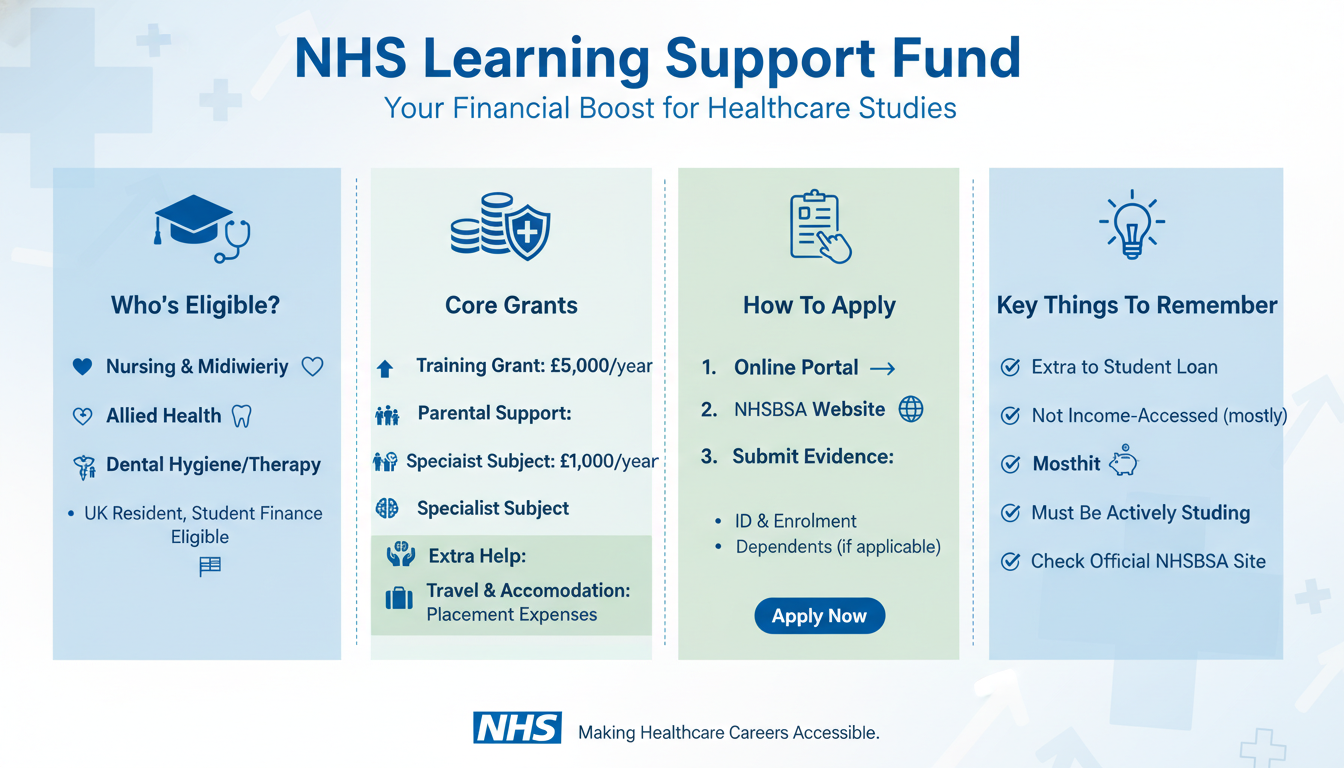
Most students dipping a toe into health and social care programmes feel that mix of excitement and dread—excited for that first clinical shift, dread about fees and living costs piling up. The NHS Learning Support Fund, a big part of funding strategy in the UK, takes a chunk of that worry off your plate. It’s aimed at supporting healthcare students, from nursing to midwifery, physiotherapy, and beyond. But how exactly does it work, what’s available, and how can you maximise it? Let’s unpack it—warts and all.
What the Fund Covers (And What It Doesn’t)
The Learning Support Fund isn’t a one-size-fits-all grant; it’s actually a mix of support types:
Tuition Fee Support
This covers the majority of tuition costs for students enrolled in NHS-approved pre-registration health and care courses. In effect, it means students can focus more on hitting the books and less on chasing invoices—huge relief, frankly.
Income-Related Bursaries
These are aimed at students who’ve got more pressing financial concerns. If you’re living on shoestring budgets or juggling part-time work, these bursaries can ease the pressure significantly.
Additional Funding for Non-Medical Helpers
This includes help for childcare, travel, or disability needs—those everyday barriers that don’t often get talked about are catered for here. A physiotherapy student, for example, might get support for pricey travel costs to clinical placements across regions.
“The NHS Learning Support Fund truly changes the game for many healthcare students—it’s not just about fees; it’s about accessibility,” says a university financial advisor I spoke to recently. That real-world validation underscores the fund’s transformative role.
Eligibility Criteria: Who Qualifies and When
Eligibility is based on a combination of candidacy, course type, and date of enrollment. Let’s break it down:
Pre-Registration Course Requirement
You need to be enrolled in an NHS-approved pre-registration healthcare programme—a nursing degree, midwifery, occupational therapy, etc. If you’re doing a postgraduate conversion, you might still qualify, provided it’s NHS-approved.
Residency Rules
Generally, applicants must be UK residents living in England (or other devolved nations, depending on regional rules). Non-UK or EU students often aren’t eligible for most elements, barring some exceptions like clinical placements.
Timing Matters
It’s not retroactive. You need to apply in the same academic year you start—or ideally within application deadlines. Missing this window can mean forfeiting the support for that year, which is a real bummer.
Real-World Example: A Nursing Student’s Journey
Imagine a nursing student named Zara. She moved from a smaller town to London for her degree. Rent is skyrocketing, travel expenses to clinical placements are adding up, and part-time shifts only go so far. Here’s how the fund helped her:
- Tuition fees covered entirely—so Zara didn’t have to worry about termly payments.
- Received an income-assessed bursary that helped cover her rent, food, and even that monthly tube fare spike.
- Got travel support for placements outside the capital, saving her both time and money.
That wasn’t just helpful; in Zara’s words, it “felt like someone finally saw how much juggling actual life and studies takes.”
How to Apply: Practical Steps and Tips
Navigating applications can be a little confusing; let’s map it out:
- Check your course eligibility via your university’s student finance or NHS portal.
- Gather documentation—this usually includes proof of income, ID, residency, course enrolment confirmation, etc.
- Submit your application early. Financial advisors at unis often recommend applying as soon as registration opens.
- Stay in touch—if your financial situation changes (e.g., you lose part-time work or have new expenses), you can sometimes apply for amendments.
Beyond this, speak with university financial aid offices. They’re usually the most underutilised resource—but crucial.
Challenges and Caveats: Not Everything’s Perfect
There are some imperfections, of course:
- Bursary amounts and availability can vary by course and academic year, meaning students can’t always predict exactly what they’ll get.
- Some regions or universities have different systems—or even separate bursaries—making cross-comparison tricky.
- Application processes can be layered or confusing for first-year students already befuddled by university admin.
Despite these hurdles, most students end up saying the support—though imperfect—is invaluable. It’s not flawless, but it’s far better than going it alone.
Why It’s Strategic for Healthcare Workforce Planning
Here’s a bigger picture thought: this isn’t just student help; it’s workforce planning. By reducing financial barriers, the NHS Learning Support Fund encourages more people into critical healthcare roles—nursing, midwifery, allied health professions—ultimately boosting staffing levels across the system.
Over time, enabling students to complete their estudos without crushing debt bolsters retention, contributes to a more diverse workforce, and stabilises local services.
Quick Checklist: Key Takeaways
- Tuition: usually fully covered for eligible courses.
- Additional bursaries: income-based, help with living/travel/other costs.
- Eligibility: depends on residency, course type, and timely application.
- Action steps: apply early, use university support, update your situation if things change.
- System-wide impact: supports not just students, but the NHS workforce and public health infrastructure.
Conclusion
The NHS Learning Support Fund is a vital pillar for healthcare students—less about charity, more about access and uptime. It’s a strategic lever that helps individuals pursue demanding, high-impact careers without crippling financial stress. While its processes can feel clunky, and amounts vary, the net effect is consistently positive: improved retention, broader access, and ultimately, more robust healthcare services. For prospective and current students, it’s a resource worth exploring, leveraging, and advocating for within your institution.
FAQs
What types of courses qualify for the NHS Learning Support Fund?
Courses that are NHS-approved pre-registration healthcare programmes—nursing, midwifery, occupational therapy, physiotherapy, etc.—usually qualify. Postgraduate or conversion courses might be included if they meet NHS approval criteria.
Who is eligible to receive the fund?
Typically, UK residents studying in England (or the relevant devolved UK nation) on an approved course are eligible. Non-UK or EU students generally do not qualify, except in specific circumstances like certain clinical placements.
How do I apply and when should I do it?
Applications generally open at the start of the academic year—ideally, apply as early as possible after registration. Check your university’s student finance or NHS support portal, gather income and residency documentation, and meet deadlines to secure funding.
What kinds of support are included in the fund?
The Fund may cover tuition fees, provide income-based bursaries to offset living costs, and offer extra help for childcare, travel, or disability-related expenses related to study.
Can I update my application if my circumstances change?
Yes, if your financial or personal situation changes (e.g., loss of part-time work, increased expenses), you can often request a review or amendment to your funding—reach out to your university’s financial support office promptly.
Does the fund vary between universities or regions?
Yes, support levels and application processes can differ depending on the university and region. Exploring your specific institution’s guidance and making use of financial advisors is crucial to understanding what’s available to you.
