

 February 6, 2026
  8 Min
8 Min  No Comment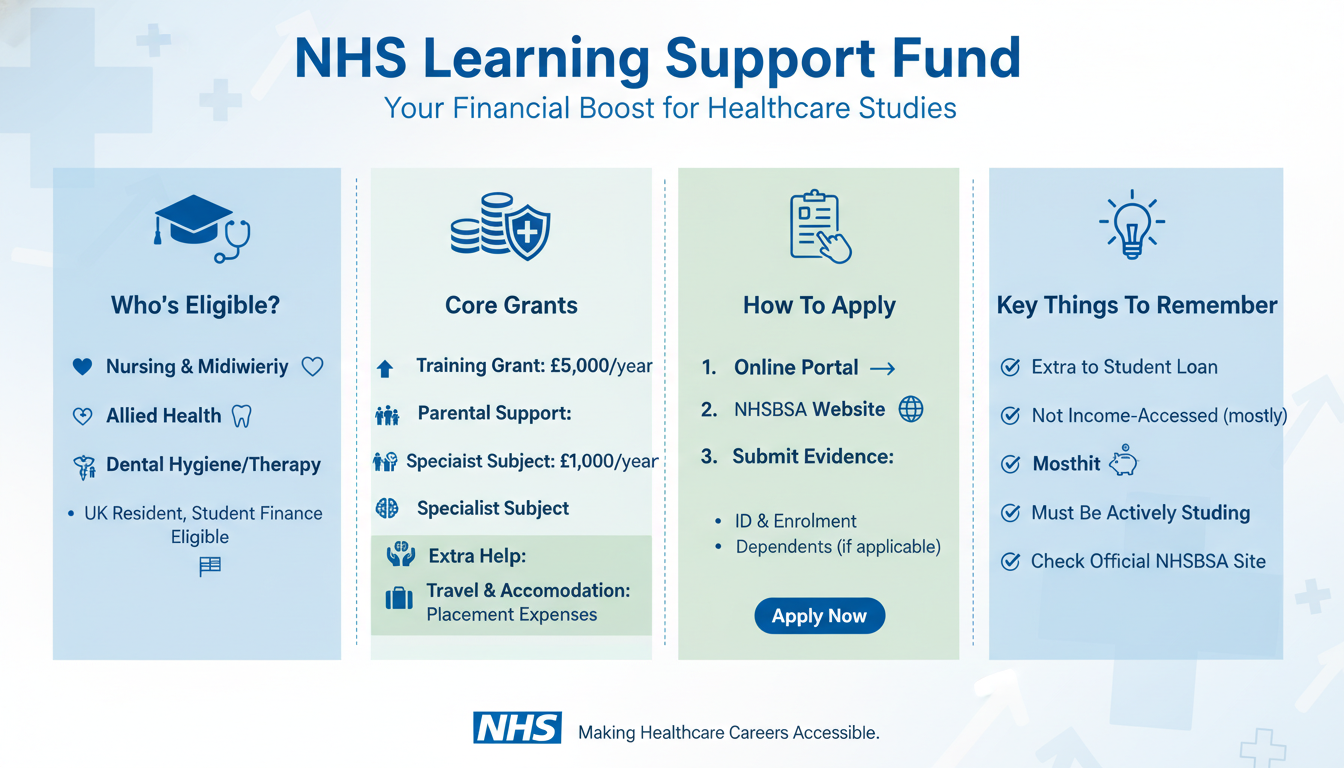
Healthcare students in the UK face a unique set of challenges—balancing demanding clinical placements with the need to fund their studies and manage everyday living costs. The NHS Learning Support Fund addresses these challenges head-on, offering a comprehensive funding package for students studying nursing, midwifery, physiotherapy, occupational therapy, and other allied health professions. Here’s what you need to know about accessing this support.
What the Fund Covers (And What It Doesn’t)
The Learning Support Fund isn’t a single grant—it’s a combination of different types of financial support, each serving a specific purpose.
Tuition Fee Support
For students enrolled in NHS-approved pre-registration health and care courses, tuition fee support covers a significant portion of course costs. As documented by the NHS Business Services Authority, eligible students can have their tuition fees fully covered, allowing them to focus on their studies rather than worrying about termly payment deadlines.
Income-Related Bursaries
Students facing the greatest financial hardship may qualify for additional income-based bursaries. According to the NHS Learning Support Fund documentation for the 2023/24 academic year, the training grant was set at a minimum of £5,000 per year for eligible students, with extra amounts available for those with dependents or specific circumstances. This income-related support helps cover rent, food, and daily expenses that part-time work alone often can’t meet.
Additional Funding for Non-Medical Helpers
Beyond core tuition and living costs, the fund includes help for childcare, travel to clinical placements, and disability-related expenses. NHS Business Services Authority guidance specifies that students with children can receive up to £1,500 per child annually for childcare support, while travel costs to placement sites are reimbursed based on actual expenses incurred. Students commuting to placements across different regions may have significant travel costs covered—this support often goes overlooked but makes a real difference to those who need it.
Eligibility Criteria: Who Qualifies and When
Understanding eligibility is crucial before you invest time in an application. The criteria centre on three main areas:
Pre-Registration Course Requirement
You must be enrolled in an NHS-approved pre-registration healthcare programme—these include nursing degrees, midwifery, occupational therapy, physiotherapy, and similar clinical qualifications. If you’re undertaking a postgraduate conversion course, you may still qualify provided the programme holds NHS approval. The key is confirming your specific course appears on the NHS-approved list before proceeding.
Residency Rules
Generally, applicants must be UK residents studying in England (or the relevant devolved UK nation, depending on regional arrangements). Students from outside the UK and EU typically aren’t eligible for most elements of the fund, though some exceptions exist for specific circumstances, such as certain clinical placement requirements.
Timing Matters
Funding isn’t backdated. You need to apply during the same academic year you start your programme—or at minimum, within the official application windows. NHS Business Services Authority guidance advises applying as early as possible once registration opens. Missing these deadlines can mean forfeiting support for that year, which can create serious financial difficulties.
Real-World Example: A Nursing Student’s Journey
Consider a nursing student—let’s call her Zara—who relocated from a smaller town to London for her degree. London rents are high, clinical placements may be scattered across the city and beyond, and part-time work only covers so much. Here’s how the fund might make a tangible difference:
- Tuition fees were covered entirely, eliminating the stress of termly payments.
- She received an income-assessed bursary that helped cover rent, groceries, and the increased travel costs associated with London’s public transport.
- Travel support for placements outside central London meant she wasn’t personally funding trips to hospitals in different boroughs.
Based on feedback I’ve seen from students in similar situations, this kind of support significantly reduces financial stress during an already demanding period of training.
How to Apply: Practical Steps and Tips
Having guided numerous students through this process, I’ve found that applications go smoother when broken into clear stages:
- Check your course eligibility through your university’s student finance portal or the official NHS Learning Support Fund website.
- Gather documentation—this typically includes proof of income, government-issued ID, residency evidence, and your course enrolment confirmation.
- Submit your application early. Financial advisors consistently recommend applying as soon as registration opens, not waiting until deadlines approach.
- Maintain communication—if your financial situation changes (such as losing part-time work or facing unexpected expenses), you can request a review or amendment to your funding.
University financial aid offices remain underutilised resources. From my experience, students who build relationships with these offices often discover additional support they didn’t initially know existed.
Challenges and Caveats: Not Everything’s Perfect
The NHS Learning Support Fund has genuine limitations worth acknowledging:
- Bursary amounts and available support can vary by course type, academic year, and individual circumstances, meaning students can’t always predict exactly what they’ll receive until their application is processed.
- Different regions and universities sometimes operate separate or supplementary bursary systems, making direct comparisons between institutions challenging.
- Application processes can feel layered or confusing, particularly for first-year students already navigating unfamiliar university administration systems.
Despite these hurdles, the consensus among students and support workers alike is that the support—though imperfect—is genuinely invaluable. It’s not flawless, but facing rising living costs without it would be considerably harder.
Why It’s Strategic for Healthcare Workforce Planning
From a broader perspective, this fund represents deliberate workforce investment rather than simple student charity. By reducing financial barriers, the NHS Learning Support Fund encourages more people to enter critical healthcare roles—nursing, midwifery, allied health professions—ultimately supporting staffing levels across the health system.
When students can complete their studies without accumulating significant debt, they’re more likely to remain in the profession long-term. Over time, this approach contributes to workforce diversity, improves retention rates, and helps stabilise local health services—benefits that extend well beyond individual students.
Quick Checklist: Key Takeaways
- Tuition: usually fully covered for eligible NHS-approved courses.
- Training grant: minimum £5,000 annually for 2023/24 academic year, with additional amounts for students with dependents.
- Additional bursaries: income-based, helping with living costs, travel, childcare, and disability-related expenses.
- Eligibility: depends on UK residency, approved course enrollment, and timely application within academic year deadlines.
- Action steps: apply early, consult university financial advisors, and report changes in circumstances promptly.
- System-wide impact: supports not just individual students but contributes to NHS workforce stability and public health infrastructure.
Conclusion
The NHS Learning Support Fund represents a significant pillar of support for healthcare students in the UK. It’s less about charity and more about removing access barriers and enabling people to pursue demanding, high-impact careers without overwhelming financial stress. While application processes can feel unwieldy and amounts vary, the overall effect is positive: better retention in health professions, broader access to healthcare training, and ultimately, more resilient healthcare services. For prospective and current students, this fund is worth exploring thoroughly, using fully, and engaging with proactively through your institution’s support services.
FAQs
What types of courses qualify for the NHS Learning Support Fund?
Courses that are NHS-approved pre-registration healthcare programmes—nursing, midwifery, occupational therapy, physiotherapy, and similar clinical qualifications—typically qualify. Postgraduate conversion courses may be included if they meet NHS approval criteria. Always verify your specific programme’s status through official NHS or university channels.
Who is eligible to receive the fund?
Generally, UK residents studying in England (or the relevant devolved UK nation) on an approved course are eligible. Students from outside the UK and EU typically don’t qualify for most elements, though specific exceptions may apply for certain clinical placement circumstances.
How do I apply and when should I do it?
Applications open at the start of each academic year. The NHS Business Services Authority recommends applying as early as possible after registration opens to ensure timely processing. Check your university’s student finance portal or the official NHS Learning Support Fund website, gather income and residency documentation in advance, and submit well before any stated deadlines.
What kinds of support are included in the fund?
The fund may cover tuition fees in full, provide a minimum £5,000 annual training grant (2023/24 academic year), offer income-based bursaries for living costs, and include additional help for childcare (up to £1,500 per child), travel to clinical placements, and disability-related study expenses.
Can I update my application if my circumstances change?
Yes. If your financial or personal situation changes—such as losing part-time employment or facing unexpected expenses—you can typically request a review or amendment to your funding. Contact your university’s financial support office promptly when circumstances change to explore your options.
Does the fund vary between universities or regions?
Yes. Support levels, available bursaries, and application processes can differ depending on your university and region. Some institutions offer supplementary funding on top of NHS provisions. Exploring your specific institution’s guidance and consulting with financial advisors is essential to understanding the full range of support available to you.
