

 March 6, 2026
  7 Min
7 Min  No Comment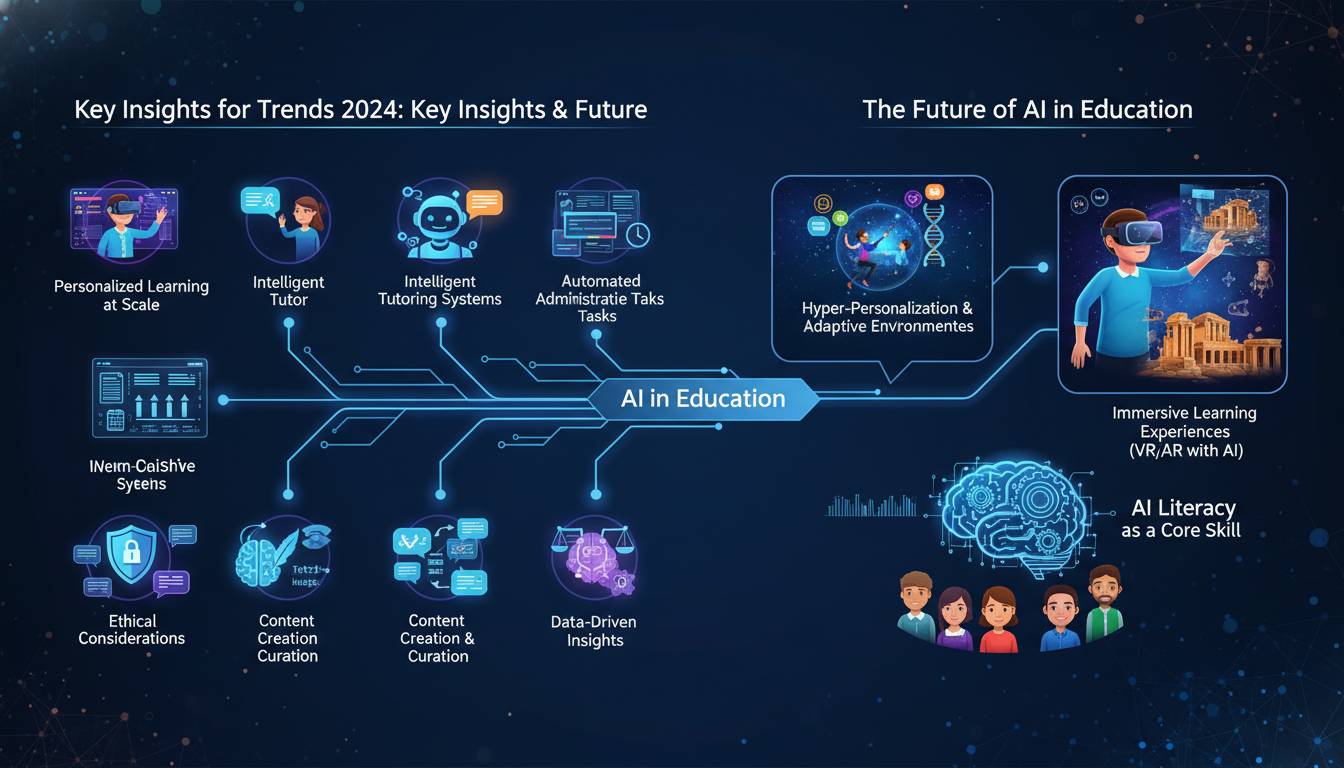
American classrooms look different in 2024. AI tools have moved from experiment to everyday use, affecting how teachers teach and how students learn. This isn’t a futuristic prediction anymore—it’s happening now, in real schools, with real consequences.
Generative AI in Classrooms
ChatGPT and similar tools went mainstream in 2023, and by 2024, they’ve settled into teaching life. An EdWeek survey found about half of teachers now use generative AI regularly, up from roughly a quarter the year before. Students are using it too, often more than teachers realize.
The practical uses are pretty straightforward. Teachers ask AI to draft lesson plans, create quiz questions, or explain concepts in different ways for struggling students. Students use it to brainstorm essay topics, check their writing, or get unstuck on homework. Nothing glamorous—mostly grunt work that used to eat up evenings and weekends.
The honest mess? Schools are still figuring out what counts as cheating. Some universities are trying AI detection tools, though these have proven unreliable. Many districts have updated their academic honesty policies, but the rules keep shifting as the technology changes.
“Generative AI isn’t going to replace teachers,” says Dr. Ray Schroeder at the University of Minnesota. “But teachers who use it will likely have an advantage over those who don’t.” That’s becoming less controversial and more obvious as the school year progresses.
Personalized Learning Through Adaptive Platforms
Here’s where AI gets genuinely interesting. Adaptive platforms like Khan Academy’s Khanmigo, DreamBox, and Carnegie Learning watch how students perform and adjust the difficulty in real time. Too easy? The system ramps up. Stuck on a concept? It slows down and tries a different approach.
The results are worth noting. RAND research found students using adaptive math platforms gained 18% more proficiency than those in traditional classes. That’s not a tiny improvement—that’s the difference between passing and failing for many students.
The accessibility angle matters too. ELL students get instant translation help. Kids with dyslexia get text-to-speech support. These tools aren’t perfect, but they’re removing barriers that used to be insurmountable.
“AI lets us give every student a personalized experience,” says Dr. Barbara Means at Digital Promise. “That’s something that used to require expensive private tutoring.” She’s right, but I’ll add: the quality varies wildly between platforms. Not everything labeled “AI-powered” actually works well.
AI-Powered Assessment
Grading used to eat up massive amounts of teacher time. Now, AI handles routine quizzes instantly and gives feedback on writing within seconds. For teachers with 150 students, that’s not trivial—it’s the difference between spending evenings on paperwork or actually resting.
Turnitin and Gradescope lead this space. They catch plagiarism and standardize grading across thousands of submissions. The consistency is better than tired humans late at night, honestly.
The analytics side is more ambitious. Chicago Public Schools uses predictive systems to flag students at risk of dropping out. The district says graduation rates improved 5% since implementation. That’s meaningful, but correlation isn’t causation—other changes happened during that time too.
The real tension here is privacy. These systems need student data to work. FERPA provides some protection, but the fine print matters. Parents increasingly wonder: what exactly is being collected, and who sees it?
Accessibility and Inclusive Education
AI is genuinely helping students who historically got the short end of the stick. Speech recognition lets students with motor disabilities dictate essays. Real-time captioning helps deaf students access lecture content. Text-to-speech supports kids who process written words better when they hear them.
For immigrant students learning English, translation tools have gotten good enough to actually use—still not perfect, but dramatically better than even two years ago. A student who arrived mid-year can now participate in class discussions with proper support, rather than sitting silently for months.
Dr. Christopher Hughes at Syracuse University says AI “gives us tools to create truly inclusive classrooms where every student can succeed on their own terms.” That’s a fair description, though I’ll note: it’s tools, not magic. Implementation matters as much as the technology itself.
The Department of Education has started issuing guidance on AI and disability rights, which means schools now have actual rules to follow instead of just guessing.
Ethical Considerations
Let’s not pretend this is all positive. Data privacy is a real concern—AI systems need student information to function, and that data could theoretically be misused or breached.
Algorithmic bias is another genuine problem. If AI is trained on biased data, it reproduces those biases. In education, that could mean unfair discipline recommendations or flawed placement decisions for students from underrepresented groups.
Academic integrity remains messy. When a student submits an essay, can you really tell if AI wrote it? The honest answer is: often no, not reliably. Many schools have responded by shifting toward in-class assessments, oral presentations, and projects that require human presence—but that doesn’t work for every subject or situation.
“We need to teach students how to work alongside AI rather than compete with it,” argues Dr. Justin Reich at MIT. That’s a sensible framing, though it requires actually redesigning curriculum rather than just updating policies.
What’s Coming Next
A few things are worth watching. Multimodal AI that handles text, images, audio, and video together is enabling more immersive learning experiences. VR simulations for medical training and scientific experiments are moving from expensive experiments to real classroom options.
The big promise remains AI tutoring at scale. Current systems work okay for certain subjects. The next generation—truly intelligent, conversational tutors—could genuinely change homework help from something parents dread to something students actually get.
Investment keeps flowing. EdTech startups raised over $10 billion in 2023, with AI companies capturing an increasing share. Some of this will fail spectacularly. Some will change education in ways we can’t predict yet.
Common Questions
How is AI being used in education? Across the board: personalized learning platforms, automated grading, content generation, analytics, and accessibility tools. Schools use it for everything from administrative efficiency to direct student support.
Benefits for teachers? Less time on grading, better insight into student struggles, help creating materials, and more time for actual teaching rather than paperwork.
Risks? Privacy issues, potential bias, over-reliance on technology, widening gaps between well-funded and under-resourced schools, and the obvious academic integrity problems.
Will AI replace teachers? Almost certainly not. The human elements—mentorship, emotional support, motivating teenagers at 8am—remain deeply human. AI can augment, not replicate, those connections.
Popular tools? Khanmigo, ChatGPT, DreamBox, Carnegie Learning, Turnitin, and increasingly, features built directly into learning management systems like Canvas and Google Classroom.
Effects on student learning? Mixed. The potential for instant feedback and personalized help is real. The risk of reduced critical thinking and over-dependence is also real.
The Reality Check
AI is changing American education. The question isn’t whether anymore—it’s how well we manage the transition.
The best outcomes happen when schools have clear policies, proper training, and realistic expectations. The worst outcomes happen when administrators panic, when teachers get no support, or when students have better AI skills than the adults in the room.
We’re still early in this story. The schools handling this thoughtfully now—experimenting, adjusting, training people—will be better positioned for whatever comes next. Those hoping it will just blow over are probably disappointed.
The future of education is being written now. AI will play a major role. Whether that’s ultimately positive depends almost entirely on the humans making decisions.