Gamification in Education: Definition, Examples & Benefits

Gamification

Imagine a classroom where students eagerly complete math problems to earn points, collaborate in teams to unlock achievements, and track their progress through visual dashboards that make learning feel like an adventure. This isn’t a futuristic fantasy—it’s happening in schools across the United States right now through gamification in education. By applying game-design elements and principles to non-game contexts, educators are transforming how students engage with academic content, potentially reshaping outcomes for learners who have historically struggled to find motivation in traditional classroom settings.

This approach goes far beyond simply adding points to assignments. Gamification in education represents a fundamental shift in how we think about student engagement, assessment, and feedback. Research from the Entertainment Software Association found that 97% of American households with school-age children have at least one video game device in their home, making gaming a native language for today’s learners. Understanding how to harness that familiarity for educational purposes has become increasingly critical for educators seeking to connect with modern students.

What is Gamification in Education?

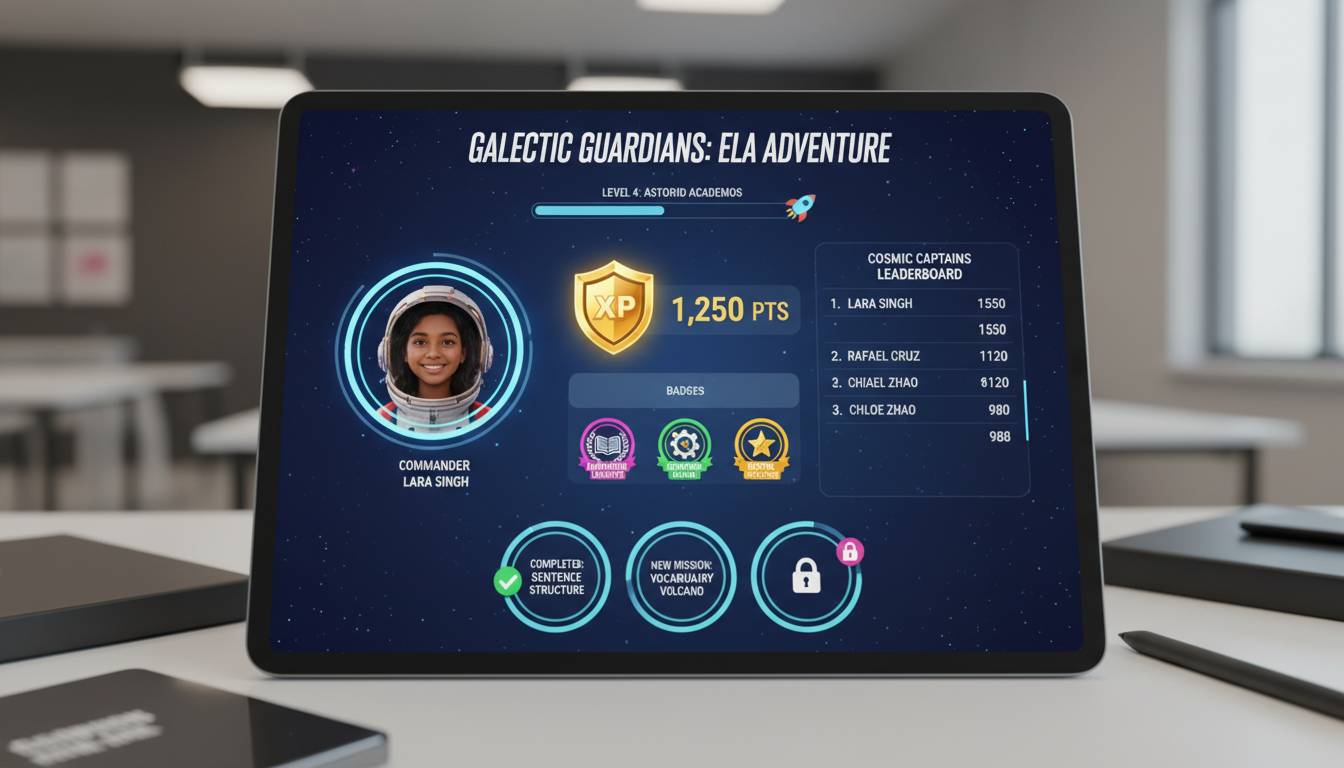
Gamification in education refers to the application of game-design elements and game principles in non-game contexts to enhance learning experiences. These elements include things like point systems, leaderboards, badges, challenges, narrative progression, immediate feedback, and reward structures—all features that make games inherently engaging and addictive.

What is the best gamified app for learning coding?
byu/facemacintyre inlearnprogramming

The core principle behind educational gamification lies in motivation theory. Games naturally tap into intrinsic motivation by providing clear goals, immediate feedback, appropriate challenges that scale with skill, and a sense of autonomy and mastery. When these elements are thoughtfully applied to educational content, they can create similar motivational dynamics in learning environments.

Key Components of Gamification:

  • Points and Scoring: Numerical representations of progress that accumulate as students complete tasks
  • Leaderboards: Ranked displays that create friendly competition and social motivation
  • Badges and Achievements: Visual recognition for reaching milestones or demonstrating specific skills
  • Narrative and Storylines: Contextual frameworks that give learning activities meaning beyond isolated assignments
  • Challenges and Quests: Mission-based structures that organize content into achievable goals
  • Immediate Feedback: Real-time responses to student actions that guide learning in the moment
  • Leveling Up: Progressive systems where students advance through increasingly complex content

The distinction between gamification and educational games themselves is important to understand. Educational games are complete games designed specifically for learning purposes—think of games like Math Blaster or Civilization. Gamification, by contrast, takes existing educational content and adds game mechanics to it. A math worksheet becomes a quest; a reading assignment becomes a chapter in a larger narrative; a vocabulary list becomes a set of challenges to unlock.

How Gamification Works in Learning Environments

The effectiveness of gamification in education stems from its ability to address fundamental psychological needs that traditional classroom structures often neglect. Self-determination theory, a framework developed by psychologists Edward Deci and Richard Ryan, identifies three core human needs: autonomy (the sense of control over one’s actions), competence (the feeling of mastery and growth), and relatedness (connection to others). Well-designed gamification systems can address all three of these needs.

Autonomy emerges through choice. In gamified systems, students often can select which challenges to tackle, in what order, or at what difficulty level. This element of choice transforms homework from mandatory compliance into self-directed exploration.

Competence develops through carefully calibrated challenges. Game designers have long understood the concept of “flow”—the mental state between anxiety (challenges too hard) and boredom (challenges too easy). Gamification allows educators to create this optimal difficulty zone where students feel challenged but capable of success.

Relatedness forms through collaborative elements. Many gamified systems include team challenges, cooperative missions, or social features that create community among learners. This transforms learning from an isolated activity into a shared experience.

Research published in the Journal of Educational Psychology demonstrated that students who participated in gamified learning environments showed significantly higher intrinsic motivation than those in traditional instruction settings. The study, conducted across multiple classrooms over a full academic year, found that gamification particularly benefited students who had previously shown low engagement with standard curricula.

Types of Gamification Elements

Understanding the different categories of gamification helps educators choose which elements will work best for their specific context and student population.

Points and Progression Systems

Points represent the most fundamental gamification element. They provide immediate numerical feedback and create a visible record of effort and achievement. Points can be awarded for completing assignments, participating in discussions, helping peers, or demonstrating specific behaviors the educator wants to reinforce.

Progression systems take points further by organizing them into levels or tiers. Students advance through levels as they accumulate points, creating a sense of journey and transformation. This taps into the psychological principle of variable ratio reinforcement—similar to how slot machines keep people pulling the lever, unpredictable rewards within a progression system can create powerful engagement.

Badges and Digital Credentials

Badges serve as visual markers of achievement that students can collect and display. Unlike points, which are numerical, badges are discrete symbols that represent specific accomplishments. A student might earn badges for “First Perfect Score,” “Reading Champion,” “Helpful Peer,” or “Creative Problem Solver.”

The power of badges lies in their specificity. They can recognize many different kinds of achievement beyond academic performance, allowing educators to value and reward behaviors they want to cultivate in their classroom culture. Digital badge systems like Badgr or Credly allow these achievements to be shared beyond the classroom, potentially carrying weight in college applications or resumes.

Leaderboards and Competition

Leaderboards create transparent ranking systems that let students see how their performance compares to peers. When implemented thoughtfully, leaderboards can motivate students to push harder and create exciting race conditions at the top of the ranking. However, they can also discourage students who consistently see themselves at the bottom.

Research from the University of Colorado found that leaderboard effectiveness depends heavily on how they are designed. Systems that group students by similar performance levels, or that recognize improvement rather than just absolute achievement, can maintain motivation for students across all ability levels.

Narrative and Storytelling

Story-based gamification embeds learning content within a larger narrative framework. Students might progress as characters through a story where each chapter requires completing academic challenges to unlock the next part of the narrative. This approach makes abstract content feel meaningful by connecting it to something emotionally engaging.

The narrative approach works particularly well for younger students and for subjects where emotional investment can enhance retention. History lessons become episodes in a larger historical drama; science concepts become discoveries in an ongoing exploration; language learning becomes communication in a simulated community.

Real-World Examples of Gamification in Education

Khan Academy and Mastery-Based Progression

Khan Academy, the free online learning platform, provides one of the most widely recognized examples of educational gamification. The platform uses a mastery-based system where students must demonstrate proficiency in one skill area before advancing to the next. Points, energy points, and badges reward consistent effort and achievement.

What makes Khan Academy particularly effective is its sophisticated algorithm that identifies knowledge gaps and adjusts problem difficulty accordingly. Students work in their “zone of proximal development”—challenged but not overwhelmed. Data from Khan Academy’s internal research showed that students who engaged with gamified elements spent 30% more time on the platform and demonstrated better retention of concepts compared to those who used more traditional online resource formats.

Classcraft: Whole-Class Adventure

Classcraft transforms the entire classroom into a role-playing game where students create characters and work together as a team. Students earn “XP” (experience points) for positive behaviors like helping classmates, completing homework, or demonstrating leadership. These points allow characters to gain new powers and abilities.

The system is designed to make positive behavior contagious. When one student helps another, both earn rewards. When the class collectively reaches milestones, everyone benefits. Teachers report that Classcraft has helped reduce behavioral issues while increasing collaboration among students who previously clashed. A study published in the Journal of Gaming & Virtual Worlds found that classrooms using Classcraft showed a 50% reduction in disciplinary referrals during the academic year.

Duolingo and Language Learning

Duolingo, the popular language-learning app, has perfected gamification for independent learning. The platform uses a combination of points, streaks (consecutive days of practice), leaderboards, and leagues to create daily engagement habits. Users can see their “league” standing and compete with others at similar proficiency levels.

The streak feature deserves particular attention—it has proven remarkably powerful for habit formation. Users who maintain streaks feel invested in not breaking their record, creating intrinsic motivation to practice daily. Duolingo’s internal data suggests that users who maintain 7-day streaks are dramatically more likely to continue using the app long-term compared to those who don’t establish this initial habit.

Quizizz and Blooket: Game-Based Assessment

Quizizz and Blooket have revolutionized how teachers conduct formative assessments. These platforms transform quizzes into competitive games where students answer questions against the clock, with immediate feedback and animated consequences for right and wrong answers.

What distinguishes these tools is their energy and visual appeal. The gamified presentation makes assessment feel less like testing and more like playing. Teachers can choose from game modes that emphasize speed, accuracy, survival, or collection, finding formats that match their classroom culture. Research from Georgia State University found that students who used Quizizz showed 9% higher quiz scores compared to traditional paper-based assessment, with the biggest gains among lower-performing students.

Benefits of Gamification for Students

The benefits of gamification extend well beyond simple engagement. Research is revealing measurable impacts across multiple dimensions of student development.

Increased Motivation and Engagement

This remains the most immediately visible benefit. Students who resist completing worksheets often eagerly tackle gamified versions of the same content. A meta-analysis published in the journal Computers & Education reviewed 98 studies on gamification and found that it consistently produced significant positive effects on motivation, with effect sizes that qualified as “large” by academic standards.

The motivation boost appears particularly strong for students who have historically been underserved by traditional instruction. Students from lower-income backgrounds, English language learners, and students with attention challenges often respond especially well to gamified approaches, potentially helping close achievement gaps.

Improved Retention and Learning Outcomes

Gamification doesn’t just make learning more enjoyable—it can make it more effective. The immediate feedback loops in gamified systems help students identify and correct misconceptions before they become entrenched. The spaced repetition built into many systems naturally supports long-term memory formation.

Data from schools implementing gamified math curricula in Texas showed that students using gamified platforms scored an average of 12% higher on standardized math assessments compared to control groups using traditional curricula. Perhaps more importantly, these gains persisted when students were tested six months after the intervention ended.

Development of 21st-Century Skills

Beyond academic content, gamification can help students develop capabilities that employers increasingly value. Collaborative challenges build teamwork and communication skills. Complex puzzles develop problem-solving and critical thinking. Progress systems teach goal-setting and self-regulation. Competitive elements build resilience and the ability to handle both success and failure gracefully.

Educators implementing gamification report observing these skills developing organically as students engage with game elements. Students begin to approach challenges with strategic thinking, helping each other to overcome obstacles, and developing persistence in the face of difficulty.

Enhanced Collaboration and Social Learning

Many gamification systems incorporate team-based elements that naturally encourage collaboration. When students must work together to achieve common goals, they develop social skills and learn to value diverse contributions. The social dimension also adds accountability—students don’t want to let down their teammates.

Challenges and Considerations

Gamification in education is not without critics and challenges. Responsible implementation requires acknowledging these concerns.

Risk of Extrinsic Motivation Crowding Out Intrinsic Motivation

Some researchers worry that adding external rewards to learning activities can undermine the natural curiosity and love of learning that educators hope to cultivate. If students only engage because of points and badges, what happens when those rewards disappear?

Research suggests this concern, while valid, is manageable. The key is designing reward systems that eventually fade as students develop genuine interest in the content. Initial extrinsic rewards can serve as scaffolding that helps students experience the pleasure of learning, eventually leading to intrinsic motivation.

Potential for Increased Anxiety

Competition elements like leaderboards can create stress for some students, particularly those who consistently find themselves at the bottom. Students with anxiety or perfectionism may become overly focused on maintaining streaks or rankings, potentially backfiring on the intended benefits.

Successful implementations typically include multiple pathways to recognition and avoid situations where students are publicly displayed as “failures.” Private feedback for struggling students, recognition for improvement rather than just absolute achievement, and team-based elements that distribute success more broadly can mitigate these concerns.

Equity Concerns

Gamification systems often assume students have equal access to technology and gaming experience outside school. Students without home gaming devices or reliable internet access may enter gamified classrooms at a disadvantage, unfamiliar with game conventions that their peers take for granted.

Educators must ensure that gamification reduces rather than amplifies existing equity gaps. This might mean providing additional scaffolding for students new to gaming, ensuring all necessary technology access, and being alert to assumptions baked into game designs.

Implementation Quality Matters

Perhaps the biggest challenge is that gamification is not simply a matter of adding game elements to bad curriculum. If the underlying educational content lacks value, gamification merely makes ineffective content more engaging—which might actually be worse than making it boring, as students will invest time in something that doesn’t serve them.

Effective gamification requires excellent curriculum design as a foundation, with game elements enhancing rather than compensating for weak content.

How to Implement Gamification in Your Classroom

Educators interested in bringing gamification into their practice can start with manageable steps and build complexity over time.

Start with Clear Learning Objectives

Before adding any game elements, identify what students should know or be able to do by the end of the unit. Gamification should serve these learning goals, not distract from them. Every game mechanic should connect to educational outcomes.

Choose Your Platform or Design Your System

Depending on your resources and comfort level, you might use existing gamified platforms (like Khan Academy, Quizizz, or Classcraft) or design your own system. Teacher-designed systems have the advantage of complete customization but require more time to establish. Commercial platforms offer polished experiences but may not perfectly match your specific needs.

For those wanting to experiment before committing, start with free tools like Blooket or Gimkit, which require minimal setup and can be integrated into existing lesson plans with little disruption.

Establish Transparent Rules and Expectations

Students need to understand how the gamified system works. Take time to explain point systems, how achievements are earned, and what behaviors you value. Transparency builds trust and helps students make strategic decisions about their learning.

Balance Competition with Collaboration

Include team-based elements and opportunities for all students to experience success. Consider using “hidden” achievements that recognize effort and improvement alongside those that reward raw performance. Monitor how different students respond to competitive elements and be prepared to adjust.

Reflect and Iterate

Gather feedback from students about what’s working and what isn’t. The beauty of most gamification systems is that they can be adjusted. If leaderboards are demoralizing certain students, modify them. If certain challenges aren’t engaging, try different approaches.

The Future of Gamification in Education

Emerging technologies promise to deepen gamification’s potential in education. Virtual reality and augmented reality are beginning to enable immersive learning experiences that were previously impossible—students might soon explore virtual ecosystems, walk through historical periods, or conduct virtual science experiments.

Artificial intelligence is enabling more sophisticated adaptive systems that can personalize learning pathways for individual students in real-time. These systems can identify when a student is struggling with a concept before a teacher might notice, automatically adjusting difficulty or suggesting interventions.

The broader trend suggests gamification principles will increasingly be woven into educational technology rather than existing as a separate category. As game designers and educators continue to collaborate, the line between “learning” and “playing” may continue to blur—a development that could fundamentally reshape education for generations to come.


Frequently Asked Questions

What age group benefits most from gamification in education?

Gamification can benefit learners across all age groups, from elementary school through higher education and professional development. However, research suggests younger students (ages 6-12) often show the strongest initial engagement because they tend to have fewer preconceptions about what learning “should” look like. Middle and high school students also respond well, particularly to competitive and social elements. For adult learners, gamification works best when the connection to real-world application is clear.

Does gamification work for all subjects?

Gamification principles can be applied to virtually any subject, though the implementation varies. STEM subjects often lend themselves naturally to gamification because they involve problem-solving and sequential skill-building. Language arts and humanities can benefit from narrative-based gamification and badge systems recognizing reading achievement or writing progress. Even subjects like history and social studies can incorporate story-driven elements and collaborative challenges.

How do teachers manage the time required to set up gamification systems?

Initial setup does require time investment, but the long-term payoff can reduce other workload burdens. Many platforms like Khan Academy, Quizizz, and Gimkit offer ready-made content that teachers can implement immediately. Even teacher-designed systems become easier to manage once established, as they can be reused and refined across multiple class periods and years.

What if students focus more on points than actual learning?

This concern is valid and requires thoughtful design. The best gamification systems tie points and rewards directly to meaningful learning activities rather than arbitrary behaviors. Teachers should emphasize that points recognize demonstrated mastery and valuable contributions, not just completion. Building in requirements that students explain their reasoning or apply concepts prevents gaming the system without genuine understanding.

Are there free tools for classroom gamification?

Yes, numerous free options exist. Quizizz, Blooket, Gimkit, and Kahoot! all offer free tiers with substantial functionality. Khan Academy is entirely free. Classcraft offers both free and premium versions. Google Forms with add-ons can be used to create simple point systems. Many teachers also design their own systems using free tools like Google Sheets for tracking and Google Slides for creating badge graphics.

Can gamification work in traditional classroom settings without technology?

Absolutely. While technology enhances many gamification elements, the core principles can be implemented with minimal technology. Teachers can create physical point systems using paper charts, award stickers or stamps as badges, use cooperative group structures to create team dynamics, and employ narrative framing to make units feel like adventures. The psychological principles behind gamification—clear goals, immediate feedback, appropriate challenge, progression—can be enacted through non-digital means.

Leave a comment

Sign in to post your comment or sine up if you dont have any account.