

 February 7, 2026
  6 Min
6 Min  No Comment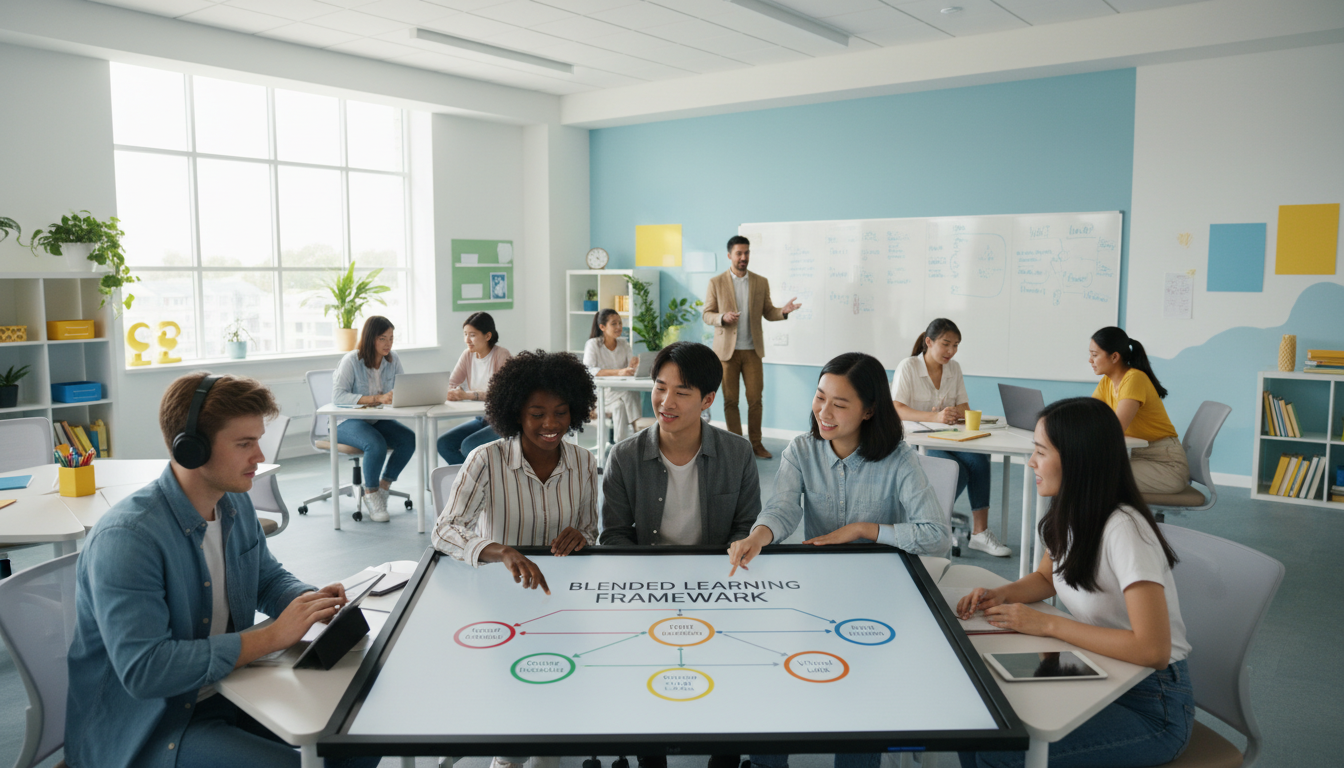
You know that moment when you wish for the convenience of online learning, but also crave the energy of a classroom? That’s the sweet spot that Blended Learning: Combining Online and Classroom Education for Success aims to hit. It doesn’t come across as a polished, scripted concept—instead, it feels like what it is: an educational remix combining the dynamic beats of tech-powered learning and the warm touch of in-person interaction. And it’s precisely this human, slightly flawed, but powerful mix that’s making waves in schools and universities everywhere.
Let’s unpack how this hybrid approach actually works—and why, surprisingly, it works quite well.
The Core Strengths of Blended Learning
Flexibility That Doesn’t Ask Too Much
One huge draw of blended learning is its flexibility. Unlike traditional classrooms that operate on fixed schedules, this hybrid model blends asynchronous online lessons with live sessions—perfect for learners juggling work, parenting, or other responsibilities. It’s not perfect—technology glitches can throw a wrench into things—but learners often feel empowered by being able to access content any time, anywhere.
Engagement Through Variety
Blended learning brings the classroom alive by mixing videos, interactive quizzes, discussion forums, and group work. It caters to visual, auditory, and kinesthetic learners in a way pure online or face-to-face formats seldom manage. Many learners stay more engaged because they can switch between modalities depending on their mood or energy level for the day.
Better Retention and Knowledge Application
It’s not just anecdotes—studies show that learners in blended formats often retain information better. For example, meta-analyses in health education reveal that using blended methods leads to significantly better knowledge acquisition than traditional learning. So, having the ability to revisit concepts online, and then apply them in person, seems to reinforce learning in a meaningful way.
Personalized Learning That Actually Works
With online platforms tracking progress and preferences, educators can tailor content more effectively. Whether it’s pointing students to extra resources or giving advanced materials to those ready to move faster, blended learning creates a more adaptive experience.
Cost Savings Over Time
Initial investment in tech can seem steep, but the return on that “blended investment” can be solid. Institutions and companies often save on printed materials, travel, and space—and digital content is reusable across cohorts.
Shining Bright: Real-World Examples and Insights
Healthcare and Medical Education
Let’s take health professions—fields notorious for complexity and precision. Multiple systematic reviews reveal that blended learning significantly boosts knowledge outcomes compared to traditional methods. In fact, one study confirmed improved test scores, learning satisfaction, and self-evaluation in evidence-based medicine courses using a blended model with flipped classrooms.
K–12 and University Classrooms
Take the “flipped classroom” model—a perfect example of blended learning in action. Students watch lectures at home and dive into problem-solving during class. At one high school, failure rates dropped dramatically when classes were flipped—from 30% down to 10%—and standardized test scores spiked.
Another case: SPARK Schools in South Africa. They use lab rotation models with adaptive software to bring individualized learning to large groups, proving that blended strategies can work at scale.
Community and Student Motivation
One study exploring blended courses found that adding even a small face-to-face element created a stronger sense of belonging among students. That sense of community—often missing in fully online setups—leads to higher satisfaction.
Tailored Learning Design Matters
In practice, effectiveness hinges on thoughtful design: quality tech, meaningful interactions, and learner support. Studies show that good technology plus instructor presence and peer support significantly boost motivation and satisfaction.
Expert Insight: Reflecting on the Blend
“Combining the digital pace of online modules with the relational energy of in-person sessions creates a resilient learning ecosystem with real depth.”
This resonates with many educational leaders who see blended learning not as a compromise but as a rich tool—one that supports flexibility, retention, and interpersonal connection.
Tackling Challenges—Because Nothing’s Perfect
No technique, however hybrid, is immune to bumps:
- Technical hiccups: Internet outages or platform glitches can derail even well-structured plans.
- Isolation still matters: If online modules aren’t balanced with interaction, learners may feel left out.
- Instructor burden: Teachers must be comfortable designing and integrating both modalities, and that can take serious time and training.
Beyond that, cultural norms, resource gaps, or low confidence with tech can slow blended adoption—especially in areas accustomed to traditional rote teaching.
Strategic Tips for Getting Blended Right
Invest in Usable Tech and Training
The backbone of blended success is intuitive platforms bolstered by educator training on digital pedagogy.
Design for Interaction and Support
Don’t bury students in content—and then leave them to fish for help. Mix tutorials, peer collaboration, and instructor check-ins to sustain engagement.
Embed Continuous Feedback Loops
Use analytics to track who’s falling behind, what concepts stick or slide, and adjust on the fly.
Tailor Based on Role and Context
In professional settings, align pathways with real job roles. In K–12, flex models or lab rotations may fit better than one-size-fits-all designs.
Frame It as a Culture Shift, Not Just a Format Shift
Blended learning succeeds when it’s embedded into learning culture—not tacked on. Prioritize psychological safety, curiosity, and continuous development over perfection.
Conclusion: Why Blended Learning Actually Feels “Just Right”
Blended learning may not be flawless, but it’s real—and that’s the point. It merges flexibility, engagement, retention, and personalization into one layered experience. From healthcare to high school, studies show strong outcomes and satisfaction without pretending everything’s simple. Yes, you need thoughtful design, reliable tech, and cultural buy-in—but when done well, this hybrid path offers students the best of both education worlds. It feels human, it adapts, and it delivers.
FAQs
How does blended learning improve student engagement?
By combining multimedia online tools with face-to-face sessions, blended learning accommodates different learning styles and keeps students engaged through varied interaction formats.
What evidence supports blended learning’s effectiveness?
Meta-analyses, especially in health education, show that knowledge acquisition is significantly better using blended methods compared to traditional or purely online instruction.
Are there challenges to implementing blended learning?
Yes. Common issues include technical glitches, the need for instructor training, a risk of learner isolation if interaction isn’t prioritized, and cultural resistance in more traditional education systems.
What is a flipped classroom?
A flipped classroom is a blended model where students learn content online at home and tackle problem-solving during class time—putting theory into action when they’re face-to-face with instructors.
Can blended learning be scaled across large or diverse groups?
Absolutely. Institutions like SPARK Schools use lab rotation and adaptive software to deliver personalized instruction at scale, demonstrating that blended models can work effectively across varied contexts.
