

 February 7, 2026
  7 Min
7 Min  No Comment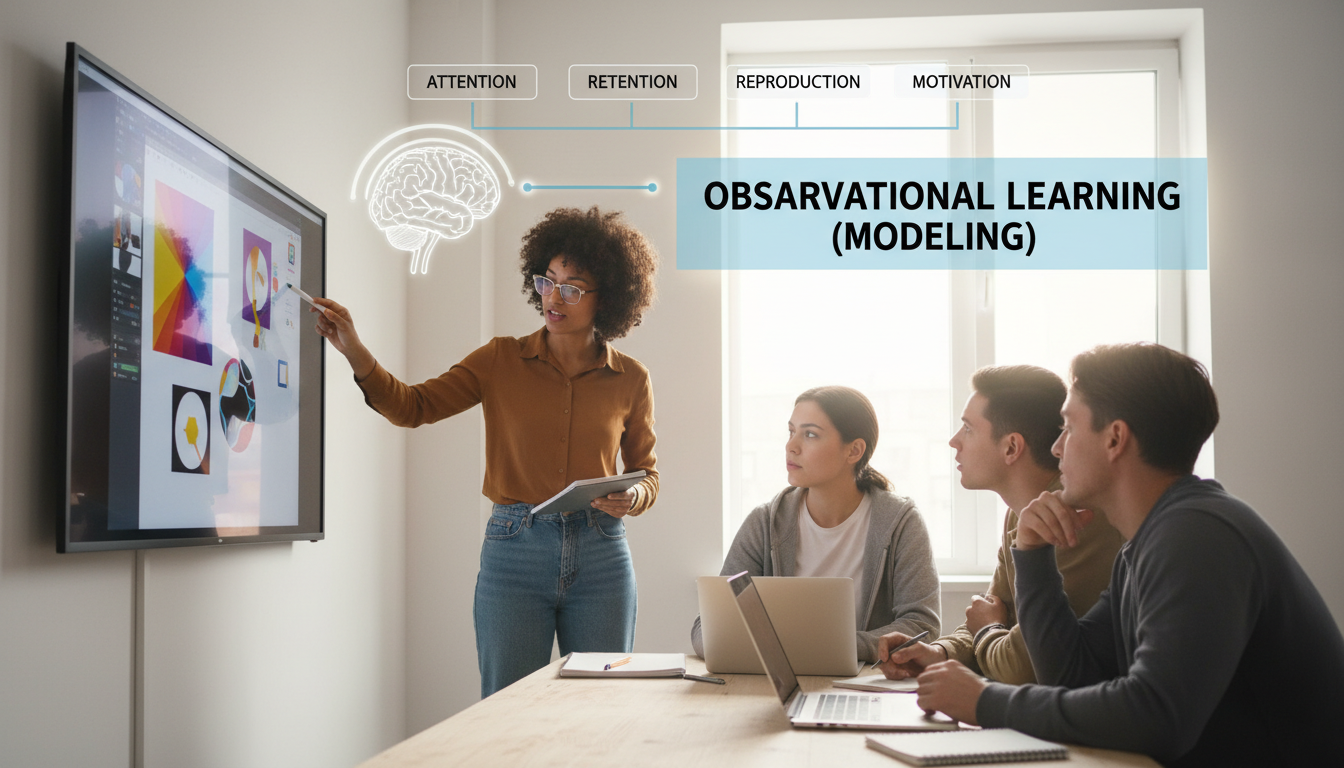
Ever noticed how a simple gesture or a passing comment can ripple through a group, subtly teaching something new? That’s social learning theory at work—it’s how humans, and even some of the clever animals among us, pick up behaviors by watching others. It’s not just a dry academic idea; it’s alive in classrooms, boardrooms, and even your favorite social media feed. Through imperfect observations and casual mimicry, we absorb ways of doing things, often without a second thought. And that’s the fascinating part—it’s both innate and surprising, informal yet impactful.
This article explores how social learning theory shapes our day-to-day lives, drawing from real examples, scholarly insights, and the slightly messy nature of human behavior. Let’s dive into the ways we learn from each other—and spot a few unexpected twists along the way.
Exploring the Essence of Social Learning
Watching Others: The Foundation of Behavior Shift
Social learning starts with observation. Whether a toddler copies a sibling’s words or a new employee picks up a tech trick from a coworker, seeing is often learning. There’s an undeniable pull in how actions spread: a peer shares a habit, and before you know it, others follow suit—sometimes without realizing it.
On the other hand, there’s something intriguingly unpredictable here. We don’t just mimic everything we see. We weigh, we question, we decide. That evaluation—”does that make sense for me?”—is a subtle but crucial ingredient in the learning process.
Internal Narratives: Beyond Mere Imitation
Sometimes, what we observe triggers reflections or even internal debates. Witness an overenthusiastic presenter in a meeting? You may chuckle, then reflect: “Okay, maybe I’ll be energetic—but not that overly performative.” So, you’re not copying—you’re recalibrating. Social learning isn’t mere mimicry; it’s more like tuning into the orchestra and deciding your own tempo.
Reinforcement: Validation Matters
Let’s say a colleague receives applause for a presentation tactic. That’s a social cue that behavior may be worth emulating. Positive feedback—likes, nods, praise—can reinforce learned behaviors, while a cool reception might discourage a repeat.
A workplace vignette:
- Jamie shares a fresh idea in a team meeting and gets genuine enthusiasm.
- Others start sharing similar ideas, early.
- Reinforcement happens in real time through reaction and tone.
That quick feedback loop makes learning more dynamic—and slightly unpredictable in terms of who leads the next wave.
Real-World Snapshots: How Social Learning Shapes Behavior
Classroom Rhythms and Peer Influence
In schools, beyond curriculum, peer interactions carry lessons. A student who confidently presents in front of a class may encourage others to step up. Teachers often notice that behavioral norms—positive or not—spread quickly between classmates.
Beyond that, concept retention improves when students observe engaging peers. It’s messy, yes—and often bumpy—but the learning spread is authentic because it’s peer-powered. A shy student, for example, might grow confidence from gradually watching others speak up.
Office Cultures: Modeling in Professional Spaces
In many organizations, junior staffers often adapt to the habits of influential seniors. Whether it’s how they tackle emails, lead brainstorming, or structure a deck, imitation’s a strong force. Over time, those behaviors either lock in—becoming part of team culture—or fade when norms shift.
It’s a delicate balance—sometimes replication without understanding leads to confusion. That’s when onboarding programs or mentorship can help scaffold learning, blending observation with explicit explanation.
Social Media: Trends, Tutorials, and Shared Behaviors
The digital sphere is a spectacular display of social learning. A cooking hack explodes in popularity, and soon everyone’s posting their version. Fitness challenges? A trend spreads in minutes. Tips and styles multiply across feeds as people emulate—and yes, transform—the original.
But here’s where unpredictability comes in. We don’t just copy; we remix. Someone adds a twist to a recipe, another dials up complexity. That’s social learning meeting creativity—and the result is often better than step-by-step mimicry.
Why Social Learning Theory Still Matters Today
Bridging Academia and Real-Life Behavior
This theory isn’t just dusty psychology—it pulses through modern life. It explains viral trends, onboarding shifts, even how cultural movements propagate. Recognizing the power of observation, modeling, and reinforcement helps educators, marketers, managers, and clinicians foster environments that support growth—while also mindful of negative copying.
Hybrid and Remote Contexts: New Patterns of Learning
Remote work and hybrid setups shift how we observe one another. Without hallway chats or in-person gestures, virtual cues gain weight—tone of voice in a meeting, emoji use, camera-on routines. Those subtle signs shape what’s acceptable or expected, influencing norms across distributed teams.
In practice, misreading cues becomes easier—and repairing missteps becomes more deliberate. That makes framing behaviors in explicit ways more helpful than assuming everyone picks up signals clearly.
Social Learning and Personal Development
Here’s the interesting personal angle: though social learning relies on external examples, it can spark internal change. Maybe watching a peer master a skill nudges you to try something bold. Or you see a behavior you’d rather avoid and consciously choose differently.
At its best, social learning can be a nudge toward growth, or a safeguard against unwanted norms. It’s less about replication and more about informed choice—one fostered through observation, context, and reflection.
“Social learning isn’t about carbon-copy behavior—it’s about seeing what’s possible and crafting your own way forward.”
— A behavioral psychologist (paraphrased)
Strategies for Tapping Social Learning in Practice
Structured Role Modeling
- Encourage experienced team members to share not just “what,” but “how” they do things.
- Pair juniors with someone not too senior—makes the model realistic and relatable.
Feedback Amplification
Create spaces where peer behaviors are highlighted and acknowledged—informally or during retrospectives. That visibility boosts both adoption and adaptation.
Storytelling and Microcase Studies
Share short stories—real or composite—about how someone learned a new workflow or overcame hesitation. These aren’t manuals; they’re invitations to imagine. When people see scenarios that feel real, learning becomes personal and less abstract.
Observational Learning in Training
Bring observation into learning moments. Include shadowing, peer demos, or role-play—not just slides. Doing, watching, and then discussing closes the loop more effectively than lecture-style methods.
Conclusion: Learning from Each Other—Intentionally
Social learning is both simple and wondrous: we see, we think, we sometimes try—but often with small human quirks in how we interpret, adapt, or decline. Whether in a school, a startup, or a social feed, this theory helps us understand how behaviors and norms diffuse.
The key? Channeling it with intention. Want fresh ideas baked into a team culture? Spotlight creative behaviors. Hoping to curb unproductive norms? Call attention to alternatives. In every case, visibility and feedback echo louder than instruction alone.
Learning from each other isn’t just inevitable—it’s a design opportunity, if we let it be.
FAQs
What exactly is social learning theory?
It’s the idea that people learn behaviors by observing and imitating others, influenced both by what they see and how those actions are received—especially through reward, modeling, or disapproval.
How does reinforcement shape learned behavior?
Reinforcement, whether praise or critique, signals which behaviors are valued or discouraged. That feedback—implicit or explicit—guides whether we repeat what we’ve observed.
Can social learning work remotely?
Definitely. Remote teams pick up on voiced tone, email habits, emoji usage, and meeting posture. Though cues may be subtler, they still inform norms—and intentional modeling helps make it clearer.
Does social learning always result in copying?
Not necessarily. While imitation is central, people tend to adapt behaviors—or consciously reject them—based on context, values, or feasibility, blending observation with judgment.
How can educators or leaders harness social learning purposefully?
By showcasing real examples, encouraging visible behavior, enabling peer stories, and structuring opportunities for observation and feedback. That turns passive learning into active, reflective change.
