

 February 5, 2026
  6 Min
6 Min  No Comment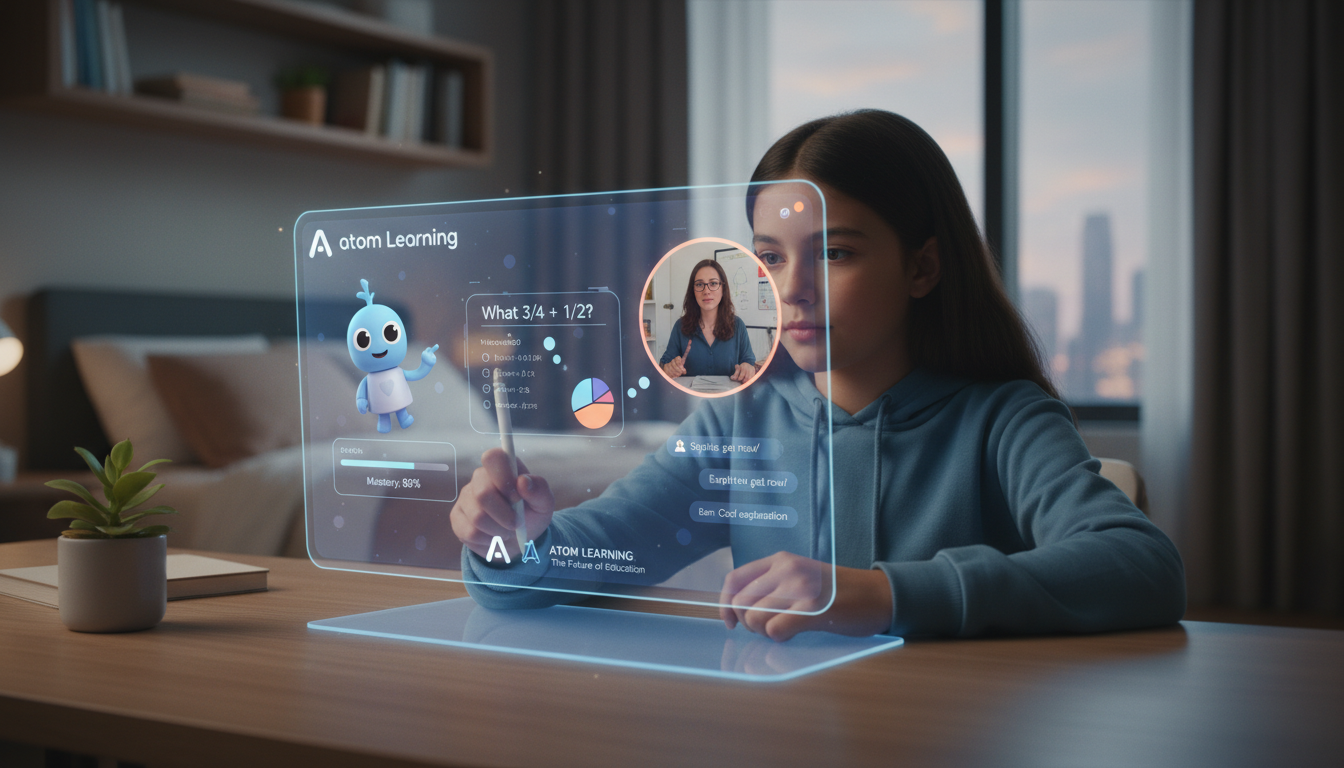
As someone who has spent considerable time researching and evaluating educational technology platforms, I find Atom Learning represents an interesting case study in how adaptive learning tools are reshaping supplemental education. The platform positions itself as an AI-enabled learning system targeting children aged 7 to 11, delivering customized content across English, maths, science, and reasoning through three primary offerings: Atom Home, Atom School, and Atom Tuition. These serve families, schools, and tutors engaged in Key Stage 2 learning and entrance exam preparation, including 11+, ISEE, and SSAT assessments.
My evaluation of Atom Learning centers on several critical dimensions: engagement data, institutional adoption rates, accessibility considerations, and competitive positioning within the EdTech landscape. The platform’s approach raises important questions about whether adaptive technology signals a meaningful shift in educational delivery, or whether it occupies a more limited supplementary role.
Atom’s Adaptive Platform: Personalization Meets Real-World Practice
What Atom Offers Families and Schools
Atom Home provides families with access to a library of AI-adaptive questions, customized learning plans, printable tests, and performance tracking tools designed for exam preparation and curriculum reinforcement. Atom School offers teachers tools to assign adaptive homework, manage mixed-ability classrooms, and monitor student progress in real-time, all aligned with national curriculum standards. This dual-system approach connects out-of-school learning with classroom activities under a unified adaptive framework.
Engagement Metrics and Institutional Adoption
According to data published on Atom Learning’s official website, in 2024 the platform reported serving approximately 140,000 children who collectively answered over 72 million questions and completed more than 665,000 mock tests. Users reportedly accumulated over one million learning hours on the platform. The company states that over 900 schools had adopted Atom School, more than 60 grammar schools had partnered for access, and over 125 schools utilized Atom’s entrance tests.
From my observations, these figures suggest meaningful adoption within the UK market. I note these are company-reported statistics and would benefit from independent third-party verification—a common limitation when evaluating EdTech platform claims.
Why Atom Could Shape the Future—and Where It Still Falters
Strengths Pointing Toward a Promising Future
Based on my analysis of adaptive learning research, AI-driven personalization appears central to Atom’s approach—the platform continuously adjusts difficulty to target each student’s learning zone. The cognitive science underlying adaptive learning suggests this targeting can help maintain motivation and support skill development when implemented effectively. Content development involves collaboration with educators, and the company indicates user feedback informs ongoing refinement.
Accessibility initiatives include offering Atom School at no cost to schools and partnerships with organizations to provide access to students from lower-income backgrounds. These efforts demonstrate commitment to broader educational access, though I would encourage readers to verify current partnership details directly with the platform.
Limitations and Areas for Growth
In my assessment, Atom currently focuses narrowly on Key Stage 2 and entrance exam preparation for the 7–11 age range, with primary emphasis on the UK market. The platform’s applicability to older students, international curricula, or broader learning domains like socio-emotional development remains limited. This concentration, while potentially strategic, represents a constraint for families or institutions seeking comprehensive educational solutions.
Additionally, while the platform offers adaptive question delivery, it currently does not include multi-turn interactive tutoring or explainable AI-driven strategy guidance. These features exist in emerging educational AI systems and may represent natural evolution paths for adaptive learning platforms. Based on my monitoring of EdTech trends, I anticipate this gap will become more significant as AI tutoring capabilities advance.
A Human Take on Atom Learning’s Role
From my review, Atom Learning doesn’t claim to replace human educators, nor does it position itself as a comprehensive educational solution. In practice, it offers scalable adaptive tools that can supplement traditional instruction. In my assessment, platforms like Atom Home and Atom School may address particular gaps—supporting mixed-ability classrooms, assisting under-resourced students, or facilitating independent exam preparation. Teachers may benefit from automated marking capabilities, while parents gain visibility into student progress.
However, those seeking holistic educational models incorporating collaborative projects, socio-emotional learning, or comprehensive subject coverage will find Atom represents one component rather than a complete solution. My experience evaluating educational technology suggests that platforms making comprehensive claims warrant additional scrutiny.
Conclusion: Atom Learning—A Piece of the Next-Generation Education Puzzle
Atom Learning may not represent the complete future of education, but it contributes meaningfully to the evolving landscape. With adaptive personalization, educator-developed content, measurable engagement, and inclusion-focused initiatives, it demonstrates progress toward more responsive learning tools. To achieve broader transformation, expansion across age groups, integration of more advanced AI tutoring capabilities, and incorporation of socio-emotional and collaborative elements would likely be necessary.
For educators or parents evaluating adaptive tools, Atom offers specific functionality worth considering. Developers exploring future platforms might examine how adaptive scaffolding could evolve toward more interactive, explainable learning systems. The opportunity lies not in replacing schools but in layering intelligent, inclusive, data-informed support into existing educational frameworks.
FAQs
1. What age or year groups is Atom Learning designed for?
Atom Home and Atom School target children aged 7–11 (Years 3–6, and early Year 7) in the UK, focusing on Key Stage 2 subjects and entrance exam preparation.
2. Is Atom Learning free for schools?
Atom School is provided at no cost to schools as part of the company’s stated mission to expand educational access. Prospective users should verify current pricing structures directly.
3. How does Atom personalize a child’s learning path?
The platform uses AI to adapt in real time based on each child’s responses, adjusting question difficulty to target an appropriate learning zone. This approach aligns with established principles of adaptive learning systems.
4. What evidence exists that Atom drives learning engagement?
According to company-reported figures published on their website, in 2024 Atom Home facilitated over 72 million questions, 665,000 mock tests, and one million learning hours across 140,000 users. These metrics indicate engagement levels, though independent peer-reviewed research on learning outcomes would provide additional validation. I recommend seeking third-party studies when available.
5. Can Atom help prepare for U.S. exams?
Yes—Atom provides adaptive preparation for ISEE and SSAT exams in the U.S. market, offering practice questions and mock tests. Subscription details and pricing should be confirmed directly with the company for current offerings.
6. Does Atom include advanced AI tutoring capabilities?
Atom currently offers adaptive question delivery and explanations, but does not provide multi-turn AI tutoring or dynamic strategy guidance seen in some emerging educational AI systems. Based on my understanding of current EdTech capabilities, this represents an area where the platform may evolve.
