

 February 6, 2026
  6 Min
6 Min  No Comment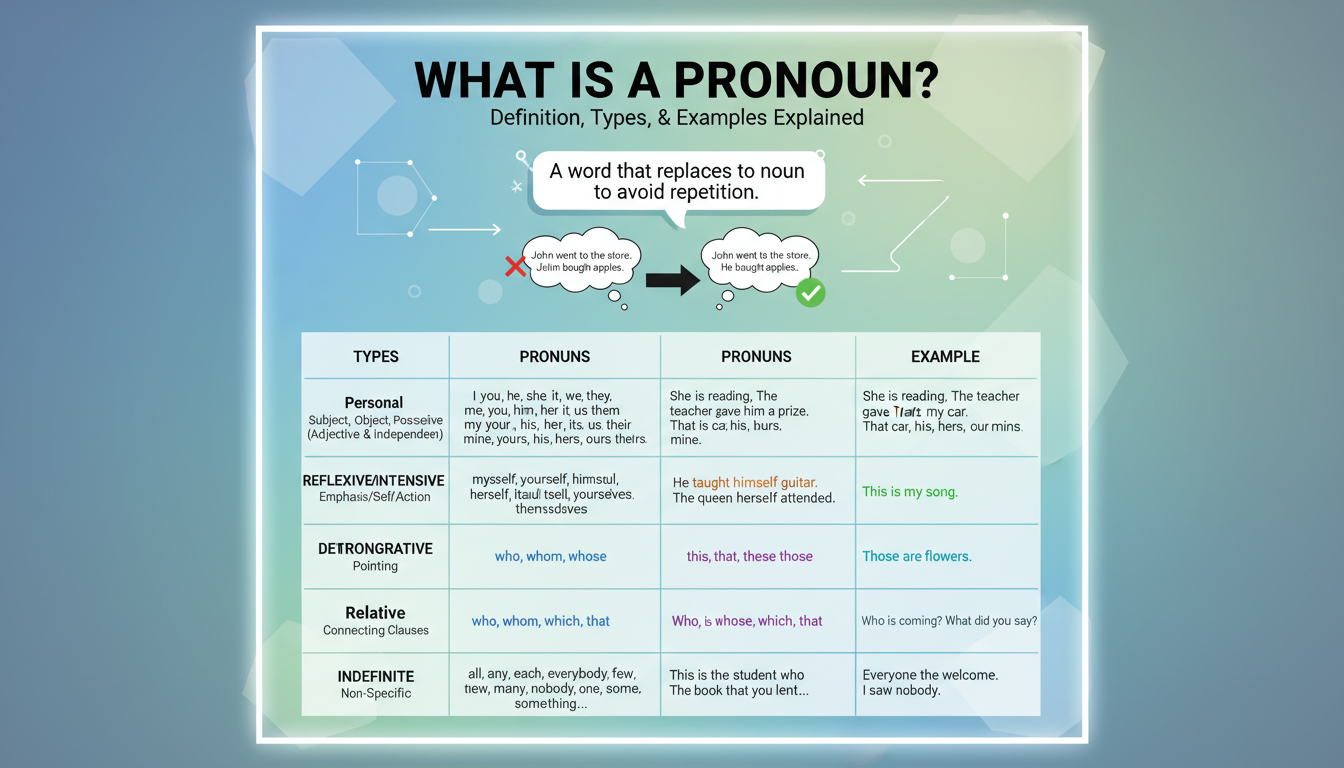
Understanding pronouns often feels trickier than it should be. They’re small, everyday words, yes—but they’re surprisingly powerful in shaping how we communicate, express identity, and even reflect cultural change. Pronouns surface everywhere—from school grammar lessons to lively Twitter debates. Their significance stretches beyond “he” or “she,” shaping who’s seen and how we relate. Let’s dive into what pronouns truly are, how diverse they can be, and why they’re quietly pivotal.
What Pronouns Are and Why They Matter
Pronouns are words that stand in for nouns or noun phrases, helping us avoid repetition. Instead of saying, “Emma picked up Emma’s book,” we naturally say, “Emma picked up her book.” So, a pronoun streamlines language and maintains clarity in communication. Beyond this, pronouns enable fluent exchanges—think of conversations where repeating names would feel stilted or robotic.
But there’s a deeper layer: pronouns can convey respect and acknowledgment of someone’s identity. Using a person’s chosen pronouns often signals understanding and inclusion, especially in contexts sensitive to gender identity. On one hand, it’s a linguistic convenience; on the other, a gesture of recognition.
Types of Pronouns Explored
Common Categories and How They Operate
Pronouns come in several flavors, each serving a distinct role in grammar:
- Personal pronouns (e.g., I, you, he, she, they)
- Possessive pronouns (e.g., mine, yours, his, hers, theirs)
- Reflexive pronouns (e.g., myself, yourself, themselves)
- Relative pronouns (e.g., who, which, that)
- Demonstrative pronouns (e.g., this, that, these, those)
- Indefinite pronouns (e.g., someone, anything, each)
Each of these categories carries its own usage quirks. For instance, reflexive pronouns emphasize the subject acting on itself (“She taught herself to code”), while relative pronouns link clauses (“The teacher who inspired me…”).
Shifting Between Singular, Plural, and Neuter
Pronouns don’t just swap for nouns—they shift number and, often, gender:
- Singular: I, you, he, she, it
- Plural: we, you, they
There’s also the increasingly common singular “they,” used when gender is unknown, irrelevant, or nonbinary. This usage isn’t new—authors centuries ago used “they” in a similar singular sense—yet it’s seeing renewed attention today as societies embrace more inclusive language.
Real-World Contexts: Pronouns in Daily Life
Education and Classroom Awareness
In many schools, instructors include pronouns in introductions: “Hi, I’m Ms. Rivera—my pronouns are she/her.” It’s a mindfulness practice, especially in diverse classrooms. Teachers report that this opens dialogue, helping students feel seen without drawing undue attention. It’s subtle but meaningful.
Corporate Inclusivity and Outreach
Forward-thinking businesses often add pronouns to email signatures or Slack profiles. Not just lip service, but part of broader equity and inclusion policies. It indicates that the organization supports diverse identities. Some companies have even implemented optional fields for pronouns in HR systems—a small technical tweak with cultural weight.
Media and the Arts
Authors, journalists, and artists also engage with pronouns. Some writers consciously avoid gendered pronouns, using “they” when possible. In entertainment, film festivals now include pronouns in attendee badges. It might look minor, but it signals a broader shift towards language that respects individual identity.
Balancing Tradition and Progress
The Case for Change
Embracing new pronouns or nontraditional uses does invite resistance. Language purists often worry about “grammar collapse,” or mourn what they see as shifting standards. Yet language has always evolved. The singular “you” replaced “thou” centuries ago, and “they” as a singular form has historical precedent as well. Progress in language often starts with conversational flexibility and expands from there.
Navigating Challenges
Implementing pronoun-conscious practices may introduce errors or confusion, especially for language learners. For instance, not everyone intuitively knows how to use singular “they.” Some might write, “They is going to…,” which is grammatically incorrect and shows how early-stage usage can trip people up. Over time, though—and with gentle guidance—such mistakes fade and usage becomes smoother.
Voices from Education and Language Experts
“Pronouns reflect not just grammar but personal agency; recognizing them is both a linguistic and empathetic tool.”
That insight comes from a linguistics instructor at a leading university, emphasizing the dual importance of pronouns. It’s more than a structural device—it’s a way we signal respect and belonging.
In fact, a language-debate forum recently saw teachers share how simply teaching about pronouns—including third-person “they”—improved student engagement with inclusive language. That might not leap off as dramatic, but in practice, subtle changes build trust in classrooms. And trust matters.
A Brief Case Scenario
Imagine a college professor, Jordan, who always introduces themself, “I’m Jordan, and my pronouns are they/them.” Initially, some students hesitate to use “they” for a singular person. There are slips—“Where is Jordan? She.. he…?” But the professor models gently, correcting warmly, and soon usage feels natural. What began as awkward evolves into an everyday norm. That’s the kind of human unpredictability in language we want—raw, imperfect, real.
Looking Ahead: Pronouns and the Language Landscape
Pronouns today may seem like technical tokens, but they’re living, evolving parts of conversation. As language technologies—AI, chatbots, virtual assistants—become more prevalent, they present both an opportunity and a responsibility. When systems default to traditional pronouns, they risk reinforcing narrow norms. On the flip side, designing systems that allow users to input pronouns—or that adaptively choose pronouns based on context—can enhance inclusivity and personalization.
Natural language platforms are increasingly offering pronoun-selection features. That’s innovation meeting empathy. Even if early designs feel clunky or overengineered, they signal a shift toward user-centered, inclusive communication tech.
Conclusion
Pronouns appear small, but their weight runs deep—linguistically, socially, and technologically. They streamline grammar while also serving as subtle ballots of identity. Whether educators modeling inclusive language, companies amplifying belonging, or designers embedding pronoun awareness in tech—these tiny words carry big impact. The path may be uneven, but that’s the beauty of evolving language.
FAQs
What is a pronoun in simple terms?
A pronoun is a word that replaces a noun—like “he,” “they,” or “it”—to help sentences flow without repeating names or things.
Why does pronoun use matter today?
Beyond grammar, pronouns reflect respect for identity. Using the correct form signals recognition and inclusion, especially around gender.
Is the singular “they” grammatically correct?
Yes—and historical! It has roots in centuries-old literature and is now widely accepted, especially to refer to someone whose gender is unknown or nonbinary.
How do organizations incorporate pronoun awareness?
Many add pronouns to profiles, email signatures, or ID badges. HR systems sometimes include optional fields for pronoun preferences, fostering a respectful culture.
What challenges do pronoun initiatives face?
New usages like singular “they” may trip people up at first. It can take practice and correction—but consistency and patience smooth the way.
Can technology support inclusive pronoun use?
Absolutely. Platforms that let users choose pronouns or that adapt language output based on context help elevate inclusivity in digital interactions.
