

 December 23, 2025
  6 Min
6 Min  No Comment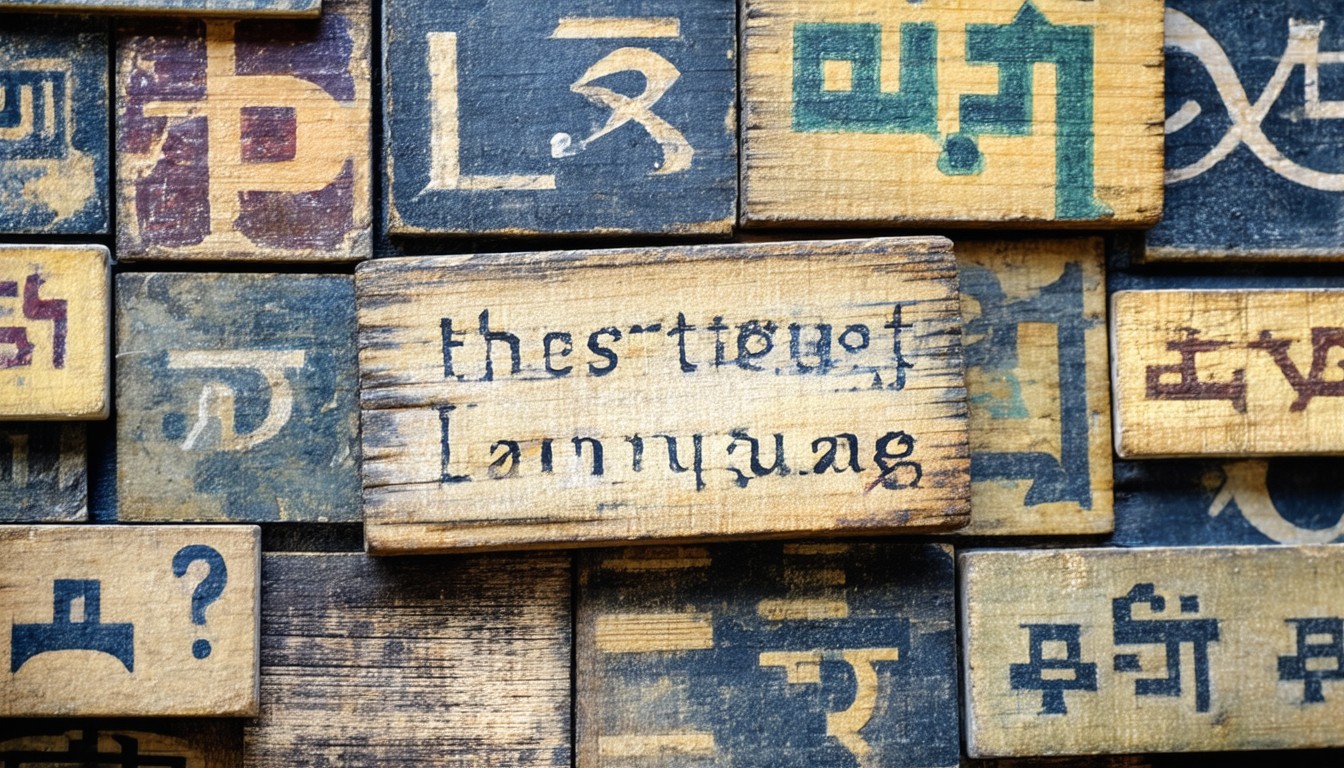
Ask any group of language enthusiasts which tongue presents the greatest challenge, and you’ll spark immediate debate. The truth is, no single language universally claims the title of “hardest”—difficulty depends on your native tongue, linguistic background, and how you measure complexity. What we can do is examine the factors that make certain languages formidable for English-speaking adults and look at what research tells us about the learning journey.
Learning a new language involves navigating both cognitive and cultural terrain. For English speakers venturing into languages with entirely different grammatical structures, writing systems, or sound patterns, the curve can be steep. But “hardest” remains relative—what challenges one learner may come naturally to another.
Key Factors That Determine Language Difficulty
Before examining specific languages frequently cited as particularly challenging, understanding the primary dimensions that influence difficulty helps set realistic expectations.
Structural Distance From the Native Language
Languages sharing vocabulary, grammatical patterns, or phonetic similarities with your mother tongue tend to be easier to acquire. English speakers typically find Romance languages like Spanish and French more accessible due to Latin roots and comparable sentence structures.
Languages from different families—such as Mandarin Chinese or Arabic—introduce fundamentally different concepts in grammar organization, word formation, and sound systems, increasing the learning challenge.
Writing System Complexity
Writing systems that use the Latin alphabet feel familiar to English speakers. However, languages requiring different scripts or character sets add layers of complexity. Russian uses the Cyrillic alphabet, while Japanese combines multiple scripts (hiragana, katakana, and kanji). Chinese requires thousands of distinct characters for basic literacy.
Phonetics and Pronunciation
Unfamiliar sounds create pronunciation challenges. Tonal languages like Mandarin and Vietnamese use pitch variations to distinguish meaning. Arabic contains guttural sounds without English equivalents, and some African languages feature click consonants that require specialized mouth positioning.
Grammatical Complexity
Grammar rules and the extent of irregularity vary significantly between languages. Finnish and Hungarian feature extensive case systems (15 or more), while Korean relies on intricate honorifics and verb conjugations that shift based on social relationships.
Cultural Context and Usage
Beyond grammar and vocabulary, cultural nuances, idioms, and context-dependent politeness levels add complexity. Japanese speakers must navigate multiple formality levels, adjusting their language based on social hierarchy and relationship dynamics.
Languages Commonly Considered the Most Difficult
Various frameworks estimate how long English-speaking adults need to achieve proficiency in different languages. The U.S. Department of State’s Foreign Service Institute (FSI) categorizes languages into five difficulty groups based on approximately 2,200 hours of study needed for professional working proficiency. FSI data places Mandarin, Arabic, Japanese, and Korean in the highest difficulty category for English speakers.
Mandarin Chinese
With over 920 million native speakers, Mandarin frequently appears on lists of challenging languages for English speakers. Primary obstacles include:
- Tonal Nature: Four main tones alter word meaning dramatically.
- Logographic Writing System: Mastery of thousands of characters is required for basic literacy.
- Grammar Simplification: While grammar is less inflected, nuances often rely on context, making fluency elusive without cultural immersion.
Arabic
Arabic presents multiple difficulty dimensions:
- Diglossia: A wide gulf exists between Modern Standard Arabic (used in media and literature) and numerous regional dialects spoken in daily life.
- Script Directionality: Writing moves right-to-left and features forms that change with word position.
- Phonetics: Sounds with no English equivalent, such as emphatic consonants, demand extensive retraining of the ear and mouth.
Japanese
Japanese combines multiple writing systems with context-dependent grammar:
- Multiple Writing Systems: Japanese uses a mixture of kanji, hiragana, and katakana, each with its own purpose.
- Context-Driven Syntax: Omitted subjects and implied meaning challenge even advanced learners.
- Politeness Levels: Mastery of honorifics and speech levels, embedded in grammar and vocabulary, is essential for meaningful communication.
Korean
Korean offers a relatively simple and logical alphabet (Hangul), but grammar and honorifics present challenges:
- Agglutinative Grammar: Words change forms via affixes, resulting in long, information-dense words.
- Levels of Speech: Social hierarchy dictates language choices, adding layers of nuance.
Other Notably Challenging Languages
Several less commonly taught languages also present significant obstacles:
- Finnish and Hungarian: Both languages have extensive case systems—up to 15 or more, requiring precise thinking about grammatical relationships.
- Navajo: Features verb structures and sound patterns alien to Indo-European language speakers.
Why Context Matters in Language Learning
Beyond linguistic features, the learning environment heavily influences perceived difficulty. Research on language acquisition suggests that immersion, teaching quality, and personal motivation can outweigh abstract difficulty rankings.
Moreover, the most difficult language can be wildly different for someone who already speaks another non-English language. For a native Finnish speaker, Estonian might be easier, but Japanese could seem overwhelmingly foreign.
Summing Up: No Universal “Hardest” Language
While languages such as Mandarin, Arabic, and Japanese consistently appear on lists of most difficult languages for English speakers, the ultimate answer to “what is the most difficult language to learn?” hinges on individual circumstances. Factors like first language, language learning environment, exposure to similar language families, and personal motivation play significant roles.
Judging a language’s difficulty is as much about the journey as the technical hurdles. Embracing the challenge—recognizing the culture, systems, and beauty in complexity—often yields the richest rewards for learners.
FAQs
Which language is officially ranked as the hardest to learn?
The Foreign Service Institute categorizes Mandarin Chinese and Arabic as Category V (most difficult) for English speakers, requiring approximately 2,200 hours of study for professional working proficiency. However, no official global ranking exists due to subjective differences among learners.
Why is Mandarin Chinese so difficult for English speakers?
Mandarin challenges English speakers with its tonal pronunciation, logographic writing system, and nuances dependent on contextual understanding, all of which differ greatly from Indo-European language structures.
Do different people find different languages difficult?
Yes, language difficulty is relative. A language that is challenging for one person may be easier for another depending on their native language, previous language learning experience, and even learning style.
Is it possible to learn a “difficult” language as an adult?
Absolutely. While adults may face more obstacles than children in language acquisition, consistent practice, immersive experiences, and high motivation can help learners achieve fluency in even the most complex languages.
Does the script or alphabet make a language harder?
Learning a new writing system can add initial difficulty, especially if it’s logographic or highly different from the Latin alphabet, but with practice, most learners adapt.
Are tonal languages always the hardest to master?
Tonal languages present unique pronunciation challenges, but they are not insurmountable; difficulty depends on how different they are from the learner’s native language and prior exposure to similar sound systems.