

 February 6, 2026
  6 Min
6 Min  No Comment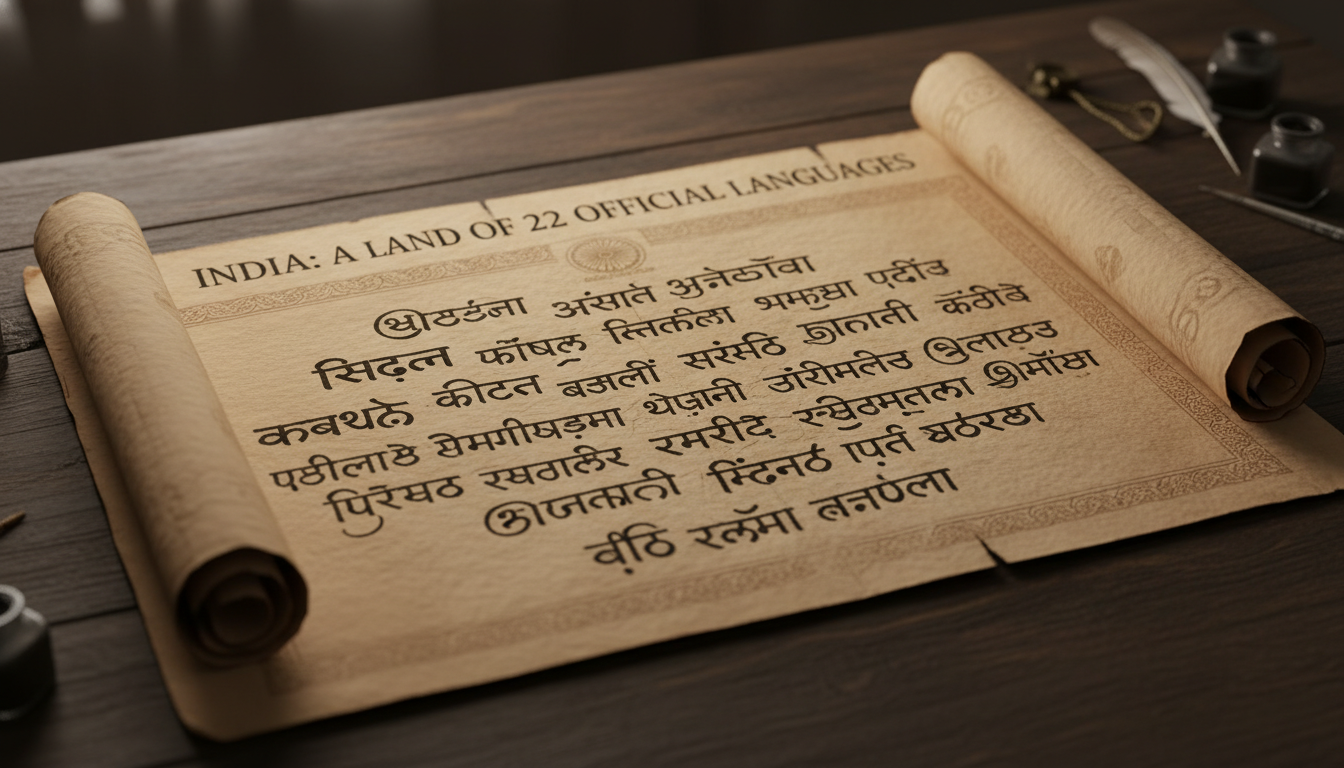
When I speak with colleagues across India’s corporate corridors, one question surfaces with surprising regularity: What is the national language of India? The follow-up confusion around official versus regional languages compounds the issue—it resembles untangling a knotted ball of yarn. Having researched India’s constitutional language provisions extensively, I can walk you through the legal framework, historical backdrop, and contemporary tensions without drowning in jargon.
Legal Framework: No ‘National Language,’ But Official Ones Exist
You may have heard people assert that “Hindi is the national language of India”—but this isn’t accurate. The Constitution of India (1950) doesn’t grant any language the title of national language. Article 343 designates Hindi in Devanagari script as the official language of the Union (central government), with English retained as an additional official language. Initially, English was scheduled to phase out after 15 years, but the Official Languages Act of 1963 made its continued use alongside Hindi a permanent arrangement. From a legal standpoint, India recognizes no national language—only official ones.
A Constitutional Patchwork: Scheduled Languages and Regional Variations
Delving deeper into the Constitution, the Eighth Schedule enumerates 22 scheduled languages, each officially recognized and eligible for development in specified contexts. These include widely-spoken languages such as Bengali (approximately 97 million speakers), Tamil (over 69 million speakers), Marathi (about 83 million speakers), and Telugu (around 83 million speakers), along with less widespread tongues like Bodo (1.5 million speakers) or Dogri (2.6 million speakers). Census data from 2011 provides these speaker figures. This constitutional framework reflects India’s linguistic diversity and ensures regional voices maintain formal recognition.
This means India isn’t monolingual by constitutional design—it operates as a legally multilingual nation.
Historical Context: Why No National Language?
When India’s constitution framers debated language policy in the Constituent Assembly (1946–1949), Hindi proponents vigorously advocated for making Hindi the national tongue. Conversely, delegates from Tamil Nadu and other non-Hindi regions opposed this, concerned about potential cultural domination. This friction produced the eventual compromise: Hindi and English as official languages, with no single national language designated. This outcome exemplifies federalism in practice—and frankly, demonstrates how one-size-fits-all solutions fail in profoundly diverse nations.
Contemporary Landscape: Tensions and Misconceptions
Despite constitutional clarity, the myth persists, often perpetuated by political rhetoric or casual conversation. India’s courts have repeatedly clarified—no, Hindi isn’t the national language. Yet, claims occasionally surface. One reported Supreme Court order mentioned Hindi as a national language in a judgment, though the Constitution itself stipulates otherwise.
Political moves can also stoke tensions. In Haryana, the education minister recently stated that Hindi is the “rastrabhasha” or national language—though legally, this claim lacks foundation. Similarly, in Madhya Pradesh, the chief minister suggested every language spoken in India should be considered a national language—a sentiment more symbolic than legally binding.
Southern states like Karnataka and Tamil Nadu have pushed back against perceived Hindi imposition. Controversy erupted over missing Hindi signage at Bengaluru airport, fueling concerns about cultural marginalization among non-Hindi speakers.
These flashpoints illustrate how language remains a charged, politically sensitive subject.
Real-World Impacts: Education and Language Policy
These debates aren’t merely academic—they directly affect students and educational institutions. National education policies frequently advocate the three-language formula, encouraging schools to teach a regional language, Hindi, and English. Implementation varies significantly across states.
Recently, the Central Board of Secondary Education (CBSE) issued Circular No. Acad-08/2024 for the 2025–26 school year, mandating that early education (foundational and preparatory stages) be delivered in the child’s mother tongue or regional language. This policy shift aligns with UNESCO’s recommendations and aims to improve comprehension and early learning outcomes by anchoring education in familiar linguistic contexts.
This move reflects research demonstrating stronger cognitive development when children begin learning in their home language. It also underscores India’s ongoing balancing act: constitutionally multilingual, and multi-layered in practice.
Perspectives Collide: Diversity, Identity, and Policy
Beneath the legal provisions and court rulings lies something profoundly human—identity. Language connects to culture, pride, and history. When politicians frame Hindi as a national language, non-Hindi-speaking communities may perceive this as cultural erasure.
Conversely, practical arguments exist for a shared language: it can unify a diverse nation, streamline administration, and support mobility. In practice, English often functions as the de facto lingua franca, particularly in higher courts, central institutions, corporate settings, and academia.
Language policy in India thus represents a delicate balance between national unity and respect for linguistic difference.
The gap between constitutional provisions and public perception reveals how legal nuance often becomes lost amid identity politics and regional sensitivities.
Conclusion
The answer is both straightforward and complex. Legally, India has no national language. Officially, Hindi in Devanagari and English serve as the Union’s official languages; 22 scheduled languages add regional depth across the country. Why no national language? Because in an immensely diverse nation, imposing one language would have been politically damaging—and the Constitution’s architects chose inclusivity through linguistic plurality.
Yet, confusion persists—often driven by politics, sometimes by simple misunderstanding. Real-world policies like mother-tongue education initiatives or school language reforms matter more to daily lives than constitutional debates.
Ultimately, India’s language story exemplifies the ongoing pursuit of balance between common ground and cultural respect.
FAQs
What exactly is the difference between a national and an official language in India?
A national language serves as a symbolic marker of national identity; India designates none. Official languages—Hindi and English—facilitate central government operations and parliamentary proceedings, as specified in the Constitution. Scheduled languages cover regional official use across states.
Why is Hindi often mistaken as the national language of India?
Because it’s the most widely promoted and spoken language, particularly in government contexts, many assume it holds national language status. However, legally, no language in India bears that designation.
How many scheduled languages does India recognize?
The Constitution’s Eighth Schedule lists 22 languages officially recognized and promoted, reflecting India’s multilingual reality. This number has grown from the original 14 languages in 1950 through subsequent amendments.
Is English still an official language in India?
Yes. Originally scheduled to phase out after 15 years post-independence, English remains an additional official language indefinitely, preserved through the Official Languages Act of 1963 and subsequent renewals.
Why is the mother tongue being emphasized in education now?
Research consistently shows children achieve better learning outcomes in familiar languages. For the 2025–26 academic year, CBSE mandates mother tongue instruction in foundational educational stages, citing cognitive development benefits supported by educational research.
How do states decide their own official languages?
States can adopt any scheduled language—or other languages—for administrative purposes. Many base their choice on linguistic majority within the state, resulting in Tamil as the official language in Tamil Nadu, Kannada in Karnataka, Malayalam in Kerala, and so forth.
