
 February 15, 2026
  6 Min
6 Min  No Comment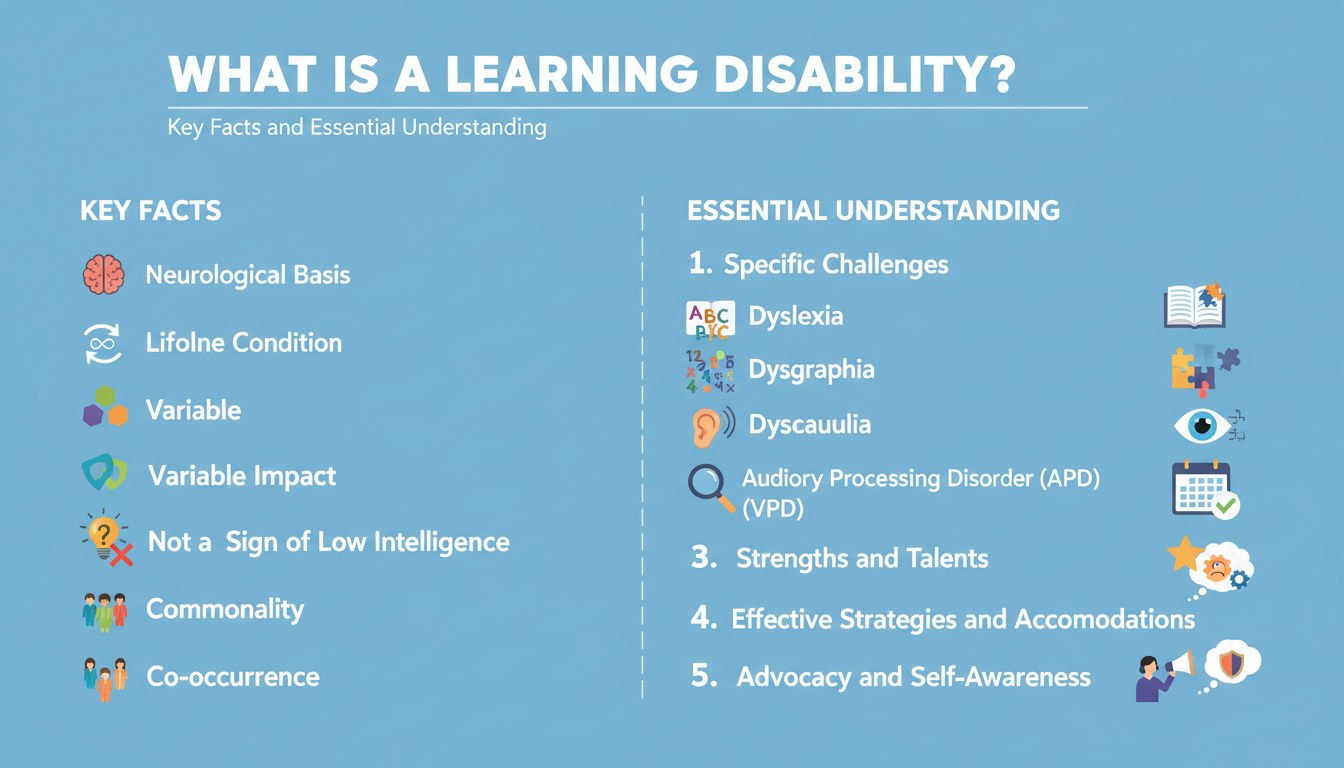
What exactly is a learning disability? It’s easy to think of it as simply trouble with learning, right? But that’s too simplistic—and often misleading. The reality is richer, more nuanced, and yes, a bit messy—like real life often is. Understanding learning disabilities means recognizing that the brain processes information differently; not poorly, just differently.
People often overlook how common and varied these conditions are. This article aims to clear up confusion, unpack key concepts, and offer a balanced view—sometimes imperfect, just like our own thinking—while still delivering accurate, reliable information.
Fundamental Understanding of Learning Disabilities
Learning disabilities—sometimes called specific learning disabilities—reflect differences in the brain’s processing systems. These are neurologically rooted difficulties in how individuals receive, process, or express information. Crucially, they are not tied to low intelligence—far from it. Many people with learning disabilities display average or even above-average cognitive abilities.
These challenges are not the result of poor teaching, lack of motivation, or socioeconomic disadvantages—though those can certainly exacerbate them. The root lies in cognitive processes such as memory, language processing, attention, and spatial reasoning.
Common Types of Learning Disabilities
Specific Learning Disorders
-
Dyslexia: Trouble with reading fluently, spelling, and recognizing words—even with normal desire to learn. It’s the most common of the lot, affecting roughly 3–7% of the population, with up to 20% showing mild symptoms.
-
Dysgraphia: Difficulty with handwriting, writing coherence, and fine motor skills. You might see messy handwriting, poor spacing, or fatigue when writing.
-
Dyscalculia: Difficulty in understanding numbers, performing calculations, or grasping mathematical concepts. Common signs include confusion around symbols or frequent math errors.
Broader Processing Difficulties
-
Auditory Processing Disorder: Hearing works fine, but processing sounds—especially in noisy environments—is a major challenge.
-
Non-Verbal Learning Disabilities (NVLD): Characterized by strong verbal abilities but difficulty with spatial awareness, social cues, and organization. Not formally recognized in DSM-5, yet widely acknowledged among professionals.
-
Language-Based Learning Disabilities: This category includes difficulties across listening, speaking, reading, writing, and math, with a neurological underpinning. It may surface as ambiguous speech or trouble expressing ideas coherently.
How Prevalent Are Learning Disabilities?
Learning disabilities are more common than many realize. According to recent data covering U.S. children and teens aged 6–17 years, nearly 9% have been diagnosed with a learning disability at some point, and around 8.3% currently live with one.
Other statistics suggest up to 4 million children in the U.S.—about 1 in 59—live with learning disabilities. Special education services under IDEA include roughly 2.5–2.8 million of these students.
Within students receiving disability services, over 30% rely on support for specific learning disabilities. However, educational gaps remain troubling—most students with learning disabilities are not proficient in reading or math, and while K–12 accommodations are common, only a small fraction continue to receive support in postsecondary education.
Diagnosis and Identification Process
Diagnosis typically involves psychoeducational or neuropsychological evaluations assessing intelligence, academic achievement, memory, attention, and more. Discrepancies between cognitive ability and academic performance often point toward a learning disability.
A more proactive model, Response to Intervention (RTI), uses early screening and tiered intervention. Students who don’t respond well to increasingly intensive support may then be formally evaluated. This avoids waiting for symptoms to worsen before taking action.
Real-World Impact and Examples
Consider Sarah, a bright student who reads well but wholly misunderstands math concepts. Despite her intelligence, the mismatch between strengths and struggles made school a minefield until she received tailored support. That kind of story is all too common.
In colleges, awareness of learning disabilities grew in the 1990s. Faculty began offering accommodations—extra time, note-taking help, adaptive technology—because legal and institutional pressures pushed access forward.
Adults with learning disabilities often face enduring challenges, too. Programs like Adult Basic Education (ABE) and GED prep offer essential support, yet misconceptions persist—that you “outgrow” a learning disability after school. That’s a myth. Many continue to need assistance into adulthood.
Strategies for Support and Management
Effective support balances structured teaching, accommodations, and self-esteem-building:
-
Direct instruction and mastery models: Break tasks into manageable steps, use rapid feedback loops, and let learners proceed at their own pace.
-
Environmental accommodations: Quiet classrooms, modified assignments, assistive tech like text-to-speech tools, speech-to-text, talking calculators—all make a tangible difference.
-
Boosting confidence: Positive experiences—like small successes or supportive peer relationships—can counter stigma and reinforce self-esteem. Asking learners how they prefer to work shows respect and fosters trust.
“Working with the disability, not against it, leads to better outcomes.”
—Learning Disability Practice (paraphrased)
Putting It All Together in Everyday Context
We casually call it a “disability,” but it’s more a difference—a unique cognitive wiring that demands recognition. Misunderstanding it as laziness, intellectual deficiency, or absenteeism only deepens frustration and isolation. By reframing the dialogue—focusing on strengths, accommodations, and realistic strategies—we empower individuals and educators alike.
Trends in diagnosis, like the rising prevalence recorded through 2023, reflect not only actual growth but also increasing awareness and better screening tools. Yet, disparities persist across communities, and equitable access to support remains a work in progress.
Conclusion
Learning disabilities are common, complex, and lifelong. They stem from how the brain processes information—not from lack of intellect. With early identification, thoughtful diagnosis, and supportive strategies—from direct instruction to assistive technology—individuals can succeed academically and beyond. At the heart of it, acknowledging difference and building on strengths makes all the difference.
FAQs
What is the difference between a learning disability and intellectual disability?
Learning disabilities affect specific cognitive processes—like reading or math—without impacting overall intelligence, whereas intellectual disabilities involve broader cognitive and adaptive functioning challenges.
Are learning disabilities lifelong?
Yes, learning disabilities are lifelong differences in learning systems. However, their impact can be significantly reduced with proper supports and strategies tailored to the individual’s needs.
Can adults be diagnosed with learning disabilities?
Absolutely. Many adults go undiagnosed during childhood but can benefit from assessments and interventions through adult education programs or workplace accommodations.
Why aren’t all students with learning disabilities proficient in reading or math?
Systemic gaps in early identification, uneven access to quality support, and disparities across demographics result in many students not receiving the necessary interventions to reach proficiency.
How does the RTI (Response to Intervention) model work?
RTI starts with universal early screenings and offers progressive support tiers. Students who don’t respond adequately move to more intensive help, and only then are they considered for formal evaluations.
Can technology help individuals with learning disabilities?
Yes. Assistive tech—including text-to-speech, speech-to-text, writing tools, calculators, and more—can ease access to learning and provide significant support when thoughtfully implemented.
