
 February 7, 2026
  5 Min
5 Min  No Comment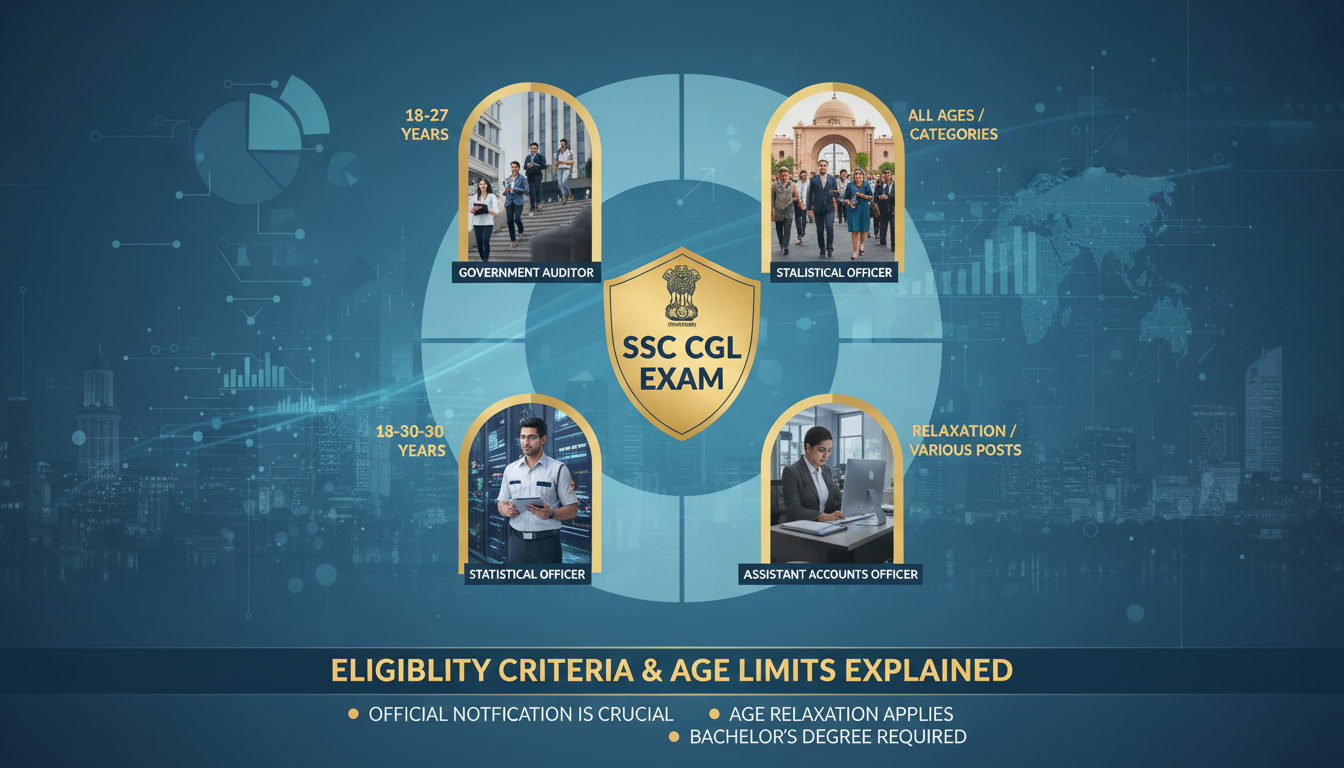
Figuring out the SSC CGL age limit can be, well, a bit of a headache—different posts, slightly differing age brackets, and then, of course, category-based relaxations. It’s kind of like assembling a jigsaw puzzle where a few pieces don’t quite fit at first glance. But don’t worry. The goal here is to break it down in a simple, human-friendly way (complete with some honest “oh wait…” moments), show how different posts differ, and provide real context to help you plan your application journey.
General Age Brackets Across SSC CGL Posts
Different positions under SSC CGL require different age limits. Grasping the brackets upfront helps candidates narrow down their options quickly rather than getting lost in a list of posts and dates.
Key Age Brackets (as on assessment date, typically August 1)
- 18–27 years – common for roles like Auditor, Tax Assistant, UDC, and Postal Assistant .
- 20–30 years – typical for Assistant Section Officer (ASO) in ministries like CSS, MEA, IB, and others .
- 18–30 years – sometimes seen for a broader range of roles, depending on the department .
- 18–32 years – notably for JSO (Junior Statistical Officer) and certain specialized posts .
On the whole, the general age limit spans from 18 to 32 years, varying by post. The upper end is usually for the most technical or statistical roles, while the lower bracket applies to clerical roles. It’s not fuzzy—they’re generally consistent across official notices, but it’s always wise to check the specific year’s official notification.
Post-Wise Age Limit Examples
Let’s zoom in on some role-specific examples to make things clearer:
Auditor / Accountant / Tax Assistant (Group C)
- Minimum age: 18 years
- Maximum age: 27 years
Typical posts under Offices like C&AG, CGDA, CBDT, CBIC, or Postal Department fall here .
Assistant Section Officer (ASO) – Central Secretariat, MEA, Railways, IB, AFHQ
- Minimum age: 20 years
- Maximum age: 30 years .
Junior Statistical Officer (JSO) – Ministry of Statistics & PSI
- Minimum age: 18 years
- Maximum age: 32 years .
Special Posts such as Inspector, Sub-Inspector
- Usually fall under 18–30 years, though there’s slight variation depending on role and department (like NIA, CBI, etc.) .
Age Relaxation: Who Gets Extra Leeway?
If you belong to a reserved category, you might breathe a sigh of relief—relaxations can literally translate into a couple more years of eligibility.
Standard Relaxation Table
- OBC: +3 years
- SC/ST: +5 years
- PwD (Unreserved): +10 years
- PwD (OBC): +13 years
- PwD (SC/ST): +15 years
Additional Relaxations for Special Cases
- Ex-Servicemen: +3 years after deducting military service rendered .
- Defence Personnel (disabled during service): +3 years (or +8 years if SC/ST) .
- Central Govt civilian employees (Group C):
- General: up to 40 years
- SC/ST: up to 45 years
. - Widows/Divorced women (not remarried):
- General: up to 35 years
- SC/ST: up to 40 years
.
To sum up: there’s a lot of nuance here. Don’t assume a one-size-fits-all. Checking eligibility carefully can make or break your application.
Real-World Example: Candidate Scenario
Imagine you’re 28 years old and considering applying for an ASO post:
- ASO age limit: 20–30 years → You’re eligible.
- Auditor role age limit: 18–27 years → You’re just over the cutoff. But if you’re OBC, +3 years means you would be eligible. If you’re SC/ST, +5 years—again, good.
- If you’re ex-servicemen, PWD, or have served in central govt, you may have even more age boost depending on category.
This kind of nuance is why skimming just the general limits without context is risky—and why practical scenarios often help clear the fog.
Expert Insight
“Understanding the specific age limit tied to each SSC CGL post—not to mention how category-based relaxations interact—is the foundation of smart application strategy.”
This isn’t just theoretical; it’s what senior exam strategists emphasize over and over.
Why This Matters for You
- Avoid Wasting Applications: Specifying the wrong age for a post can lead to outright rejection—even if you’re a day over limit.
- Plan Years Ahead: If you’re near the upper bound for your desired post, knowing category relaxations might broaden your target window.
- Prioritize Roles: If you’re over 27 but under 30, aiming for ASO or JSO might make more strategic sense than lower-tier roles.
Conclusion
SSC CGL age limits can feel like navigating by feel alone, but with clarity and context you’ll see the patterns. The core age brackets—18–27, 20–30, 18–30, 18–32—map clearly to types of posts. Overlaying category-based relaxations (OBC, SC/ST, PwD, etc.) layers in more flexibility. The trick is to match your profile (age, category) with roles that you’re actually eligible for—and to not make assumptions based on generalities.
FAQs
Q: Can I apply for multiple SSC CGL posts if my age varies across them?
Yes, you can apply to posts for which you meet the age criteria. Your eligibility is assessed per post, so you may be eligible for some roles and not for others.
Q: Do age relaxations apply to both lower and upper limits?
No—relaxations are only applied to the upper age limit, extending your eligibility if you exceed general limits.
Q: Is the age calculated as on application date or a fixed date?
Age is calculated as on a specific date (commonly August 1 of the exam year). Check the official notification to confirm the relevant cutoff date.
Q: Can central govt employees get additional age relaxation?
Yes. Central govt civilian employees (Group C) can get age relaxation—up to specified limits depending on category and years of service.
Q: Are category relaxation rules same every year?
Mostly yes, but minor tweaks can occur. Always check the specific year’s SSC CGL notification to ensure you have the latest details.
Q: What if I exceed the age limit by just a day?
Unfortunately, even a single day matters. If the limit is “born on or after August 2” and you’re born August 1, you’re considered over the limit. Always verify your birth date against the exact official phrasing.
This breakdown should give you a clearer, more confident grasp of SSC CGL age eligibility—so you can focus on preparation instead of eligibility guesswork.
