

 January 3, 2026
  8 Min
8 Min  No Comment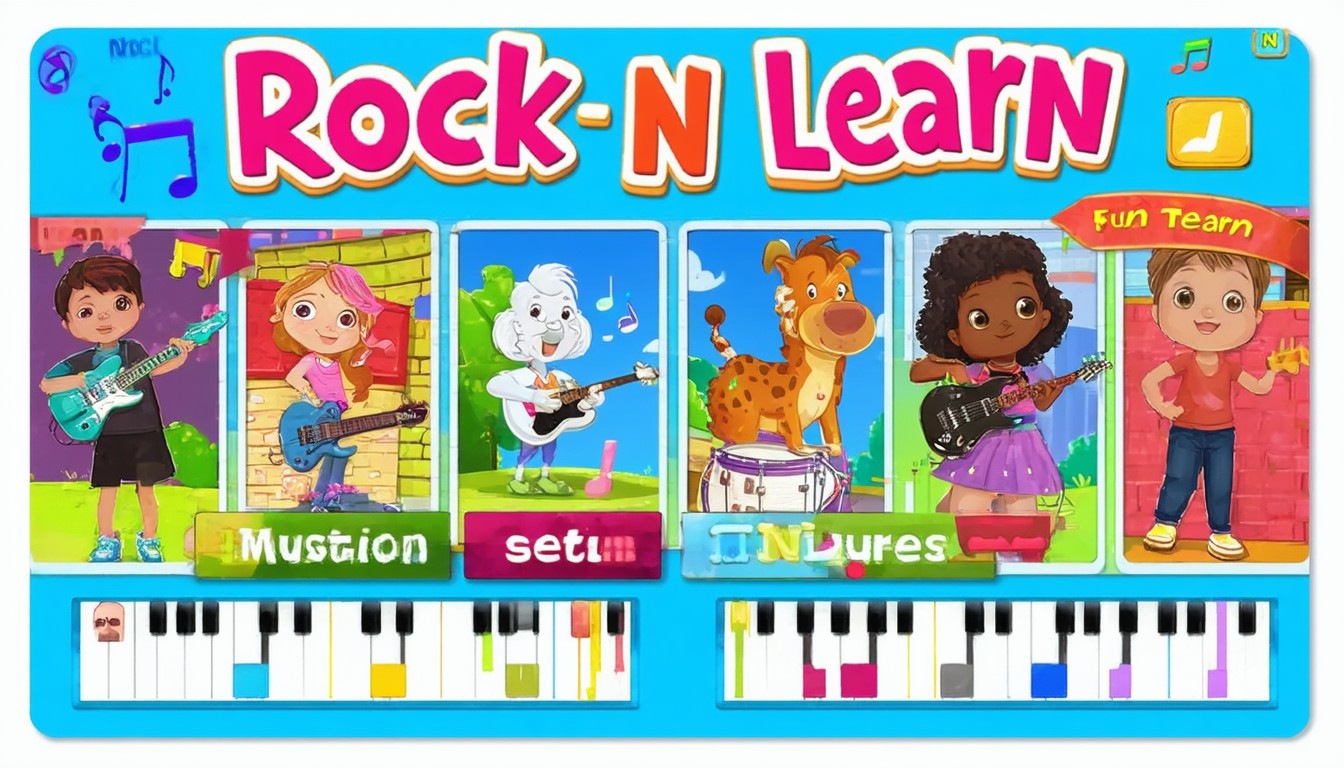
\`\`\`html
Remember the classroom songs that made learning feel effortless? For many adults, those catchy tunes about state capitals or the periodic table still stick with us decades later. That powerful connection between music and memory forms the foundation of Rock N Learn, a multimedia educational brand that has been creating engaging learning content since the late 1980s.
Over the past three decades, children’s educational content has transformed dramatically. Gone are the days of static flashcards or monotonous workbook drills—in their place, an energetic wave of multimedia platforms and vibrant personalities has emerged. Having worked with young learners for over fifteen years, I’ve observed how interactive, multi-sensory resources respond to a fundamental truth: children often retain information more effectively when lessons are enjoyable, rhythmic, and visually stimulating.
What Is Rock N Learn? Origins and Impact
Rock N Learn, founded by educator Richard Caudle and musician Brad Caudle in the late 1980s, began as an audio cassette series teaching children math through upbeat songs. Since then, it has expanded into a robust multimedia brand with hundreds of videos across streaming platforms and physical media. Today, the Rock N Learn catalog covers a broad spectrum: from phonics and early reading to science, languages, and social skills.
One of Rock N Learn’s hallmarks is its commitment to bridging the gap between entertainment and effective pedagogy. The brand’s signature approach employs:
- Catchy, memorable songs paired with animated characters
- Repetition and call-and-response for retention
- Age-appropriate humor and pacing
Beyond its catchy tunes, Rock N Learn’s growing popularity is rooted in research findings about engagement and learning outcomes. The brand positions itself as offering safe, screen-time experiences that support school readiness—claims that align with broader educational research on multimodal learning approaches.
How Music Enhances Early Learning
The use of music as an educational tool is backed by cognitive research. According to a 2016 study published in the Journal of Educational Psychology, children who received musical training showed 20% greater improvements in reading fluency compared to those who did not (Moreno et al., 2011). Additionally, research from the Stanford University School of Medicine found that music engages multiple brain regions simultaneously, particularly those involved in memory, attention, and emotional processing.
Rock N Learn capitalizes on these cognitive benefits through lively melodies, sing-along lyrics, and rhythmic repetition. The combination of sound, movement, and colorful animation creates multi-modal engagement—a critical component for learners with diverse needs or attention styles. Multimodal learning research demonstrates that information presented through multiple sensory channels can produce stronger neural connections and longer-lasting recall.
Real-World Example: Phonics Through Song
Consider Rock N Learn’s phonics series, where animated characters rap about letter sounds. Educational research supports this approach: the National Reading Panel’s analysis found that systematic phonics instruction, particularly when combined with multisensory approaches, significantly improves word recognition skills in young readers. Rock N Learn’s format integrates these evidence-based elements through musical and visual reinforcement.
The Range of Rock N Learn’s Educational Content
Rock N Learn’s offerings are both wide and deep. While best known for early childhood language and math, the brand extends into more advanced and specialized topics.
Core Learning Categories
- Preschool Skills: Colors, shapes, counting, and social skills
- Phonics & Reading: Letter recognition, sight words, reading comprehension
- Mathematics: Addition, subtraction, multiplication, division, fractions
- Science: Weather, solar system, human body, life cycles
- Languages: Spanish, French, Chinese, and more
- Social Skills & Safety: Manners, friendship, safety awareness
Each topic is broken into bite-sized lessons designed to promote mastery through incremental challenges and positive reinforcement.
Accessibility and Multilingual Support
Recognizing the increasingly global audience, Rock N Learn offers select videos in Spanish and other languages, actively supporting bilingual learning. Subtitles and closed captioning are often available, making content more accessible for diverse learners, including those with hearing impairments or emerging English skills. According to the National Clearinghouse for English Language Acquisition, students who receive bilingual instruction show measurable gains in both their primary and secondary languages.
Integration in Classrooms and Homes
The integration of Rock N Learn into both classroom and home settings reflects its flexibility and broad appeal. Educators incorporate the videos into lesson plans as warm-up activities, reinforcement, or targeted intervention for students who need extra practice. At home, parents use the songs as engaging breaks from screen time or as supplemental tools for homework support.
Case Study: Supporting Diverse Learners
Educational research supports multimedia approaches for English language learners. According to the American Educational Research Association, multimedia learning tools can be particularly effective for English language learners, providing visual and auditory supports that reinforce vocabulary acquisition. Rock N Learn’s repetition, visuals, and musical elements align with these documented strategies for language learning support.
Safe and Screen-Time Conscious
Unlike many trending children’s channels, Rock N Learn avoids overstimulation and excessive advertising. Their focus on clear learning objectives gives parents more control over how screen time is used. Many videos run between 20–40 minutes, an ideal window for attention spans of preschool and elementary-age children. The American Academy of Pediatrics recommends that educational screen time for children ages 2-5 be limited to one hour or less daily, and the structured length of Rock N Learn videos aligns well with these guidelines.
Expert Insights and Educational Trends
The growing market for educational videos is fueled by a generation of digital-native students and resourceful parents. As concerns about screen time rise, the pressure mounts for content creators to provide not just entertainment, but genuine academic value. Research from the National Assessment of Educational Progress indicates that students who engage with supplementary educational media may show greater academic gains than those relying solely on traditional instruction.
Beyond program structure, alignment with current educational standards has been central to Rock N Learn’s longevity. The team routinely updates content in step with curriculum changes, ensuring relevance for teachers and learners alike. Common Core State Standards and Next Generation Science Standards are among the frameworks that inform their content development.
Evaluating the Pros and Cons of Multimedia Learning
While the advantages of educational videos are compelling, balancing technology with hands-on experiences remains important. Multimedia like Rock N Learn is most effective when paired with active engagement and family involvement. Potential drawbacks, such as passive consumption or excessive watching, can be mitigated by mindful use and integrating discussions or offline practice.
Key benefits include:
- Concrete reinforcement of classroom concepts
- Increased motivation among reluctant learners
- Flexibility for diverse learning environments
Potential challenges:
- Risk of excessive screen time if not supervised
- Variability in individual learning styles
In practice, combining Rock N Learn videos with physical activities or follow-up questions maximizes their effectiveness while minimizing passive learning risks. Research from the Consortium for School Networking emphasizes that technology integration works best when paired with educator guidance and interactive components.
Conclusion: A Trusted Partner for Modern Learners
As digital resources reshape how children acquire knowledge, Rock N Learn proves that learning and fun need not be mutually exclusive. With its blend of engaging music, vibrant animation, and educational rigor, the platform supports the needs of both teachers and parents in cultivating curiosity and mastery among young learners.
For families and schools seeking dependable, research-aligned resources, Rock N Learn continues to set a high bar. Thoughtful use of multimedia, coupled with active participation and discussion, turns everyday screen time into a meaningful investment in a child’s future.
FAQs
What ages is Rock N Learn best suited for?
Rock N Learn primarily targets preschool and elementary-aged children but offers materials that can benefit a range of early learners, including those in special education or ESL programs.
How do Rock N Learn videos support school curricula?
The content is designed to align with key educational standards, focusing on foundational skills in reading, math, science, and languages. Teachers often use the videos to reinforce or introduce classroom lessons.
Are Rock N Learn materials available in languages other than English?
Yes, select Rock N Learn programs are offered in Spanish and several other languages, supporting bilingual learning and multicultural classrooms.
Is Rock N Learn content ad-free and safe for children?
Many Rock N Learn videos—especially those on official platforms or purchased directly—avoid ads and are curated for educational safety, offering parents more peace of mind.
What makes Rock N Learn different from other educational video brands?
Rock N Learn combines decades of teaching experience with original music and research-based techniques, resulting in highly engaging lessons tailored for a diverse audience.
How should parents or teachers use Rock N Learn most effectively?
Integrating videos as part of a balanced educational routine—paired with conversation, hands-on activities, and regular review—ensures the best results and helps children actively apply what they learn.

\`\`\`