

 December 26, 2025
  6 Min
6 Min  No Comment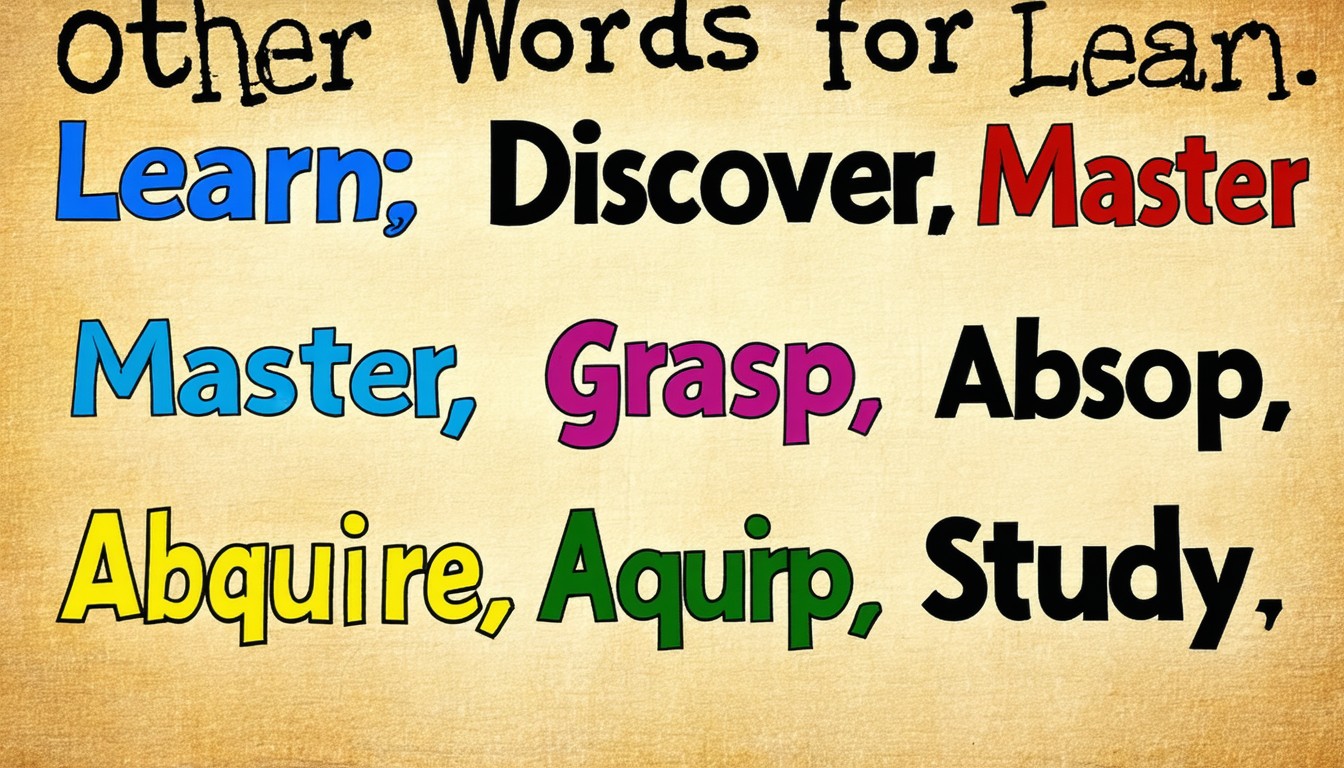
Language shapes how we think about knowledge, growth, and personal development. While “learn” remains one of the most essential verbs in English, countless other words can capture its nuance, context, or depth—words like “discover,” “master,” “grasp,” “absorb,” “study,” and “acquire.” Each term brings distinct connotations and is better suited to particular contexts, from academic research to business onboarding or even personal achievement. In an era demanding constant adaptation and upskilling, understanding the range of these terms is critical not only for clear communication but also for inspiring engagement with the learning process itself.
Understanding Synonyms for “Learn”: Context Matters
The English language offers a rich tapestry of synonyms for “learn,” but subtle distinctions shape their meaning and proper use. Choosing the right alternative helps to convey the formality, depth, or type of learning involved.
Emotional and Cognitive Dimensions
While “learn” is neutral, words like “grasp” or “absorb” imply an internalization of knowledge, highlighting the emotional and cognitive commitment. “Master” goes further, suggesting both competency and control—often used when skills have been honed to a high degree.
Formal vs. Informal Use
- “Study” often appears in academic or structured settings, aligning with research or analysis.
- “Acquire,” on the other hand, conveys a process of gaining knowledge or skills over time, and is frequently used in professional development.
“Language is not just about accuracy; it’s about conveying the right emotion and intent. The words we choose to represent learning can signal curiosity, discipline, or even passion.” – Dr. Lorraine Samuel, Professor of Linguistics
Key Alternatives: Definitions and Practical Examples
Digging deeper into each synonym uncovers their unique value across different scenarios.
Discover: Unveiling New Knowledge
“Discover” evokes a sense of novelty or unearthing something previously unknown. It’s particularly apt in scientific research or creative endeavors, where learning takes the form of revelation.
Example: A scientist might discover a new species, or a musician may discover a technique by experimenting with their instrument.
Master: Attaining Proficiency and Expertise
To “master” something means to surpass just knowing—it implies deep understanding and skilled application. Mastery often follows years of deliberate practice.
Example: Software engineers strive to master new programming languages, not just learn their syntax but develop fluency and confidence in using them to solve problems efficiently.
Grasp: Achieving Initial Comprehension
To “grasp” is to comprehend a concept, sometimes after a struggle. It’s better suited to early stages of learning or complex ideas.
Example: A student may finally grasp the fundamentals of calculus after weeks of study, unlocking the ability to apply mathematical theories.
Absorb: Deep Internalization
“Absorb” emphasizes integrating information until it becomes almost second nature. Absorbing knowledge implies full attention and memory retention.
Example: Immersive language learning techniques are designed to help learners absorb not only vocabulary but cultural nuances as well.
Study: Structured and Focused Learning
“Study” presupposes disciplined effort—reading, research, or systematic review. It’s common in education and scientific work.
Example: Medical students study anatomy for years, often combining independent reading with hands-on practice to ensure holistic understanding.
Acquire: Gaining Knowledge Over Time
To “acquire” is to gain gradually, whether through experience, exposure, or practice. This verb fits best when learning accumulates naturally or informally.
Example: Children often acquire social skills by observing parents and peers rather than sitting down for explicit lessons.
Why Word Choice in Learning Matters
Choosing among these synonyms does more than avoid repetition; it shapes how learning is perceived and engaged with. Research on educational psychology highlights that language can motivate, affirm progress, or set expectations.
- Referring to a skill as something to “master” can inspire dedication but may intimidate some learners.
- Telling someone to “grasp” a topic signals patience and the expectation that understanding develops over time.
In professional settings, selecting precise terms helps set transparent training goals or accurately describe job requirements. For example, a job posting might say candidates should “acquire knowledge of industry standards” rather than simply “learn” them, communicating a sustained, evolving process.
Synonyms in Action: Real-World Contexts
Business and Corporate Training
Modern workplaces place a premium on continuous growth. Learning management systems and HR leaders increasingly rely on diversified terminology to describe learning tracks.
– “Absorbing company culture”
– “Mastering internal software”
– “Acquiring compliance knowledge”
These distinctions help clarify employee expectations and the purpose behind each training module.
Education and Academia
In syllabus writing and teaching, educators use verbs intentionally. Blooms Taxonomy, a well-regarded educational framework, categorizes levels of cognition with verbs such as “understand,” “apply,” “analyze,” “evaluate,” and “create.” Each reflects a different phase of learning—a testament to the power of word choice in instructional design.
Everyday Communication and Self-Improvement
Personal development materials, from bestselling books to online courses, leverage synonyms like “discover” or “grasp” to foster a sense of progress. By shifting focus from rote memorization to exploration or mastery, such language encourages lifelong engagement with learning.
The Psychology Behind “Learning” Language
Studies in cognitive science suggest that how we talk about learning—especially using varied, active verbs—can impact our approach to new challenges and even our willingness to persist.
One frequently cited study from Stanford highlighted that students who framed challenges as opportunities to “master” concepts rather than just “pass” a test were more resilient and inquisitive. This simple linguistic shift contributed to better long-term retention and greater enthusiasm.
“Framing knowledge as something to ‘acquire’ or ‘discover’ can fundamentally change how learners perceive their own capacity for growth.” — Dr. James Petrov, Educational Psychologist
Conclusion: The Power of Choosing the Right Synonym
The words chosen to describe the act of learning—whether “study,” “grasp,” “master,” “absorb,” “discover,” or “acquire”—each bring their own shades of meaning, signaling different approaches and intentions. In professional, academic, and personal settings alike, thoughtful language selection can inspire deeper engagement, foster growth mindsets, and clarify learning objectives. Ultimately, harnessing the richness of English synonyms for “learn” equips communicators to motivate, instruct, and connect more effectively.
FAQs
What is another word for “learn” in a professional context?
In business or workplace environments, “acquire,” “master,” and “absorb” are commonly used to convey ongoing skill development or deep understanding relevant to job roles.
How does the choice of synonym affect learning outcomes?
Using varied terms like “discover” or “grasp” can positively influence motivation, making the learning process feel more dynamic and less intimidating.
Are some synonyms for “learn” more formal than others?
Yes. Terms like “study” and “acquire” carry a more formal tone, especially in academic or corporate settings, while “grasp” and “absorb” are informal and conversational.
Can “master” and “learn” be used interchangeably?
Not entirely. “Learn” indicates acquiring knowledge at any stage, while “master” specifically implies reaching expert-level proficiency through sustained practice.
Why do educators use different verbs for learning?
Educators tailor verbs to represent levels of cognitive complexity, drawing from frameworks like Bloom’s Taxonomy to promote skills beyond memorization, such as analysis and application.
