

 February 5, 2026
  5 Min
5 Min  No Comment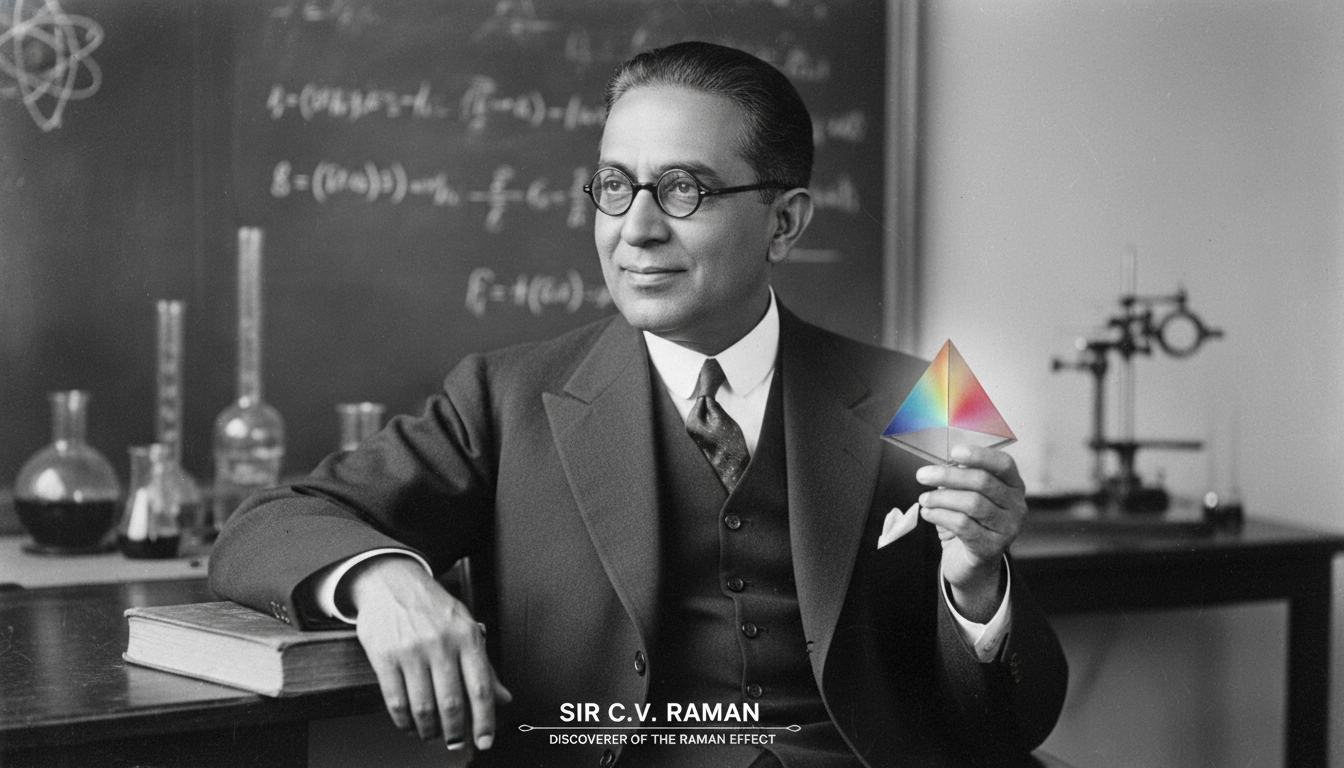
February 28, 1928 marked a turning point in scientific history when Sir C.V. Raman unveiled the Raman Effect at the Indian Association for the Cultivation of Science in Kolkata—a discovery that would win India its first Nobel Prize in Physics and revolutionize molecular spectroscopy. Since 1987, India has commemorated this anniversary as National Science Day, transforming a historic breakthrough into an annual celebration that bridges scientific heritage with modern innovation.
Significance of the Day: Honoring Legacy and Inspiring Future
Marking a Historic Scientific Breakthrough
Raman’s discovery revealed how light scattering experiences wavelength changes when interacting with molecules—a finding that established Raman spectroscopy as an indispensable analytical tool now essential to pharmaceuticals, materials science, and nanotechnology. Working in research environments, I have observed how this foundational work continues to shape scientific methodologies nearly a century later.
Establishing a National Science Milestone
The National Council for Science and Technology Communication (NCSTC) proposed in 1986 that February 28 become National Science Day, and the Indian government officially designated it the following year, creating a framework for science communication that has grown to encompass thousands of science clubs across educational institutions nationwide, according to the Department of Science and Technology.
Themes Reflecting Vision and Priorities
Each year, National Science Day adopts themes designed to align with contemporary challenges and national priorities.
- 2020: “Women in Science” highlighted gender representation in STEM
- 2022: “Integrated Approach in S&T for Sustainable Future” promoted interdisciplinary collaboration
- 2023: “Global Science for Global Wellbeing” aligned with India’s rising global role
- 2024: “Indigenous Technologies for Viksit Bharat” celebrated homegrown innovation
- 2025: “Empowering Indian Youth for Global Leadership in Science & Innovation for VIKSIT BHARAT” focused on nurturing tomorrow’s scientific leaders
These themes serve as catalysts to mobilize ideas, bridge past achievements with future goals, and galvanize communities across educational and research institutions.
How National Science Day Comes Alive
Institutions and Public Engagement
From schools hosting essay and speech competitions to universities organizing debates, open houses, and exhibitions—activities across the country bring science into everyday conversation. The Ministry of Science & Technology has reported annual participation exceeding 10 million students across all states and union territories.
Accelerating Research and Innovation
The INSPIRE-MANAK (Million Minds Augmenting National Aspirations and Knowledge) program, administered by the DST, received over 58 lakh (5.8 million) entries in its 2023-24 cycle, demonstrating substantial youth engagement in scientific innovation. The National Level Exhibition and Project Competition showcases outstanding student innovations, with the 2024 edition featuring over 450 project entries from across India.
Championing Inclusion and Equity
Promoting gender parity in STEM remains a national priority. Programs including WISE-PhD, WISE-PDF, WINGS, Women Leadership Programme, Vigyan Jyoti, and CURIE have collectively supported women researchers, with DST records indicating significant participation since their inception.
Recognition Through Awards
National Science Day connects with major science awards. The Vigyan Ratna Award, recognizing lifetime contributions to science, invites nominations until February 28 and announces recipients on National Technology Day (May 11).
Why the Day Matters: Broader Impact and Human Stories
Fostering Scientific Temper
Inspired by India’s constitutional vision for scientific temper, the government has established a comprehensive network of science communication initiatives. The National Science Popularisation programme supports science clubs, science cities, and science centres across the country.
Case Study: Engaging Young Communicators
In Kolkata, science walks in 2024 transformed urban spaces like College Street and Rajabazar into outdoor laboratories. These neighborhood science events, which I have witnessed generate genuine excitement among participants, demonstrate how local initiatives can complement national observances.
Linking Science with National Vision
The focus on “Viksit Bharat” (Developed India) in recent themes connects scientific literacy with India’s development trajectory toward 2047. The National Education Policy 2020 explicitly identifies science and technology as essential for achieving this vision, creating clear pathways from classroom learning to national progress.
Conclusion
National Science Day celebrates C.V. Raman’s groundbreaking discovery while weaving an evolving narrative where young minds, inclusivity, and innovation converge to shape India’s scientific future. Through themed observances that connect local with global priorities, and initiatives spanning schools to research institutions, the day fosters a science-forward culture. As we approach 2026, this tradition continues to spotlight both heritage and hope.
FAQs
What exactly does National Science Day commemorate?
It honors Sir C.V. Raman’s discovery of the Raman Effect on February 28, 1928—a breakthrough that pioneered modern spectroscopy and earned India its first Nobel Prize in Physics in 1930.
When was National Science Day first celebrated in India?
Following NCSTC’s 1986 recommendation, the Indian government declared February 28 as National Science Day, with the first observance taking place in 1987.
What themes have recent National Science Days focused on?
Recent themes include “Women in Science” (2020), “Integrated Approach in S&T for Sustainable Future” (2022), “Global Science for Global Wellbeing” (2023), “Indigenous Technologies for Viksit Bharat” (2024), and “Empowering Indian Youth for Global Leadership in Science & Innovation for VIKSIT BHARAT” (2025).
How do schools and public institutions celebrate the day?
They organize essay and speech competitions, open laboratories, exhibitions, science walks, and engage students and citizens through hands-on, participatory events supported by science clubs nationwide.
Are there any awards connected to National Science Day?
Yes—the Vigyan Ratna Award, recognizing lifetime scientific achievement, invites nominations through February 28 and announces recipients on National Technology Day.
