
 February 6, 2026
  5 Min
5 Min  No Comment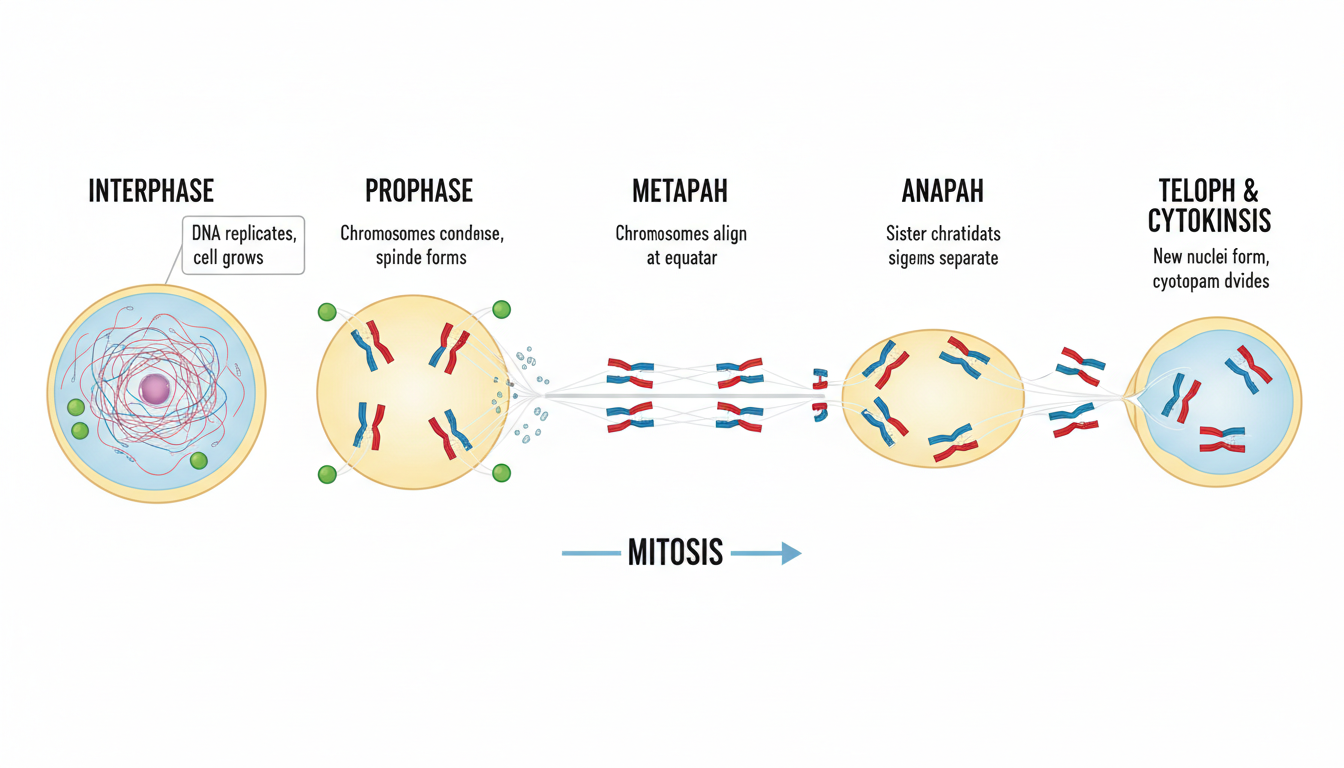
Mitosis vs meiosis—sounds like high school biology déjà vu, but, let’s be real, it’s way more than just memorizing phases. This technical piece unpacks the key differences, stages, and functions of both processes, keeping things natural and a tad imperfect—as we humans are. Imagine a tale of two cell dances: one a steady waltz (mitosis), the other a wild, double-split tango (meiosis). Along the way, we’ll mix in real-world context, scientific nuances, and a touch of unpredictability—just like nature intended.
The Big Picture: Purpose and Outcomes
Mitosis: The Reliable Workhorse
Mitosis is the performer we rely on for day-to-day cellular upkeep. Every diploid parent cell divides once to yield two genetically identical diploid daughter cells—no surprises. It’s essential for growth, tissue repair, and asexual reproduction across countless organisms. In other words, if your skin heals after a scrape, thank mitosis.
Meiosis: The Diversity Architect
By contrast, meiosis occurs only in germ cells and involves two rounds of division, producing four haploid cells. The result? Genetically unique gametes—think sperm or eggs—that underpin sexual reproduction and genetic diversity.
“Mitosis produces two genetically identical diploid cells, while meiosis produces four genetically unique haploid cells.”
Process Breakdown: Stages and Mechanisms
Shared Foundations: Interphase
Both mitosis and meiosis begin in interphase, where the cell grows, replicates DNA, and preps for division (G₁, S, G₂ phases). This phase spans the majority of a cell’s life and is central to ensuring both fidelity and readiness for cell division.
Mitosis: One Division, Simple Rhythm
Stages of mitosis typically follow:
– Prophase: Chromosomes condense, nuclear envelope disappears, spindle forms.
– Metaphase: Sister chromatids align at the cell equator.
– Anaphase: Cohesin is cleaved; chromatids separate toward opposite poles.
– Telophase and Cytokinesis: Nuclear envelope reforms, cells split.
Meiosis: Two Acts, Double Complexity
Meiosis splits into two phases:
Meiosis I (Reduction Division)
- Prophase I: Homologous chromosomes pair, form tetrads, and exchange segments through crossing over—visualized as chiasmata.
- Metaphase I: Tetrads align at the equator.
- Anaphase I: Homologs separate (not sister chromatids).
- Telophase I & Cytokinesis I: Two haploid cells emerge.
Meiosis II (Equational Division, resembling mitosis)
- Prophase II to Telophase II: Sister chromatids finally separate, resulting in four genetically distinct haploid cells.
Real-World Examples and Insights
Evolutionary Value and Genetic Diversity
Meiosis is nature’s way of shuffling the genetic deck: crossing over during prophase I and the random orientation of tetrads during metaphase I lead to varied offspring. This diversity fuels evolution and adaptability.
⏱ Timing—and Its Complexity
The duration of these processes varies widely. Mitosis in cultured mammalian cells may take over 10 hours, while in yeast, the cycle can be as fast as 80 minutes. Meiosis can drag on—especially in humans. Female germ cells may pause in prophase I for years, even decades.
Mistakes Matter
When mitosis falters—say, through unregulated division—it can lead to cancer. Meiosis errors, like improper chromosome segregation, may result in conditions like aneuploidy (e.g. Down syndrome).
Deep Dive: Why and How This Matters
Fidelity vs Variation
- Mitosis preserves genetic stability—crucial for tissue function and organismal health.
- Meiosis generates variability, essential for evolution and species survival.
Investment & Consequence
The time women’s egg cells spend arrested in prophase I isn’t trivial—it’s an evolutionary gambit. It allows for quality control but also raises risks of chromosomal errors over time.
Process Comparison at a Glance
| Process | Divisions | Daughter Cells | Chromosome Number | Genetic Variation |
|————|——————|——————–|————————|————————|
| Mitosis | One | Two diploid | Same as parent (2n) | None |
| Meiosis | Two (I & II) | Four haploid | Half of parent (n) | High (crossing over, etc.) |
This table keeps things clear—imagine similar content in kid-friendly diagrams or a dynamic infographic in an actual article.
Conclusion
So, mitosis is the sturdy, dependable workhorse: fast, accurate, essential for body maintenance. Meiosis, though intricate and time-consuming, is the artist of genetic originality, driving reproduction and variation.
Both are masterclasses in biological precision—and occasional imperfection (like long-awaited egg maturation or cancer onset)—but each serves a vital purpose in the broader story of life.
FAQs
What’s the main difference between mitosis and meiosis?
Mitosis yields two genetically identical diploid cells for growth and repair, while meiosis produces four genetically diverse haploid gametes for sexual reproduction.
Do both processes start with DNA replication?
Yes, both begin with interphase’s S phase, where DNA duplicates in preparation for division.
Why does meiosis take longer, especially in humans?
Prophase I of meiosis is especially complex—it includes pairing of homologous chromosomes and crossing over, and can remain arrested for years in human oocytes.
What happens when mitosis goes wrong?
Errors can result in too many or too few chromosomes, leading to cell death or diseases like cancer.
Is genetic diversity only due to meiosis?
Mainly yes—crossing over and independent assortment during meiosis create new genetic combinations, which are crucial for diversity.
Are there organisms that use only mitosis?
Some asexual or single-celled organisms rely solely on mitosis. However, all sexually reproducing eukaryotes use meiosis to produce gametes.
That’s (somewhat) imperfect humans talking—but yes, mitosis and meiosis are distinct yet coordinated feats of cellular choreography, each with its own rhythm, purpose, and occasional mishap.
