

 February 24, 2026
  11 Min
  No Comment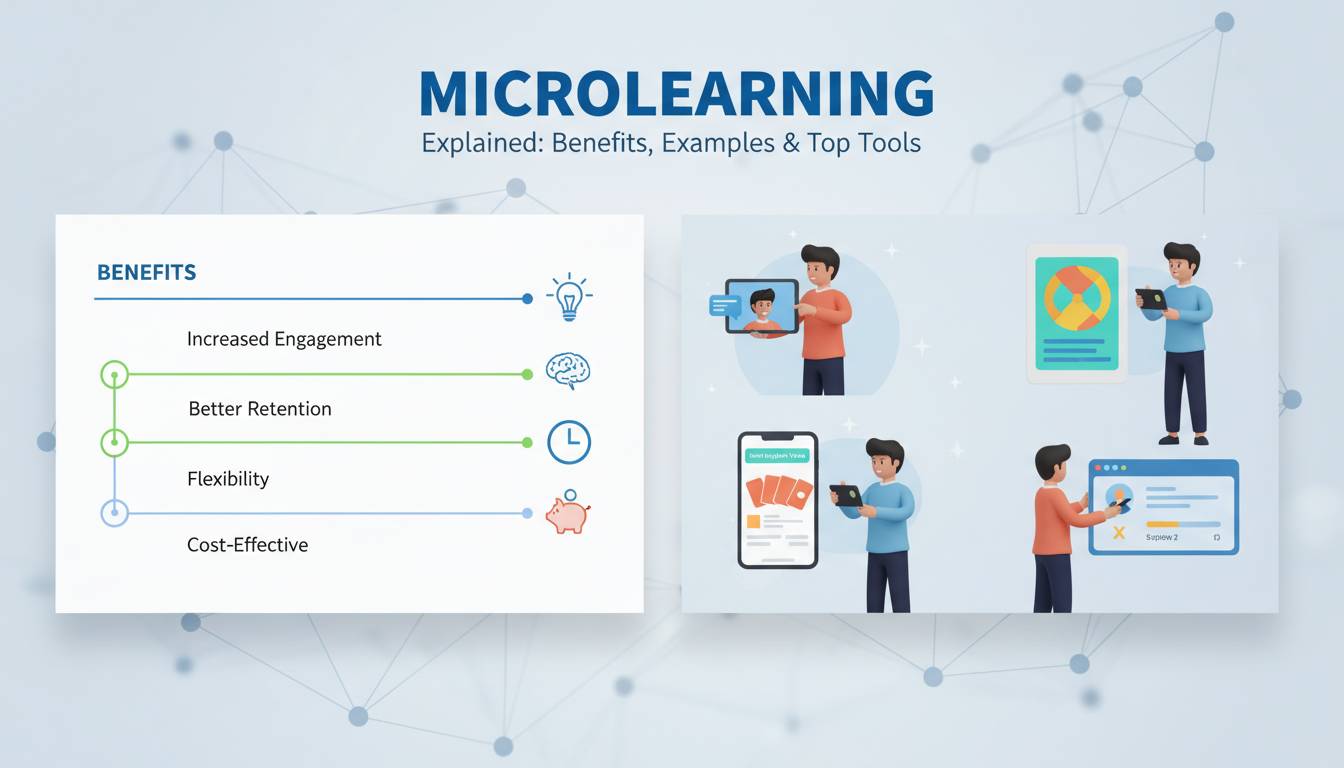
Microlearning has become a major force in how organizations handle employee development and education. This approach breaks complex information into small, digestible chunks that learners can consume in just a few minutes. With attention spans shrinking and demand for flexible learning solutions growing, understanding microlearning matters for L&D professionals, educators, and business leaders.
What is Microlearning?
Microlearning is a holistic approach to skill-based learning that deals with relatively small learning units and short-term learning activities. Unlike traditional training programs that may last hours or even days, microlearning delivers content in bite-sized segments typically ranging from 3 to 7 minutes. Each module focuses on meeting a specific learning objective through focused, self-contained content that learners can access on-demand.
The core principle comes from cognitive science research showing that humans process and retain information more effectively when it’s presented in manageable quantities. Instead of overwhelming learners with comprehensive courses, microlearning delivers just enough information to master a single concept or skill. This approach fits how people naturally consume information today—from social media snippets to quick video tutorials.
Several characteristics define effective microlearning content. First, each module targets a single learning objective, ensuring clarity and focus. Second, the content comes in multiple formats: videos, infographics, quizzes, flashcards, and interactive scenarios. Third, microlearning experiences work across various devices, with mobile optimization being particularly important since many learners access content on smartphones. Finally, the self-contained nature means learners can start, pause, and resume their learning journey without losing context.
Key Benefits of Microlearning
Organizations implementing microlearning strategies consistently report improved learner engagement, better knowledge retention, and more efficient use of training resources.
Learner engagement improves significantly with this approach. Traditional lengthy training sessions often suffer from declining attention and participation, particularly in virtual settings. Microlearning’s short, focused format maintains interest by delivering content in digestible portions. Research from the Centre for Creative Leadership found that learners who completed microlearning modules showed 50% higher engagement rates compared to those in traditional classroom settings.
Time efficiency is another major advantage. Employees increasingly struggle to find extended periods for professional development amid competing work demands. Microlearning fits seamlessly into workflows, allowing learners to complete modules during brief breaks, while commuting, or between tasks. A typical microlearning module takes only 5-10 minutes to complete, making it possible for employees to engage in ongoing learning without significant schedule disruption.
Knowledge retention improves substantially when information comes in focused, repeated exposures rather than single intensive sessions. The spacing effect, a well-established principle in cognitive psychology, shows that information learned in distributed sessions over time sticks longer than the same information learned in concentrated blocks. Microlearning naturally incorporates this spacing by presenting concepts in discrete modules that learners revisit and build upon. Organizations implementing microlearning report retention rates of up to 80%, compared to approximately 20-25% retention from traditional one-time training sessions.
Cost effectiveness further drives adoption. Developing microlearning content typically requires less time and resources than creating comprehensive training programs. The modular nature also allows organizations to update specific content pieces without rebuilding entire courses. When information changes rapidly—compliance requirements or product updates, for example—these targeted updates prove far more efficient than traditional course revisions.
Flexibility and accessibility round out the primary benefits. Microlearning content works across devices and platforms, enabling learners to access materials whenever and wherever needed. This flexibility supports diverse learning styles and accommodates geographically distributed workforces. The self-paced nature allows learners to review challenging concepts multiple times while moving quickly through familiar material, creating a personalized experience.
Real-World Examples of Microlearning
Practical examples across corporate training, compliance education, customer service, and professional development show how organizations apply microlearning principles.
Corporate Onboarding is one of the most common applications. Rather than subjecting new hires to lengthy orientation sessions, many companies now use microlearning modules to introduce company culture, policies, and basic procedures. A new employee might complete a 3-minute video on the company’s mission and values, followed by a brief quiz. Subsequent modules cover benefits enrollment, IT setup, and team introductions, delivered over the first several weeks. This approach reduces first-day overwhelm while improving information absorption.
Compliance Training benefits significantly from microlearning formats. Annual compliance requirements—anti-harassment policies, data security practices, industry regulations—involve substantial information that employees must understand and remember. Breaking this content into short modules distributed throughout the year proves more effective than annual marathon training sessions. Financial services firms, healthcare organizations, and companies handling sensitive customer data particularly favor this approach.
Sales Enablement provides another compelling example. Product knowledge, competitive positioning, and selling techniques change frequently in dynamic markets. Sales teams need quick refreshers before client meetings or ongoing reinforcement of key messaging. Microlearning delivers 2-minute video tips, quick reference guides, and brief scenario-based exercises that keep skills sharp without requiring extensive training time.
Software Training and Tool Adoption demonstrates microlearning’s value for technical skills. When organizations roll out new software or tools, traditional training often overwhelms users with comprehensive features they may not immediately need. Microlearning modules focus on specific tasks, guiding users through actual workflows. A customer service representative might watch a 4-minute module on using the new ticketing system to resolve a specific issue, then apply that knowledge immediately in their work.
Leadership Development increasingly incorporates microlearning for busy managers. Rather than removing executives from their roles for multi-day programs, organizations deliver leadership insights through short modules covering giving effective feedback, coaching team members, or making decisions under uncertainty. These brief experiences build management capabilities over time while respecting participants’ schedules.
Customer Education extends microlearning beyond internal use. Software companies provide brief tutorial videos and interactive guides helping users master features. Healthcare organizations offer patient education modules explaining conditions, medications, and treatment procedures. Financial institutions deliver short content helping customers understand products and make informed decisions.
Language Learning applications like Duolingo exemplify consumer-focused microlearning. These platforms deliver vocabulary, grammar, and pronunciation content in brief exercises that users complete in just a few minutes daily. The gamified approach and progress tracking keep learners motivated while the micro format makes consistent practice feasible.
Safety Training in industries like manufacturing, construction, and logistics benefits from microlearning’s focused approach. Rather than annual safety seminars, organizations deliver brief modules addressing specific hazards, proper equipment use, and emergency procedures. This continuous reinforcement helps maintain safety awareness more effectively than infrequent intensive sessions.
Top Microlearning Tools and Platforms
The growing demand for microlearning content has spawned numerous platforms and tools designed to create, deliver, and manage short-form learning experiences.
TalentLMS offers a cloud-based learning management system with strong microlearning capabilities. The platform enables organizations to create and deliver micro courses, track completion rates, and manage learner progress. Features include mobile-responsive design, gamification elements, and integration with common business tools. Pricing starts with a free tier suitable for small organizations, with paid plans adding advanced features.
Docebo provides an enterprise-focused learning platform incorporating AI-powered recommendations and personalized learning paths. The platform supports multiple content formats and includes social learning features that enable peer interaction around microlearning content. Docebo suits larger organizations seeking a comprehensive learning ecosystem.
LearnWorlds specializes in creating and selling online courses, with particular strength in interactive video and assessment features. Organizations using the platform can develop engaging microlearning content with built-in quizzes, interactive videos, and completion certificates.
Kahoot! transforms learning into game-based experiences through quizzes and interactive content. While often associated with educational settings, Kahoot! proves effective for corporate training, sales contests, and compliance reinforcement. The competitive format drives engagement while providing immediate feedback on knowledge gaps.
Quizlet offers flashcard-based learning with extensive study modes and collaborative features. The platform works well for memorization-heavy content like terminology, procedures, and product specifications. Quizlet’s simplicity makes it accessible for learners across age groups and technical comfort levels.
SC Training & Development focuses specifically on microlearning for employee training. The platform emphasizes short, scenario-based modules designed for rapid consumption and skill application. Organizations appreciate the focus on practical, job-relevant content delivery.
Grovo specializes in modern learning content for customer-facing teams. The platform provides pre-built microlearning content covering topics like sales techniques, customer service, and compliance. Organizations can customize this content or create original modules using the platform’s tools.
Axonify combines microlearning with adaptive learning technology to deliver personalized content recommendations. The platform uses brief daily briefings, called “brain bans,” to reinforce critical knowledge while identifying areas where individual learners need additional support.
When evaluating microlearning tools, organizations should consider ease of content creation, mobile experience quality, analytics and reporting capabilities, integration with existing systems, and pricing structures. Many platforms offer free trials allowing organizations to test functionality before committing.
How to Implement Microlearning Effectively
Successful microlearning implementation requires more than simply creating short content modules. Organizations achieve best results by following established principles and avoiding common pitfalls.
Begin with clear learning objectives for each module. The most effective microlearning focuses on a single, specific outcome. Rather than creating a module covering “customer service skills,” develop separate modules addressing “handling angry customers,” “active listening techniques,” and “de-escalation strategies.” This specificity ensures each module delivers measurable value and maintains learner focus.
Design content for the target device and context. Most microlearning consumption happens on mobile devices during brief windows. Content should load quickly, display well on smaller screens, and support interrupted consumption. Learners should be able to begin a module, pause mid-way, and resume without losing progress. Session time limits of 5-10 minutes work well for most applications.
Build progression and connection between modules. While individual modules are self-contained, effective programs connect these pieces into coherent learning journeys. Consider how modules build upon each other and create logical sequences. This progression helps learners see connections between concepts and understand how individual skills contribute to larger competencies.
Integrate reinforcement and practice opportunities. Single exposure to information rarely creates lasting behavior change. Effective microlearning programs include spaced repetition, where learners revisit key concepts over time through follow-up quizzes, refresher modules, or scenario challenges. This reinforcement strengthens retention and helps transfer learning to actual job performance.
Measure results and iterate based on data. Analytics showing completion rates, quiz scores, time on task, and knowledge decay over time help organizations understand what’s working and what needs adjustment. Use this data to refine module design, adjust difficulty levels, and improve overall program effectiveness.
Avoid common mistakes: creating content that’s too long, failing to connect modules to actual job application, neglecting mobile experience, or launching microlearning without learner buy-in. Successful programs typically introduce microlearning gradually, gather feedback, and continuously improve based on learner and business outcomes.
The Future of Microlearning
Several trends shape how organizations will approach microlearning in coming years.
Artificial intelligence enables more personalized and adaptive experiences. AI algorithms can analyze learner performance, identify knowledge gaps, and recommend specific modules targeting individual needs. This personalization makes microlearning even more efficient by ensuring learners spend time on content matching their current skill levels and learning needs.
Integration with workflow tools brings learning directly into the systems employees use daily. Rather than requiring learners to navigate to separate platforms, microlearning content appears within CRM systems, communication tools, and project management software. This contextual delivery reduces friction and increases the likelihood that learning occurs at moments of maximum relevance.
Analytics and measurement capabilities grow increasingly sophisticated. Organizations can now track not just module completion, but actual behavior change and business impact. This measurement enables demonstrating clear ROI from microlearning investments and refining programs based on business outcome data rather than just completion metrics.
Microlearning principles expand beyond traditional training into broader organizational knowledge management. Organizations capture and distribute expertise through brief, focused content pieces, creating searchable knowledge bases that help employees solve problems and share insights efficiently.
Microlearning represents a fundamental shift in how organizations approach learning and development. By delivering focused content in digestible formats, organizations can overcome traditional training challenges including time constraints, poor retention, and limited engagement. The examples and tools available today make implementation practical across industries and use cases. As technology enables increasingly personalized and integrated experiences, microlearning’s role in organizational learning strategies will only grow stronger. Organizations that embrace this approach position themselves to develop skilled, knowledgeable workforces capable of continuous adaptation in rapidly changing business environments.
