
 March 19, 2026
  13 Min
  No Comment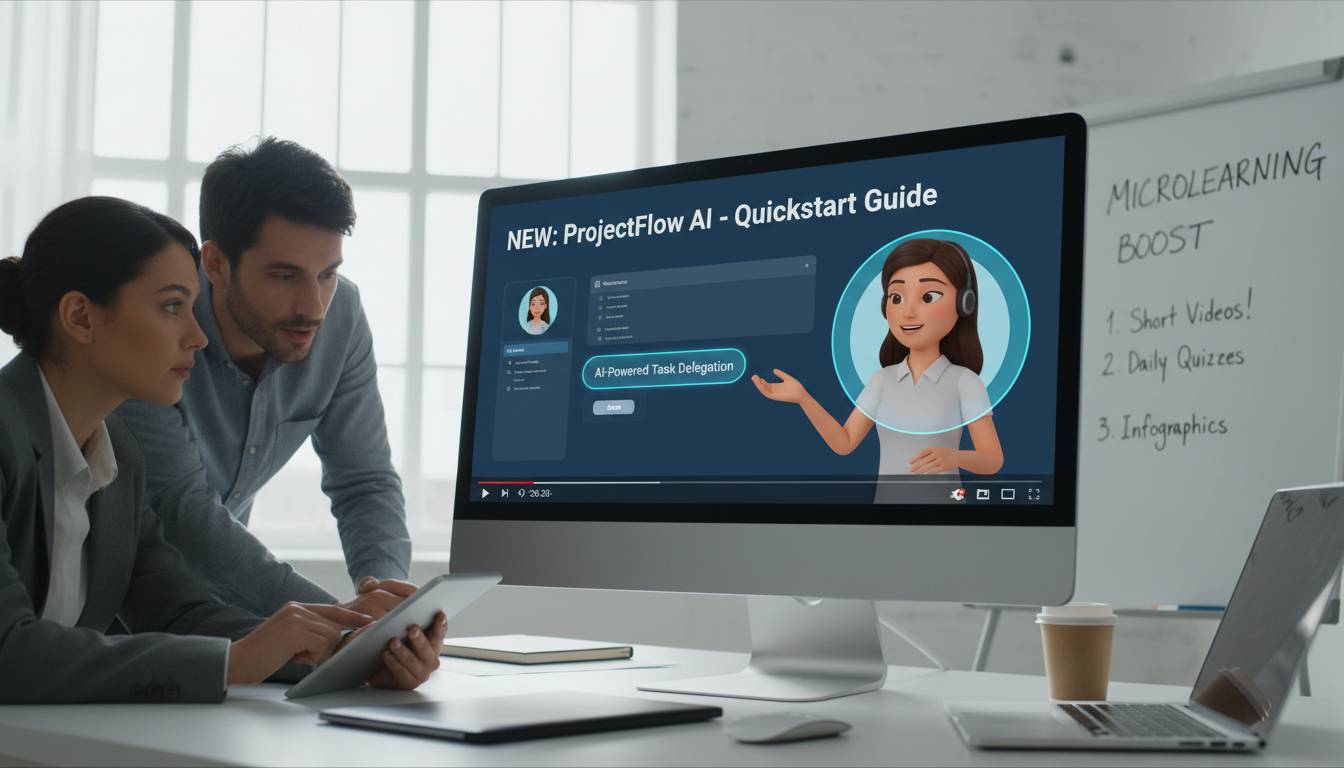
Corporate training faces a fundamental crisis: employees are overwhelmed, attention spans are shrinking, and traditional lengthy training sessions fail to deliver measurable results. Microlearning offers a powerful alternative by delivering focused, bite-sized content that fits into modern work rhythms. This approach transforms how organizations approach employee development, making learning a seamless part of daily workflows rather than a disruptive event.
What Is Microlearning and Why It Works
Microlearning delivers content in small, focused chunks typically lasting 3-7 minutes. This methodology aligns with how the human brain processes and retains information. Research from the National Training Laboratory indicates that learners retain 65% more information when content is broken into small segments compared to traditional lecture-style training, which often sees retention rates below 20%.
The cognitive science behind microlearning is compelling. When employees engage with brief, self-contained learning modules, they experience reduced cognitive load. Each microlearning segment addresses a single learning objective, allowing the brain to process, consolidate, and store information without overwhelming working memory. This approach triggers what psychologists call “spaced repetition”—the phenomenon where information presented in small doses over time creates stronger neural pathways than cramming information into extended sessions.
Beyond retention, microlearning addresses a practical workplace reality. The average employee receives dozens of emails, attends multiple meetings, and manages competing priorities throughout their workday. Requesting 60-90 minutes for traditional training creates resistance and opportunity cost. Microlearning meets employees where they already are—on their smartphones, between meetings, or during brief pauses in their workflow.
Video-Based Microlearning Examples
Video remains one of the most effective formats for microlearning, combining visual and auditory learning channels while maintaining the flexibility to consume content in short bursts.
Micro-lectures represent the simplest video format, featuring a subject matter expert addressing a single concept in 3-5 minutes. These differ from traditional video training by focusing on one skill or piece of information rather than covering multiple topics. A customer service representative might watch a 4-minute video on de-escalation techniques before their shift, then apply those skills immediately with customers.
Animated explainer videos work exceptionally well for complex topics requiring visual demonstration. When explaining processes like benefits enrollment, software navigation, or safety procedures, animation clarifies steps that might confuse employees in text-based formats. Companies like Tasty, which produces brief, visually engaging content, demonstrate how animation captures attention within the first 10 seconds.
Loom-style screen recordings enable employees to learn software skills by watching a colleague’s screen as they complete a task. These recordings, typically 2-4 minutes, show real workflows in the actual software employees use daily. This format proves particularly valuable for onboarding new hires who need to learn company-specific tools and processes quickly.
Video case studies present brief narratives showing real workplace situations and their outcomes. A 3-minute video showing a successful team conflict resolution provides more memorable guidance than written policies about communication standards.
Interactive Microlearning Formats
Interactive content dramatically increases engagement by requiring active participation rather than passive consumption.
Quick quizzes test understanding immediately after consuming content, reinforcing learning through retrieval practice. Modern quiz platforms provide instant feedback, explaining why answers are correct or incorrect. This immediate reinforcement loop strengthens memory consolidation. Companies using quiz-based microlearning report 50% higher knowledge retention compared to passive training methods.
Drag-and-drop exercises let employees practice sorting information, categorizing items, or sequencing processes. A compliance training module might ask employees to drag scenarios into “compliant” or “non-compliant” categories, actively engaging them with the material rather than simply reading about compliance rules.
Scenario-based branching presents employees with workplace situations requiring decisions. Each choice leads to different outcomes, allowing employees to experience consequences in a risk-free environment. A manager might navigate through a difficult performance conversation, with each response affecting how the simulated employee responds. This format builds decision-making skills that translate directly to real workplace situations.
Flashcard apps leverage proven spaced repetition algorithms to help employees memorize essential information—from product features and pricing to safety protocols and company policies. Organizations report that employees who use flashcard apps for as little as 10 minutes daily master 2-3 times more information than those relying on traditional study methods.
Text and Graphic-Based Microlearning
Not all effective microlearning requires video or interactive elements. Well-designed text and graphics deliver value in situations where audio isn’t practical or when employees prefer reading.
Infographics compress complex information into visual formats employees can comprehend in under a minute. A benefits summary presented as an infographic helps employees understand enrollment options faster than pages of plan descriptions. The visual hierarchy guides the eye through key information while colors and icons create memorable associations.
Email learning series deliver daily or weekly micro-lessons directly to employee inboxes. This format meets employees in an environment they already check regularly. A 5-email series on effective presentations might cover opening techniques, visual design, handling questions, closing strong, and avoiding common mistakes—each email taking less than 2 minutes to read.
Short-form written guides address single topics with laser focus. Rather than a 20-page employee handbook, organizations create 1-page guides on specific topics like “How to Request Time Off” or “Emergency Evacuation Procedures.” Employees find exactly what they need without wading through irrelevant information.
Job aids and quick reference cards live where employees need them—on desk, in work areas, or accessible via phone. These laminated cards or digital resources provide step-by-step instructions for infrequent but critical tasks, such as operating fire extinguishers or processing customer returns.
Audio and Podcast Microlearning
Audio formats enable learning during activities that don’t require visual attention—commuting, exercising, or performing routine tasks.
Podcast episodes lasting 5-15 minutes cover topics ranging from leadership development to industry trends. Employees subscribe to channels relevant to their roles and consume content during commutes or breaks. Some organizations create internal podcasts featuring executives, peer interviews, or thought leaders discussing company strategy and values.
Audio lessons work particularly well for language learning, active listening skills, and communication training. Employees practice pronunciation, intonation, or active listening techniques during otherwise unproductive time.
Voice-led guided exercises walk employees through practical activities like meditation for stress management, vocal warmups for presentations, or breathing techniques for managing anxiety. These audio experiences require no visual engagement, making them accessible during walking breaks or commute.
Industry-Specific Microlearning Examples
Microlearning adapts to virtually any industry and job function, with implementation varying based on specific workplace needs.
Healthcare organizations use microlearning for medication safety, compliance updates, and patient communication skills. Nurses might complete 3-minute modules on new protocol changes during shift changes, ensuring critical information reaches staff without requiring lengthy training sessions. Research published in the Journal of Continuing Education in Nursing found that microlearning improved medication administration knowledge by 23% compared to traditional methods.
Retail and hospitality apply microlearning to product knowledge, customer service scripts, and upselling techniques. Sales associates learn about new products through brief videos they can watch between customers. Hotel staff master service standards through quick scenario-based exercises.
Financial services rely heavily on microlearning for compliance training, which must be completed regularly but often faces completion resistance. Breaking compliance modules into 5-minute segments dramatically improves completion rates while maintaining the same learning outcomes.
Technology companies use microlearning for software onboarding, security awareness, and technical skill development. Engineers might complete brief coding challenges daily, gradually building proficiency in new programming languages or frameworks.
Manufacturing and construction apply microlearning to safety protocols, equipment operation, and procedural compliance. Workers access brief safety demonstrations on tablets before operating new equipment, reinforcing critical safety information without delaying production.
Mobile-First Microlearning Design
Modern microlearning must function seamlessly on mobile devices, where employees increasingly consume content.
Responsive design ensures content adapts to any screen size, with text sized appropriately and interactive elements large enough for touch navigation. Employees should be able to complete a 3-minute module on their phone during a break without pinching to zoom or struggling with small buttons.
Offline access enables learning in areas with poor connectivity—warehouses, parking garages, or remote job sites. Employees download modules when they have WiFi access, then complete training without relying on cellular connections.
Push notifications remind employees to engage with learning content at optimal times. Rather than forcing employees to remember to complete training, notifications prompt them when they have brief windows available.
Progress tracking through mobile apps provides both employees and managers visibility into completion status. Gamification elements like streaks, badges, and leaderboards increase motivation when employees can see their progress on their phones.
Implementing Microlearning Successfully
Successful microlearning implementation requires strategic planning beyond simply creating short content.
Needs analysis identifies the specific knowledge gaps microlearning should address. Organizations achieve best results when targeting precise skills or information gaps rather than creating general training content.
Learning objectives must be narrowly defined for each microlearning module. Each 3-5 minute segment should help employees accomplish one specific, measurable outcome. A module titled “Handling Objections” should focus exclusively on objection handling, not expand to cover the entire sales process.
Content creation workflows ensure consistent quality and regular updates. Organizations benefit from establishing templates, style guides, and approval processes that speed production while maintaining standards.
Integration with workflow maximizes adoption by making learning accessible where employees already work. Content embedded in Slack, Teams, or existing software platforms sees much higher engagement than content requiring employees to log into separate learning management systems.
Analytics and iteration drive continuous improvement by tracking completion rates, assessment scores, and behavioral changes resulting from training. Data reveals which modules work well and which need revision.
Measuring Microlearning Effectiveness
Quantifying microlearning impact requires tracking both completion metrics and business outcomes.
Completion rates measure whether employees actually engage with content. High completion rates indicate that content format and delivery timing work well; low rates signal problems with accessibility or relevance.
Knowledge assessment scores reveal whether employees understand and retain content. Comparing pre-training and post-training assessment results quantifies learning gains.
Behavior change metrics track whether training translates to workplace application. A sales training program should show measurable improvements in conversion rates, not just test scores.
Time-to-competency measures how quickly new hires reach performance standards. Organizations using microlearning often report significantly faster onboarding timelines.
Employee feedback provides qualitative insight into learning experience. Employees can identify which formats they find most engaging and which topics require additional depth.
Common Microlearning Mistakes to Avoid
Several pitfalls undermine microlearning initiatives before they deliver results.
Making content too short results in superficial treatment of important topics. Microlearning works best when each segment provides meaningful depth on a focused topic, not when content is artificially truncated to meet arbitrary time limits.
Ignoring mobile users excludes the significant portion of employees who primarily access content via smartphones. Training that requires desktop computers or tablets sees dramatically lower completion rates.
Failing to integrate with workflow treats learning as an add-on rather than a natural part of work. Content that requires employees to carve out dedicated training time sees resistance; content accessible during natural work pauses sees adoption.
Neglecting reinforcement treats microlearning as a one-time event rather than an ongoing process. Spaced repetition and periodic review dramatically improve long-term retention compared to single exposure.
Creating content without clear objectives produces training that feels interesting but fails to deliver measurable performance improvements. Every module should connect directly to specific workplace applications.
Tools and Platforms for Microlearning
Organizations have numerous options for creating and delivering microlearning content.
| Platform | Best For | Key Features |
|---|---|---|
| Docebo | Enterprise learning | AI-powered recommendations, robust analytics |
| Absorb LMS | Mid-market | Mobile-first design, social learning |
| TalentCards | Microlearning focus | Card-based interface, offline mode |
| Zapier | Workflow integration | Connects learning to existing tools |
| Articulate | Content creation | Rapid e-learning development |
| Canva | Visual content | Template library, easy design tools |
Content creation tools range from simple screen recording software for quick videos to comprehensive authoring tools for interactive modules. Organizations should match tool complexity to their content volume and interactivity needs.
Learning experience platforms aggregate content from multiple sources, providing personalized learning pathways based on role, skill gaps, and employee preferences.
Frequently Asked Questions
How long should each microlearning segment be?
The ideal length ranges from 3-7 minutes, though this can vary based on complexity and context. Complex topics might require slightly longer segments, while simple concepts can work in under 2 minutes. The key principle is covering one focused learning objective without unnecessary content that dilutes attention.
What topics work best for microlearning?
Microlearning excels for compliance training, software skills, product knowledge, communication skills, onboarding, and performance support. It works less well for developing deep expertise or teaching entirely new disciplines that require comprehensive understanding before application.
How do I get employees to complete microlearning?
Make content easily accessible within existing workflows, deliver content in moments when employees have brief availability, use mobile-first design, and connect learning to immediate job applications. Gamification elements like progress tracking and completion badges also increase motivation.
How much does microlearning cost to implement?
Costs vary widely based on whether organizations create custom content or purchase готовые solutions, the learning management platform chosen, and internal production resources. Many organizations find microlearning reduces overall training costs by 30-50% compared to traditional methods while delivering better results.
Can microlearning replace all employee training?
Microlearning works best for ongoing training, skill refreshers, and performance support rather than comprehensive onboarding or deep skill development. A blended approach combining microlearning for ongoing development with more intensive training for initial skill-building often proves most effective.
How do I measure ROI for microlearning initiatives?
Track completion rates, knowledge assessment improvements, time-to-competency for new hires, and business metrics relevant to trained skills (sales performance, error rates, customer satisfaction). Comparing these metrics before and after microlearning implementation reveals the actual business impact.
Conclusion
Microlearning represents a fundamental shift in how organizations approach employee development—moving from event-based training to continuous, embedded learning that fits modern work realities. The examples outlined above demonstrate that effective microlearning takes many forms, from brief videos and interactive scenarios to infographics and audio lessons. Success requires selecting formats that match both content requirements and employee preferences, delivering content where employees already work, and measuring outcomes that matter to business performance.
Organizations implementing microlearning strategically report not just improved training completion rates, but genuine skill development that translates to workplace performance. Employees benefit from learning that respects their time and fits into their schedules, while organizations benefit from reduced training costs and improved business metrics. The key lies in treating microlearning as a strategic capability rather than simply a content format—integrating it thoughtfully into workflow and continuously iterating based on data and feedback.