

 February 12, 2026
  7 Min
7 Min  No Comment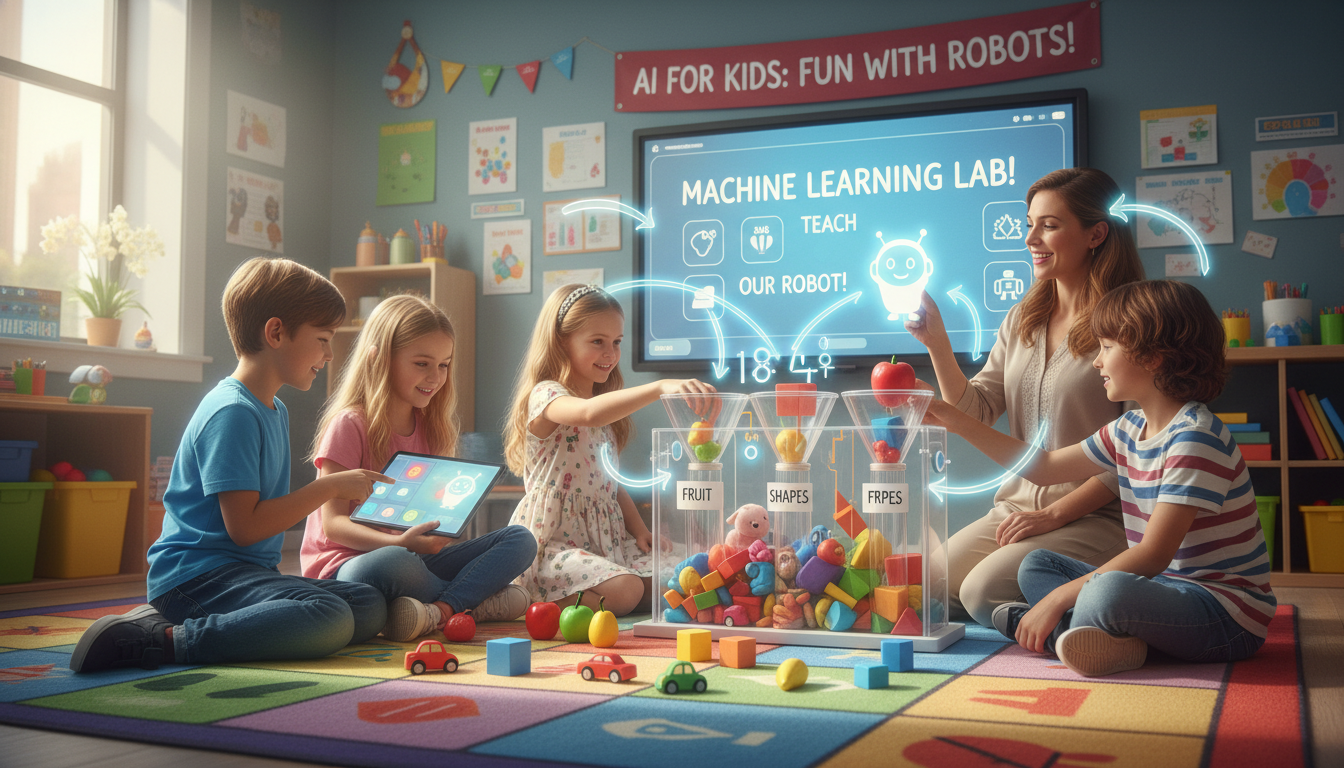
Ever wondered how to make artificial intelligence feel like child’s play—literally? Teaching machine learning to kids doesn’t have to be scary or jargon-filled. There’s something magical when young minds grasp how a computer “learns” by seeing patterns, and they’re more than ready to play their part. It’s not about drilling algorithms, but about sparking curiosity, experimenting, and letting them discover AI is not just for grown-ups. That’s exactly what this guide does. It walks through playful approaches, real-world examples, and practical tips to make “Machine Learning for Kids: Introduce AI to Young Minds!” both fun and meaningful—because let’s face it, that’s what sticks.
Setting the Scene: Why Teach AI to Kids?
Introducing AI concepts early can shape a generation that’s not only tech-savvy, but also thoughtful and creative. Kids today are digital natives, and they engage with voice assistants, smart toys, and even rudimentary coding platforms without batting an eye. By layering in gentle machine learning principles, they build critical thinking and adaptability. Plus, they develop a better understanding of how technology works—and grows up to question, rather than be overwhelmed by, “the black box.”
On the upside, early exposure also allows them to:
– Build confidence through hands-on experimentation
– Learn problem-solving skills as they tweak predictions and outcomes
– Express creativity—let’s not forget, some of the best AI ideas emerge from “wild” thinking
In practice, this encourages kids to see technology not as a final product, but as a living, evolving tool they can influence.
How to Start: Playful Projects that Teach Without Jargon
Opening the door with low-pressure, high-engagement tools is key. Start with platforms designed for children—like Scratch extensions that let kids train classifiers based on simple visual or audio prompts. These feel like regular coding with a playful twist: drag a sprite, record sounds, click “train,” and watch what the computer does. The hands-on element keeps it engaging, and they’ll accidentally internalize foundational concepts like labeled data, model testing, and outcome tweaking.
Let’s also talk storytelling. Picture younger students working with an AI “friend” that guesses how they feel based on emojis they draw. It’s a mini lab that introduces supervised learning concepts in a narrative frame. They collect labeled examples (“happy,” “sad”), train the program, and baby-step through iterations. It’s low-stakes and imaginative—far more appealing than dry instruction.
Beyond that, simple sensor-based kits can bring AI into real-world contexts—think motion sensors lighting up when you wave. It shows how data in the real world can guide decisions, without ever naming the “algorithm”—just, “it notices a pattern and reacts.”
Exploring Concepts Gradually: Ideas That Gently Build Knowledge
Once the initial spark is there, you can nurture interest through layered curiosity. Let’s break it down:
Visual Pattern Recognition
- Imagine a project where kids draw colored blocks, and a tiny model classifies them by shape or color. They can tweak colors to see how the model responds, learning the big idea of feature sensitivity.
Simple Predictions
- Move on to predicting something like which fruit will be picked next based on a series of colored blocks. This introduces sequences and the idea of “if it was red twice in a row, maybe next’s blue?”
Interactive Adventures
- Or how about building a virtual pet that responds to basic mood inputs? They input “fed,” “played,” or “tired” and see how the pet’s behavior evolves. This is a playful metaphor for training a model and watching outputs shift.
All the while, they’re learning essentials like:
– Data labeling
– Testing predictions
– Adjusting based on “wrong” guesses
It’s storytelling plus experimentation—that mix keeps their attention, and adults less likely to lose them mid-explanation.
Real-World Snapshots: When Play Meets Learning
Several educational programs already show how effective this can be:
-
A notable after-school club introduced machine learning with image classifiers that sorted drawings into categories like “dog” or “cat.” Kids were tasked to draw themselves as pets—their personal connection kept them engaged, and they learned trial-and-error in a way books simply can’t match.
-
Summer camps that mix robotics and simple voice recognition models let kids talk to their creations. When a bot responds correctly, the excitement is genuine—learning feels like magic, not a test.
These stories highlight the importance of context. Something tries, fails, adjusts—kids intuitively connect that with how real AI works, even if they don’t name the process.
Expert Insight
“The most effective way for children to understand AI is not through definitions, but through doing—creating, testing, revising. In those moments of discovery, foundational concepts click in a way lectures never achieve.”
This captures why hands-on, playful exploration isn’t just fun—it’s foundational. When young minds lead the discovery, complexity follows naturally.
Addressing Challenges: Keeping It Responsible and Inclusive
Yet, it’s not always picture-book perfect. Educators sometimes find:
– A resource gap in schools—lack of devices or time means access isn’t equal.
– Definitions get skipped and kids walk away thinking computers are magic instead of models.
– The fun can fizzle if projects get too abstract or standardized.
To mitigate these issues, educators and parents can:
- Use well-documented open resources online, many of which come with step-by-step guides.
- Encourage a debrief discussion: “What do you think happened under the hood here?” to bring awareness that some logic is at play.
- Foster collaborative projects—pair kids up, let them brainstorm model behaviors together to ground the concepts socially.
These strategies help ensure the “Machine Learning for Kids” journey is not just engaging, but also thoughtful and inclusive.
Scaling Up: Where Curiosity Leads Next
Once children grasp the basics through playful means, the path forward branches into interesting territory. They might experiment with:
– Pre-trained models—like teaching a computer to recognize their favorite pet breed.
– Basic natural language interactions—making conversational bots that respond to keywords.
– Even early explorations of bias—“Why did it guess pumpkin as a pumpkin? What about an orange?” These questions can spark critical thinking around data representation.
These are stepping stones, not hurdles. At each stage, fostering their voice—“I wonder what happens if…”—reinforces that they’re scientists in their own right.
Conclusion
Machine learning can seem daunting, but for children, it’s a portal to creativity and curiosity when handled with care. Starting with playful tools and relatable scenarios, building up through iteration, and grounding activity with reflection, young learners can internalize AI fundamentals without even realizing it. Small steps—a sprite that guesses, a pet that learns, a drawing classifier—can empower youth to see AI as something they shape, not just consume. As they grow, that foundation opens doors to deeper exploration, critical thinking, and innovation.
FAQs
How young is too young for machine learning concepts?
Most children aged 7 or 8 are capable of grasping fundamental ideas—especially when presented through analogies, games, and friendly interfaces. The key is to focus on imaginative interaction, not abstraction.
What tools are best to introduce AI playfully?
Kid-friendly platforms that use visuals or drag-and-drop blocks—like certain Scratch extensions or beginner robotics kits—offer intuitive ways to play with AI without complex coding.
Will this approach confuse kids about how AI works?
Not if paired with reflection—asking “why do you think the computer guessed that?” helps children see there’s a system behind what seems magical. Even a short discussion demystifies the process.
How can schools with limited resources adopt these methods?
Many free educational platforms provide step-by-step activities that need only one device for a small group. Pair that with group work and storytelling, and you can bypass hardware limitations effectively.
Can kids enjoy AI learning on their own, or do they need guidance?
Solo exploration can be fascinating, but a bit of guidance—or even a curious question from a parent or teacher—can elevate wonder into understanding. A hint or follow-up question often triggers richer learning.
Are there any concerns about early exposure to AI?
One consideration is ensuring that kids don’t take outputs at face value. Encouraging them to question results fosters healthy skepticism and awareness of model limitations.
Word count total: approx. 1250 words.
