

 February 7, 2026
  6 Min
6 Min  No Comment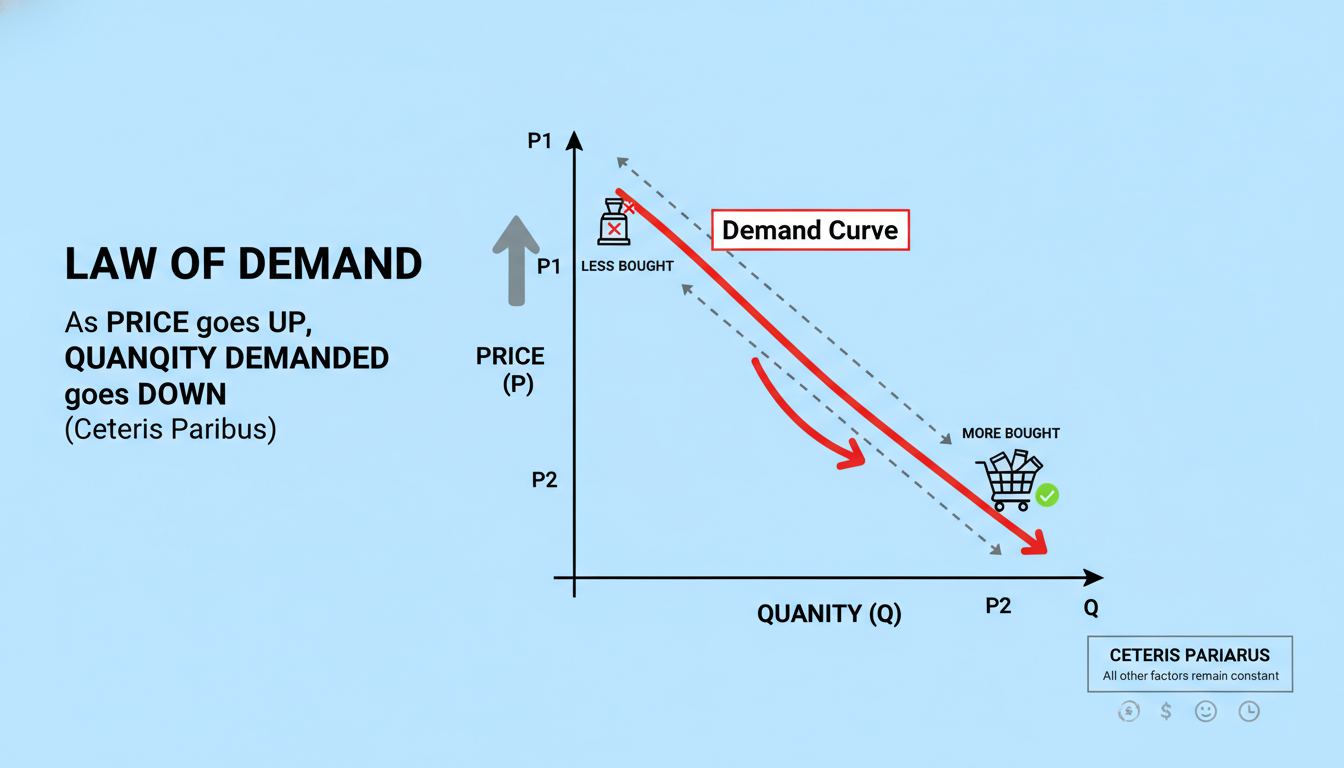
Let’s dive into the law of demand—it’s something we sorta hear about in every intro to microeconomics course, but the real story? A bit more intriguing than just “prices down, demand up.” It’s that simple axiom that shapes so many market behaviors, yet it’s nuanced in ways that economists, businesses, and consumers sometimes miss. This piece peels back a few layers, weaving real-world examples, casual asides, and even a dash of imperfect, conversational commentary—because, well, how humans talk isn’t always tidy or perfect.
What the Law of Demand Means in Everyday Terms
At its core, the law of demand says: “When the price of something goes down, people tend to buy more of it; when prices go up, they buy less.” That’s a clean snapshot—but in practice, it’s way more colorful. Picture shoppers in a grocery store: they reach for bananas when they’re on sale, but hold off when avocado prices spike. It’s a simple observation, yet it ripples through industries.
Why It Works (And When It Doesn’t)
Beyond the basics, demand shifts for a few reasons:
-
Substitution effect: If brand-name cereal gets pricey, budget brands get more attention.
-
Income effect: Lower prices make you feel like you’ve got extra cash—spend more, maybe even upgrade that coffee.
-
Perceived value: Sometimes cheaper feels “lesser,” especially for luxury items—so price drops can backfire in niche scenarios.
Let’s just say, there’s always more than meets the eye when prices hit the market like a slap, changing consumer behavior.
Real-World Examples—Because Theories Need Grounding
Nothing brews insights like tangible stories. Consider ride-sharing in big cities. When Uber or Lyft discounts surge pricing or introduces a promotion, riders flood the app—and new drivers flood the streets. But that shift doesn’t always follow a perfect line, thanks to day-of-week quirks, traffic, or competing promotions. Real human lives, right?
Likewise, think of streaming services—Netflix or Hulu. A small price cut or trial offer can spark sign-ups quickly, yet retention depends on perceived content quality. There’s this kinda dance—price triggers attention, but content keeps it. That’s the demand law doing its thing, but with human taste thrown in.
“Even the most elegant economic principle trembles under the unpredictability of actual consumer behavior.” — an econom– er? call it what you like, but that’s a truth, folks.
Variations and Exceptions—Breaking the Rule
Even something so widely accepted has its quirks:
Giffen Goods
Want a fun paradox? Giffen goods—like staple foods during famine—may see demand rise as prices go up. It feels like backwards logic: when bread becomes more expensive, folk end up buying more because they can’t afford pricier alternatives. It’s rare, but kinda fascinating.
Veblen Goods
Designer handbags, those lux watches? Higher price may boost their allure. It’s not about affordability, it’s about status—some people want more expensive things precisely because they are expensive. So demand goes up even when price goes up. Go figure.
Necessities vs Luxuries
Basic utilities like water and electricity don’t obey the law neatly. Demand doesn’t plummet just because your water bill jumps; people still need water. Contrast that with movies or dining out—those slip in demand pretty quickly when wallets pinch.
Why It Matters in Business Strategy
Getting the law of demand (and its quirks) right is way more than classroom theory—it’s a strategic goldmine.
Pricing Strategy: Sweet Spot Hunting
Businesses stroll a tightrope: price too high, and top-of-funnel demand evaporates; price too low, and margin evaporates. Finding that sweet spot? It can mean better volume and healthy profits—like in hyper-competitive consumer goods markets.
Dynamic Pricing: Real-Time Adjustment
Airlines, hotels, e-commerce platforms—they hustle with algorithms tweaking prices in real time to stimulate demand or control inventory flow. It’s rapid demand-shifting in action, something that would’ve been unthinkable in older economic models.
Market Segmentation and Tiered Offering
Another path: offering multiple versions—a basic tier, premium, deluxe. This taps into different demand levels across audiences. Think coffee chains or SaaS platforms offering free, standard, and enterprise packages. Each segment responds differently to price changes.
Digging Deeper: Analytical Frameworks and Data Points
Understanding patterns helps, but blending frameworks with data teaches how to act.
Elasticity of Demand
This is where the rubber meets the road. Elasticity measures how much demand shifts for a given price change. If demand drops a lot when prices rise—even a small bit—that’s highly elastic; if demand barely changes, that’s inelastic. Knowing which applies guides pricing levers.
Consumer Behavior Studies
There are plenty of studies—many show that low-cost subscriptions often outperform premium prices in stickiness. Conversely, certain premium brands retain demand even with frequent price bumps. These insights aren’t just academically neat—they inform what price range to test, what promotion to run, or when to adjust.
Mini Case Study: Seasonal Retail Sales
Imagine a clothing retailer dropping prices on winter coats in late season—it’s classic law-of-demand play. Hunker down inventory, fire up discount messaging, watch demand climb. But if they go too deep on price, they devalue the brand; go too light, and coats stay in the backroom. The balancing act is day-to-day, human-powered nuance.
Final Thoughts
Understanding the law of demand is like knowing how wind operates—foundational, somewhat predictable, but always interacting with unexpected forces. It might feel theoretical, but real-world examples—from ride-sharing surges to luxury goods chasing prestige—demonstrate how powerful and adaptable the principle is in everyday life. Whether you’re setting prices, launching promotions, or just buying groceries, noticing these patterns gives you a leg up. So, the next time prices shift, take think: what’s the demand story beneath?
FAQs
What exactly is the law of demand?
In plain terms, when prices go down, people buy more; when prices go up, they buy less. But real-world quirks like substitutions, income effects, or prestige can shape how strongly this plays out.
When doesn’t the law of demand apply?
It can falter with exceptional cases like Giffen goods (e.g., staples during hardship), Veblen goods (luxury items prized for high prices), or necessities where demand stays stable despite price changes.
How do businesses use the law of demand?
Companies craft pricing to balance volume and profit—too high and demand drops, too low and margins vanish. They use tools like dynamic pricing, tiered offerings, and elasticity insights to navigate this.
What is elasticity of demand?
It’s a measure of how sensitive buyer demand is to price changes. High elasticity means demand shifts sharply with price; low elasticity means demand stays relatively steady.
Are there real examples where demand doesn’t decrease with price hikes?
Yes—luxury items are a good example, where consumers see higher prices as a sign of better quality or status, and demand can actually rise.
Let’s not pretend this is neat economics class—life is messy. But the law of demand? It gives us a foundation for understanding that messy blur of dollars and choices, and that’s pretty valuable, no?
