

 December 17, 2025
  6 Min
6 Min  No Comment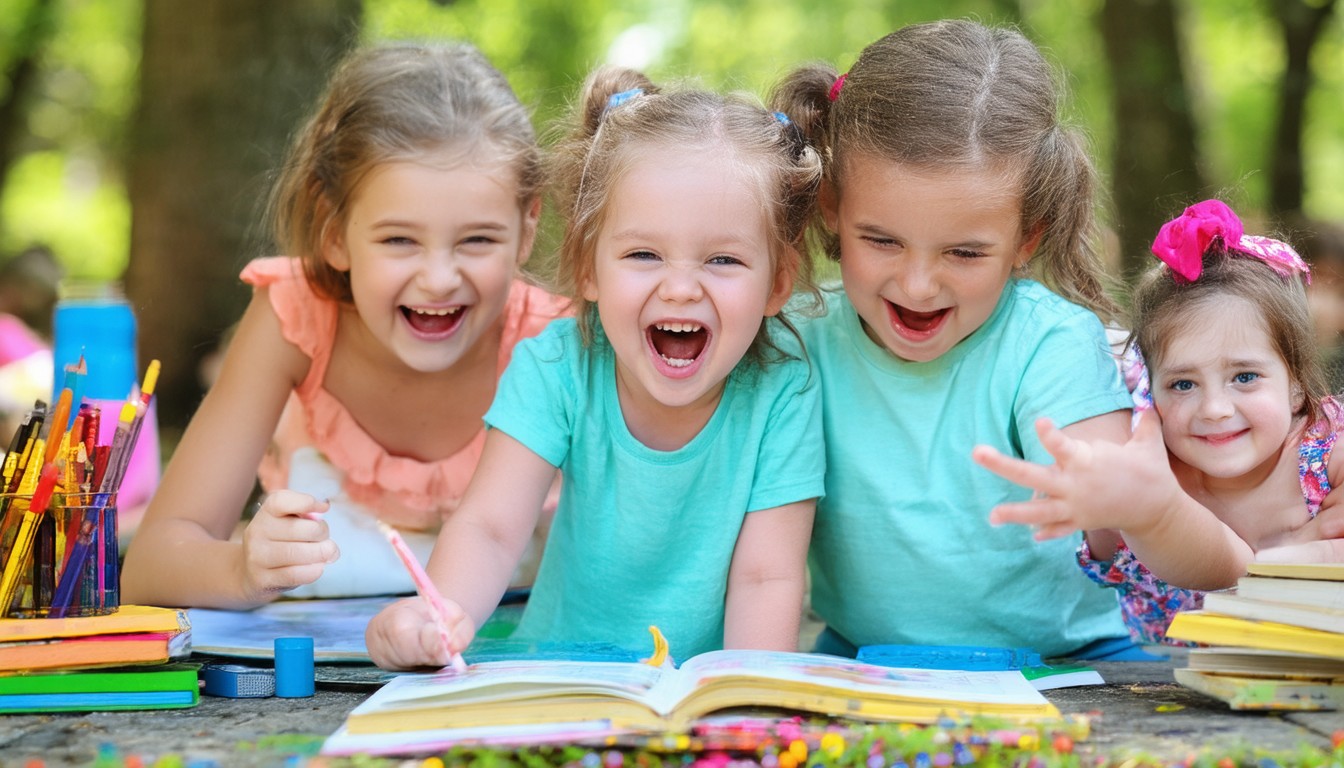
From my years observing classrooms and working with families, I’ve seen a consistent pattern: children absorb knowledge most effectively when they’re genuinely engaged and enjoying themselves. This aligns with developmental research showing that joyful, hands-on experiences create stronger neural connections than passive instruction. The biochemistry supports this observation—laughter triggers dopamine release, which enhances motivation and memory consolidation.
Studies examining learning outcomes support this approach. Research published in journals like Early Childhood Education Journal has documented that children participating in interactive, play-based activities demonstrate measurable cognitive gains compared to those in traditional lecture-style settings. The American Academy of Pediatrics has long advocated for playful learning as a foundational element in early childhood development, emphasizing that children learn best through active engagement rather than passive absorption.
Creative Activities That Make Learning Fun
Educational Board Games for All Ages
Board games offer a structured way for families to bond while reinforcing curricular concepts. Classics like Scrabble Jr. or Math Bingo transform word recognition and arithmetic skills into competitive fun. In my experience leading game-based learning sessions, game nights naturally encourage turn-taking, problem-solving, and strategic thinking—all essential life skills.
I’ve observed teachers successfully adapting popular family games such as Codenames or Ticket to Ride to classroom settings, using them to teach geography, vocabulary, and teamwork. By disguising learning as recreation, parents and educators consistently see greater enthusiasm and deeper engagement.
Science Experiments at Home
Few things spark a child’s imagination like hands-on science. Household staples—baking soda, vinegar, food coloring—become tools for discovery in simple chemistry projects. For example, observing a homemade volcano illustrates chemical reactions in real time, while building a model bridge with spaghetti aligns with early engineering principles.
These experiments encourage kids to ask questions and make predictions, instilling the scientific method as a habit of mind. Research from the National Science Teaching Association supports hands-on experimentation as a core component of effective science education, noting that student involvement in the learning process yields better conceptual understanding.
Outdoor Adventures for Science and Nature
Stepping outside transforms ordinary afternoons into memorable learning expeditions. Nature walks double as lessons in biology, geology, and environmental stewardship. Collecting leaves, identifying bird calls, or tracking insects foster observation skills and respect for the natural world.
Richard Louv’s research on the relationship between children and nature has highlighted concerns about reduced outdoor time as screen usage increases. His work, published in outlets including the Children and Nature Network, documents correlations between limited nature exposure and various developmental concerns. By making outdoor exploration a regular family routine, I’ve seen families successfully nurture curiosity alongside healthy habits.
Using Laughter to Build Social-Emotional Skills
Role-Playing and Storytelling
Imagination is a gateway to emotional intelligence. Through pretend play or family storytelling sessions, children practice perspective-taking and empathy. Acting out everyday scenarios or inventing new worlds together can address challenges like sharing, managing frustration, or understanding diversity.
Many schools now incorporate role-play in social-emotional literacy programs. I’ve observed firsthand how these approaches correlate with improvements in peer relationships and conflict resolution among students. Laughter releases social tension, making difficult topics approachable and memorable.
Art and Music as Emotional Outlets
Creative arts are vital in helping children express feelings that words sometimes cannot reach. Painting, drawing, singing, or drumming together allows for unfiltered self-expression and builds confidence. Group music activities—like drum circles or sing-alongs—facilitate cooperation and a sense of belonging, crucial elements in childhood development.
Research programs such as those affiliated with the Early Childhood Music and Movement Association have documented how shared music experiences can strengthen language development and family bonds. When laughter fills the room, I’ve noticed that barriers drop and genuine connections form more naturally.
Integrating Fun Learning Into Everyday Life
Turn Chores Into Challenges
Routine tasks can become opportunities for playful education. For young children, setting a timer to “beat the clock” while cleaning, or turning grocery shopping into a scavenger hunt for colors and shapes, seamlessly integrates academic concepts into daily life.
Introducing friendly competition or reward systems for completed tasks maintains motivation and helps build executive function skills—planning, focus, and self-control—that developmental research consistently identifies as foundational for later academic achievement.
Digital Tools and Games With Purpose
While technology presents challenges, it also opens doors to innovative education. High-quality apps and interactive learning platforms blend humor, animation, and curriculum to reach children with diverse learning styles. Programs like ABCmouse for early literacy or Prodigy for math leverage gamification, which keeps learners entertained and motivated.
Parents and teachers should vet digital resources to ensure they are age-appropriate, content-rich, and designed in consultation with educators. The key is balance: supplementing, not replacing, real-world play with digital learning.
Building a “Laugh and Learn” Family Culture
Setting the Scene for Playful Learning
Fostering an environment where laughter and learning coexist requires intentionality. Setting aside screen-free play hours, curating accessible materials (blocks, puzzles, art supplies), and creating rituals—such as Friday family game night—signal to children that discovery is a shared family value.
Research from the Search Institute, a nonprofit organization focused on youth development, indicates that families engaging in regular, enjoyable shared activities report stronger family connections. Studies from this organization have found positive correlations between family engagement in learning activities and children’s academic performance and emotional well-being.
Navigating Challenges and Sustaining Engagement
Of course, not every activity will be a hit, and sustaining enthusiasm takes adaptation. Rotating new games or crafts, soliciting children’s input, and celebrating small “aha” moments help maintain momentum. From my experience, flexibility and open communication ensure that learning remains dynamic and centered around the child’s interests.
Conclusion
At its core, “laugh and learn” is more than a philosophy—it’s an actionable strategy for nurturing well-rounded, curious, and emotionally balanced children. By infusing joy, playfulness, and connection into educational activities, families equip the next generation not only for academic success, but for lifelong resilience and happiness.
FAQs
How can parents start incorporating “laugh and learn” activities at home?
Begin by observing your child’s interests and experimenting with simple, playful activities that align with everyday routines. Even small changes, like turning reading into a dramatic performance or making math into a kitchen game, can spark joy and curiosity.
What are some age-appropriate “laugh and learn” games for younger children?
Toddlers and preschoolers benefit from hands-on activities such as matching games, scavenger hunts, and simple science experiments. Board games designed for early learners, like Candy Land or Chutes and Ladders, are also enjoyable and educational.
How does humor impact early childhood education?
Humor lowers anxiety and builds rapport, making children more receptive to new information. It also supports memory retention—kids often recall funny moments from lessons more vividly than dry facts.
Are digital games effective for learning?
When thoughtfully chosen, digital games can reinforce skills with interactive and engaging content. However, a balanced approach that prioritizes both screen-based and real-world play yields the best results.
What if a child resists participating in educational activities?
Try switching up activities based on your child’s feedback and introduce new games or creative projects to keep things fresh. The goal is to make learning enjoyable without pressure or expectations.
