

 February 6, 2026
  6 Min
6 Min  No Comment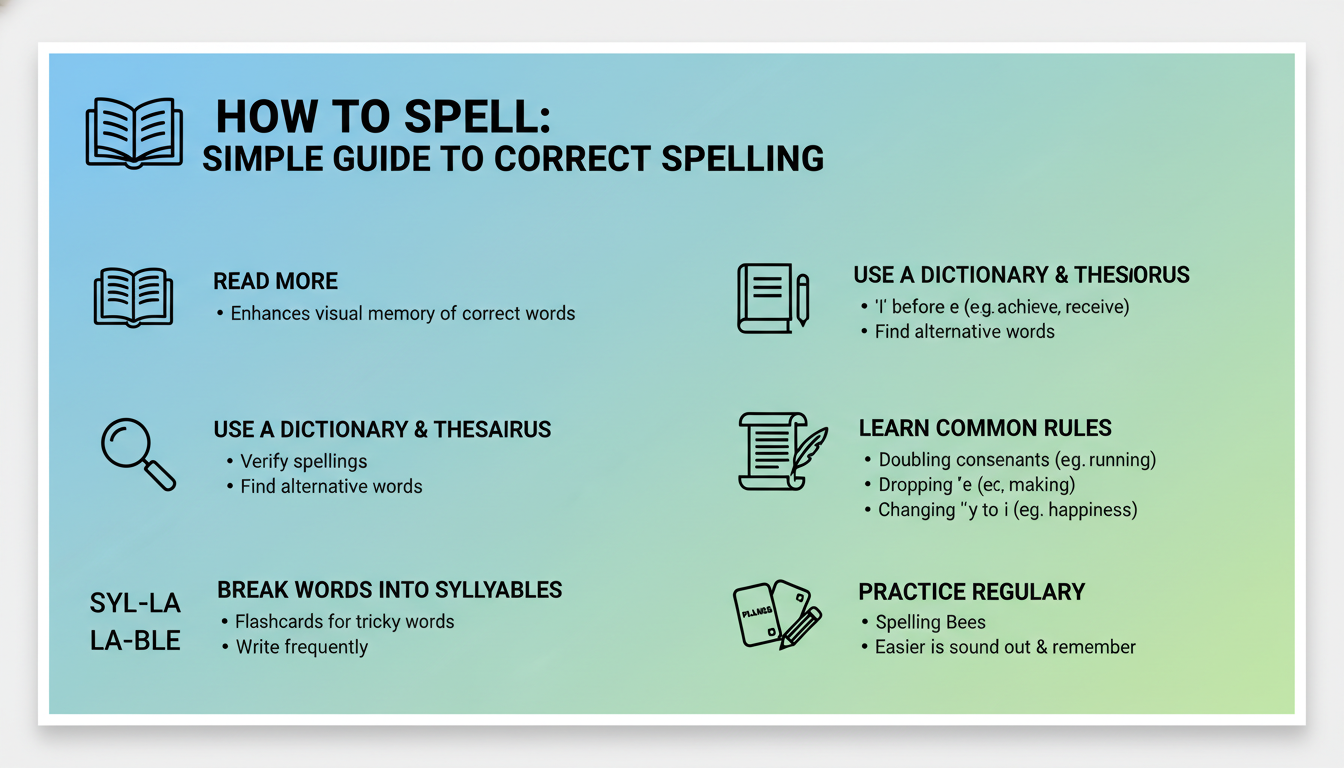
Spelling—right, it feels like this antique task yet still totally relevant. Sometimes words trip us up—maybe because English is such a rebellious language, borrowing from everywhere. This guide tries to feel conversational—like you’d explain to a friend while sipping coffee—and gently structured enough to help you remember tips, without too much precision that you’d snooze. So here we go, diving into the essentials of spelling accurately.
Why Spelling Still Matters More Than You’d Think
Words, after all, are more than symbols—they’re credibility badges. Whether you’re shooting off an email or drafting a report, muddled spelling can unintentionally erode trust. On a practical level, correct spelling supports clarity and professionalism—and even casual missteps can cause distractions.
Plus, it’s not all dry memorization. Many words follow patterns—so once you get a feel, you’re ahead. Beyond that, spelling opens doors: writing confident, understandable, and credible. For folks in editing, teaching, or content, it’s not trivial—it’s foundational. I’ve seen how guiding a few spelling tip-strategies made student writing visibly stronger in weeks.
How to Spell Precisely: Techniques That Actually Stick
1. Phonetic Logic—With a Catch
We often look at how a word sounds to guess its spelling, but English loves to surprise us. Still, phonetic assumptions do help—for instance, “definitely” often gets misspelled as definately—hearing that “i-but-ly” pattern is a common trigger. Recognizing these usual pitfalls can prime you to pause and double-check.
2. Mnemonics That Actually Work
Memory tricks are surprisingly effective. Think “i before e except after c” rule—it helps even though it has exceptions like weird. For a word like “necessary,” I remember: “one collar, two sleeves” to recall one “c” and two “s”s. These playful lines can be a lifesaver in tense typing moments.
3. Pattern Awareness—Common Structures
English borrowing means you’ll spot patterns from Latin, Greek, French. Words like receive, conceive, perceive follow a “cei” sequence. Other examples: “tion” endings in celebration, rotation. Familiarizing yourself with common suffixes and prefixes builds a sense for what looks right.
4. Visual Imprinting—See to Believe
Often you just know a word by having seen it before—so reading widely strengthens spelling. Encountering a word many times in context builds a mental image—this visual imprint helps more than sheer repetition.
5. Technology as Spelling Buddy (Not Crutch)
Spell-checkers in your writing tools catch many slips, yet they’re imperfect—auto-correctingfrom to for changes meaning, not spelling. The key? Use them, but always glance at suggestions, especially for homophones like there/their/they’re. For more tricky cases, quick look-ups in trusted resources (online dictionaries, grammar sites) still matter.
Real-World Examples That Shine a Light
In an editing project last year, a brand repeatedly spelled accommodate wrong—missing one “c” or “m.” We applied a visual mnemonic (“a cc, a mm”) and repeated seeing it stenciled in the brand guidelines. Within a few review rounds, it stuck—confidence rose noticeably. That tiny tip saved unexpected redos and team frustration later.
Another friend teaching ESL learners found spelling “restaurant” especially tough—different vowels, silent letters, and French origin. Breaking it down: rest-au-rant, and associating the “au” chunk (common French pattern) helped the brain anchor the right combination.
These aren’t glamorous hacks, but grounded strategies that actually wear well in use.
“Spelling is less about memorizing a thousand words and more about recognizing patterns, getting your brain to say ‘that looks right,’ and building visual familiarity.” – Editor and writing coach, Morgan Lane.
Building Confidence: Steps You Can Take Now
A. Practice in Context, Not Isolation
Don’t just list words. Instead:
– Write sentences
– Summarize articles
– Spell within real phrases
Add variety—you’ll notice more subtle twists.
B. Use a Spelling Log or Notebook
Whenever you struggle with a word, jot it down. Review it periodically. You might also note the rule or mnemonic that helped—this reflection reinforces memory.
C. Read Selectively, but Often
Pick up articles, blogs, reports—even fiction. Reading informs your internal dictionary. You’ll quickly develop a sense of what “feels off,” which is priceless when writing.
D. Quiz Smartly with Helper Tools
Flashcards (digital or analog), small quizzes, even apps that make spelling a bit playful—they help strengthen recall under a bit of pressure.
E. Reflect on Mistakes (Without the Shame)
Spelling mistakes aren’t failures—they’re signals. We learn more by seeing patterns of error than by repeating successes. So pay attention to where you stumble, not just where you ace it.
Advantages and Common Hurdles
Advantages
- Improved Readability: Accurate spelling makes writing much easier to read and trust.
- Increased Professionalism: Especially in academic or professional contexts, clean spelling matters—a lot.
- Self-Confidence Boost: Knowing you spelled something right brings unexpected relief.
Common Hurdles
- Irregular Patterns: English has weird exceptions—weird breaks the “i before e” rule, for example.
- Homophones Galore: Words like there, their, they’re can be visually identical mistakes.
- Typing vs. Thinking: Sometimes fingers race ahead of the brain—mistakes happen. Pausing helps.
Quick Reference: Tactics at a Glance
- Use phonetics with caution—English disrupts logic often.
- Rely on mnemonics; customize silly ones if they stick.
- Notice word structure—prefixes, suffixes, roots.
- Read widely for visual familiarity.
- Treat tech tools as allies, not replacements.
- Create your own practice and reflection routine.
Concluding Thoughts
Spelling isn’t a relic of Primary School—it’s a tool, an earned skill that supports clarity, professionalism, and personal confidence. The path to better spelling lies not in dry memorization, but in playful awareness, pattern recognition, and everyday exposure. A few minutes of structured practice—flashcard here, reading there, a quick log note—can steadily transform your written voice. Over time, what felt like a chore will become second nature, and you’ll find words starting to align almost without thinking.
FAQs
How long does it take to improve spelling significantly?
Improvement depends on consistent practice—not instant, but noticeable in weeks. With regular reading and a few minutes of deliberate review daily, confidence and accuracy can rise steadily.
Are spelling tools trustworthy?
They help catch basic slips, but they miss homophones or context misinterpreted errors. Always glance over suggested corrections and pair tools with conscious validation.
What’s the best way to remember tough spellings?
A mix works best: visual exposure, personalized mnemonics, and writing words in meaningful sentences. These reinforce memory more than rote lists.
Is it worth learning spelling rules?
Absolutely—rules like “i before e except after c” anchor patterns, even if exceptions exist. Recognizing word roots and suffixes bolsters your internal toolkit for new vocabulary.
Does reading really help spelling?
Yes—exposure builds visual memory. Frequent reading trains your eyes to notice when something just doesn’t look right, even before you consciously think about it.
Can spelling improvement transfer across languages?
To some extent—recognizing roots, patterns, and effective memory strategies helps overall literacy. But each language has unique quirks, so a tailored approach always matters.
With a bit of curiosity, patience, and playful methods, spelling becomes less of a burdensome chore and more of a quietly mastered skill—one that supports better communication every single time.
