

 February 12, 2026
  6 Min
6 Min  No Comment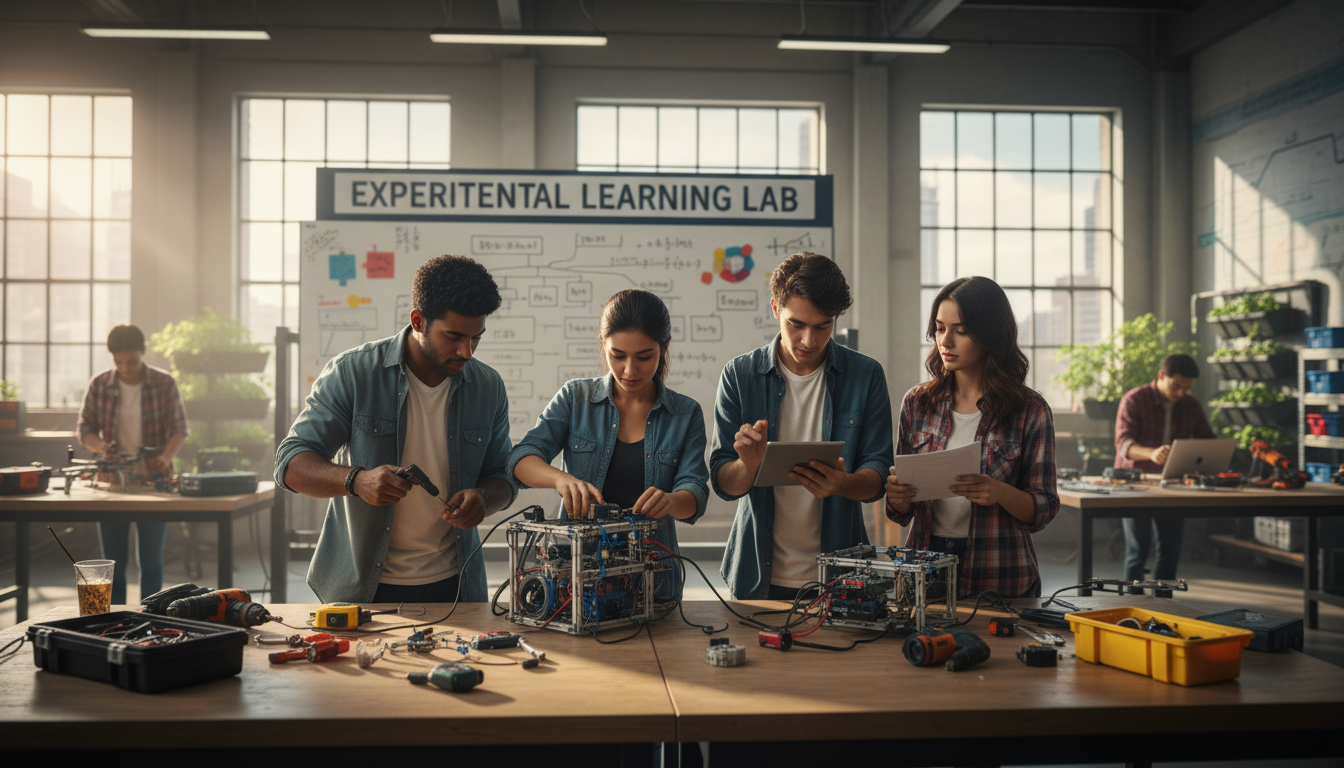
Experiential learning—often summed up as “learning by doing”—is more than just a catchy phrase. It’s about unlocking deep understanding through hands-on experience, real-world challenges, and reflective practice. This approach isn’t flawless—it can be messy, unpredictable, and resource-intensive—but therein lies its strength. Learners, whether in classrooms or corporate training rooms, encounter unpredictable variables, learn to adapt, and, most importantly, learn how to learn. Let’s dig into that messy reality, and see how experience shapes knowledge, prepares people for complex situations, and builds confidence in ways that lectures rarely do.
The Core Concept: What Makes Experiential Learning So Powerful?
Direct Experience Meets Reflection
It’s not just action—it’s thinking about that action, too. Experiential learning combines doing with deliberate reflection, grounding lessons in real experience. Educational philosopher John Dewey long ago stressed that active engagement, experiment, and reflection are essential to meaningful learning—not just traditional schooling. This forces educators to shift from lecturers to facilitators, allowing learners to explore, adjust, and grow through each cycle of doing and pondering.
Real-World Relevance
When learning connects with real life, it clicks. Students dealing with real problems—be it a startup pitch, community outreach, or coding a simple app—understand more deeply because they’re solving actual issues. For instance, that “aha!” moment in a lab or during a project is nothing like memorizing definitions.
How Experiential Learning Transforms Understanding and Engagement
Engagement and Motivation
Traditional lectures can feel distant. In contrast, hands-on tasks spark curiosity and involvement. A report by Than Institute highlights how active STEM projects—from building robots to lab simulations—wrap learners in curiosity, guiding them toward deeper exploration.
Better Retention of Knowledge
Doing helps remembering. Experiential learning embeds concepts through action—learning physics by constructing models, for example—making recall easier and more intuitive later.
Critical Thinking and Problem-Solving
There’s no script when real problems show up. Facing real-world challenges pushes learners to analyze, test, and reconfigure ideas—skills far more actionable than rote repetition.
Collaboration, Creativity, and Soft Skills
Projects often involve people working together—negotiating, communicating, improvising. These environments deepen empathy, leadership, and innovation. Sora Schools notes that experiential setups nurture adaptability, empathy, and collaboration—crucial for unpredictable real-world settings.
Real-World Snapshots: How Institutions Use Experience to Boost Learning
Higher Ed & Career-Ready Skills
At institutions like SNHU and Siena, experiential learning isn’t an afterthought—it’s central. Students work on live projects with actual companies or conduct community-based research. They don’t just study theories—they apply them, build networks, and gain confidence.
Impactful Classroom Results
In primary and middle school contexts, experiential methods show promising outcomes. For instance, combining experiential learning with subjects like arithmetic or geometry improved both test scores and student attitude—a clear win for educators. And beyond academics, these methods boost physical activity and wellbeing among children—showing the benefits go beyond tests.
Educational Reform in Indian States
In Maharashtra, India, over 90% of schools now include experiential components like sports, creative projects, and cultural activities. That widespread integration shows systemic commitment to hands-on education—even if disparities in access remain. Meanwhile, Telangana’s reforms show promise in combining experiential learning with problem-solving skills—though experts say the emotional side (SEL) still needs more attention to make the change truly holistic.
Deeper Insight: Tech, Makerspaces & Adaptive Learning
Technology stands out as a powerful tool in this space. Makerspace workshops in computer science classrooms significantly boosted critical thinking, collaboration, creativity—essential skills for the 21st century. Meanwhile, Augmented Reality environments with adaptive guidance—like the Arigató system—show nuanced effects: fixed guidance improved recall but demanded higher mental effort, while adaptive associations brought better learning efficiency with less strain.
Pros and Cons: What Works—and What’s Tricky
Benefits
- Deep engagement and more enjoyable learning
- Stronger retention and interconnected understanding
- Critical thinking bolstered by real challenges
- Soft skills honed through collaboration and creative problem-solving
- Career readiness via real-world experience and networks
Challenges
- Resource-heavy: needs tools, labs, materials, and teacher training
- Reflection must be structured—doing without thinking blunts the impact
- Inequities in access may leave some students behind
- Curriculum systems tied to standardized testing can limit flexibility
Summary and Next Steps
In sum, experiential learning—learning by doing—isn’t perfect, but its transformative impact is clear. By immersing people in real tasks, combining action with reflection, it drives engagement, deeper understanding, skill development, and readiness for real-life challenges. The trick is balance: embed reflection, support with resources, train educators, ensure equity, and weave it into curricula meaningfully.
Practical next moves:
– Prioritize quality reflection alongside action.
– Invest in teacher training and infrastructure.
– Anchor experiential units within clear learning outcomes.
– Design for equitable access across all learners.
“Experiential learning gives students the confidence and real-world context they need to stand out in competitive situations.” — from educators at SNHU
This blend of experience, thought, and context makes learning not just effective—but rememberable, meaningful, and adaptable.
FAQs
What exactly is experiential learning?
Experiential learning revolves around active participation combined with reflection—learners do, then think about what they did, grounding ideas in real experience rather than just theory.
How does it benefit students compared to traditional methods?
It boosts motivation, improves memory, promotes critical thinking, and cultivates soft skills like teamwork and adaptability that traditional lectures often overlook.
Can experiential learning work in online or remote settings?
Yes—through virtual labs, project-based tasks, and digital simulations—but it still needs spaces for reflection and feedback to ensure deep learning.
What are the biggest challenges schools face implementing it?
The main hurdles include cost, limited resources or training, ensuring fair access, and reconciling hands-on approaches with rigid standardized testing systems.
How do educators make sure it’s effective?
By planning well-designed activities, embedding structured reflection, training instructors to act as facilitators, and aligning outcomes with real-world goals and assessments.
Who benefits most from this approach?
While all learners gain from experiential methods, those seeking real-world application—like career-focused students, STEM learners, or any learners craving engagement—often see the biggest impact.
In embracing the messy, unpredictable nature of doing, experiential learning elevates education from memorization to meaningful growth, preparing learners for a complex, ever-changing world.
