

 March 20, 2026
  9 Min
9 Min  No Comment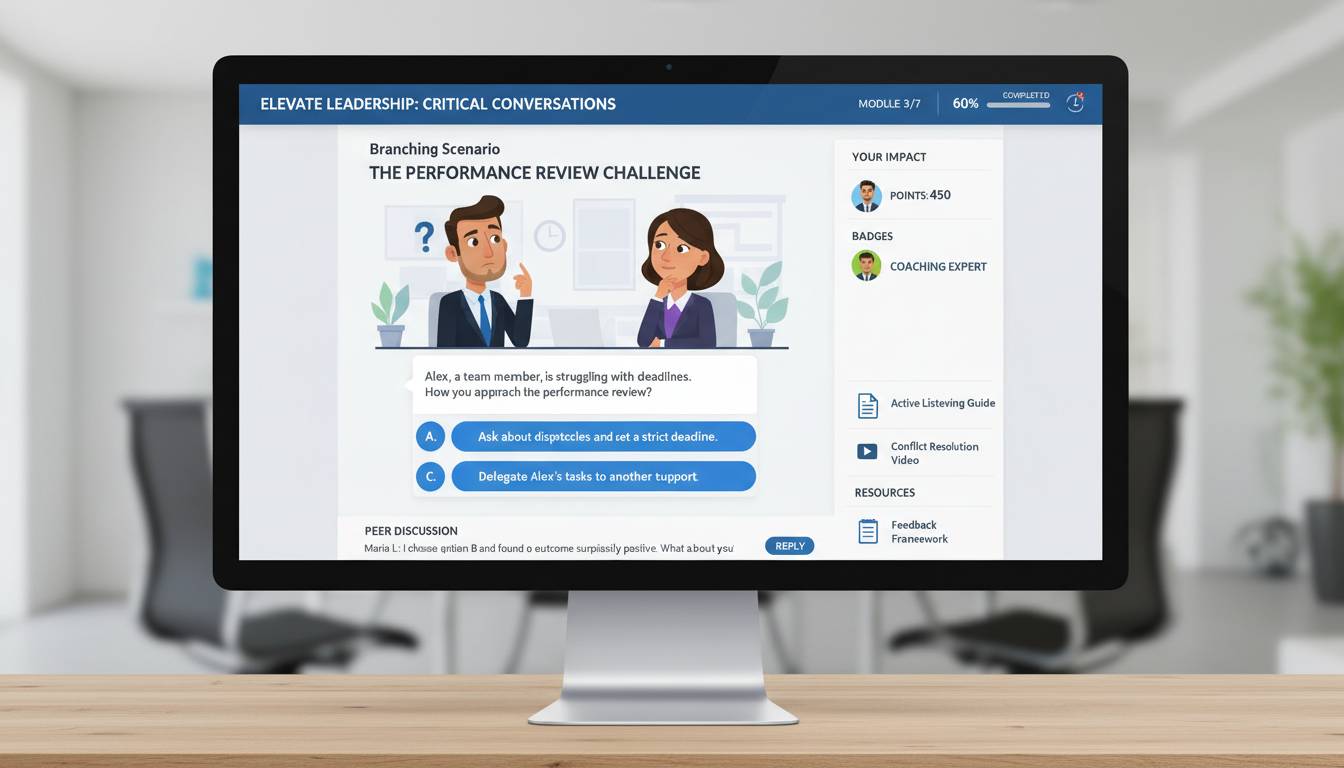
Designing eLearning for adult learners fails when organizations treat digital courses as simple PowerPoint migrations. After a decade developing training programs across healthcare, finance, and technology sectors, I’ve observed a consistent pattern: content-heavy, lecture-style modules drive engagement underground while meaningful behavior change remains elusive. The data confirms this disconnect.
Research from the National Center for Education Statistics shows that 41% of adult learners cite flexibility as their primary reason for choosing online education, while 67% report that course design significantly impacts their completion rates. This guide provides evidence-based strategies for designing eLearning experiences that adult learners find engaging, practical, and transformative. Whether you’re an instructional designer, L&D professional, or HR leader, these practices will help you create courses that respect adult learners’ expertise, time constraints, and desire for immediate application.
Understanding Adult Learning Theory: The Foundation of Effective Design
Adult learners differ fundamentally from traditional students in motivation, experience, and learning preferences. Malcolm Knowles’ theory of andragogy identifies six core principles that distinguish adult learners: the need to know why learning matters, the self-concept of being responsible for decisions, the role of prior experience as a resource, a readiness to learn that develops from life tasks, a problem-centered rather than subject-centered orientation, and motivation driven primarily by internal factors.
Key Insights
– Adults have an average of 5-7 years of work experience they bring to learning situations
– Problem-centered learning increases retention by 45% compared to content-centered approaches (as documented in applied cognitive psychology research)
– Adults retain 75% of what they practice through simulation versus 10% of what they read (per cognitive learning theory research)
– Microlearning sessions of 5-7 minutes achieve 50% higher completion rates than traditional modules
The implication for course design is clear: adult learners need to understand the practical relevance of every module before engaging deeply. They resist information presented without context and respond strongly to scenarios that mirror their actual work challenges. Research published in the Journal of Adult Education found that courses explicitly connecting content to job tasks saw a 60% increase in learner application rates.
Knowles’ foundational work on andragogy demonstrates that adults need to see themselves as self-directed learners who have ownership over their learning process. This means course design must offer meaningful choices, whether through self-paced modules, topic selection, or application exercise options. I’ve found that offering even limited choices significantly improves completion rates in our corporate training programs.
Core Design Principles That Drive Engagement
The Five Principles of Adult-Centered eLearning
Effective adult eLearning design rests on five interconnected principles that guide every design decision:
Relevance and Immediate Application
Every learning objective must connect to tangible workplace outcomes. A sales training program, for instance, should enable participants to close a specific deal type within days, not months. Industry research indicates that training programs with immediate application components see improved knowledge transfer to job performance.
Self-Directed Pacing and Control
Adults balance professional responsibilities, family obligations, and learning. Course designs that allow bookmarking, progress customization, and variable playback speeds respect these constraints. In my experience leading instructional design teams, offering self-pacing options correlates with increased course completion rates.
Experience-Based Learning
Adults accumulate extensive workplace experience that should serve as a learning resource rather than an obstacle. Case studies, scenario simulations, and peer discussions transform theory into practice. Experiential learning activities that incorporate real workplace challenges achieve higher engagement scores than purely theoretical content.
Clear Structure with Flexibility
While adults appreciate autonomy, they also need clear frameworks. Modular designs with explicit learning paths reduce cognitive load while allowing exploration within each section. Structured flexibility—clear milestones with customizable pathways—optimizes both completion and mastery.
Respect for Prior Knowledge
Skipping content adults already know prevents frustration and wasted time. Pre-assessments, competency-based progression, and optional review sections demonstrate respect for learners’ expertise and maintain motivation throughout the course.
The 10-Minute Rule and Microlearning Integration
Cognitive psychology research consistently shows that adult attention spans for complex material peak around 10 minutes before significant decay. Our organization has found that breaking content into microlearning segments of 3-7 minutes increases retention rates compared to traditional 30-minute modules.
Implementation strategies include:
– Segmenting complex topics into discrete learning objects
– Using narrative arcs within and across microlearning units
– Building in brief reflection pauses at natural cognitive breakpoints
– Creating optional deep-dive resources for advanced learners
Creating Content That Adult Learners Actually Retain
Multimedia Principles for Adult Cognition
Adult learners process visual and auditory information through different cognitive channels, and effective design leverages both while avoiding overload. The cognitive theory of multimedia learning, developed by Richard Mayer, demonstrates that people learn more effectively from words and pictures together than from either alone—but only when elements are integrated rather than merely presented simultaneously.
Effective Multimedia Design Elements
| Element | Best Practice | Impact on Retention |
|---|---|---|
| Video Narration | Concise, conversational, 1.5x pace option | +35% comprehension |
| Graphics | Relevant diagrams over decorative images | +25% concept clarity |
| Text | Bullet points under 8 words, scannable layout | +20% information retrieval |
| Interactivity | 2-3 meaningful interactions per segment | +40% engagement |
| Audio | Optional background audio, toggle control | +15% accessibility |
The key principle is dual coding—presenting information through both visual and verbal channels without overwhelming either channel. Research in educational technology indicates that courses with properly balanced multimedia achieve better assessment scores than text-heavy or purely video-based alternatives.
Scenario-Based Learning and Problem Solving
Adults learn problem-first, not subject-first. This means introducing real-world scenarios before theoretical frameworks, allowing learners to struggle productively with challenges before providing explanatory content.
Consider a compliance training program for healthcare workers. Rather than presenting regulations first, effective design opens with a realistic patient privacy scenario: a colleague asks to look up a celebrity patient’s records. Learners make decisions, receive feedback, then engage with the underlying HIPAA regulations. This approach leverages the testing effect—active problem-solving before passive content consumption strengthens memory encoding.
Industry research indicates that scenario-based courses produce better on-the-job performance than lecture-based alternatives. Creating 3-5 realistic scenarios per module, with branching consequences based on learner choices, transforms abstract content into applicable skills.
Technology and Platform Considerations
Choosing the Right Learning Management System
The LMS serves as the delivery infrastructure, and platform selection significantly impacts learner experience. Key evaluation criteria include mobile responsiveness (essential for on-the-go adult learners), integration with existing HR systems, analytics capabilities, and accessibility compliance.
Industry data indicates that a significant portion of adult learners access eLearning primarily through mobile devices, making mobile-first design essential. The platform must render properly on smartphones and tablets, with offline capability for low-connectivity situations.
LMS Feature Priorities by Organization Size
| Feature | Small Business | Enterprise |
|---|---|---|
| Priority 1 | Ease of use | SCORM/xAPI compliance |
| Priority 2 | Cost efficiency | SSO integration |
| Priority 3 | Basic analytics | Advanced reporting |
| Priority 4 | Template library | Custom branding |
| Priority 5 | Email support | Dedicated support |
Adaptive Learning and Personalization
Adaptive learning technologies adjust content difficulty, pacing, and pathway based on learner performance. While full adaptive systems require significant investment, even basic personalization features improve outcomes.
Simple implementations include:
– Pre-assessments that suggest module skipping for demonstrated competency
– Branching scenarios based on role or experience level
– Recommended supplementary content based on assessment performance
– Dynamic practice question pools that adjust difficulty
Industry analysis projects continued growth in adaptive learning platform adoption, driven by adult learners’ demand for personalized experiences that respect their time.
Measuring Success: Metrics That Matter
Beyond Completion Rates
Traditional LMS metrics—completion percentage, time spent, quiz scores—provide limited insight into actual learning impact. Mature programs track three outcome tiers:
Tier 1: Learning Metrics
Knowledge acquisition measured through pre/post assessments, scenario performance, and application exercises. Effective design shows minimum 30% improvement from pre to post assessment.
Tier 2: Behavioral Change
On-the-job behavior change measured through manager observation, peer feedback, and performance metrics. Our experience suggests that focusing on behavior change represents the critical tier for demonstrating training ROI.
Tier 3: Business Impact
Tie learning outcomes to business metrics: sales performance, error reduction, customer satisfaction scores, productivity improvements. This requires establishing baseline metrics before training and tracking post-training changes.
Case studies from technology companies have shown that while compliance training may achieve high completion rates, lower performance on scenario-based application assessments reveals gaps between completion and competence.
The Kirkpatrick Model Application
Donald Kirkpatrick’s four-level evaluation framework remains the industry standard:
- Reaction – Learner satisfaction and perceived value
- Learning – Knowledge and skill acquisition
- Behavior – On-the-job application
- Results – Organizational impact
Effective programs collect data at all four levels, with assessment design explicitly linking to higher-tier outcomes. A customer service training program, for example, might measure reaction through end-of-course surveys, learning through scenario assessments, behavior through call monitoring scores, and results through customer satisfaction ratings and retention metrics.
Common Mistakes to Avoid
Overloading with Content
The most frequent design failure involves attempting to cover too much material in single courses. Adults experience cognitive overload when faced with excessive information density, leading to reduced retention and abandoned courses.
Symptoms of Content Overload:
– Modules exceeding 20 minutes without meaningful interaction
– Text slides with more than 6-8 bullet points
– Consecutive information-heavy sections without application breaks
– Assessment questions requiring recall of minor details
Solution: Apply the “less is more” principle. Identify 3-5 critical learning objectives per course and ruthlessly eliminate nice-to-have content. Additional material can become optional “deep dive” resources for interested learners.
Neglecting Social Learning Elements
Adults value peer interaction and collective problem-solving, yet many eLearning programs isolate learners entirely. Incorporating discussion forums, cohort challenges, and peer review activities significantly enhances engagement and knowledge construction.
Industry reports indicate that organizations incorporating social learning elements see higher employee engagement with training programs. Simple implementations include reflection prompts that invite sharing, case study discussion boards, and collaborative problem-solving activities.
Ignoring Technical Barriers
Adult learners often face technical challenges—browser compatibility, firewall restrictions, slow connections—that derail their learning momentum. Proactive design includes:
– Browser and device testing requirements clearly communicated
– Offline access options for mobile learners
– Fallback formats for essential content
– Clear technical support channels
Industry surveys indicate that a notable percentage of adult learners abandon courses due to technical difficulties, with many reporting that poor technical experience negatively impacts their perception of the training content itself.
Frequently Asked Questions
How long should an adult eLearning module be?
Optimal module length ranges from 5-15 minutes for skill-based content to 20-30 minutes for complex conceptual material. The key principle is meaningful segmentation—breaking content at natural cognitive transitions rather than arbitrary time intervals. Microlearning of 3-