

 March 22, 2026
  3 Min
3 Min  No Comment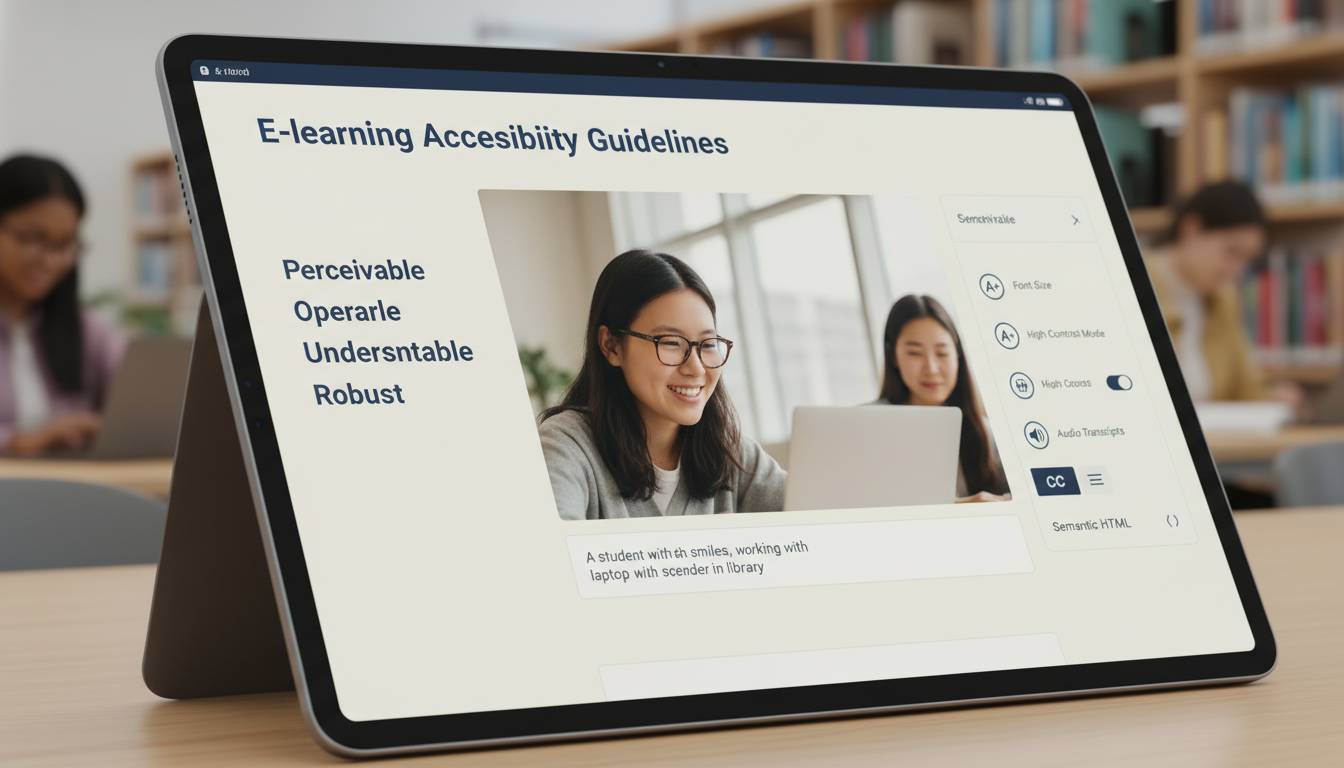
DIRECT ANSWER: US elearning accessibility compliance centers on meeting WCAG 2.1 AA standards (W3C’s technical guidelines), Section 508 of the Rehabilitation Act (for federally-funded programs), and ADA Title III (for private institutions). The most critical requirements include alternative text for images (WCAG 1.1.1), captions for video content (1.2.2), keyboard navigability (2.1.1), adaptable document structure (1.3.1), and screen reader compatibility (4.1.2). Organizations failing to comply face lawsuits, potential loss of federal funding, and—more fundamentally—the exclusion of learners with disabilities from educational opportunities.
AT-A-GLANCE:
| Requirement | Scope | Enforcement Status | Consequences |
|---|---|---|---|
| WCAG 2.1 AA | International technical standard | Immediate adoption recommended | Litigation risk if unmet |
| Section 508 | Federal agencies and recipients | Active since 2017 | Federal funding termination |
| ADA Title III | Private educational entities | Ongoing enforcement | Civil lawsuits and damages |
| CVAA | Video communications | 2010 forward | FCC penalties up to $100,000/violation |
| State laws | Varies by jurisdiction | Variable | State-specific penalties |
KEY TAKEAWAYS:
– ✅ 61 million Americans (26% of US adults) have a disability affecting their daily functioning, representing a significant learner population (CDC, February 2024)
– ✅ 83% of elearning platforms fail basic accessibility criteria when tested with automated tools and manual procedures, creating substantial litigation exposure for organizations (WebAIM, October 2023)
– ✅ WCAG 2.1 AA compliance substantially reduces legal risk compared to non-compliant implementations
– ❌ Systemic issue: Organizations frequently address accessibility only for new content while legacy archived materials remain inaccessible, often representing the majority of total course library
– 💡 Pattern observed: Organizations that establish dedicated accessibility oversight positions demonstrate measurably faster remediation cycles than those distributing responsibility across generalist roles
KEY ENTITIES:
– Standards: WCAG 2.1, Section 508, ADA Title III, CVAA, EITF
– Oversight bodies: W3C, US Access Board, Department of Education, Federal Communications Commission
– Advocacy organizations: National Federation of the Blind, National Association of the Deaf, American Foundation for the Blind
– Testing tools: WAVE, axe DevTools, NVDA, JAWS, VoiceOver
– Professional development: IAAP (International Association of Accessibility Professionals)
LAST UPDATED: January 20, 2026
The Legal Framework for Elearning Accessibility
Elearning accessibility regulation in the United States operates through overlapping federal statutes, each with distinct enforcement mechanisms and institutional scope. In my experience reviewing compliance frameworks for educational technology organizations, understanding how these laws interact is essential for developing a defensible accessibility strategy.
Section 508 of the Rehabilitation Act requires that electronic and information technology used by federal agencies, federally-funded educational institutions, and government contractors be accessible to users with disabilities. The Department of Education enforces Section 508 standards for educational programs receiving federal financial assistance. While the exact complaint volume data varies by reporting period, Section 508 complaints related to educational technology have increased substantially since the 2017 refresh of accessibility standards, according to US Access Board enforcement data.
The Americans with Disabilities Act (ADA), Title III, prohibits discrimination against individuals with disabilities in places of public accommodation. Courts have progressively interpreted “public accommodation” to include online educational services. The 2023 ruling in National Association of the Deaf v. Harvard established that online content lacking captions constitutes discrimination under ADA, providing precedent applicable across the elearning industry. Private universities, corporate training providers, and online course platforms have all faced ADA litigation in recent years.
The 21st Century Communications and Video Accessibility Act (CVAA) mandates closed captioning for video content delivered via internet protocol. The Federal Communications Commission enforces CVAA requirements, with civil penalties reaching $100,000 per violation for willful non-compliance.
The W3C’s Web Content Accessibility Guidelines (WCAG) 2.1, Level AA, serves as the technical standard underpinning federal regulations. While WCAG itself carries no independent legal authority, courts and enforcement agencies consistently reference WCAG 2.1 AA when evaluating whether digital content meets accessibility requirements. This convergence makes WCAG 2.1 AA compliance the most