

 February 9, 2026
  6 Min
6 Min  No Comment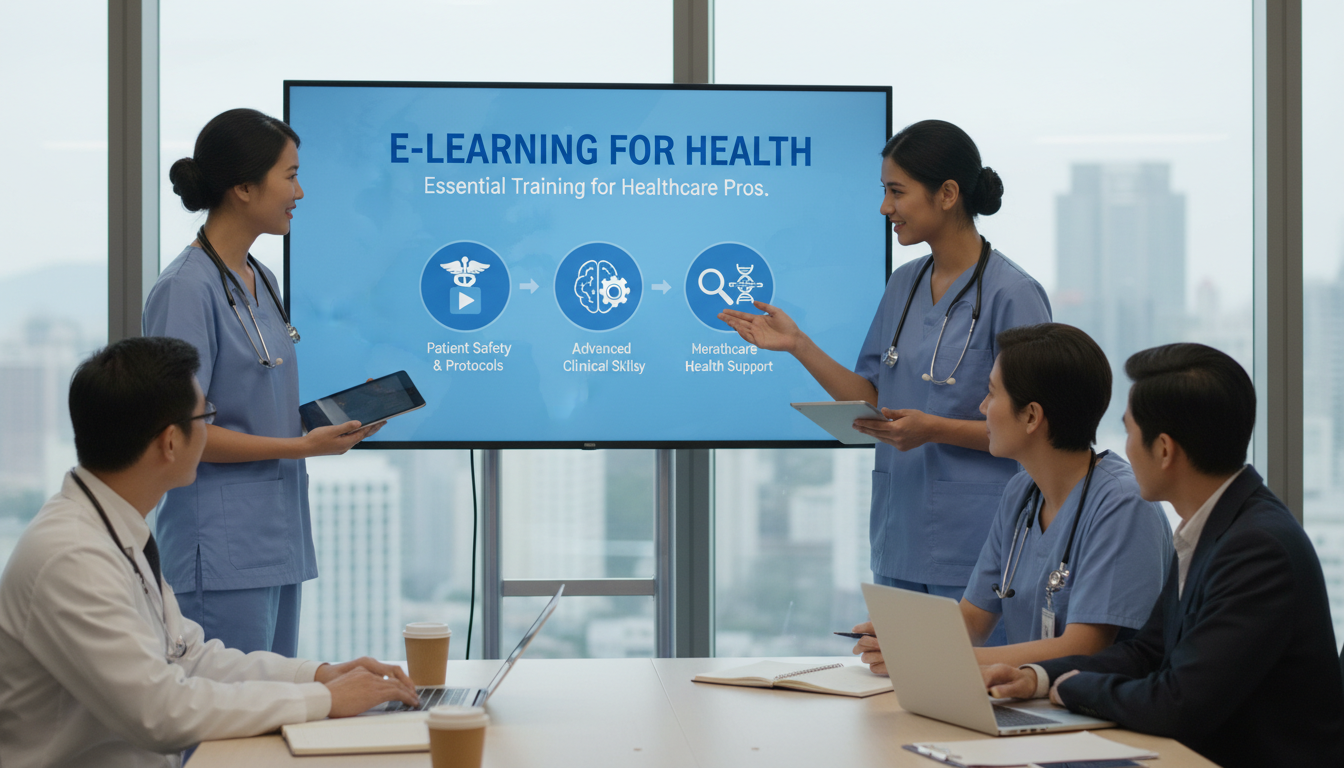
, aiming for approximately 1,400 words:
Introduction
Healthcare professionals constantly face evolving demands—from leveraging new technologies to navigating regulatory changes and delivering person-centered care. E-learning for health emerges as a practical, accessible response: it brings essential training directly to professionals, whether they’re in a hospital, community clinic, or remote field setting. There’s a curious blend here of immediacy and flexibility—online modules, immersive simulations, expert-led case studies—that help practitioners stay current without sacrificing their day-to-day responsibilities. In an imperfect world where time is short and stakes are high, e‑learning often feels like the lifeline that healthcare pros didn’t know they needed—and now can’t imagine practicing without.
Why E‑Learning Matters for Healthcare Professionals
Beyond convenience, e‑learning addresses critical gaps in healthcare training. For instance, WHO-backed initiatives in Vietnam created e‑learning modules in clinical immunology, primary pediatrics, and non‑communicable diseases—designed to reach remote health workers effectively and reduce opportunity costs of travel and time . Similarly, European efforts like the Susa project are weaving digital and AI competencies into the education of doctors and nurses, supported by €12.4 million in EU funding—promoting not just knowledge, but a digital fluency that’s essential for modern patient care . This trend underscores a broader shift: no longer is e‑learning a novelty; it’s rapidly becoming the backbone of ongoing professional development in healthcare.
Real-World Examples of E‑Learning in Practice
EPHA and Community Health
EPHA’s e‑Learning platform, accessible via a user-friendly Moodle-based system, offers CPD-accredited courses like the eCHIS data collection tool for community health workers . These modules help practitioners use mobile tools effectively and sustain longitudinal tracking—both critical for community-level interventions.
Bespoke NHS Programs: ELELearn
Within the UK context, the ELELearn platform by EL Healthcare delivers co-designed CPD modules—ranging from AI in healthcare and leadership to diversity, equity, and menopause support—built with input from frontline staff, patients, and carers . This approach embeds lived experience into digital learning, making the training feel grounded and relevant.
Corporate and Clinical Applications
From Wiley’s e‑learning services offering CME-accredited modules that bridge scientific insight and real-world clinical application , to Embracive Health & Safety Solutions offering self‑paced courses on facility safety and workplace violence prevention , there’s a spectrum of training modalities adapted to organizational needs—scalable, certifiable, and outcome-focused.
Emerging Trends and Tech in Health E‑Learning
Immersive Simulation with VR
Virtual reality simulation is gaining traction as a powerful tool in clinical training. For instance, a VR-based version of the Neonatal Resuscitation Program (NRP) was tested and found to enhance learners’ sense of presence and confidence in hands-on skills like mask placement—especially valuable in rural or remote environments .
Lifelong Learning and Digital Fluency
The Susa project exemplifies a holistic upskilling model: offering digital health data competence through bachelor’s and master’s programs, and extending modules to mid-career professionals. Highlighting AI, ethical use, and clinician–technology co‑design, it represents a paradigm shift toward continuous learning throughout one’s career .
Human Imperfection and Learning Design: Why It Matters
E‑learning in healthcare must reflect the complexity of real-world practice. Too often, modules feel too polished or generic—losing sight of the unpredictability and emotional nuance of patient care. Courses that incorporate narratives, decision‑making under pressure, and mistakes as learning moments tend to resonate more deeply. It’s the small imperfections—the yes, I’ve been there moments—that bridge digital learning with lived experience.
“If we really want clinicians to integrate new practices, we have to make the training feel real—even if it’s just a messy case scenario or a choice that backfires.”
That sentiment echoes widely among instructional designers: compelling e‑learning doesn’t shy away from complexity; it invites learners into it.
Practical Benefits and Considerations for Adoption
Healthcare organizations adopting e‑learning often highlight:
- Accessibility and Flexibility – Professionals can access modules anytime, anywhere (e.g., mobile-friendly or offline-enabled content) .
- Scalability – One course can train dozens, hundreds, or thousands, with minimal incremental cost .
- Accreditation and CPD – Many platforms offer CPD credits or align with revalidation needs (EPHA, ELELearn, Wiley) .
- Customization and Co-design – Engaging content developed with real-world input—clinicians, carers, patients—boosts relevance (ELELearn and EL Healthcare) .
- Enhanced Engagement via Interactivity – Use of case-based, scenario-driven learning (Wiley, VR modalities) enhances retention and application .
At the same time, pitfalls persist: too much theory, lack of hands-on simulation (especially for procedural skills), and sometimes superficial narrative framing can limit efficacy. Designing with realism—and even a degree of controlled failure—helps bridge that gap.
Structuring Effective E‑Learning: A Framework
-
Needs Assessment
Start with a clear understanding of learner gaps—digital fluency, clinical procedure, regulatory compliance, etc. -
Co‑Design with Stakeholders
Engage clinicians, subject-matter experts, even patients or frontline staff to shape content that’s grounded and meaningful. -
Learner-Centered Scenarios
Use branching narratives, immersive case studies, or simulations that reflect the uncertainty of practice. -
Modularity & Flexibility
Build microlearning or short modules that fit into busy schedules, mobile-accessible and re-usuable across contexts. -
Accreditation & Measurement
Integrate CPD credits, embed quizzes, track engagement, and assess impact on knowledge or behavior. -
Iterative Feedback Loop
Use learner feedback, performance data, and real-world outcomes to continually refine and update content.
This framework helps ensure training is not only efficient, but trusted, applied, and evolving alongside practice.
Conclusion
E-learning for health isn’t just a convenience—it’s a critical tool for continuous, experiential, and accessible professional growth. When thoughtfully designed—with immersive simulations, real-world co‑design, CPD accreditation, and adaptive technology—it becomes the scaffolding that supports competent, confident, and compassionate care. As the landscape of healthcare continues to shift—to AI, to decentralized models, to digital-first platforms—e‑learning isn’t optional; it’s essential infrastructure.
FAQs
FAQs
1. How does e‑learning improve healthcare education compared to traditional methods?
E‑learning offers flexibility, scalability, and the ability to embed multimedia and interactive scenarios. It allows professionals to learn at their own pace without sacrificing patient care or needing extensive travel time.
2. Can e‑learning replace hands-on training?
While e‑learning enhances theoretical understanding and decision-making, hands-on skills still require practical experience. Ideal programs blend digital simulation (e.g., VR) with supervised in-person practice.
3. Are e‑learning courses recognized for professional development?
Many platforms offer CPD credits or CME-accredited modules—such as EPHA, Wiley, and UK-based ELELearn—making them valuable for revalidation and career progression.
4. How can e‑learning feel realistic and relevant for clinicians?
Incorporating real-world scenarios, decision-based branching, and stakeholder co‑design ensures content resonates with clinical realities, including emotional and ethical complexity.
5. What emerging technologies are shaping healthcare e‑learning?
Virtual and augmented reality, AI‑embedded micro‑assistants, and mobile-first platforms are increasingly used for immersive training, personalized learning pathways, and just‑in‑time support.
6. What should organizations look for when choosing an e‑learning provider?
Consider accreditation, customizable content, interactivity, stakeholder engagement in design, mobile/offline access, and data-tracking capabilities to measure learning outcomes.
