
 February 8, 2026
  6 Min
6 Min  No Comment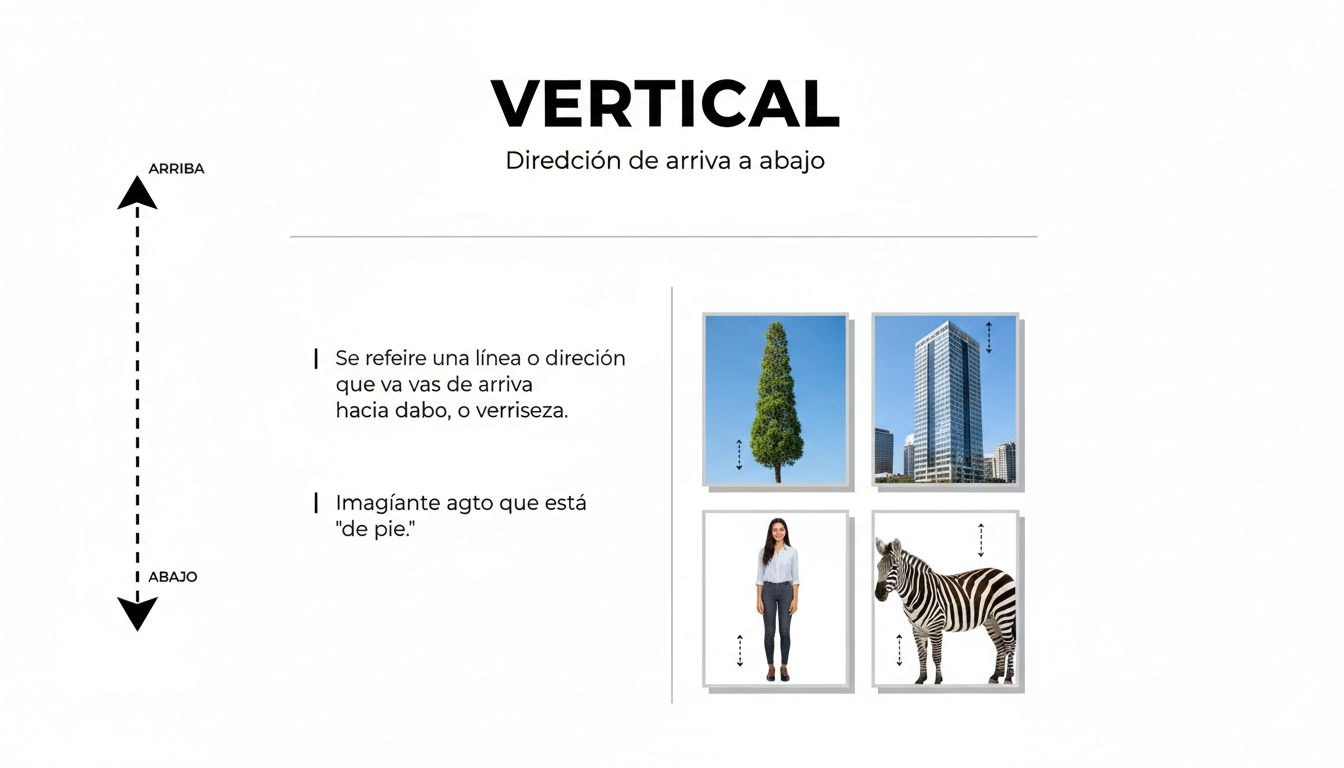
It’s funny how two simple words—vertical and horizontal—carry layers of meaning, depending on whether you’re sketching a line, organizing workflows, or reading East Asian scripts. Most people first grasp them as “up-and-down” versus “side-to-side.” But once you scratch the surface, they reveal fascinating nuances in geometry, design, writing conventions, and even business strategy. Let’s dive in—with a few imperfections, a bit of digression, and maybe one or two “aha!” moments along the way.
What Does Vertical Mean—and How Does It Affect Our World?
Physical Orientation and Natural Reference
At its most basic, vertical follows the pull of gravity—think flagpoles, skyscrapers, trees. In engineering and construction, a plumb line defines verticality by hanging straight down—gravity’s gift for accuracy. Yet once we start thinking big—Earth’s curvature, rotation, and uneven mass distribution—the “straight” plumb line may wobble slightly . So even a vertical wall needs a bit more attention than you’d expect.
Mathematics and Dimensionality
In a 2D Cartesian coordinate system, vertical maps to the y-axis, and it’s simple: vertical lines are parallel to that axis, and they don’t cross each other . But in 3D, “vertical” sprouts hidden complexity: one horizontal plane per point, but countless vertical planes passing through—it breaks the symmetry . Who knew?
Horizontal: Not Just Flat, But Rich in Meaning
Everyday Perception
Horizontal is easier to spot—parallel to the horizon, think of the floor, a table surface, the sea meeting the sky . Lines going from left to right, layouts that stretch sideways. It’s so intuitive many confuse horizontal with flat or laying down—but annotation helps.
Practical Foundations
In coordinate geometry, horizontal lines keep the same y-value (y = k) while vertical lines keep the same x-value (x = k) . In design, horizontal text reads from left to right in most languages—most of us take that for granted.
Beyond Basics: Nuances and Contextual Uses
Optical Illusions and Perception
Here’s a mind-bender: people often overestimate the length of a vertical line compared to a horizontal one of the same length—that’s the vertical–horizontal illusion . It even varies across cultures—urban Western societies are more susceptible than rural or open-scape dwellers. Perspective matters.
East Asian Writing Traditions
Funny how orientation flips when culture steps in. In East Asia, scripts like Chinese, Japanese, Korean, and Vietnamese can be written vertically (top to bottom, right to left) or horizontally (left to right) . There are subtle differences—punctuation rotates, the book binds on different sides, even numerical styles shift—pretty intricate stuff.
Structure in Business and Strategy
Vertical vs Horizontal Integration
In business, vertical integration means owning every stage—from raw materials to shelving at retail. Horizontal integration means expanding across the same stage—like merging with competitors . One is about depth and control; the other, about breadth and reach.
Organizational Blueprints
Vertical organizations represent hierarchy and layers—bosses, managers, employees—each with defined roles. Horizontal (or flat) structures favor autonomy, collaboration, and speed . One moves deliberately, the other mutates fast—each with trade-offs.
Market Focus
A vertical market focuses on a niche (e.g., healthcare software). A horizontal market casts a wide net—think CRM tools that serve retail, finance, education, etc. .
Visual Design: A Playground of Orientation
Layout and Usability
Vertical layouts—like mobile app menus—play to scrolling behaviors. Horizontal alignment—like desktop navigation—showcases comparisons, galleries, timelines . A smart design often blends both to adapt to devices and user needs.
Psychological Weight of Orientation
Vertical lines evoke ambition, authority, elevation. Horizontal lines feel calm, stable, inclusive . In architecture, vertical skyscrapers soar, while horizontal landscapes soothe. In media, vertical framing can dramatize, horizontal widens the field of view.
“Vertical elements create a sense of focus and direction… horizontal orientations emphasize stability and harmony.”
— design thinking distilled
Everyday Learning and Memory Tips
We all have tricks to remember the difference: H in horizontal for horizon (side-to-side), and V in vertical for upright standing (like in jump) . Another favourite: imagine a plumb bob hanging straight by the sea. Visual memory for the win.
Summary of Key Contrasts
| Context | Vertical | Horizontal |
|——————|————————————————|———————————————-|
| Everyday | Up-down, gravity-aligned (e.g., flagpole) | Side-to-side, horizon-aligned (e.g., table) |
| Geometry | y-axis, x = constant | x-axis, y = constant |
| Illusion/Perception | Overestimated length, cultural variance | Perceived accurately |
| Writing (East Asia) | Top-down, book binding right | Left-right, rotated punctuation |
| Business | Niche focus, deep control | Broad markets, wide reach |
| Org Structure | Hierarchical, layered | Flat, collaborative |
| Design | Emotive height | Balanced calm |
Conclusion
The distinction between vertical and horizontal may seem straightforward at first—up vs. sideways—but each orientation threads through nearly every discipline, from geometry to graphic design, from corporate strategy to typography. They shape how we perceive space, structure organizations, and even write stories on the page. The next time someone says “vertical” or “horizontal,” consider asking: which context? Because once you do, the conversation—and meanings—become much richer.
FAQs
What is the simplest way to remember vertical vs horizontal?
A helpful trick: H in horizontal reminds you of the horizon—that side-to-side line. V in vertical can evoke “upright,” like a person standing or a jump going up. Quick, simple, visual.
Why do vertical and horizontal planes intersect on Earth?
Each vertical or horizontal concept is local and gravity-dependent. Because Earth curves and gravity varies, verticals and horizontals can diverge, slightly intersect, or behave differently at distant points .
How does the illusion affect design?
Designers should note that vertical lines tend to appear longer than horizontals of the same length—called the vertical–horizontal illusion. This perceptual tweak can subtly alter balance and emphasis in visuals .
In which situations do East Asian texts use vertical instead of horizontal?
Vertical writing remains common in novels, newspapers, and manga—especially traditional or aesthetic contexts in Japan, Taiwan, and Hong Kong. Horizontal writing prevails in academic texts or signage integrating multiple languages .
Which is better: a vertical organization or a horizontal one?
It depends. Vertical (hierarchical) structures suit clear roles and efficient chain-of-command, while horizontal (flat) structures suit agile, collaborative environments. Each has pros and cons: vertical can be slow-moving, horizontal can blur accountability .
Can businesses apply vertical and horizontal strategies together?
Absolutely. Many companies layer approaches—targeting a niche product deeply (vertical) while also leveraging horizontal reach with complementary offerings. Choosing both strategically often yields balance between depth and breadth.
