

 February 7, 2026
  6 Min
6 Min  No Comment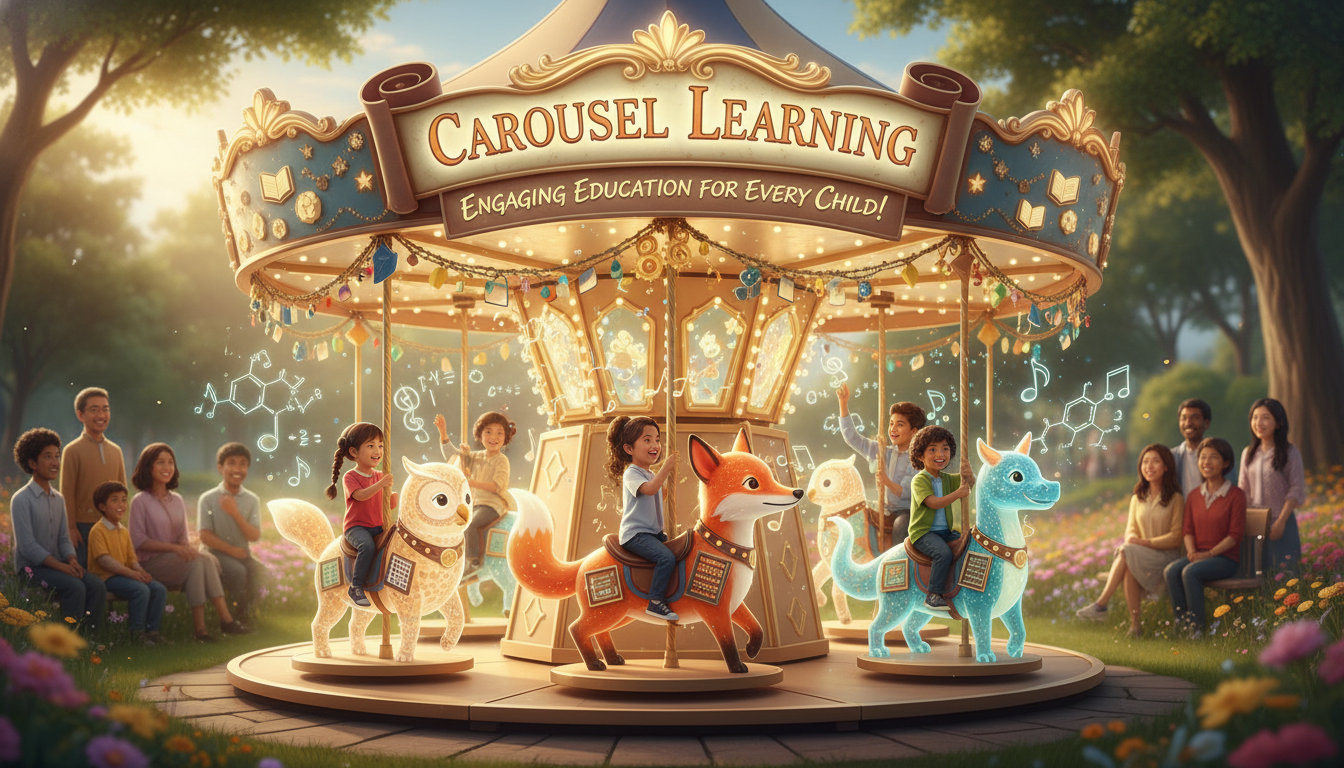
Walking through a dynamic classroom where students aren’t anchored to their desks but move through different learning experiences—some creating with their hands, others discussing in small groups, a few exploring digital content—reveals the essence of Carousel Learning. This structured approach rotates learners through diverse learning styles—visual, auditory, kinesthetic—so each child finds their spark. After observing this model in action across multiple classrooms, I’ve seen it transform what can feel chaotic into purposeful movement that reinforces learning.
What is Carousel Learning and Why It Matters
Carousel Learning refers to a structure where instruction rotates among multiple stations or “pods,” each offering a different type of activity or mode of engagement. Rather than sitting through a long lecture, students hop, skip, or shuffle through short, focused tasks—a style that’s both flexible and dynamic.
This model resonates with established learning theories: kinesthetic movement invites engagement, while varied modalities support diverse learner types. In practice, the method often resembles classroom “speed dating” with subjects—something that feels refreshingly fresh for students who’ve sat through endless slideshows.
Advantages That Stand Out
- Variety drives attention: Children are notorious for getting restless, and Carousel Learning keeps boredom at bay with consistent novelty.
- Flexibility to customize: Teachers can pair stations with adaptive tech, peer tasks, or hands-on projects depending on class needs.
- Inclusivity by design: Visual arts, audio clips, movement-based games—there’s something for everyone.
Practical Examples in Real Classrooms
Carousel Learning shows up in different shapes across schools. In one middle school I observed, students rotated through an art-based history station, a small-group discussion, and a digital game reinforcing vocabulary. In special education settings, stations cater to sensory breaks, visual aids, and peer collaboration—letting every child engage at their comfort level.
Beyond K-12 education, this approach is also used in corporate training, professional workshops, and museum programming—though slightly tweaked, the principle remains consistent: rotate, refresh, and re-engage.
Research Foundation: Active Learning and Station-Based Approaches
A substantial body of research supports the effectiveness of station-based, active learning approaches. A 2014 meta-analysis published in the Proceedings of the National Academy of Sciences by Freeman et al. examined 225 studies on active learning in undergraduate STEM courses. The analysis found that students in active learning sections had exam scores averaging 6% higher than those in traditional lecture formats, with the effect size increasing to 14% in classes with fewer than 50 students. Additionally, students in traditional lecture formats were 1.5 times more likely to fail than those in active learning classes.
Learning theories back this up. Readiness theory suggests that breaking learning into manageable chunks aligns with attention cycles. Dual-coding theory supports mixing visual with verbal content. Carousel Learning rides on a solid base of educational psychology with empirical support.
Designing Carousel Learning: A Step-by-Step Guide
Here’s how a teacher—or training designer—might map out a Carousel Learning session:
- Identify learning goals—be clear on desired outcomes (e.g., understand fractions, build vocabulary, practice dialogue).
- Select diverse station types—include a hands-on task, peer discussion, multimedia station, and reflective writing.
- Time box stations—keep it short, typically 8–12 minutes per station, to stay dynamic without rushing.
- Group thoughtfully—mix skills and interests so students aren’t stuck in comfort zones.
- Debrief—end with shared conversation or reflection to reinforce connections across stations.
This framework offers structure, but there’s wiggle room. From my experience observing implementations, teachers sometimes struggle with timing—too fast and students feel harried; too slow and excitement drops. Still, with consistent practice, tweaking fosters a more natural rhythm over time.
Potential Drawbacks and How to Navigate Them
Carousel Learning isn’t a panacea; it has caveats.
- Logistics can be a hurdle—setting up multiple stations, ensuring resources, or managing transitions can feel chaotic, especially in larger classes.
- Uneven pacing—some kids zip through tasks, others linger. This may widen inequalities if not monitored well.
- Shallow engagement risk—jumping too quickly from topic to topic might prevent deeper comprehension.
Mitigating these concerns involves preparation. Clear instructions, visible timers, supportive scaffolds, and flexible pacing all help. Having a paraprofessional or tech assistant, or using self-guided digital station tools, can smooth operations too.
Classroom Application: A Practical Example
Consider a 4th-grade classroom using Carousel Learning for a science unit on ecosystems. One station features an augmented reality app where students scan plant images; another has a reading corner with short narrative passages; a third is a collaborative poster-making area; and the fourth, a discussion nook with hands-on puzzle games.
In my observations, teachers noticed not just higher enthusiasm but improved recall—students remembered details because they had physically seen or heard, talked or drawn. A hesitant reader came alive while explaining a concept at the discussion station—moments like that reveal the power of multi-modal engagement.
Strategic Tips for Educators and Designers
- Start small—try just three stations before scaling up.
- Mix tech and tactile options—even a simple whiteboard and iPad balance better than all-digital or all-analog.
- Capture feedback—ask students what worked, what felt rushed. Use sticky notes or short exit tickets to gather quick insights.
- Use themes—e.g., “explore, explain, express”—to tie stations into coherent narrative arcs.
Conclusion
Carousel Learning offers a refreshing twist on traditional instruction—structured yet fluid, varied yet purposeful. By rotating through diverse learning modes, it fosters engagement, meets students where they are, and invites exploration rather than dictation. The approach isn’t perfect—timing, pacing, and logistics pose real challenges—but the payoff is a classroom alive with curiosity and participation. For educators seeking a versatile, inclusive approach, Carousel Learning is more than a method—it’s an invitation to reimagine how learning moves.
FAQs
What exactly is Carousel Learning?
Carousel Learning structures lessons into rotating stations, each offering different activities—like visual tasks, discussions, games, or tech interactions—to accommodate diverse learning styles and keep students engaged.
Can Carousel Learning work for all age groups?
Absolutely! Carousel-style formats have been used effectively from elementary grades through adult workshops—though station complexity and timing can be adapted to learners’ developmental levels.
How much time should each station last?
Typically, 8–12 minutes per station balances freshness with depth—short enough to stay energetic, long enough to engage meaningfully. However, flexibility based on content and classroom flow is key.
What are common challenges of implementing Carousel Learning?
Challenges include managing transitions smoothly, ensuring equitable pacing for all students, and avoiding surface-level engagement. Thoughtful planning, clear instructions, and scaffolding help mitigate these issues.
How do teachers measure success with Carousel Learning?
Success can be gauged via informal observations, student feedback, participation rates, and short formative assessments. Anecdotal insights about engagement often tell as much as numeric data.
Is tech required for Carousel Learning?
Not at all. While technology can enrich stations—think apps or interactive media—Carousel Learning works just as well with low-tech methods, such as drawing tables, reading corners, or peer discussions.
