

 February 7, 2026
  7 Min
7 Min  No Comment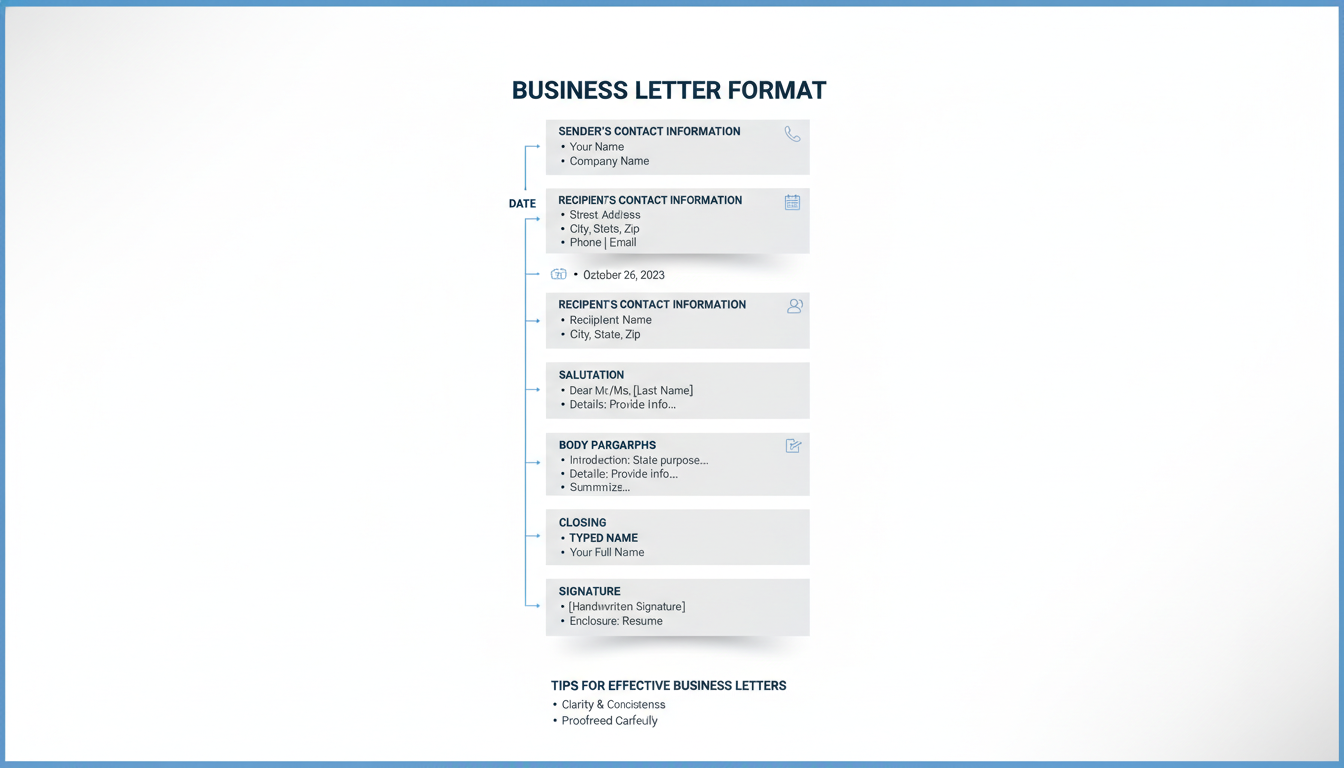
There’s something quietly reassuring about sending a well-structured business letter—like slipping into a tailored suit that fits just right. Whether you’re reaching out to a client, applying for a job, or touching base with a potential partner, mastering business letter format equips you not just with professionalism, but with clarity. At its core, a business letter is more than words on a page: it’s a reflection of brand identity, attention to detail, and communication finesse.
In daily routines, it’s easy to get casual—emails, quick messages, even texts. But sometimes, stepping back into a traditional format adds weight and intention. Let’s walk through how to shape that message just right—structure tips, subtle mistakes to avoid, and a real-world template you can adapt on the fly.
Business Letter Format Breakdown
Understanding the Layout
Most business letters follow a classic block style—left-aligned, single-spaced, with a space between each section. It’s simple but effective. The main components include:
- Sender’s contact information
- Date line
- Recipient’s contact details
- Salutation
- Body (introduction, content, closing)
- Complimentary close and signature
It’s predictable, yes—but predictability breeds clarity. The neat alignment ensures that recipients see every detail without hunting for it.
Why These Elements Matter
Every section serves a function. Your contact details and date anchor the letter in time and context. The salutation sets tone—“Dear Mr. Lee” feels different from “To whom it may concern.” And in the body, you want an inviting opening, a concise middle, and a courteous wrap-up to encourage response. That structure signals intentionality and respect.
Tips for Writing Your Business Letter
Be Clear, But Human
Use plain language—not overly formal, not slang either. Especially in the digital age, readers crave authenticity. It doesn’t need to sound like a robot.
“A well-crafted business letter shows you care—not just about the message you’re sending, but the person receiving it.”
Inject a dash of conversational tone where appropriate. A subtle “thank you again for your time last Tuesday” goes further than “I appreciate your previous time.”
Mind the Formatting Details
Little mistakes stick out. Watch your margins—usually one inch all around. Standard fonts like Times New Roman or Arial, size 11 or 12, keep things legible. And don’t bury key points in long, dense paragraphs; break things up with brief lines or bullet points if helpful.
Use a Template—but Don’t Be Robotic
Templates get you started—and are lifesavers on tight schedules. Still, personalize each letter. A line that acknowledges something specific—“I enjoyed seeing your recent product launch”—can shift tone from generic to genuine.
Sample Business Letter Template
Here’s a template that keeps formality but leaves space for personality:
“`
[Your Name]
[Your Job Title]
[Your Company]
[Street Address]
[City, State ZIP]
[Phone Number]
[Email Address]
[Date: Month Day, Year]
[Recipient Name]
[Recipient Job Title]
[Company/Organization]
[Street Address]
[City, State ZIP]
Dear [Recipient Name],
I hope you’re doing well. I’m reaching out to [reason for writing]—specifically, [briefly explain purpose]. I was especially impressed by [mention a relevant detail or company milestone] and believe we might [propose next step or collaboration idea].
Please let me know if you’d like to discuss this further—I’d be happy to arrange a call or meeting at your convenience. Thank you for considering, and I look forward to your response.
Sincerely,
[Your Name]
[Job Title]
[Optional: enclosures or attachments]
“`
You might notice I left some lines blank—intentionally. That’s your invitation to make the letter distinctly yours.
Real-World Example in Practice
Imagine a freelance graphic designer reaching out to a small consulting firm post-conference:
“`
Andrea Parker
Creative Director
DesignSphere, Inc.
1234 Maple Avenue
Denver, CO 80220
(303) 555‑1234
[email protected]
February 3, 2026
Jordan Lee
Marketing Manager
GreenField Consulting
5678 Oak Street
Denver, CO 80230
Dear Jordan,
It was great chatting at the Denver Business Summit last week—I really appreciated your insights on sustainable branding. I’m reaching out because I’d love to collaborate on visual materials that reflect GreenField’s mission-driven approach.
My team at DesignSphere specializes in clean, eco-conscious design. For instance, our recent work with EcoHarvest boosted their outreach engagement significantly while reinforcing their brand values.
Would you be open to a brief call next week to explore how we could support your next campaign? I’m flexible with timing and genuinely excited about the possibility.
Warm regards,
Andrea Parker
Creative Director
DesignSphere, Inc.
“`
See how mention of the summit adds connection; referencing EcoHarvest illustrates experience without boasting.
Common Missteps and How to Avoid Them
Over-Formality That Feels Off
Yes, this is professional writing—but too much pomp can feel stiff. Phrases like “I trust this letter finds you well” or “per your esteemed communication” swirl into excess. Keep it clean, but warm.
Forgetting Proofreading
Typos in a business letter scream “rushed.” Even punctuation errors—like missing a comma after “Sincerely”—can undermine polish. Always do a final read—or ask someone for a quick second eye.
Overusing Jargon or Buzzwords
Buzzwords like “synergy,” “leverage,” or “journey” can dilute clarity, especially when overused. Stick to terms that serve the message—not the page.
Why It Still Matters Today
In an era dominated by emails and instant messages, sending a formal letter can feel almost anachronistic—but that’s precisely where its strength lies. The slower, more considered pace signals respect—and purpose. In crowded inboxes, a formatted letter stands out. Plus, in fields like law, academia, or recruitment, it still often carries weightier expectations.
Conclusion
Mastering business letter format is less about rigid rules and more about purposeful communication. When each part—from your contact info to sign-off—is intentionally placed, it enhances clarity and credibility. Mix in personal touches, respect formatting conventions, and proofread with care, and you’ll deliver a message that looks as good as it reads. Ultimately, it’s not just about sending a letter—it’s about how that letter makes the recipient feel: seen, respected, and open to what comes next.
FAQs
Q: What’s the best font and size for a business letter?
Standard serif or sans-serif fonts like Times New Roman or Arial, size 11 or 12, ensure clarity and professionalism without being excessive.
Q: Is a digital signature okay, or should I sign manually?
For emails or PDFs, a digital signature is acceptable. But if you’re mailing a printed letter, a handwritten signature adds a personal, trusted touch.
Q: Should I include my company logo or branding in the letter format?
A subtle, professional logo at the top can reinforce brand identity, but it’s optional. Keep it clean and unobtrusive so the focus remains on your message.
Q: How long should a business letter be?
Aim for one page. Concise writing keeps your reader engaged and focused—two to three short paragraphs are often enough unless complex details are needed.
Q: When is a business letter preferable to email?
Use a business letter when formality matters: official offers, proposals, cover letters, or sensitive correspondence. It signals weight and intention more clearly than a casual email.
Q: Can I use bullets or numbered lists in a business letter?
Yes—when listing important items or steps, bullets or numbers improve readability. Just use them sparingly to preserve the traditional tone.
