
 March 15, 2026
  13 Min
  No Comment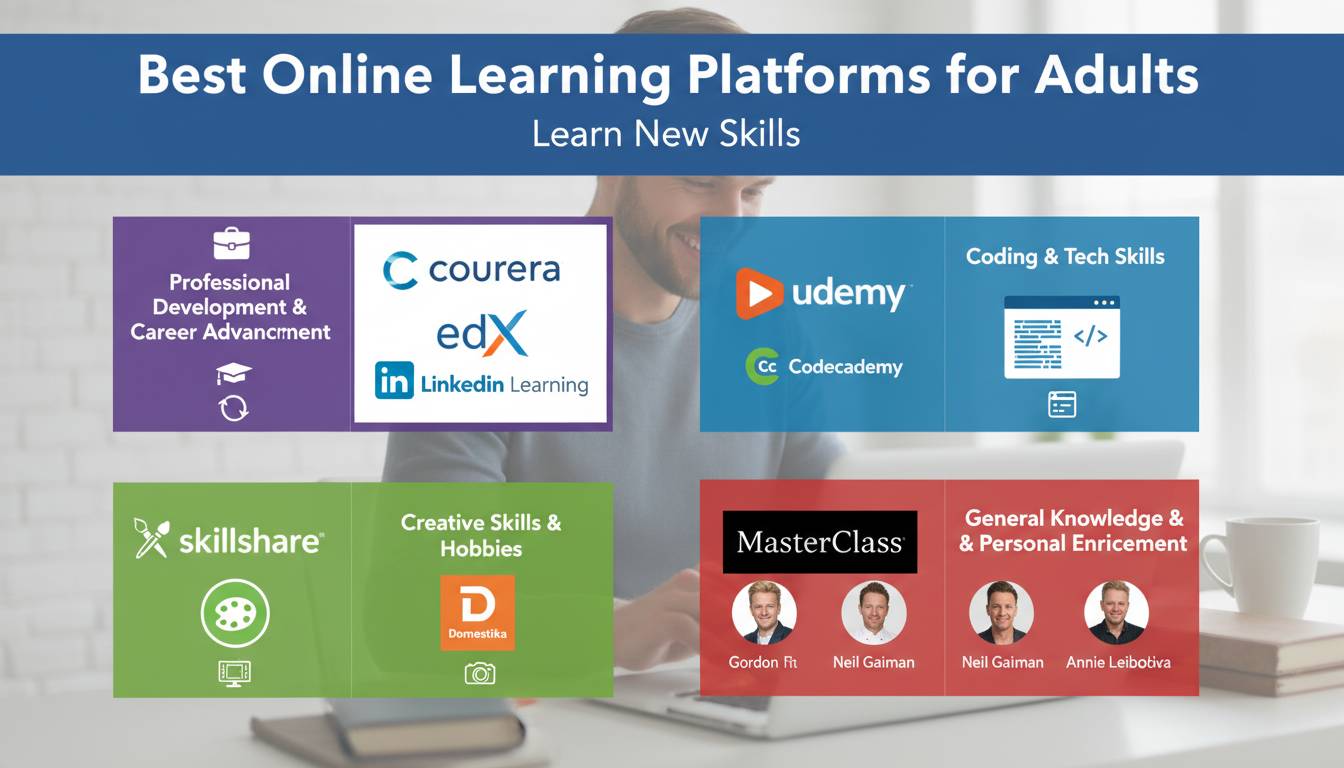
The landscape of adult education has undergone a dramatic transformation over the past decade, with online learning platforms emerging as the primary avenue for professionals seeking to upskill or change careers. According to a 2023 report from HolonIQ, the global e-learning market is projected to reach $400 billion by 2026, driven largely by adult learners in the United States who are increasingly turning to digital education to remain competitive in a rapidly evolving job market. With thousands of courses available across dozens of platforms, choosing the right learning environment has become both an opportunity and a challenge for millions of Americans. This comprehensive guide examines the top online learning platforms for adults, analyzing their unique features, pricing structures, and the specific needs they address for different types of learners.
The Growth of Online Learning for Working Professionals
The demand for online learning among adults in the United States has experienced unprecedented growth, particularly since the COVID-19 pandemic reshaped how professionals approach career development. Data from the National Center for Education Statistics reveals that enrollment in distance education courses among adult learners increased by over 30% between 2019 and 2022, with projections indicating continued growth through the decade. This surge reflects a fundamental shift in how working adults perceive education—no longer viewed as a one-time event confined to early adulthood, but rather as a continuous process of skill acquisition that spans entire careers.
The rise of remote work has accelerated this transformation, as professionals now have greater flexibility to pursue educational goals alongside their work responsibilities. According to the World Economic Forum’s Future of Jobs Report 2023, approximately 44% of core skills required for most jobs are expected to change within the next five years, creating urgent demand for accessible learning solutions. Online platforms have responded by offering more flexible scheduling, mobile-friendly interfaces, and industry-recognized credentials that align with current market needs. The democratization of education through digital platforms has made high-quality instruction from world-class institutions accessible to learners regardless of their geographic location or financial circumstances.
This evolution has also been driven by employers increasingly valuing continuous learning as a measure of professional development. Many companies now sponsor or subsidize employee education through tuition assistance programs, creating a symbiotic relationship between platforms and corporate partners. This corporate investment has not only expanded access to premium courses but has also raised the overall quality and relevance of offerings across the industry.
Top Platforms for Career-Focused Adult Learners
Coursera
Coursera has established itself as a leader in professional online education, partnering with over 300 universities and companies to offer more than 5,000 courses, certificates, and degree programs. The platform distinguishes itself through partnerships with elite institutions including Stanford University, Yale, and Google, allowing learners to access credentials from renowned academic and industry sources. Coursera’s subscription model provides unlimited access to guided projects and most courses for approximately $49 per month, while professional certificates and degree programs carry additional costs that vary by program.
The platform’s strength lies in its structured learning paths that guide professionals through curated curricula designed to develop specific career competencies. Learners can pursue IBM Data Science Professional Certificates, Google Career Certificates in fields such as project management and UX design, or complete full master’s degree programs from accredited universities. According to a 2023 Coursera learner survey, 87% of respondents reported career benefits within six months of completing a certificate program, with 38% achieving promotions or new job opportunities.
LinkedIn Learning
LinkedIn Learning, integrated directly with the world’s largest professional network, offers more than 16,000 courses designed specifically for working professionals seeking immediate workplace applicability. The platform leverages LinkedIn’s extensive labor market data to identify in-demand skills and recommend courses that align with users’ career trajectories and industry trends. With a subscription cost of approximately $29.99 per month or $239.88 annually, the platform provides exceptional value for professionals who want to develop skills recognized by potential employers.
The platform’s integration with LinkedIn profiles allows learners to showcase completed courses directly on their professional profiles, providing tangible evidence of skill development to recruiters and hiring managers. Courses are taught by industry experts rather than academic faculty, ensuring that content remains current with real-world practices and tools. The average course length of 2-3 hours makes LinkedIn Learning particularly attractive for professionals seeking to acquire specific skills without committing to lengthy programs.
Udemy
Udemy hosts the largest library of online courses in the world, with over 200,000 video courses covering topics from software development to personal development and artistic pursuits. The platform operates on a consumer marketplace model, meaning individual instructors create and sell courses, resulting in a vast diversity of topics and teaching styles. Prices vary widely, with frequent sales reducing individual course costs to $19.99 or less, while premium courses can reach $299 or higher.
The platform’s strength lies in its sheer breadth of content, offering courses on nearly every conceivable topic under the guidance of practitioners rather than formal educators. However, quality varies significantly between courses, requiring learners to carefully evaluate instructor credentials and course reviews before committing. For adult learners seeking highly specific technical skills or niche interests, Udemy’s extensive catalog often provides options unavailable on more curated platforms.
edX
Founded by Harvard University and the Massachusetts Institute of Technology in 2012, edX maintains an academic focus that distinguishes it from competitors. The platform offers free access to course materials from over 160 member institutions, with verified certificates available for purchase starting at approximately $50 to $300 depending on the course complexity. For learners seeking formal credentials, edX also provides MicroMasters programs and full degree programs at significantly reduced costs compared to traditional on-campus education.
The platform’s rigorous academic standards appeal to professionals seeking deep, comprehensive knowledge rather than quick skill acquisition. According to edX data, learners who complete verified certificate programs demonstrate a 45% increase in knowledge retention compared to informal learning methods. Professional certificate programs developed in partnership with leading employers such as IBM, AWS, and Microsoft provide direct pathways to career advancement in technology and business fields.
Specialized Platforms for Specific Professional Needs
The adult learning market has evolved to serve increasingly specialized professional communities, with platforms targeting specific industries and skill domains. Pluralsight, for instance, focuses exclusively on technology and IT professionals, offering skill assessments, learning paths, and hands-on labs for software development, cybersecurity, and data science careers. The platform’s integrated skill IQ measurement allows learners to identify gaps and track progress through competency-based assessments, with subscriptions starting at approximately $29 per month.
Skillshare emphasizes creative and entrepreneurial skills, attracting learners interested in fields such as graphic design, photography, creative writing, and small business management. The平台的 community-driven approach encourages peer feedback and project-based learning, with an annual subscription of approximately $168 providing unlimited access to over 7,000 courses. For professionals in creative industries, Skillshare provides an accessible entry point into new disciplines or supplemental income activities.
Professional certification preparation has also spawned dedicated platforms serving specific credentialing needs. For individuals pursuing project management careers, platforms like PM Training and PM Prep provide targeted preparation for Project Management Professional (PMP) certifications. Similarly, test preparation services such as Kaplan and The Princeton Review serve professionals seeking advanced degrees or specialized certifications in fields including healthcare, law, and finance.
Key Features That Drive Successful Adult Learning
Successful adult learning platforms share several essential features that accommodate the unique constraints and preferences of working professionals. Flexibility stands as the paramount consideration, with leading platforms offering on-demand access that allows learners to progress through materials according to their schedules rather than fixed class times. Mobile applications with offline download capabilities enable learning during commutes, travel, or other periods when continuous internet access is unavailable.
Recognizing that adult learners often struggle with time constraints, top platforms have developed microlearning features that deliver content in digestible segments typically lasting 10-15 minutes. This approach aligns with cognitive science research demonstrating that spaced repetition and chunked information delivery improve retention and engagement among busy professionals. Platforms including LinkedIn Learning and Duolingo have pioneered this approach, reporting significantly higher completion rates compared to traditional longer-form course structures.
Credential recognition has emerged as a critical differentiator in the adult learning space. Modern professionals require tangible evidence of their learning investments that employers will recognize and value. Leading platforms have responded by offering digital certificates, badges, and micro-credentials that integrate with professional networks and can be displayed on LinkedIn profiles. Some platforms have gone further, developing programs that directly prepare learners for industry-recognized certifications from organizations including Google, Amazon Web Services, and the Project Management Institute.
The importance of practical, application-oriented learning cannot be overstated for adult audiences. Top platforms incorporate hands-on projects, case studies, and simulations that allow learners to practice skills in realistic scenarios rather than passively consuming theoretical content. Coursera’s guided projects, for example, provide step-by-step instructions for completing tangible deliverables that learners can add to professional portfolios.
Pricing Models and Value Considerations
Understanding pricing structures proves essential for adult learners seeking to maximize their educational investments. The market has converged around three primary models: subscription access, individual course purchases, and degree or certificate programs. Subscription models from platforms like Coursera, LinkedIn Learning, and Skillshare offer the best value for learners planning to complete multiple courses, with annual subscriptions typically providing 40-50% savings compared to monthly billing.
Individual course purchases suit learners with narrow, specific learning objectives who may only need one or two courses to achieve their goals. This approach eliminates ongoing financial commitments while still providing access to quality instruction, though it requires greater upfront investment for each course. The marketplace model employed by Udemy creates significant price variation, with the same subject available at dramatically different price points depending on instructor and course depth.
Professional certificate and degree programs represent the highest investment tier, with complete certificate programs ranging from several hundred to several thousand dollars, while online master’s degrees from accredited institutions can reach $20,000 or more. However, these programs often provide the strongest return on investment through career advancement and salary increases. According to Coursera’s 2023 Economic Impact Report, learners who completed professional certificates saw average salary increases of 25%, demonstrating meaningful returns on educational investments.
Many platforms now offer free access to course materials, allowing learners to audit courses before committing to paid options. This approach enables professionals to evaluate teaching style and content quality before making financial commitments, reducing risk and improving learning outcomes.
The Future of Online Learning for Adults
The online learning industry continues evolving rapidly, with emerging technologies promising to transform how adults acquire new skills and credentials. Artificial intelligence integration has already begun reshaping platform experiences through personalized recommendations, adaptive learning paths, and automated feedback on assignments. These AI-powered features enable unprecedented customization, allowing platforms to tailor content difficulty and pacing to individual learner needs in ways that traditional classroom instruction cannot match.
Virtual and augmented reality technologies are beginning to penetrate professional training applications, particularly in fields requiring hands-on practice or spatial understanding. Healthcare professionals, manufacturing workers, and technical specialists can now practice procedures and equipment operation in realistic simulated environments without real-world consequences. As these technologies mature and become more accessible, their adoption across professional training applications is expected to accelerate significantly.
Credential innovation continues expanding, with blockchain-based credentials and digital badges offering new possibilities for verifying skills and achievements. These technologies address longstanding challenges in credential verification while providing learners with portable, tamper-proof records of their educational accomplishments. Several major universities and employers have already begun piloting blockchain-based credential systems, suggesting broader adoption in the coming years.
The trend toward competency-based education is reshaping how platforms structure and deliver content. Rather than measuring learning through time-based metrics such as course completion, competency-based approaches verify specific skill mastery regardless of time invested. This alignment with adult learners’ need for efficiency and tangible outcomes is driving increased adoption across the industry.
Conclusion
The selection of online learning platforms for adults in the United States has never been more robust, with options available for virtually every professional objective and budget. Whether seeking rapid skill acquisition for immediate workplace application, formal credentials from elite academic institutions, or flexible learning opportunities that accommodate demanding careers, professionals can find tailored solutions across the platforms examined in this guide.
The key to successful online learning lies in aligning platform selection with specific career goals, time constraints, and learning preferences. Career-focused professionals may find LinkedIn Learning’s integration with professional networks and industry-recognized certificates most valuable, while those seeking academic rigor or degree credentials will benefit from Coursera’s university partnerships or edX’s institutional offerings. The diverse ecosystem ensures that committed learners can find pathways to achievement regardless of their starting point or ultimate objectives.
As the professional landscape continues evolving, the importance of continuous learning will only increase. Adults who leverage these platforms effectively position themselves for career advancement and adaptability in an economy where skill requirements change rapidly. The accessibility and quality of online learning resources now available make this continuous development more achievable than ever before.
Frequently Asked Questions
Which online learning platform is best for career advancement?
The best platform depends on your specific career goals. LinkedIn Learning excels for immediate workplace skills and professional networking integration, while Coursera offers prestigious certificates and degrees recognized by major employers. For technology professionals, Pluralsight provides specialized technical training. Consider your industry, career stage, and whether you need formal credentials or practical skills.
Are online learning certificates worth the investment?
According to data from platforms like Coursera and LinkedIn Learning, the majority of certificate completers report career benefits within six months, including promotions, new job opportunities, and salary increases. However, value varies significantly based on the certificate’s recognition in your field, your existing experience, and how you leverage the credential in your career.
How much time should I dedicate to online learning each week?
Most professionals benefit from dedicating 5-10 hours per week to meaningful skill development. Many platforms offer microlearning options that accommodate even busy schedules, with content available in 10-15 minute segments. Consistency matters more than intensity—regular, moderate engagement typically produces better long-term results than sporadic intensive study.
Can I get a legitimate degree through online learning platforms?
Yes, several platforms offer fully accredited degree programs. Coursera, edX, and other platforms partner with accredited universities to deliver online degree programs at significantly lower costs than traditional on-campus education. These degrees carry the same accreditation and recognition as on-campus equivalents.
Do employers recognize certificates from online learning platforms?
Recognition varies by employer and certificate type. Certificates from platforms with strong corporate partnerships—such as Google’s Career Certificates or IBM professional certificates on Coursera—carry significant weight with many employers. University-backed certificates from platforms like edX and Coursera also enjoy strong recognition, particularly when the issuing institution has strong reputation.
What is the most affordable way to learn new skills online?
Auditing courses for free on platforms like edX and Coursera provides access to quality materials without cost. For certifications, watching for sales on platforms like Udemy can reduce costs significantly. Many employers offer tuition assistance programs that cover or subsidize online learning subscriptions for employees pursuing relevant skills.