 March 7, 2026
  6 Min
6 Min  No Comment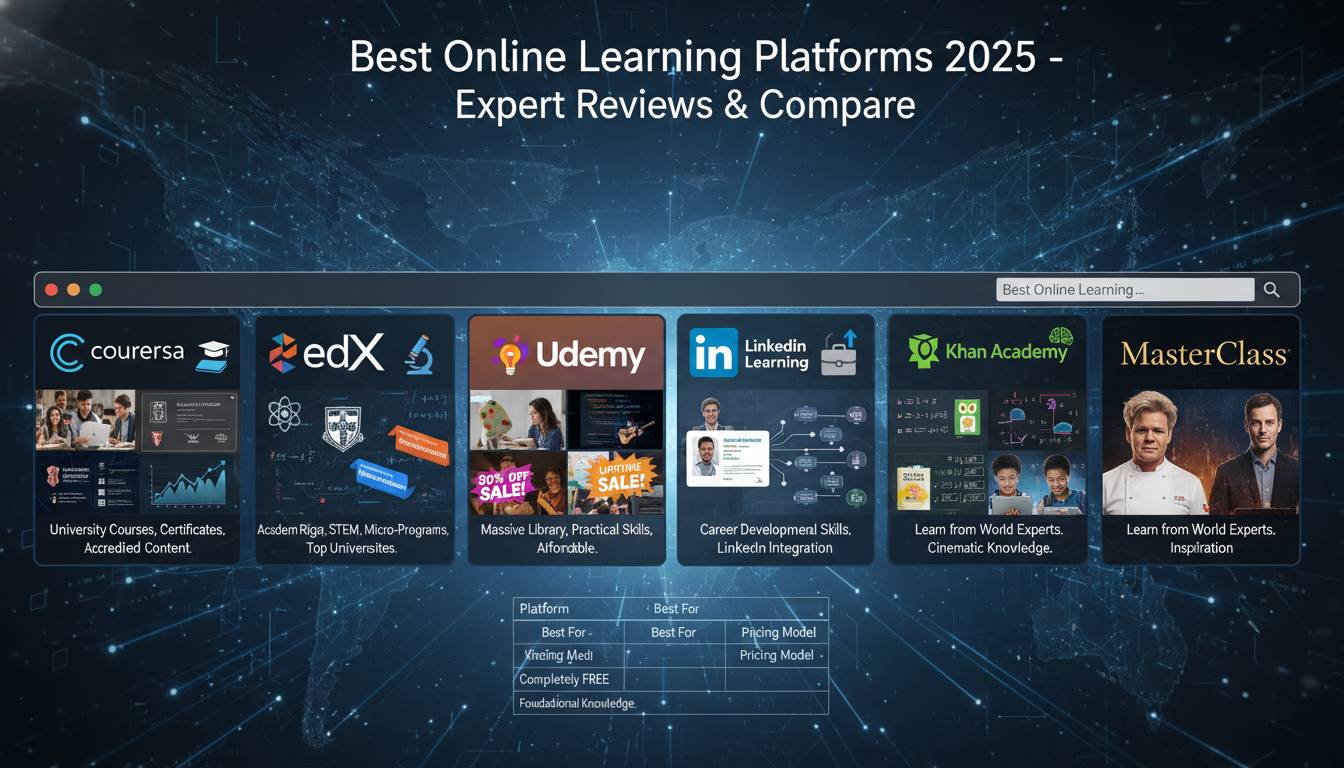
Online education has become a normal part of how people upskill in America. Whether you’re looking to switch careers, learn coding, or pick up a new hobby, there’s a platform out there for you. This guide looks at the major players in 2025—what they offer, what they cost, and who they’re best for.
Our Top Picks at a Glance
| Platform | Best For | Pricing (Monthly) | Courses Available |
|---|---|---|---|
| Coursera | University-quality education | $49.99 (certificate) | 7,000+ |
| Udemy | Course variety and affordability | $12.99–199.99 | 210,000+ |
| edX | Academic rigor and certifications | Free–$300+ | 3,500+ |
| LinkedIn Learning | Professional skill development | $29.99 | 16,000+ |
| Skillshare | Creative and entrepreneurial skills | $13.99 | 35,000+ |
| Khan Academy | Free K-12 education | Free | 8,000+ |
| Codecademy | Technical and coding skills | $19.99–39.99 | 190+ |
How We Evaluated These Platforms
I looked at course quality, pricing, whether certificates are actually worth anything, and how easy the platforms are to use. I also checked completion rates and user reviews. The big question was: will these actually help you get a job or learn a skill, or are they just expensive video libraries?
Detailed Platform Reviews
Coursera – Best Overall for University-Quality Education
Coursera partners with over 300 universities and companies like Yale, Stanford, and Google. If you want actual college-level courses online, this is the most legitimate option. Their Professional Certificates, built with companies like IBM and Meta, are designed specifically for career changes.
You can audit courses for free or pay $49-150 for a certificate. They also offer full degree programs, which have gotten popular with people who can’t attend traditional classes but want a real diploma. The downside is that certificates add up if you take multiple courses.
Udemy – Best for Course Variety and Affordability
Udemy has over 210,000 courses—pretty much anything you could want to learn. The quality varies wildly since anyone can teach. Some courses are fantastic, taught by actual industry experts. Others are barely more than glorified YouTube videos.
The key is waiting for their constant sales. You’ll find quality courses for $15-30 if you’re patient. Don’t pay full price. Their review system helps filter out the bad ones, and you can take short quizzes before buying to see if a course is right for your skill level.
edX – Best for Academic Rigor and Credentials
Harvard and MIT founded edX, and it shows. The courses feel like actual college classes—rigorous, well-structured, and demanding. They partner with over 160 institutions, including the usual suspects plus places like Georgetown and Boston University.
You can audit most courses for free. Pay for a verified certificate if you need proof you completed it. MicroMasters programs (around $1,000-1,500) can count toward a master’s degree if you go that route. It’s more expensive than Udemy, but the credentials mean more.
LinkedIn Learning – Best for Professional Skill Development
With over 16,000 courses focused on workplace skills, LinkedIn Learning integrates directly with your LinkedIn profile. Completed courses show up right on your page, which recruiters can see. That’s actually useful for job hunting.
The course recommendations are based on your LinkedIn data—what jobs you’re interested in, what skills are missing from your profile. It’s convenient if you already use LinkedIn. Enterprise pricing makes it popular with companies training employees.
Skillshare – Best for Creative and Entrepreneurial Skills
Skillshare is strongest in design, illustration, photography, and small business topics. The project-based approach means you’re actually making things, not just watching videos. There’s a community aspect where you can get feedback on your work.
It’s cheaper than most options at $13.99/month. Good for hobbyists and aspiring creatives who don’t want to spend thousands on formal education.
Key Features Compared
Certifications: Coursera and edX have the most respected credentials. LinkedIn Learning certificates appear on your profile, which is handy for job searches. Udemy certificates exist but vary widely in quality.
Free Options: Khan Academy is completely free for K-12. edX and Coursera let you audit many courses for free—you just won’t get a certificate. Udemy has free courses but quality is inconsistent.
Mobile Apps: All platforms have apps. Udemy and Coursera have the best offline download options for learning without internet.
Career Help: LinkedIn Learning connects to job tools naturally. Coursera offers resume reviews and interview prep for certificate holders.
Pricing Breakdown
Coursera: Individual certificates $49-150. Monthly subscription $49.99. Degrees $9,000-45,000.
Udemy: $0-199.99 per course. Sales happen constantly—wait for them.
edX: Free to audit. Certificates $50-300. MicroMasters $1,000-1,500.
LinkedIn Learning: $29.99/month or about $20/month billed annually.
Skillshare: $13.99/month or about $8/month annually.
Khan Academy: Free.
Which Platform Should You Choose?
Think about what you’re actually trying to accomplish. Want a recognized credential for job applications? Go with Coursera or edX. Need specific workplace skills and want recruiters to see them? LinkedIn Learning. Just want to learn something without spending much? Udemy sales or Khan Academy.
The expensive platforms aren’t always better. Sometimes a $20 Udemy course taught by a working professional is more useful than a $300 certificate from a university.
Frequently Asked Questions
Which platform is best for career changes?
Coursera and edX have the most respected certificates for career transitions. LinkedIn Learning makes your new skills visible to recruiters automatically.
Are these worth the money?
It depends on what you pick and whether you finish. A certificate you never use is a waste. A well-chosen course that actually teaches you a marketable skill is a good investment.
What’s the cheapest option?
Khan Academy for K-12. For adults, Udemy during a sale or edX audit mode. Free audits don’t give you certificates, but the content is usually the same.
Do employers actually care about these certificates?
Some do, some don’t. Certificates from Coursera (especially the Google/IBM programs), edX, and LinkedIn Learning carry real weight in many industries. Udemy certificates are a harder sell since quality varies so much.
Can you get a job with just an online certificate?
Plenty of people have transitioned careers using these platforms. Success depends on the specific certificate, your other experience, and how you present it to employers.
Best for coding?
Codecademy is interactive and good for beginners. Udemy and Coursera have deeper courses. For professional certifications, Coursera’s Google and IBM programs are solid.
Conclusion
There’s no perfect platform for everyone. Coursera wins for university-level credentials. Udemy has the most variety and lowest entry price. edX offers the most academic rigor. LinkedIn Learning is best for professionals already using the site. Skillshare works well for creative skills.
The real secret? Pick something, actually finish it, and apply what you learn. A completed course beats a library of half-finished ones every time.