

 March 13, 2026
  7 Min
7 Min  No Comment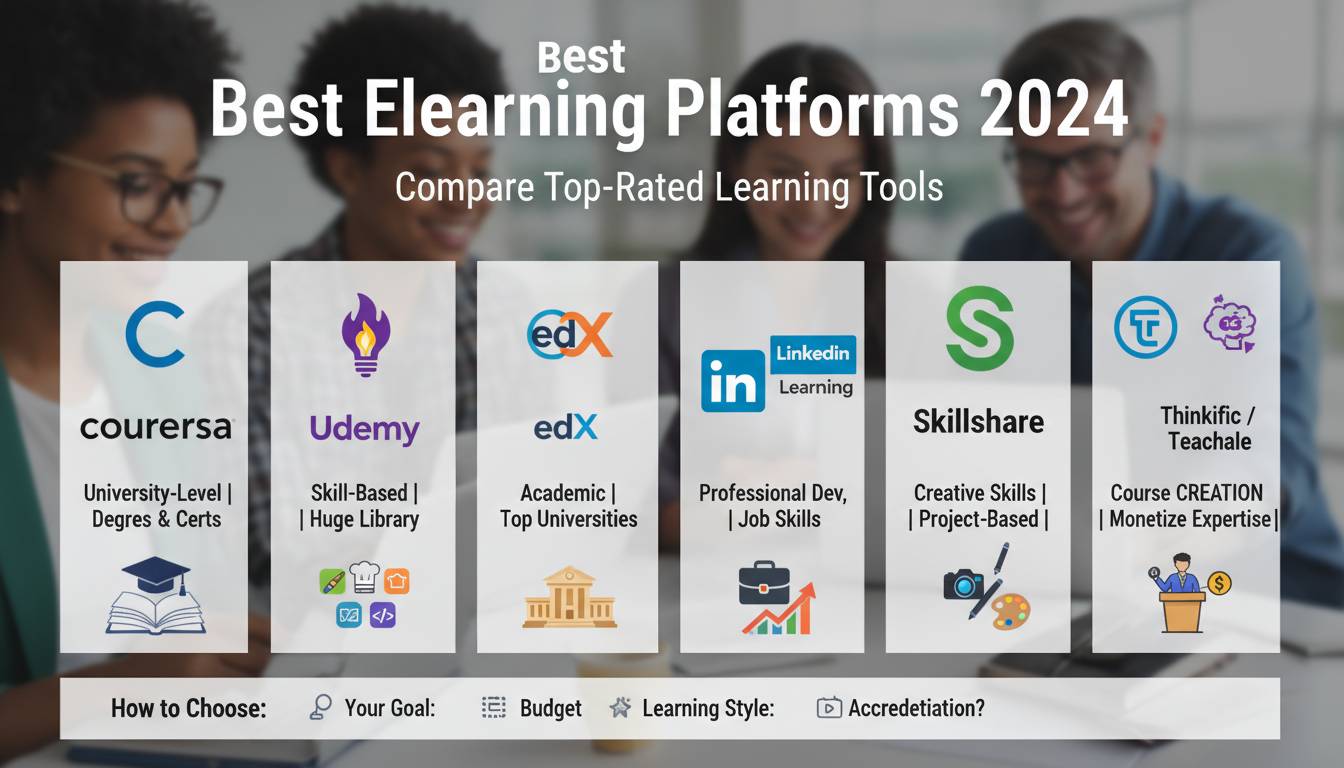
Online learning has transformed how Americans develop careers, acquire new competencies, and explore personal interests. With platforms ranging from university-affiliated programs to creative skill-sharing communities, finding the right fit requires understanding what each offers. This guide evaluates the top platforms based on course quality, pricing structures, and target audiences—helping you make an informed decision for your learning goals.
How We Selected the Best E-Learning Platforms
Our evaluation methodology prioritizes factors that directly impact learner outcomes. We assessed course quality through instructor credentials, curriculum comprehensiveness, and completion rates. Pricing analysis included subscription models, individual course costs, and financial aid availability. We also examined mobile accessibility, employer recognition of certificates, interactive learning features, and community support systems. Rankings incorporate user reviews from verified platforms and content update frequency to ensure recommendations reflect current offerings.
Quick Comparison of Top Elearning Platforms
| Platform | Courses | Pricing | Best For | Students |
|---|---|---|---|---|
| Coursera | 7,000+ | $0-$399/course | University credentials | 77+ million |
| Udemy | 200,000+ | $9.99-$199.99 | Self-paced variety | 50+ million |
| edX | 3,000+ | Free-$300/course | Academic rigor | 20+ million |
| LinkedIn Learning | 16,000+ | $29.99/month | Professional skills | Premium subscribers |
| Skillshare | 35,000+ | $13.99/month | Creative fields | 12+ million |
| Pluralsight | 7,000+ | $29/month | Tech professionals | Enterprise focus |
| Khan Academy | 70,000+ | Free | K-12 education | 140+ million |
1. Coursera – Best for University Credentials
Coursera partners with over 300 universities and organizations worldwide, offering degrees, professional certificates, and guided projects that employers recognize. According to company data, the platform serves 77 million learners globally as of 2024. Credentials come from institutions including Yale, Stanford, and IBM without requiring campus attendance.
The platform’s structured approach distinguishes it from purely self-paced alternatives. Learners encounter deadlines, peer-graded assignments, and capstone projects that mirror traditional coursework. Financial aid options exist for those facing cost barriers. Recent additions include AI-powered tools that identify knowledge gaps and optimize study schedules based on individual progress patterns.
Considerations include accumulating costs for full degree programs and the time investment required for accredited coursework. For learners seeking credentials with demonstrated resume value, Coursera delivers recognized qualifications backed by university partnerships.
2. Udemy – Best for Course Variety
Udemy’s marketplace model hosts over 200,000 video courses spanning diverse subjects. According to platform information, the library attracts 50 million learners and continues expanding daily. The open instructor model means content ranges from industry professionals to hobbyists sharing practical knowledge.
Pricing remains accessible—courses frequently sale below $20, and purchased content includes lifetime access. Instruction typically emphasizes immediately applicable skills rather than theoretical foundations. The practical approach suits learners seeking quick skill acquisition.
Quality variance requires buyer diligence. Reviewing ratings and previewing content before purchase helps identify high-value courses. Certificates lack the academic weight of university-affiliated credentials but demonstrate initiative and completed learning.
3. edX – Best for Academic Excellence
Founded by Harvard and MIT, edX maintains rigorous academic standards. The platform offers university-level courses with curricula matching on-campus programs. Subject areas include computer science, business, humanities, and public health—many providing pathways to earn academic credit.
MicroMasters programs enable graduate-level course completion online, with transferable credits toward master’s programs. This structure has expanded advanced education access for working professionals unable to attend traditional campus programs. Company data indicates over 20 million learners utilize the platform.
Auditing most courses remains free, with payment unlocking certificates and graded assignments. Financial aid availability supports learners committed to completing coursework despite budget constraints.
4. LinkedIn Learning – Best for Professional Development
Integration with LinkedIn’s professional network creates unique career advantages. With over 16,000 courses spanning professional skills—software proficiency, leadership development, and industry-specific competencies—certificates display directly on LinkedIn profiles where employers review candidates.
Course organization by job titles and skill levels provides clear learning paths for career advancement. Content receives regular updates maintaining relevance with evolving industry standards. I’ve observed that professionals seeking visible credentialing benefit most from this platform’s integration features.
Unlimited access through subscription pricing offers value for committed learners. The platform complements rather than replaces specialized learning resources for technical or creative depth.
5. Skillshare – Best for Creative Skills
Skillshare targets creative and practical skill development—design, photography, writing, filmmaking, and entrepreneurship. With over 35,000 classes, the project-based methodology produces portfolio work demonstrating acquired competencies. Platform data indicates 12 million members engage with creative learning content.
Subscription access enables exploration across multiple creative disciplines without per-course purchases. Community features including class projects and peer feedback support motivation and skill refinement. Instructors are working professionals sharing current industry techniques.
Free membership provides limited access; premium subscriptions unlock complete course libraries.
6. Pluralsight – Best for Technology Professionals
Pluralsight serves IT and software development professionals with focused technology content. Subject matter includes programming, cloud computing, cybersecurity, and data science. Skill assessments identify knowledge gaps and recommend targeted courses addressing specific competency needs.
Enterprise adoption by technology companies lends credibility to platform credentials within the industry. Regular content releases respond to evolving technology landscapes, keeping skills current with market demands. Companies investing in team training through Pluralsight signal credential value to potential employers.
Pricing exceeds general-purpose platforms, but technology professionals seeking specific skill mastery or career advancement find the investment justified by demonstrated professional returns.
Which Elearning Platform Is Right for You
Decision-making requires clarifying achievement goals, budget constraints, and available time investment. These factors narrow options toward platforms matching individual circumstances.
Credential-focused learners should prioritize Coursera or edX for employer-recognized qualifications. Professionals emphasizing current field advancement benefit from LinkedIn Learning’s network integration. Budget-conscious learners find value in Udemy’s per-course pricing and Khan Academy’s free offerings. Creative practitioners align with Skillshare’s project-based approach. Technology specialists maximize returns through Pluralsight’s focused curriculum.
Platforms vary between structured deadline-driven formats and flexible self-paced alternatives. Free audits and trial periods enable experience before commitment.
Conclusion
Coursera leads for university-recognized credentials backed by institutional partnerships. Udemy offers maximum variety at accessible price points. EdX provides genuine academic rigor from prestigious origins. LinkedIn Learning serves career-focused professionals through professional network integration. Skillshare delivers creative skill development with portfolio outcomes.
Optimal platform selection depends on individual circumstances, learning preferences, and career objectives. Beginning with free trials reveals which teaching methodologies and platform features align with personal learning styles. Continuous investment in skill development yields measurable returns—career advancement, expanded capabilities, and personal satisfaction. Evaluate options, start with trials, and commit to ongoing development.
Frequently Asked Questions
What is the most popular elearning platform in 2024?
According to platform-reported data, Coursera serves 77 million learners while Udemy reports 50 million users. Both platforms maintain extensive libraries and offer credentials recognized by employers across industries.
Are free elearning platforms worth it?
Free platforms including Khan Academy (140 million registered learners) and edX audit mode effectively serve fundamental learning and topic exploration. Paid platforms provide superior credentials, structured learning paths, and professional certificates carrying hiring weight.
Which elearning platform is best for beginners?
Udemy and Skillshare offer beginner-friendly experiences through accessible instruction, practical focus, and low price points. Neither platform requires prior expertise, and course previews help new learners assess fit before purchasing.
Can I get a job after completing elearning courses?
Career transitions and promotions regularly result from platform certification completion. Coursera and edX credentials from partner universities demonstrate competence to employers. Any platform certification signals learning initiative during hiring evaluations.
How much do elearning platforms cost monthly?
Free options include Khan Academy and edX audit access. Paid subscriptions range from $13.99/month (Skillshare) to $29.99/month (LinkedIn Learning, Pluralsight). Udemy courses typically cost $20-$200 as one-time purchases.
Which platform is best for learning programming?
Pluralsight and Codecademy rank among top choices for programming education. Codecademy provides interactive coding lessons suited for beginners. Pluralsight offers deeper content for intermediate and advanced developers seeking professional-level expertise.
The post Best Elearning Platforms 2024 – Compare Top-Rated Learning Tools appeared first on boostelearning.