

 February 24, 2026
  8 Min
8 Min  No Comment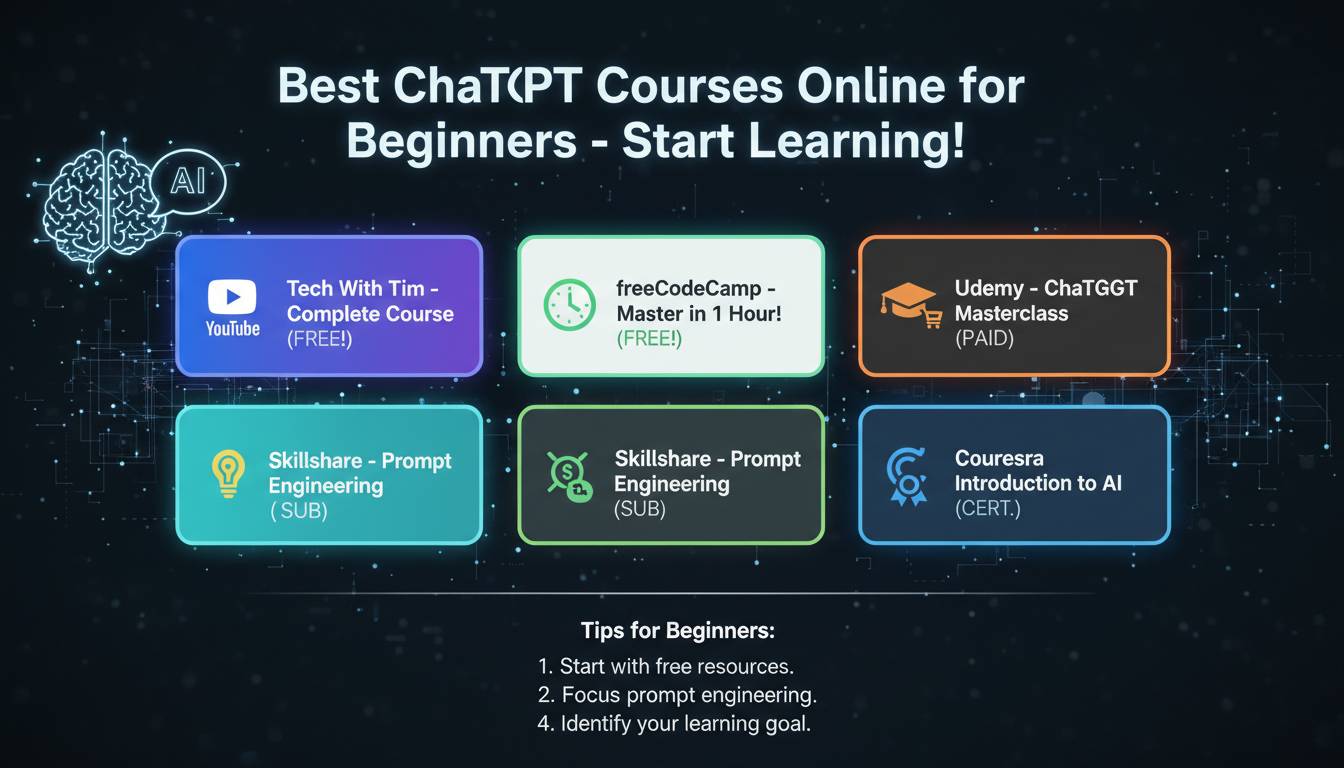
ChatGPT skills have gone from “nice to have” to genuinely useful in pretty much every industry. Whether you’re a marketer wanting to speed up content creation, a developer looking to add AI to your projects, or just someone curious about what all the fuss is about, a good course can save you hours of frustrated self-experimentation. The problem is there are thousands of courses out there, and a lot of them are overpriced or out of date. This guide breaks down what’s actually worth your time and money.
Why ChatGPT Skills Matter Now
AI is changing how workplaces function, and ChatGPT is one of the tools leading that shift. Companies are increasingly looking for people who can use language models effectively—recent job market data shows postings mentioning AI skills have skyrocketed in the past year. That’s not hype; that’s just what’s happening.
Beyond job prospects, knowing how to use ChatGPT well can genuinely speed up your workday. Drafting emails, brainstorming, breaking down complex topics, writing code—all of these get faster with good prompt skills. But here’s the thing: typing questions into a box is easy. Getting good results consistently takes some know-how. Understanding why certain prompts work better than others helps you move from “that was kind of useful” to “this is actually saving me time.”
A lot of beginners get stuck either not knowing where to start or thinking they can figure it out by trial and error. Both approaches waste time. A structured course shortcuts that process.
What Makes a Good ChatGPT Course
Not all courses are created equal. Here’s what actually matters when you’re comparing options:
Curriculum quality matters more than course length. Look for courses that cover prompt engineering techniques (like chain-of-thought prompting and few-shot learning), not just “how to type a question.” The best courses also address limitations and help you develop critical thinking about AI outputs.
Instructor background makes a real difference. People who’ve actually used ChatGPT in professional work tend to explain things better than those who’ve just read about it. Check reviews for comments on teaching style, not just star ratings.
Student feedback tells you what’s what. Look for reviews that mention specific skills or projects, not vague “great course” praise.
Price varies widely. Free courses can work for casual learners. Paid courses range from $15 to several hundred dollars—usually you get what you pay for, but not always.
Top ChatGPT Courses for Beginners
ChatGPT Complete Course: Mastering ChatGPT for Beginners
Udemy’s popular option covers the basics: setting up an account, navigating the interface, and building effective prompts. There are about six hours of video content, plus practice exercises and downloadable materials.
At around $20 when Udemy runs its frequent sales, it’s accessible. Over 100,000 students have enrolled, and ratings stay above 4.5 stars. People like the practical examples—applying ChatGPT to real tasks like writing emails and coming up with content ideas. The prompt engineering section gets particular praise.
The main downside: it focuses heavily on the free version of ChatGPT. If you’re specifically interested in ChatGPT Plus features, you’ll find less coverage there.
Prompt Engineering for Everyone
Coursera offers this through partnerships with AI education organizations. It’s more academic than most—a self-paced course that teaches the theory behind why certain prompts work, not just what to type.
You can audit it for free. Paying gets you access to graded assignments and a certificate if you want one. The pacing is slower than some alternatives, which is either a pro or con depending on your learning style. About 15 hours of content.
The theoretical focus is genuinely useful—it helps you adapt techniques to new situations rather than memorizing templates. Good choice if you want to understand the “why,” not just the “how.”
ChatGPT Masterclass: Beginner’s Guide to ChatGPT
Skillshare hosts this course, which takes a hands-on approach—less theory, more doing. The runtime is shorter (around two hours), making it efficient if you just want the essentials without a big time commitment.
At roughly $14 monthly through Skillshare membership, it’s one of the cheaper options. The instructor gets consistently good marks for clarity. The trade-off is depth: you’ll cover the basics, but don’t expect advanced techniques.
Complete ChatGPT & AI Course for Content Creation
This one’s specifically for marketers, writers, and content people. The curriculum focuses on real content workflows: articles, social media posts, emails, that kind of thing.
About eight hours with practical exercises where you actually create content using AI help. There’s useful discussion of ethics and disclosure—important stuff as AI-generated content becomes more common. The project-based approach means you finish with work samples you can show.
At around $50, it’s pricier than most, but the specialized focus justifies it if content creation is your goal. Includes templates students use long after finishing.
ChatGPT API & Python Integration Course
For developers who want to build things with ChatGPT, this teaches how to work with the API. It covers authentication, formatting requests, handling responses, and building actual applications.
About $80, and it assumes you know basic Python. The technical focus separates it from general “how to use ChatGPT” courses. Developers in the reviews say it does a solid job bridging “using ChatGPT in a browser” to “embedding it in my software.”
Free vs Paid: What’s Right for You
Free options exist—YouTube tutorials, OpenAI’s own docs, community forums. They’re genuine options for casual learners who just want basic familiarity. The downside is they’re unstructured, sometimes outdated, and you won’t have anyone to ask when you’re stuck.
Paid courses usually mean updated content, better organization, and sometimes certificates. Whether that matters depends on your goals. If you’re learning for work, a certificate might look good on a resume. If you’re just curious, free resources might be enough.
A practical approach: start with free stuff to see if you’re actually interested. If you stick with it and want to go deeper, then pay for a course. You’d rather spend $20 on a course you actually use than $200 on one you abandon.
How Long Until You’re Good at This?
Depends on what “good” means to you.
Basic competence—figuring out the interface, writing simple prompts—takes a few hours. Most intro courses hit this in their first section.
Getting actually useful at work requires maybe 10-20 hours of learning plus practice. That’s where courses really pay off.
Advanced stuff—building applications, teaching others, complex workflows—takes 40+ hours and ongoing practice.
Consistent short sessions beat occasional marathons. Studying 30 minutes a day for a few weeks works better than one eight-hour cram session.
Mistakes Beginners Make
A few things trip people up:
Expecting magic right away. ChatGPT is impressive, but you need to learn how to prompt well. First results are often not the best results.
Ignoring that it can be wrong. ChatGPT confidently says things that aren’t true. Always verify important stuff, especially for work.
Using it as a replacement for learning. It’s a tool to help you work faster, not a substitute for understanding your field.
Skipping the basics to jump to advanced stuff. Foundations matter. Figure out how prompts work before trying complicated techniques.
FAQ
Are courses worth it for complete beginners?
Yes, structured learning helps. Courses shortcut the confused “where do I even start?” phase. For complete beginners, that’s worth paying for.
Can I learn just from free stuff?
Yes, but it requires more self-direction. Free resources work if you’re motivated to figure things out yourself. Courses help if you prefer guided learning.
Do I need any tech background?
No for basic usage. Yes (Python knowledge) for the API integration courses specifically.
How much should I practice after a course?
Little and often beats occasional marathon sessions. Using ChatGPT in your actual work is the best practice.
Do employers care about ChatGPT certificates?
Increasingly, yes. It shows initiative, which most hiring managers like. Value depends on the industry, but it can’t hurt.
Conclusion
AI skills are becoming legitimate career assets. If you’re going to learn, courses like the Udemy Complete Course or the content creation specialization offer good structured paths. Coursera’s free option works if you want to test the waters first. Developers should look at the API courses.
Just remember: ChatGPT keeps evolving. What you learn now is a foundation, not a finish line. The basics you build now will help you adapt as things change. That’s the real value—not one specific technique, but knowing how to learn this stuff as it develops.
