

 February 15, 2026
  7 Min
7 Min  No Comment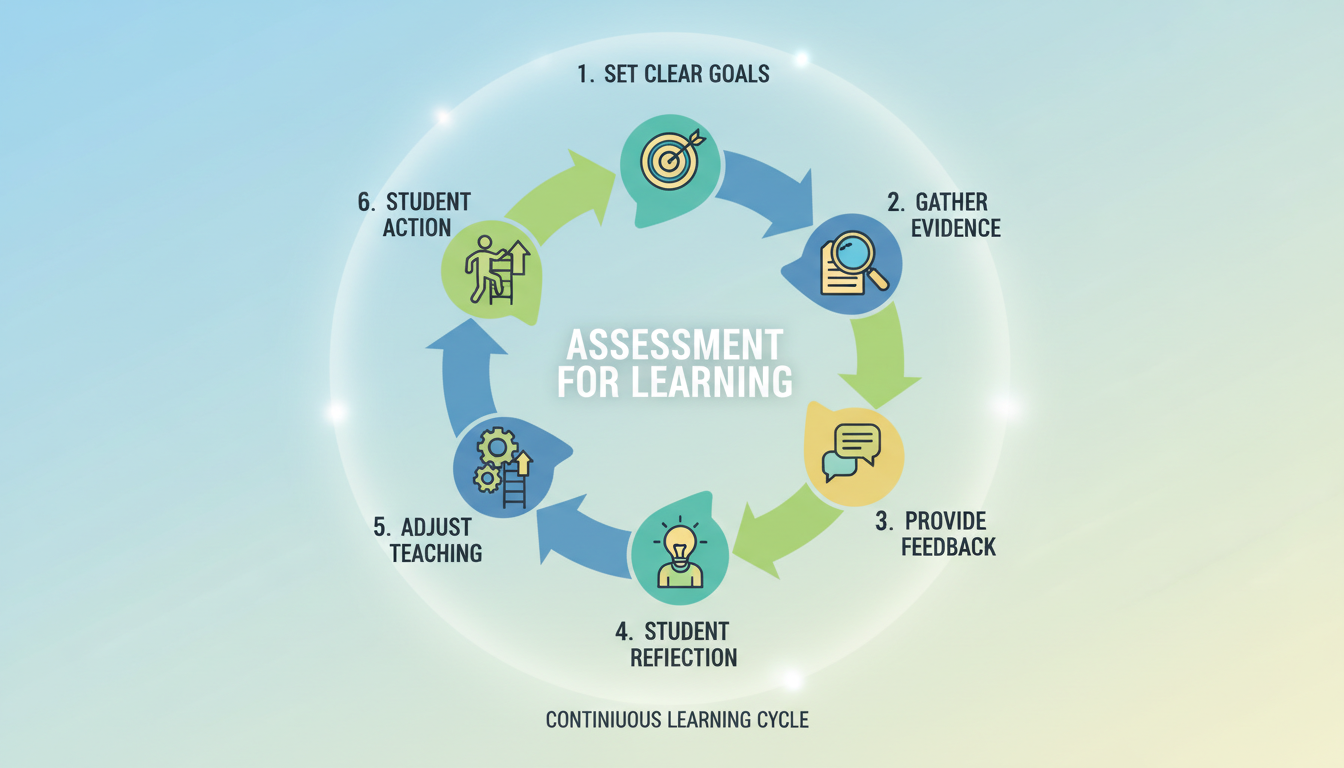
There’s, well, this thing about Assessment for Learning—sometimes called AfL or formative assessment—that really flips the traditional teaching script. Instead of just checking what students have already learned, it’s about guiding them forward, showing them where they are, and helping them figure out where to go next. Multiple studies emphasize how key this forward-looking approach is in boosting both teaching quality and student growth . It’s not a perfect system—there’s nuance, sometimes confusion, and lots of talking-back-and-forth—but it’s supremely human, dynamic, and, yes, effective.
Below, the article unpacks why AfL matters, practical strategies that make it work in real classrooms, and how it interacts with broader educational frameworks. Weaving in a mix of research-backed principles and the occasional real-talk moment helps keep it grounded and lively.
Understanding Assessment for Learning: Foundations That Matter
What It Really Means
Assessment for Learning isn’t just another educational buzzword. At its core, it’s the use of assessment to actively promote—and shape—learning, not just measure it. It’s a formative, ongoing process where teachers and students alike gather evidence about understanding, gaps, and progression in real time . Unlike traditional end-of-term exams, formative assessment is low stakes, feedback-rich, and happens mid-stream.
Beyond this, researchers highlight that AfL is deeply rooted in learning goals being transparent, offering actionable feedback, involving students in self-monitoring, and shifting teachers’ instruction in response .
Why It’s So Powerful
Studies show AfL produces noticeable benefits across subjects and grade levels. Its impact sizes—like moderate to strong improvement in student outcomes—outpace many other instructional interventions . It’s not just about numbers: AfL also nurtures motivation, resilience, and a sense that improvement is possible—which, come on, is huge for learners.
A research review by the Education Development Trust underscores how sharing clear objectives, fostering peer and self-assessment, and using summative assessments formatively can transform both teaching practice and student learning .
Turning Principles into Practice: AfL Strategies That Work
Real-World Classroom Techniques
Consider these approaches teachers are using daily:
- Muddiest Point – Ask students to share the one thing they found most confusing. It’s simple, fast, and gives immediate insight into where clarity is needed .
- One-Minute Paper – Quick written reflections to provoke thought and teacher insight into student understanding .
- Think–Pair–Share – Students reflect individually, discuss with a peer, and then share with the class—a low-risk way to build understanding .
- Other tools include concept mapping, quizzes and polls, response cards, and even tactile engagement like four corners, where students physically move based on their stance .
These are small, imperfect, human strategies—but they’re practical, quick, and fit into daily teaching.
“Assessment for learning is the process of seeking and interpreting evidence for use by learners and their teachers to decide where the learners are in their learning, where they need to go and how best to get there.” — Assessment Reform Group
Structuring for Impact: The AfL Cycle
Beyond individual techniques, AfL thrives when embedded within a structured cycle:
- Define Learning Outcomes – Clear, measurable, and meaningful (specific rather than vague).
- Design Learning Activities – Activities aligned with those learning outcomes.
- Collect Evidence – Use various formative tools to gather real-time insights.
- Feed Forward – Act on that data to inform next steps, both for teacher and student .
This cycle anchors AfL—not as random tweaks but as a deliberate, iterative process that encourages continuous improvement.
Broader Frameworks: Aligning AfL with Educational Design
Constructive Alignment
AfL doesn’t float in isolation—it’s most effective when assessments, learning activities, and intended outcomes are aligned. Constructive alignment is the principle that learning tasks, assessments, and objectives must all work in harmony to promote meaningful learning . This approach ensures AfL isn’t just reactive but intentional.
Data-Driven Instruction
AfL is at home in broader contexts like data-driven instruction, where teachers analyze assessment data to tailor their teaching practices, ensuring responsiveness to student needs . That feedback loop is educational gold—no wasted time on content that’s misaligned with students’ zone of proximal development.
Innovation in AfL: Fresh Models for Modern Classrooms
Some new-ish methods push AfL into intriguing directions:
- Assessment via Teaching (AVT) – Students teach peers—both tutor and tutee benefit. Research in computer science courses showed AVT participants notably outperformed that term’s average on certain assessments; they also found the process more enjoyable and motivational .
- Peer Instruction + Continuous Assessment (PICA) – Combines peer teaching with ongoing tasks informed by previous performance data. Resulted in higher engagement, broader collaboration, though learning gains need further confirmation .
These blends of social learning and immediate feedback show just how creative AfL can be.
Balancing Challenges and Advantages
Pros
- Promotes real-time insights and responsive teaching
- Boosts student motivation, resilience, and ownership
- Aligns instruction with learning goals more effectively
- Builds frameworks for continuous improvement and collaboration
Potential Pitfalls
- Teachers may feel overwhelmed—use multiple techniques judiciously (e.g., Avoid fatigue from overusing Muddiest Point) .
- Requires planning time, and institutional support, especially when trying innovations or teacher collaboration .
- Needs training; otherwise feedback may lack clarity, actionability, or alignment.
Conclusion
Assessment for Learning transforms the classroom from a place of static measurement to one of active growth. By combining transparency in goals, real-time feedback, student involvement, and dynamic instructional response, AfL cultivates an environment where learning evolves, and both teaching and growth happen together. Whether through time-tested techniques like Think–Pair–Share or newer approaches like Assessment via Teaching, the aim is human—imperfect, interactive, responsive.
To move forward, teachers and school leaders might start by selecting one or two AfL strategies, aligning them with clear goals, and deliberately using the evidence they produce to inform instruction. The ripple effect can reshape not just lessons, but mindsets—turning assessment into a compass for continuous improvement.
FAQs
What’s the difference between Assessment for Learning and traditional tests?
Traditional tests (Assessment of Learning) measure what students already know, often at the end of a unit. AfL is formative—it happens during learning, offering ongoing feedback that shapes teaching and guides students forward.
How often should teachers use formative techniques like Muddiest Point or One-Minute Papers?
These techniques are designed for frequent, low-stakes use—ideally every class or module—but should be varied to avoid fatigue. The idea is quick snapshots of understanding, used consistently but thoughtfully.
Can AfL work with large class sizes?
Absolutely. Techniques like response cards, polls, or quick write-ups scale well. Peer and self-assessment can also spread the load, empowering students to engage meaningfully and helping teachers gather useful feedback even in larger groups.
How does AfL support student motivation?
Because AfL emphasizes progress over perfection, and effort over innate ability, it fosters a growth mindset. Students are more likely to feel capable and see improvement as attainable, which boosts confidence and learning engagement.
Is teacher training necessary for effective AfL?
Yes—at least initial guidance helps. Teachers need to craft clear feedback, structure assessments for learning (not just grading), and act on information they gather. Without support, AfL can become tick-box rather than transformative.
Can AfL replace summative assessment entirely?
Not really. Summative assessments still matter for certifying mastery and understanding. But when combined with AfL, summative assessments become more meaningful, as they reflect progress shaped by ongoing feedback—making both more powerful.
