
 March 8, 2026
  6 Min
6 Min  No Comment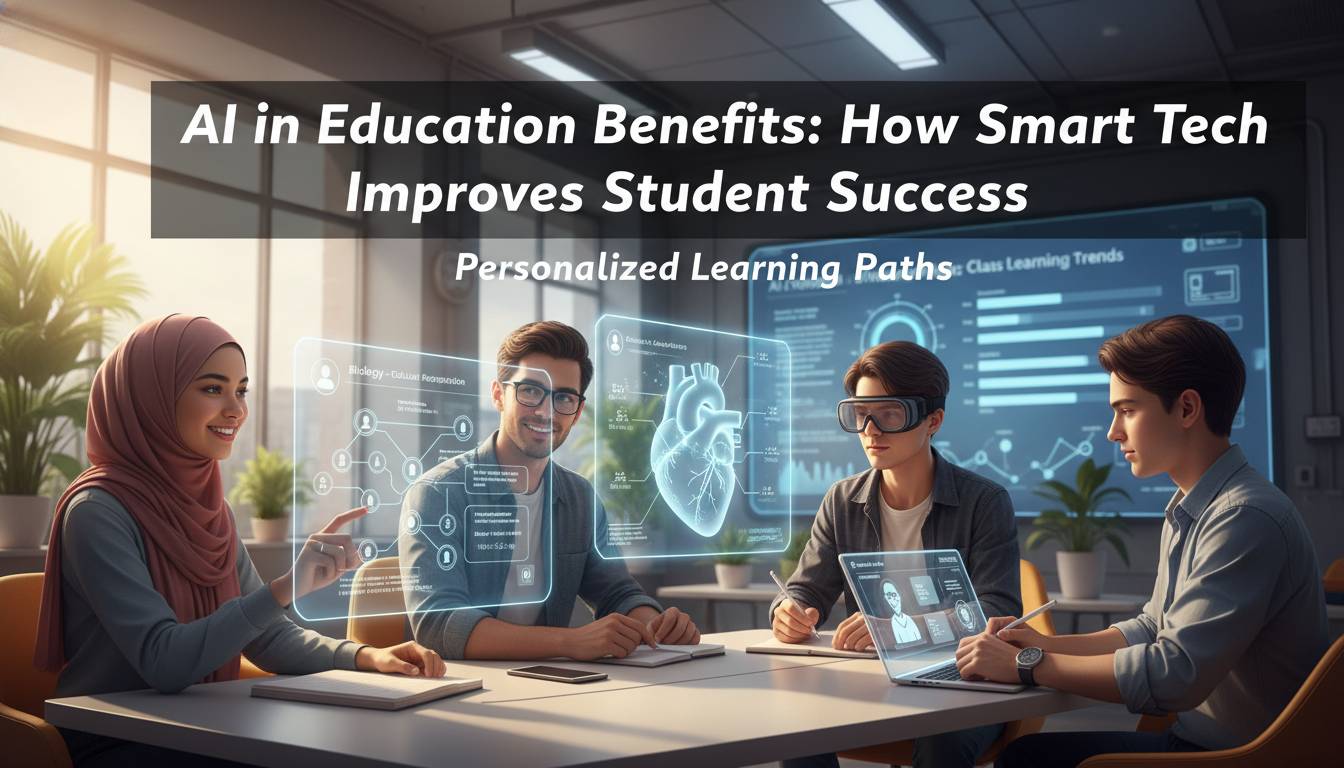
Artificial intelligence is showing up in schools across the United States, and it’s solving some problems that educators have struggled with for years. Teachers are using AI tools to personalize lessons, grade papers faster, and identify students who are falling behind before it’s too late. This isn’t science fiction—it’s happening in real classrooms right now.
Personalized Learning Experiences
One of the most practical benefits of AI in education is its ability to adapt to individual students. In a typical classroom, kids learn at wildly different speeds. The teacher moves on when most students understand, which leaves some kids lost and others bored. AI-powered platforms analyze how each student learns—what they grasp quickly, where they struggle, and what motivates them—and adjust the lessons accordingly.
Research from the Department of Education found that students receiving personalized instruction performed better than those in traditional classroom settings. This makes sense: when content matches your current level, you actually learn instead of just getting through it.
Less Time on Paperwork
Here’s something every teacher will appreciate: AI handles a lot of the busywork that eats up their day. Grading essays, tracking attendance, generating reports—these tasks take hours that could go toward actually teaching. Intelligent grading systems can evaluate written work and provide feedback to students almost instantly.
EdTech surveys suggest that schools using AI administrative tools cut teacher workload significantly—some report reductions around 40 percent. That time gets redirected to lesson planning and working directly with students, which is why most teachers got into education in the first place.
Keeping Students Engaged
AI is also making lessons more interactive. Gamified learning platforms adjust difficulty based on progress, keeping kids motivated with rewards and challenges that feel achievable. When you combine AI with virtual reality, you get simulations that make abstract concepts tangible—students can explore the inside of a cell or walk through ancient Rome instead of just reading about it.
Dr. Sarah Chen, Director of Learning Innovation at Stanford University, notes that AI-driven engagement tools work especially well during difficult material. “The technology tracks engagement in real-time and shifts how it delivers content to hold attention better,” she says. This matters because keeping students focused has gotten harder, not easier, in recent years.
Tutoring That Never Sleeps
AI tutoring systems give students access to help anytime—early morning, late at night, weekends. These platforms walk through problems step by step, explain concepts in different ways, and never get frustrated when something needs to be repeated. They can’t replace human teachers, but they fill a real gap, especially for students who don’t have access to private tutoring.
Carnegie Mellon University researchers found that AI tutoring improved student learning outcomes by roughly 30 percent compared to traditional instruction alone. That’s significant. These systems also catch patterns in student mistakes, so teachers know what misconceptions keep coming up across the class.
Better Access for Everyone
AI helps students with disabilities participate more fully in education. Speech recognition assists students who can’t use a keyboard. Text-to-speech helps those with reading difficulties. Real-time captioning supports deaf students and English language learners alike. Adaptive technologies adjust materials for different needs—larger text, different formats, customized pacing.
These tools don’t just meet federal requirements for accessibility. They actually open doors that were previously closed for many students.
What Teachers Get Out of It
Beyond cutting admin work, AI gives teachers better information. Predictive analytics can flag students who are at risk of falling behind, sometimes weeks before traditional assessments would catch it. That early warning matters—a lot.
Professional development gets smarter too. AI platforms recommend training based on what each teacher actually needs, not a one-size-fits-all workshop. Teachers can watch model lessons, get feedback on their own instruction, and grow throughout their careers without taking time off for generic seminars.
What Schools and Universities Gain
Administrators benefit from better forecasting. AI helps predict enrollment shifts, optimize staffing, and allocate budgets where they’ll matter most. It spots patterns in student retention and graduation rates, so schools can intervene strategically instead of reacting to problems after they’ve spiraled.
There’s also an reputation element. Colleges that show they’re using modern technology attract students who want that environment. But the real value is operational—efficiency gains translate into money that can go back into teaching.
What Gets in the Way
None of this works without decent infrastructure. Schools need reliable internet, enough devices, and technical support. Teachers need real training, not just a brief orientation. Data privacy is a legitimate concern—student information needs strong protection, and parents deserve transparency about what gets collected and how it’s used.
The equity issue is real. Wealthy districts can afford to experiment; underfunded schools often can’t. If AI tools require expensive hardware or reliable home internet, they risk widening existing gaps rather than closing them.
Looking Forward
AI in education isn’t a magic solution, but it’s becoming a useful one. The best outcomes come when technology supports teachers rather than replacing the human elements that matter most—mentorship, encouragement, and the ability to handle messy, unpredictable situations that algorithms can’t touch.
As AI tools get better, they’ll handle more of the routine work, giving educators more freedom to do what they do best: connect with students.
Common Questions
What’s the biggest benefit of AI in education?
The biggest practical benefit is probably time savings—both for teachers on administrative work and for students who get instant feedback instead of waiting days for graded papers. Personalized learning is close behind, though it depends heavily on having the right tools in place.
Does AI actually improve learning?
The research so far is promising. Studies show measurable improvements in student performance when AI tutoring and adaptive learning are used well. But it’s not automatic—the tools need to be implemented thoughtfully and integrated into good teaching practices.
Will AI replace teachers?
Unlikely. AI handles routine tasks well, but teaching involves emotional intelligence, relationship-building, and handling unexpected situations that machines can’t manage. The teachers who thrive will be those who use AI to enhance their work rather than compete with it.
Can low-income schools afford AI tools?
This is the big question. Some AI tools are surprisingly affordable, and there are grant programs aimed at closing the digital divide. But access still varies wildly by district. Whether AI helps close educational gaps or widens them depends a lot on policy decisions being made right now.
How does AI help students with disabilities?
In lots of ways—speech-to-text, text-to-speech, real-time captions, adaptive interfaces, customized pacing. The key is that these tools make learning accessible in ways that work for each student’s specific needs, rather than forcing everyone into the same mold.
What’s the biggest challenge to rolling this out?
The biggest challenge is probably the human one—training teachers to use these tools effectively and making sure schools have the technical infrastructure to support them. Data privacy and equity concerns are important too, but they can be addressed with good policy. The infrastructure and training issues are harder to solve quickly.