

 March 9, 2026
  9 Min
9 Min  No Comment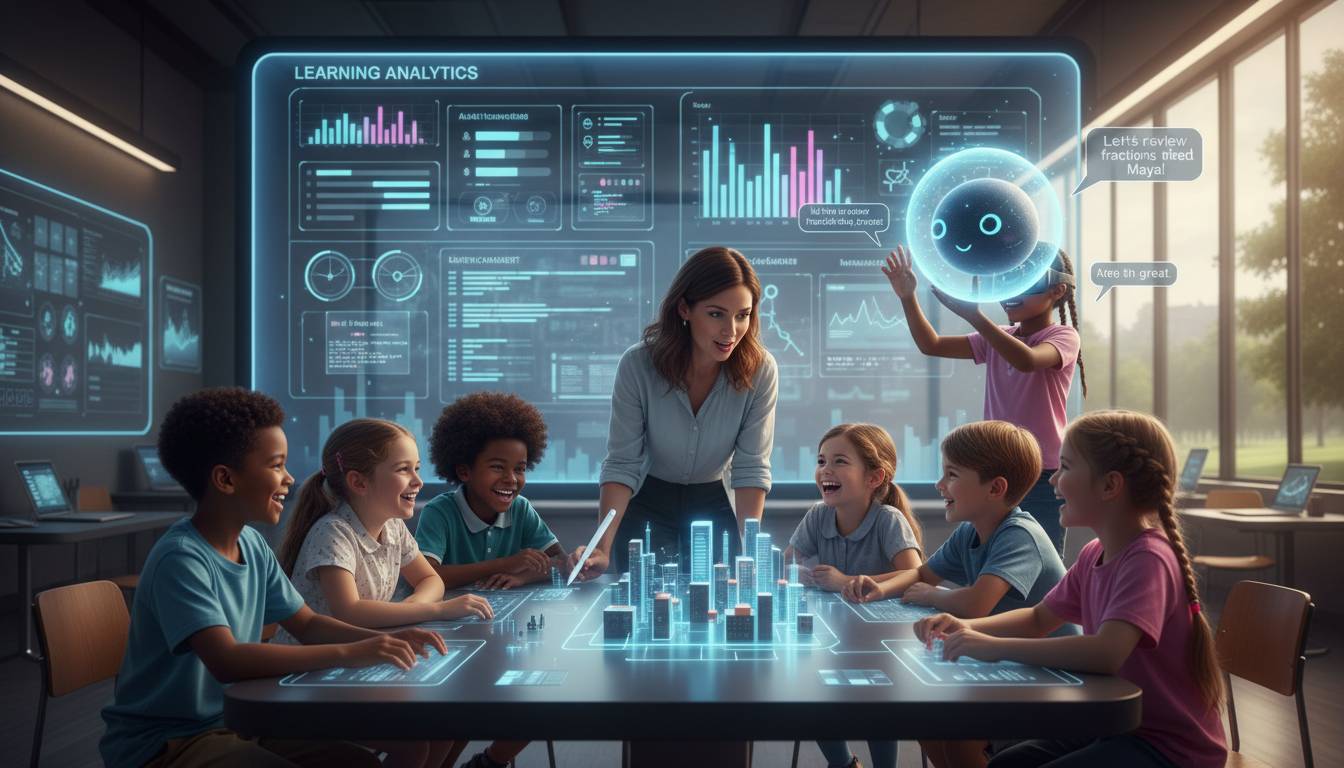
Walk into most American schools today, and you’ll notice something has shifted. The classrooms feel different than they did even three years ago. Artificial intelligence has moved from conference buzzwords into daily classroom reality—sometimes smoothly, sometimes chaotically. The U.S. Department of Education has encouraged schools to approach these tools thoughtfully, positioning AI as a complement to skilled teachers rather than a substitute for them. That positioning makes sense, even when implementation falls short of the ideal.
Based on what I’ve observed across multiple school districts, this guide examines the AI-powered solutions actually making a difference in classrooms right now. Some deliver meaningful results. Others generate more excitement than learning outcomes. I’ll try to help you tell the difference.
The Reality of AI in Schools
The COVID-19 pandemic compressed years of educational technology adoption into months. In spring 2020, schools that had discussed going digital “eventually” found themselves there immediately. According to UNESCO data, over 1.6 billion learners worldwide were affected by school closures, forcing rapid experimentation with digital tools—and that urgency opened doors for AI platforms that had previously struggled for traction.
Before the pandemic, most school administrators viewed artificial intelligence as something relevant “down the road.” Now, teachers at every grade level encounter AI tools regularly, whether they’re using them intentionally or seeing them appear in administrative systems they didn’t request.
The market has responded with dozens of platforms, each addressing different pain points. This growth reflects genuine demand. According to the National Education Association, teachers spend approximately 45% of their work time on non-instructional tasks—paperwork, compliance documentation, administrative duties that have expanded steadily for decades. AI tools that promise to handle some of this administrative load appeal directly to exhausted educators. But the demand also reflects a more uncomfortable reality: traditional classroom models often fail students with different learning speeds, backgrounds, or support systems. One teacher managing twenty-eight students cannot reasonably individualize instruction for everyone, no matter how talented they are. AI tools responding to this gap are addressing a documented failure in conventional approaches.
What Teachers Are Actually Using
From what I’ve seen, teachers who integrate AI education tools consistently report one benefit: more time for actual instruction. The administrative burden on American educators has reached unsustainable levels—lesson planning, grading, compliance documentation, parent communication. AI tools that handle routine tasks allow teachers to focus on the work that requires human judgment, relationship-building, and pedagogical expertise.
Khan Academy’s Khanmigo has become one of the most visible options in this space. It’s an AI tutor developed by the nonprofit organization behind the video-based learning platform many students have used for years. The system provides hints and explanations rather than simply delivering answers, which addresses a legitimate concern—educators don’t need another tool that completes assignments for students. Teachers receive dashboards showing where students struggle, enabling more targeted whole-class instruction around common misconceptions.
Quizlet began as a flashcard application but has expanded into adaptive learning features. Its Learn mode incorporates spaced repetition algorithms—presenting material at intervals optimized for long-term retention based on cognitive science research. This approach, grounded in decades of memory research, supports vocabulary acquisition and concept review. Teachers can access analytics showing which topics require additional classroom attention before assessments occur.
For lesson planning and creating differentiated materials, Microsoft Copilot for Education and similar AI assistants help teachers generate modified content for English language learners or students with individualized education programs (IEPs). Creating accommodations from scratch demands significant time; AI can provide a starting point that teachers then refine based on their professional judgment.
GradeCam and Teach First accelerate multiple-choice assessment grading, making formative assessments more practical. Quick checks that reveal current understanding—rather than checking comprehension two weeks later on unit tests—support more responsive instruction.
What Students Are Using
Students encounter AI in different ways—as study aids, practice platforms, and sometimes as a way to work through homework independently when they’re stuck.
Duolingo maintains significant market presence in language learning. The platform’s adaptive system responds to errors in real time, adjusting difficulty and introducing new material at intervals designed to sustain engagement. Gamification elements appear throughout, keeping learners motivated in ways that traditional exercises often fail to achieve. Duolingo’s effectiveness for language learning has been studied—research published in journals examining educational technology suggests it supports vocabulary acquisition, though it doesn’t replace immersive language experiences.
Carnegie Learning serves middle and high school mathematics with an approach informed by cognitive science research. The platform attempts to identify individual student learning preferences—visual, symbolic, or contextual approaches—and adjusts problem presentations accordingly. Research on learning suggests that matching instruction to student preferences can improve outcomes, though the evidence remains evolving.
DreamBox Learning focuses on elementary and middle school mathematics. The platform tracks not just answer correctness but problem-solving approaches. This distinction matters because incorrect answers may result from minor arithmetic errors or from fundamental conceptual misunderstandings that will compound without intervention. The system attempts to differentiate between these error types to provide appropriate feedback.
Century Tech addresses multiple subjects with particular emphasis on science and humanities. It constructs individual learning pathways based on teacher assignments and AI recommendations, helping students who are ahead or behind access appropriately challenging material rather than either coasting or struggling.
Socratic by Google serves a more targeted purpose—homework assistance when other support isn’t available. Students photograph problems or type questions and receive step-by-step explanations. While not a comprehensive learning tool, it addresses a real situation: students working independently who need guidance to proceed.
The Administrative Side
Much of what AI accomplishes in schools isn’t visible to students, but it affects school operations significantly. Managing an educational institution involves substantial data management—enrollment tracking, attendance monitoring, grade recording, family communication, regulatory compliance—and AI increasingly supports these functions.
PowerSchool maintains substantial presence in American K-12 education. Its AI features include early warning systems that flag students showing indicators of academic risk, enabling earlier intervention than traditional monitoring approaches typically allow. According to research on student retention and dropout prevention, early identification of struggling students correlates with more successful interventions, though early warning systems alone don’t guarantee improved outcomes.
Canvas and Blackboard dominate the learning management system landscape, and both have incorporated AI features including plagiarism detection, writing feedback support, and accessibility checking. Teachers managing course materials receive practical assistance rather than simply a digital repository for content.
Naviance supports college and career planning, helping students explore potential pathways while assisting counselors in managing the complex logistics of applications, recommendations, and career exploration activities.
GoGuardian provides internet safety monitoring and classroom management tools, tracking student device activity for potentially concerning content. This category of tools generates ongoing debate—privacy advocates raise legitimate concerns about surveillance in educational settings, while schools argue these systems enable interventions that protect students. Reasonable people disagree about where appropriate monitoring ends and inappropriate surveillance begins.
How to Choose Smartly
Not every AI tool justifies the implementation effort it requires. Districts that adopt technology indiscriminately often end up with unused subscriptions and teachers feeling overwhelmed by constantly changing platforms. Strategic selection matters.
Start with identified problems. If data shows students struggling with foundational algebra concepts, prioritize adaptive mathematics platforms. If writing proficiency is the documented challenge, focus there. Adopting technology because it exists rarely produces meaningful results.
Data privacy requires careful attention. FERPA and COPPA establish legal requirements for student information protection, and schools must understand exactly how vendors handle data—where it resides, who can access it, and what happens when contracts end. Vendors unable or unwilling to provide clear answers should be eliminated from consideration.
Integration capabilities significantly influence whether tools actually get used. Platforms compatible with existing systems—Canvas, PowerSchool, Google Classroom—reduce the friction that causes tools to be abandoned. A technically excellent tool that requires teachers to maintain yet another login typically doesn’t survive contact with real classroom realities.
Professional development quality varies dramatically among vendors. Some provide comprehensive onboarding and ongoing support; others provide access credentials and minimal guidance. Schools should insist on realistic training expectations, not just assumption that teachers will figure things out independently.
Total costs extend beyond subscription fees. Per-student pricing compounds in larger districts. Some tools require hardware investments. Training consumes substitute coverage. The complete financial picture matters more than initial price quotes.
Common Questions
What works best for elementary students?
Tools emphasizing foundational skills with engagement elements tend to work well at this level. DreamBox provides adaptive mathematics practice. Raz-Kids offers leveled reading content. Khan Academy Kids covers early learning comprehensively and carries no cost.
Are free versions worth using?
Often yes. Khanmigo and Duolingo both provide meaningful value without payment requirements. Paid versions typically add analytics dashboards, support access, and institutional features that matter for schools, but free tiers generally offer genuine educational value rather than being deliberately limited.
How private is student data with these tools?
Reputable vendors comply with FERPA and COPPA requirements, but regulatory compliance represents a minimum standard, not comprehensive protection. Schools should examine specific data policies rather than assuming compliance equals security.
Will AI replace teachers?
Based on current technology and educational needs, no. The human dimensions of teaching—mentorship, emotional support, creative inspiration, ethical guidance—remain irreplaceable by current AI capabilities. AI handles routine tasks and personalized practice effectively. The complex, relational work of education still requires human professionals.
What’s the secret to successful implementation?
In my observations, schools that succeed typically start small with educators genuinely interested in exploring these tools, gather their feedback systematically, and expand gradually based on evidence rather than enthusiasm alone. Treat AI as a tool that serves teachers’ professional goals, not as technology demanding accommodation.
Does any of this actually work?
Research indicates positive effects when AI tools are implemented thoughtfully. Studies examining adaptive learning platforms that provide personalized feedback generally show modest but meaningful improvements in learning outcomes, particularly for students who struggle in traditional formats. However, implementation quality matters significantly—well-designed tools with poor rollout often underperform, while simpler tools used effectively often exceed expectations.
The Bottom Line
AI education tools have matured beyond initial hype into genuinely useful territory. They won’t solve education’s fundamental challenges independently—they’re instruments that support skilled professionals, not replacements for them—but they address real problems that have stressed American schools for decades.
Schools that successfully integrate these tools typically share certain characteristics: they select platforms based on documented needs rather than marketing appeals, they invest in genuine professional development rather than assuming teachers will adapt on their own, and they maintain focus on student learning outcomes rather than technology adoption metrics. The technology will continue advancing. What remains constant is the need for wise implementation in service of actual educational goals.