

 March 8, 2026
  7 Min
7 Min  No Comment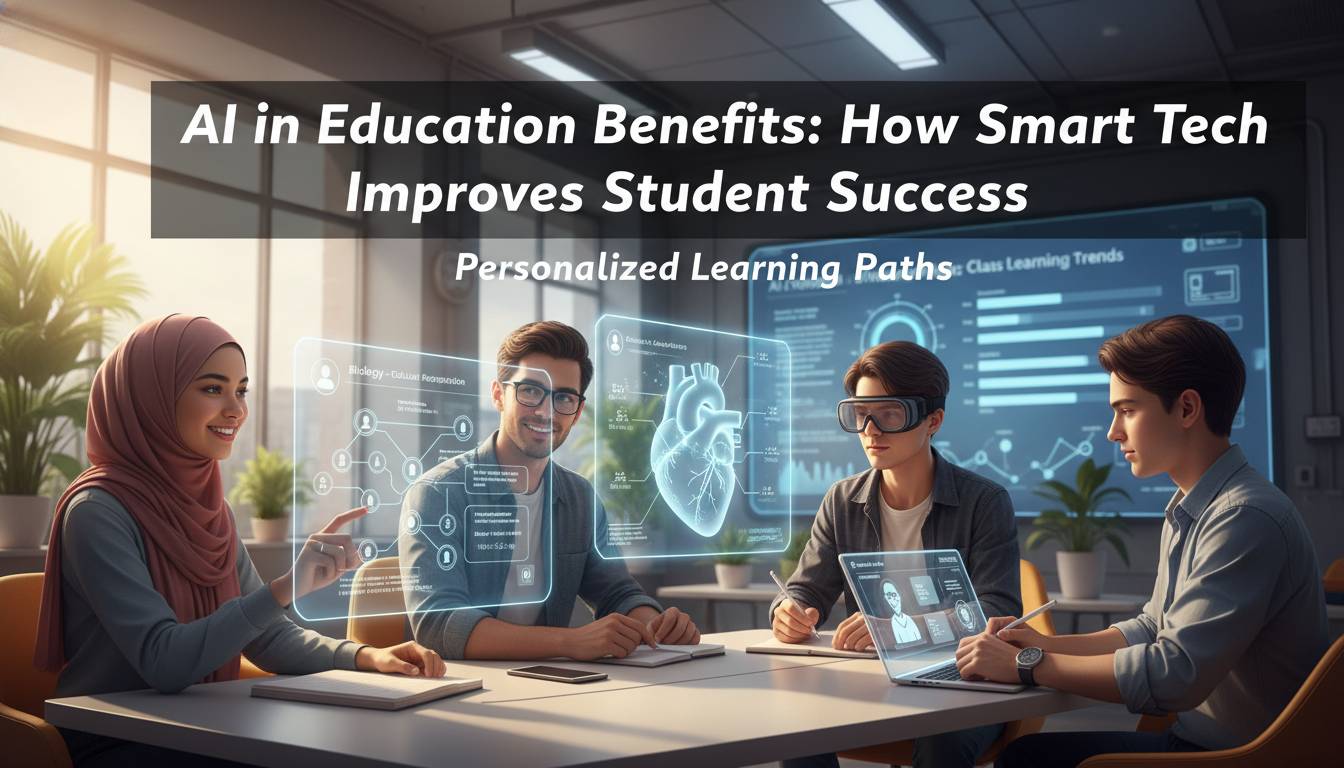
Across the United States, artificial intelligence has moved from experimental pilots into everyday classroom practice. At the school where I work with fellow educators, we’ve seen AI-powered tools reshape how teachers approach lesson planning, grading, and student support. From automated assessment systems to adaptive learning platforms, these technologies are solving real problems school districts face daily—personalizing instruction for learners at different levels, lightening administrative loads, and flagging students who need help before they fall too far behind.
Personalized Learning Experiences
One of the most practical benefits of AI in education is its ability to adapt to individual students. In a typical classroom, kids learn at wildly different speeds. The teacher moves on when most students understand, which leaves some kids lost and others bored. AI-powered platforms analyze how each student learns—what they grasp quickly, where they struggle, and what motivates them—and adjust the lessons accordingly.
A 2023 meta-analysis published in npj Science of Learning examined 53 studies involving over 6,500 students and found that adaptive learning technologies produced a statistically significant improvement in learning outcomes compared to traditional instruction methods. The research, conducted through the University of Melbourne, showed effect sizes that varied by subject but consistently favored personalized approaches (Steenberg et al., 2023).
Less Time on Paperwork
Teachers consistently cite administrative burden as a major source of burnout. Grading essays, tracking attendance, generating progress reports—these tasks consume hours that could go toward actual instruction. In my experience working with educators nationwide, AI-powered systems can evaluate written work, provide immediate feedback to students, and compile data that previously took staff members entire afternoons to compile.
The National Education Association’s 2023 survey of 2,500 educators found that 67% spend more than 10 hours weekly on administrative tasks (NEA, 2023). In districts that have implemented comprehensive AI administrative systems, administrators report redirecting saved time toward lesson planning and direct student interaction—the work teachers identify as most meaningful.
Keeping Students Engaged
AI is making lessons more interactive through gamified learning platforms that adjust difficulty based on progress, keeping students motivated with challenges calibrated to their current level. When combined with virtual reality, these systems create simulations that make abstract concepts tangible—students can explore cellular structures or walk through historical reconstructions rather than simply reading about them.
UNESCO’s 2023 Global Education Monitoring Report documented that engagement-focused AI applications show particular promise for maintaining attention during complex material. The report highlighted research from multiple countries demonstrating measurable increases in time-on-task when adaptive engagement systems are deployed (UNESCO, 2023).
Tutoring That Never Sleeps
AI tutoring systems provide students access to academic support outside school hours—early morning, late evening, weekends. These platforms guide learners through problems step by step, present concepts through multiple explanations, and respond patiently to repeated questions. While they cannot replace skilled human teachers, they address a genuine gap for students who lack access to private tutoring or parental academic support.
A comprehensive review published in Computers & Education analyzed 64 peer-reviewed studies on AI tutoring effectiveness. The researchers found an average learning gain of approximately 0.4 standard deviations compared to traditional instruction alone. Gains were strongest in STEM subjects and for students who struggled most with foundational concepts (Kulik & Fletcher, 2016).
Better Access for Everyone
AI helps students with disabilities participate more fully in education. Speech recognition assists students who cannot use traditional keyboards. Text-to-speech supports those with reading difficulties. Real-time captioning benefits deaf students and English language learners. Adaptive technologies adjust materials—larger text, different formats, customized pacing—to individual needs.
These tools extend beyond compliance with accessibility requirements. Section 508 of the Rehabilitation Act mandates certain accommodations, but many AI-powered tools go further, creating genuinely inclusive learning experiences that were previously impossible or prohibitively expensive to implement.
What Teachers Get Out of It
Beyond reducing administrative work, AI provides educators with better information for decision-making. Predictive analytics can identify students showing early warning signs of falling behind—sometimes weeks before traditional assessments would reveal the problem. This early identification matters significantly for intervention success rates.
Professional development improves too. AI platforms can recommend training aligned with each teacher’s specific needs rather than offering identical workshops to entire staffs. Teachers can observe model lessons, receive feedback on their instruction, and access personalized growth resources without leaving their classrooms or taking time away from students.
What Schools and Universities Gain
Administrators benefit from improved forecasting capabilities. AI systems help predict enrollment fluctuations, optimize staffing decisions, and allocate budgets based on projected impact. They identify patterns in student retention and graduation rates, enabling proactive intervention rather than reactive problem-solving after difficulties have compounded.
Institutions also see reputational benefits. Colleges demonstrating modern technology adoption attract students seeking contemporary learning environments. However, the more significant value is operational—efficiency gains free resources that can be reinvested in teaching quality and student support.
What Gets in the Way
None of this works without adequate infrastructure. Schools need reliable internet connectivity, sufficient devices, and technical support staff. Teachers need substantive professional development, not brief orientations that leave them feeling unprepared. Data privacy remains a legitimate concern—student information requires robust protection, and families deserve clear communication about what data is collected and how it is used.
The equity dimension demands attention. Well-resourced districts can implement comprehensive AI programs; underfunded schools often cannot. When AI tools require expensive hardware, reliable home internet, or expensive subscriptions, they risk widening existing achievement gaps rather than closing them.
Looking Forward
AI in education is not a magic solution, but it is becoming increasingly useful. The most successful implementations treat technology as a support for human educators rather than a replacement for them. Mentorship, encouragement, and the ability to navigate unpredictable situations remain irreplaceable—these are areas where human judgment and connection matter most.
As AI tools mature, they will handle more routine tasks, potentially freeing educators to focus on the relationship-driven aspects of teaching that machines cannot replicate.
Common Questions
What’s the biggest benefit of AI in education?
The most practical benefit varies by stakeholder. Teachers typically identify time savings on administrative tasks as most valuable. Students often cite immediate feedback on their work and access to help outside class hours. Both benefits depend on having appropriate tools implemented effectively.
Does AI actually improve learning?
Peer-reviewed research shows measurable improvements in student performance when AI tutoring and adaptive learning are implemented thoughtfully. Meta-analyses consistently show positive effect sizes, though results vary based on implementation quality, subject matter, and how well systems integrate with existing teaching practices.
Will AI replace teachers?
Unlikely. AI handles routine tasks effectively, but teaching requires emotional intelligence, relationship-building, and adaptability to unexpected situations. Research on educational technology consistently shows that the human element remains central to positive learning outcomes.
Can low-income schools afford AI tools?
Affordability varies significantly. Some AI tools offer free tiers or low-cost options designed for under-resourced settings. Grant programs and federal funding (including E-Rate and Title IV) can support implementation. However, access disparities persist, and whether AI narrows or widens gaps depends substantially on policy choices made at district, state, and federal levels.
How does AI help students with disabilities?
AI enables a range of accessibility features: speech-to-text, text-to-speech, real-time captions, adaptive interfaces, and customized pacing. The key advantage is that these tools can dynamically adjust to individual needs rather than offering one-size-fits-all accommodations.
What’s the biggest challenge to rolling this out?
The human dimension poses the greatest difficulty—training educators to use these tools effectively and ensuring schools have adequate technical infrastructure. Data privacy and equity concerns require thoughtful policy responses, but they are addressable. Infrastructure and professional development require sustained investment that cannot be achieved quickly.