

 March 7, 2026
  9 Min
9 Min  No Comment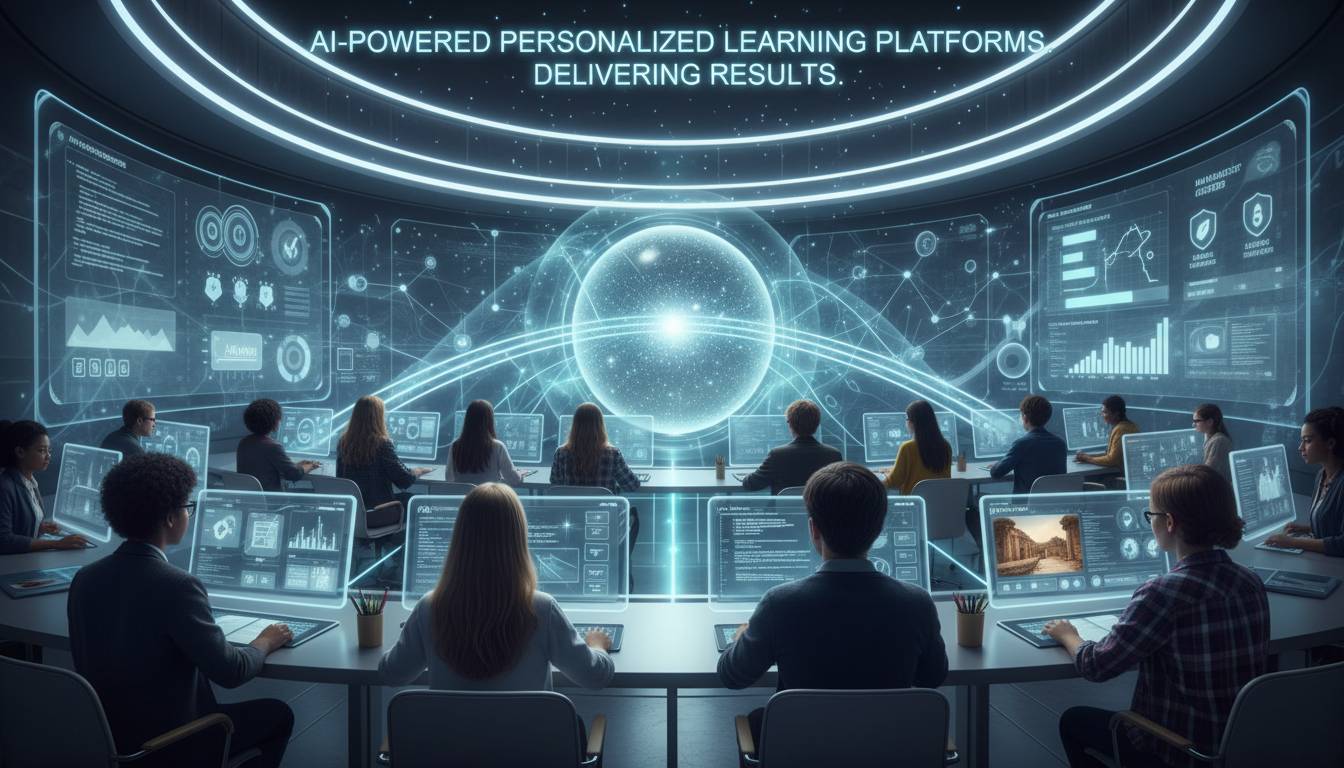
Artificial intelligence is changing how students learn and teachers teach. AI-powered personalized learning platforms have become one of the biggest tech advances in education, offering customized experiences that adapt to each student’s needs, pace, and learning style. These platforms use machine learning algorithms with educational content to create tailored learning paths that traditional classrooms simply can’t match. As schools across the United States deal with diverse student populations and varying learning needs, AI-driven tools are increasingly seen as important for improving results and closing achievement gaps.
What Are AI-Powered Personalized Learning Platforms?
AI-powered personalized learning platforms are educational technology systems that use artificial intelligence, machine learning, and data analytics to deliver customized learning experiences to individual students. Instead of the traditional one-size-fits-all approach, these platforms constantly analyze student performance data—correct answers, response times, mistake patterns, and engagement levels—to dynamically adjust content difficulty, presentation style, and learning sequences.
These systems use natural language processing to understand student questions and provide relevant responses. Adaptive algorithms track mastery levels across different skill domains. The technology comes from decades of research in cognitive science, educational psychology, and computer science, creating models that can identify knowledge gaps, predict when students will struggle, and recommend the best learning activities.
The global personalized learning platform market was worth about $4 billion in 2022 and is projected to grow more than 16% annually through 2028, according to the World Economic Forum. This rapid growth reflects growing recognition that traditional classroom instruction can’t adequately address the diverse needs of modern students, especially as schools face pressure to improve results with limited resources.
Key Features Driving Educational Success
The most effective AI-powered personalized learning platforms share several core features that set them apart from regular educational technology tools.
Adaptive Content Delivery is the foundation of personalized learning technology. These systems automatically adjust question difficulty, content complexity, and learning pathways based on real-time assessment of student understanding. When a student shows mastery of a concept, the platform moves them to more challenging material. When struggles appear, the system provides extra scaffolding and review opportunities.
Intelligent Tutoring Systems simulate one-on-one tutoring by giving immediate feedback, explanations, and guidance throughout the learning process. Unlike static educational content, these systems can answer student questions, offer hints when students get stuck, and explain concepts in different ways to accommodate different learning preferences.
Real-Time Progress Analytics give teachers comprehensive dashboards showing individual student progress, class-wide performance trends, and early warning signs for students who may be falling behind. This data lets teachers intervene proactively rather than waiting for traditional tests to reveal learning gaps.
Comprehensive Content Libraries provide access to thousands of lessons, practice problems, videos, and interactive activities across multiple subjects and grade levels. These resources are usually aligned with state standards and curriculum frameworks, ensuring personalized learning complements rather than conflicts with classroom instruction.
Multimodal Learning Support recognizes that students learn through different modalities. Quality platforms offer text, video, audio, and interactive content, letting students engage with material in ways that suit their individual preferences.
Benefits for Students, Teachers, and Institutions
Implementing AI-powered personalized learning platforms produces measurable benefits across the entire educational ecosystem.
For Students, these platforms offer personalized attention that would be impossible in traditional classrooms with typical student-teacher ratios of 20:1 or higher. Students get immediate feedback on their work, which research consistently shows accelerates learning compared to delayed feedback. The adaptive nature of these systems ensures students are neither bored with material that’s too easy nor frustrated with content that’s too difficult, maintaining optimal challenge levels that promote engagement and mastery.
A 2023 study in the journal “Computers & Education” found that students using AI-powered personalized learning platforms showed 23% greater improvement in math proficiency scores compared to students using traditional digital learning tools. The study examined over 15,000 students across 142 schools and also reported higher engagement levels and more time spent on learning activities.
For Teachers, these platforms automate routine tasks like grading practice problems and generating progress reports, freeing educators to focus on high-value activities like lesson planning, small-group instruction, and individualized student support. Teachers get detailed analytics that help them identify which concepts are causing widespread confusion, enabling them to adjust whole-class instruction based on real evidence rather than intuition.
For Schools and Districts, AI-powered personalized learning platforms offer a scalable solution for addressing achievement gaps and meeting diverse student needs without requiring proportional increases in staffing. Districts using these systems have reported improved standardized test scores, reduced need for remedial interventions, and higher student retention rates.
Leading Platforms Reshaping Education
The market for AI-powered personalized learning platforms has grown significantly, with several established providers offering sophisticated solutions for K-12 education.
Khan Academy’s Khanmigo is one of the most anticipated entries into this space, combining the organization’s extensive content library with AI tutoring capabilities. The platform provides personalized guidance through a conversational interface while maintaining Khan Academy’s commitment to free, accessible education.
Carnegie Learning has long specialized in AI-powered math education, combining cognitive science research with machine learning to create adaptive learning experiences. The platform’s MATHia software provides one-on-one tutoring simulation for middle and high school mathematics.
DreamBox Learning offers adaptive curriculum for K-8 math and reading, using proprietary algorithms that continuously adjust learning pathways based on student interactions. The platform has been implemented in hundreds of districts across the United States.
Century Tech combines AI-powered personalization with teacher decision-support tools, providing integrated solutions that connect classroom instruction with technology-driven intervention. The platform emphasizes whole-child approaches that address both academic and non-academic factors affecting student success.
Newsela has grown from a news-based literacy platform into a comprehensive solution that uses AI to adjust reading content complexity while maintaining engagement with current events and authentic texts.
How Schools Are Implementing AI Learning Solutions
Successful implementation of AI-powered personalized learning platforms requires thoughtful planning, adequate training, and realistic expectations about what these tools can and cannot do.
Professional Development is perhaps the most critical factor in successful implementation. Teachers need comprehensive training not only on platform mechanics but also on interpreting analytics, integrating personalized learning into existing curriculum, and maintaining effective teaching that combines technology with human connection. Schools that invest in sustained professional development see significantly better outcomes than those providing only initial training, according to the International Society for Technology in Education.
Integration with Classroom Instruction works best when AI platforms supplement rather than replace teacher-led instruction. Schools report greatest success when students use personalized learning platforms for targeted practice, skill building, and intervention, while teachers maintain primary responsibility for concept introduction, discussion facilitation, and higher-order thinking development.
Infrastructure Requirements must be addressed before deployment. Reliable internet connectivity, adequate device availability, and appropriate technical support are essential for maintaining productive learning experiences. Schools in rural and underserved communities may need to address connectivity gaps before implementing technology-intensive solutions.
Data Privacy and Security considerations have become increasingly important as these platforms collect detailed information about student learning behaviors. Educators and administrators must ensure that chosen platforms comply with the Family Educational Rights and Privacy Act (FERPA) and other applicable regulations, and that data practices align with community values.
The Future of Personalized AI Education
AI-powered personalized learning is heading toward increasingly sophisticated capabilities that could fundamentally reshape educational practice in the coming decade.
Enhanced Natural Language Processing will enable more natural, conversational interactions between students and AI learning systems. Future platforms may function as true learning companions, engaging students in Socratic dialogue, helping them explore complex topics through guided inquiry, and providing sophisticated explanations tailored to individual knowledge states.
Multimodal AI Systems will integrate text, voice, video, and interactive elements more seamlessly, creating immersive learning experiences that can adapt to context. These systems may leverage augmented reality and virtual reality technologies to provide experiential learning opportunities previously impossible in educational settings.
Predictive Analytics will enable earlier identification of students at risk for academic failure, allowing interventions before problems become entrenched. Advanced systems may predict not only academic struggles but also factors like student disengagement, social-emotional challenges, and the need for mental health support.
Collaboration and Social Learning features will complement individual personalization, enabling AI systems to facilitate productive group work, peer learning, and collaborative problem-solving. This represents an evolution from purely individualized approaches toward systems that optimize for both individual growth and social development.
Research institutions continue to explore fundamental questions about how AI can most effectively support learning. The Stanford Human-Centered AI Institute and similar organizations are investigating how AI systems can augment rather than replace human teachers, ensuring that technology enhances the irreplaceable elements of human educational relationships.
Frequently Asked Questions
What is the main benefit of AI-powered personalized learning platforms?
The primary benefit is that these platforms provide individualized instruction at scale. Every student receives a customized learning pathway that adapts to their specific needs, knowledge gaps, and learning pace—something impossible to achieve in traditional classrooms with limited teacher time and large class sizes.
Are AI-powered learning platforms effective for all grade levels?
These platforms have demonstrated effectiveness across grade levels, from elementary through higher education. However, implementation approaches differ: younger students benefit from gamified, visually-rich interfaces, while older students can engage with more sophisticated analytical tools and self-directed learning features.
How do teachers integrate AI platforms with their existing curriculum?
Most platforms are designed to complement rather than replace existing curriculum. Teachers typically use these systems for targeted practice, formative assessment, intervention, and extension activities. Professional development helps educators find optimal integration points that strengthen overall instructional effectiveness.
What evidence supports the effectiveness of AI-powered personalized learning?
Multiple peer-reviewed studies demonstrate positive outcomes. Research published in “Computers & Education” found 23% greater improvement in math proficiency. The RAND Corporation has documented improved outcomes in districts implementing personalized learning approaches, though results vary based on implementation quality and context.
Are there concerns about data privacy with these platforms?
Legitimate concerns exist, and responsible implementation requires careful vendor evaluation regarding data practices, compliance with FERPA and other regulations, and clear policies about data ownership and retention. Reputable platforms provide transparent privacy policies and security certifications.
Do AI platforms replace teachers?
No. The most effective implementations position AI as a tool that augments teacher capabilities rather than replacing human educators. Teachers remain essential for concept introduction, relationship building, social-emotional support, and higher-order instruction that AI cannot replicate.
The emergence of AI-powered personalized learning platforms represents an important moment in educational technology, offering real opportunities to address long-standing challenges in meeting diverse student needs. While these tools are not magic solutions and require thoughtful implementation, their potential to improve learning outcomes makes them an increasingly valuable part of modern educational practice.