

 March 6, 2026
  9 Min
9 Min  No Comment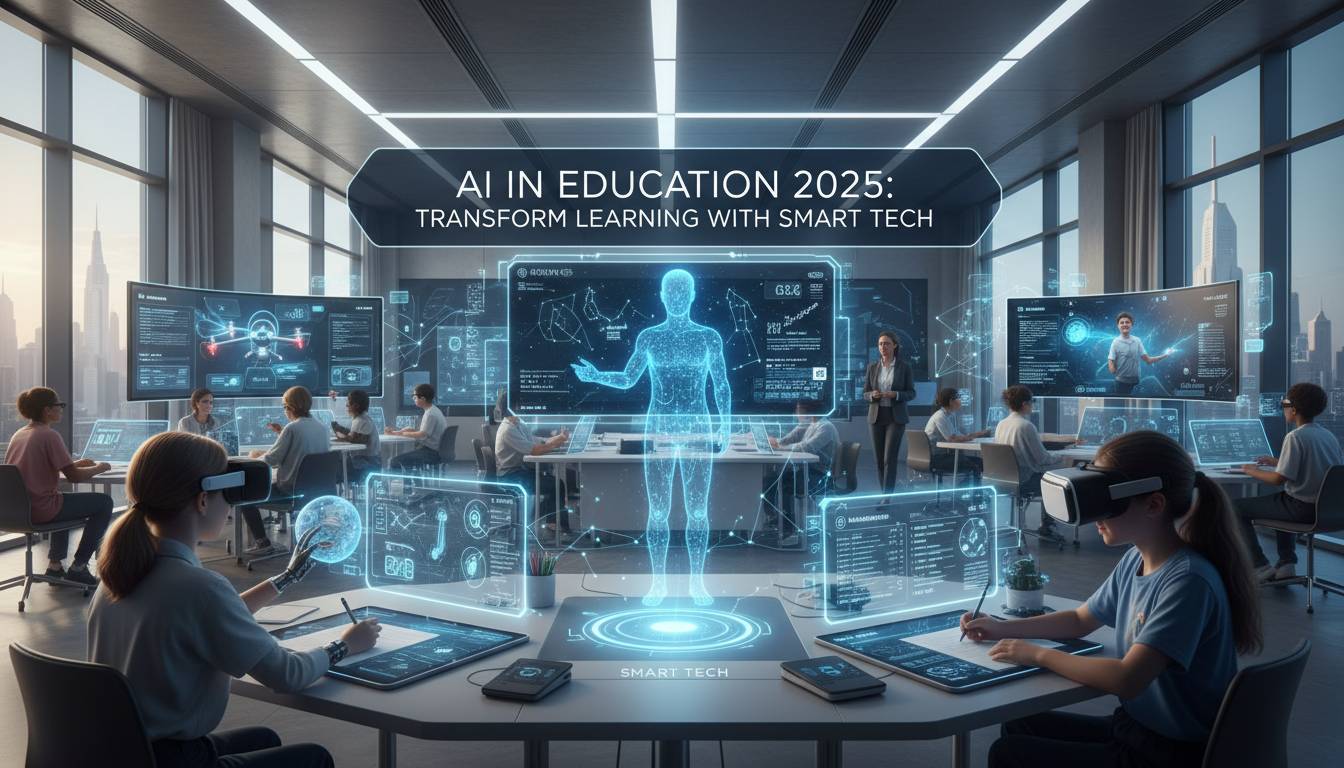
Three years of visiting classrooms across the United States have shown me a striking transformation: artificial intelligence tools now share desk space with textbooks in ways that seemed impossible a decade ago. From initial pilots to standard infrastructure, I’ve watched these technologies evolve as adaptive learning platforms, personalized learning pathways, and AI assistants have moved into mainstream practice across American schools.
What is AI in Education in 2025?
AI in education means applying artificial intelligence technologies—machine learning, natural language processing, and adaptive algorithms—to support teaching and learning. Unlike the experimental deployments of years past, these technologies now represent standard infrastructure at many schools.
The global AI in education market reached $4.04 billion in 2024 and is projected to grow at a compound annual growth rate of 36.2% through 2030, according to Grand View Research. This figure represents substantial investment by educational institutions seeking to modernize learning experiences.
Modern AI systems analyze student performance data in real time, identifying learning gaps as they emerge and automatically adjusting content difficulty for individual learners. During my visits to schools using these systems, I’ve observed how they differ from traditional educational software that follows fixed programming—AI-powered platforms learn from each student interaction and refine their recommendations continuously. This adaptive capability makes them particularly valuable for addressing the diverse learning needs present in any classroom.
Key Applications of AI in Education
AI in education breaks down into several categories, each solving different problems for teachers and students.
Personalized Learning Systems
AI-driven platforms track how each student interacts with educational content, analyzing patterns in comprehension, retention, and engagement. The systems then adjust lesson sequences, difficulty levels, and content presentation to optimize learning for each individual. Students who struggle with specific concepts receive additional practice opportunities, while those who demonstrate mastery can advance without waiting for their peers.
A 2017 RAND Corporation study found that students using personalized learning programs showed 12% greater academic growth compared to control groups over two years. During my classroom observations, I’ve seen similar outcomes reflected in teacher feedback on platforms like DreamBox and Khan Academy’s Khanmigo.
Intelligent Tutoring Systems
AI tutoring systems provide one-on-one academic support outside regular class hours. These platforms answer student questions, explain complex concepts, and deliver immediate feedback on assignments. Modern systems use conversational interfaces that closely mimic human tutoring, allowing students to receive help whenever they need it, regardless of time or location.
Administrative Automation
Teachers spend substantial time on administrative tasks that compete with instructional responsibilities. According to Education Week’s 2023 analysis of teacher time allocation, educators spend approximately 45% of their workweek on non-instructional tasks. AI tools now grade multiple-choice and fill-in-the-blank assessments automatically, generate progress reports, and handle routine parent communications—directly addressing this administrative burden.
Assessment and Analytics
AI assessment tools evaluate more than answer correctness. They can assess written arguments for logical coherence, analyze presentations for clarity, and identify patterns in student performance that may indicate learning disabilities or other issues requiring attention. This granular analysis enables earlier intervention than traditional assessment methods allow.
Benefits of AI for Students and Teachers
Implementing AI in schools offers advantages across the educational ecosystem.
For students, AI creates learning experiences that adapt to individual strengths and areas for growth. In traditional classrooms, instruction typically proceeds at an average pace—leaving some students behind while others wait. AI-powered personalized learning addresses this by ensuring each student works at an appropriate challenge level.
Schools in underfunded districts can now access the same adaptive learning tools available to wealthier schools. The UNESCO Global Education Monitoring Report (2023) noted that this democratization of resources has meaningful potential to narrow educational opportunity gaps across socioeconomic lines.
Teachers benefit significantly from AI implementation. They spend less time on grading routine assignments and gain better insight into student needs. Instead of spending hours marking multiple-choice assessments, educators can use AI-generated analytics to identify which students require targeted intervention. AI also supports lesson planning by suggesting resources and activities aligned with learning objectives.
School systems benefit from improved operational efficiency and enhanced reputation for innovation. According to EdWeek’s 2024 K-12 AI Market Report, districts reporting AI adoption metrics note average improvements of 15-20% in student assessment performance.
Challenges and Concerns Surrounding AI in Education
Despite demonstrated benefits, adopting AI in schools presents genuine challenges that educators must address thoughtfully.
Data privacy remains a primary concern. AI systems require substantial student data to function effectively, raising questions about information storage, sharing practices, and security protections. Schools must comply with FERPA regulations and implement robust security measures to protect sensitive information.
Equity presents another significant challenge. Schools in underserved communities may lack reliable internet infrastructure, sufficient devices, or technical support staff required for effective AI tool deployment. The Pew Research Center’s 2023 survey found that 35% of lower-income parents reported their children often or sometimes cannot complete homework due to insufficient technology access.
Many educators report feeling unprepared to integrate AI into their teaching practice. Professional development programs must address both technical proficiency and pedagogical application—teachers need to understand not just how AI tools function, but when and why to deploy them effectively within instruction.
Academic integrity has become increasingly complex in the era of generative AI. Students can leverage these tools to complete assignments, making it difficult for teachers to evaluate authentic learning. Schools are responding by redesigning assessments and updating academic honesty policies to address this new reality.
Leading AI Tools Shaping Education in 2025
The market for AI education tools continues expanding, with several platforms gaining significant traction in American classrooms.
Adaptive learning platforms like DreamBox, Khan Academy’s Khanmigo, and Carnegie Learning provide mathematics and literacy instruction that adjusts dynamically to student performance. A 2022 study published in the American Educational Research Journal demonstrated improved achievement outcomes for students using these tools consistently.
AI writing assistants integrated into platforms like Google Docs and Microsoft Word help students improve their writing through real-time suggestions addressing grammar, style, and organizational structure.
Language learning applications including Duolingo use AI to generate instruction tailored to individual learner progression patterns.
Virtual reality combined with AI creates immersive learning experiences in subjects like anatomy and history, enabling students to explore complex concepts within interactive three-dimensional environments.
The Future of AI in Education: Beyond 2025
Several emerging trends will continue reshaping AI’s role in education.
Emotional AI technologies can recognize and respond to student emotional states through voice analysis and facial expression recognition. Research published in Frontiers in Education (2022) demonstrates promising applications for detecting learning frustration and engagement levels.
Advanced natural language processing will enable AI tutors to conduct increasingly natural conversations with students, providing explanations and support that more closely approximate human tutoring interaction quality.
AI may play a larger role in educational research, analyzing large datasets to identify teaching methods and learning strategies that outperform those researchers could discover through traditional observation methods alone.
Despite these advances, the human dimension of teaching remains essential. AI can augment but cannot replicate the mentorship, inspiration, and emotional support that educators provide. The most effective AI implementations will enhance rather than attempt to replace human educators.
Implementing AI in Educational Institutions
Schools and districts considering AI adoption should approach implementation strategically.
Start with clear goals. Identify specific problems AI can address—whether improving mathematics achievement, reducing teacher administrative burden, or increasing student engagement. Goals should be measurable to enable genuine assessment of impact.
Invest in teacher training. Professional development must address both technical operation of AI tools and pedagogical integration strategies. Teachers need confidence using AI meaningfully within instruction rather than simply having access to the technology.
Engage stakeholders early. Parents, teachers, students, and community members deserve transparent communication about AI deployment plans and opportunities to provide input. Transparency builds trust and surfaces concerns before they become obstacles.
Pilot before scaling. Beginning with limited deployments in select classrooms or schools allows organizations to learn from experience before major resource commitment. Successful pilot results provide evidence supporting broader adoption.
Monitor continuously. Collect data on AI tool effectiveness, student outcomes, and user satisfaction. Use this information to refine implementation approaches and inform ongoing investment decisions.
Conclusion
AI in education in 2025 presents genuine opportunity to enhance learning outcomes, reduce administrative burden on teachers, and deliver more personalized educational experiences across the United States. The challenges surrounding data privacy, equity, and academic integrity warrant serious attention, but demonstrated benefits justify continued thoughtful adoption.
Schools implementing AI successfully share common characteristics: clear objectives guiding technology selection, meaningful investment in educator preparation, and unwavering focus on student outcomes as the primary success metric.
The most effective approach positions AI as a tool that supports and enhances educators rather than attempting to replace them. By maintaining this perspective and prioritizing equity alongside innovation, American education can leverage AI to create more effective, accessible, and engaging learning experiences for all students.
Frequently Asked Questions
How is AI currently being used in education?
Schools deploy AI across multiple applications: adaptive learning platforms that respond to individual student needs, tutoring systems providing 24/7 academic support, automated grading tools that reduce teacher administrative workload, and analytics dashboards helping educators identify students requiring intervention. Many institutions also use AI for scheduling optimization and parent communication automation.
What are the main benefits of AI for teachers?
Teachers gain relief from routine administrative tasks through automated grading and report generation. AI analytics reveal precisely which students need additional support, enabling targeted intervention. This efficiency improvement frees instructional time for direct student interaction and high-value teaching activities.
What concerns exist about AI in education?
Primary concerns include data privacy and security, equitable access across different school districts, potential for widening existing achievement gaps, teacher readiness for AI integration, and student misuse of AI tools for academic dishonesty. Addressing these concerns requires comprehensive policies and thoughtful implementation strategies.
Will AI replace teachers?
Most education professionals and researchers agree this outcome is unlikely. While AI handles specific tasks effectively and provides personalized academic support, it cannot replicate the mentorship, emotional support, inspiration, and complex human relationships that define effective teaching. The optimal approach positions AI as a tool that enhances teacher capabilities rather than replacing them.
How can schools implement AI responsibly?
Responsible implementation begins with clearly defined objectives, adequate investment in teacher professional development, meaningful stakeholder engagement throughout the process, phased rollout through pilot programs, and continuous outcome monitoring. Schools should also establish explicit policies addressing data privacy, academic integrity, and equitable access.
What does the future of AI in education look like?
The trajectory includes more sophisticated AI tutoring capabilities, emotion-responsive learning technology, enhanced virtual reality integration, and AI-assisted educational research. Human educators will remain central to the learning experience—AI will amplify their effectiveness rather than diminish their importance.