

 March 6, 2026
  12 Min
  No Comment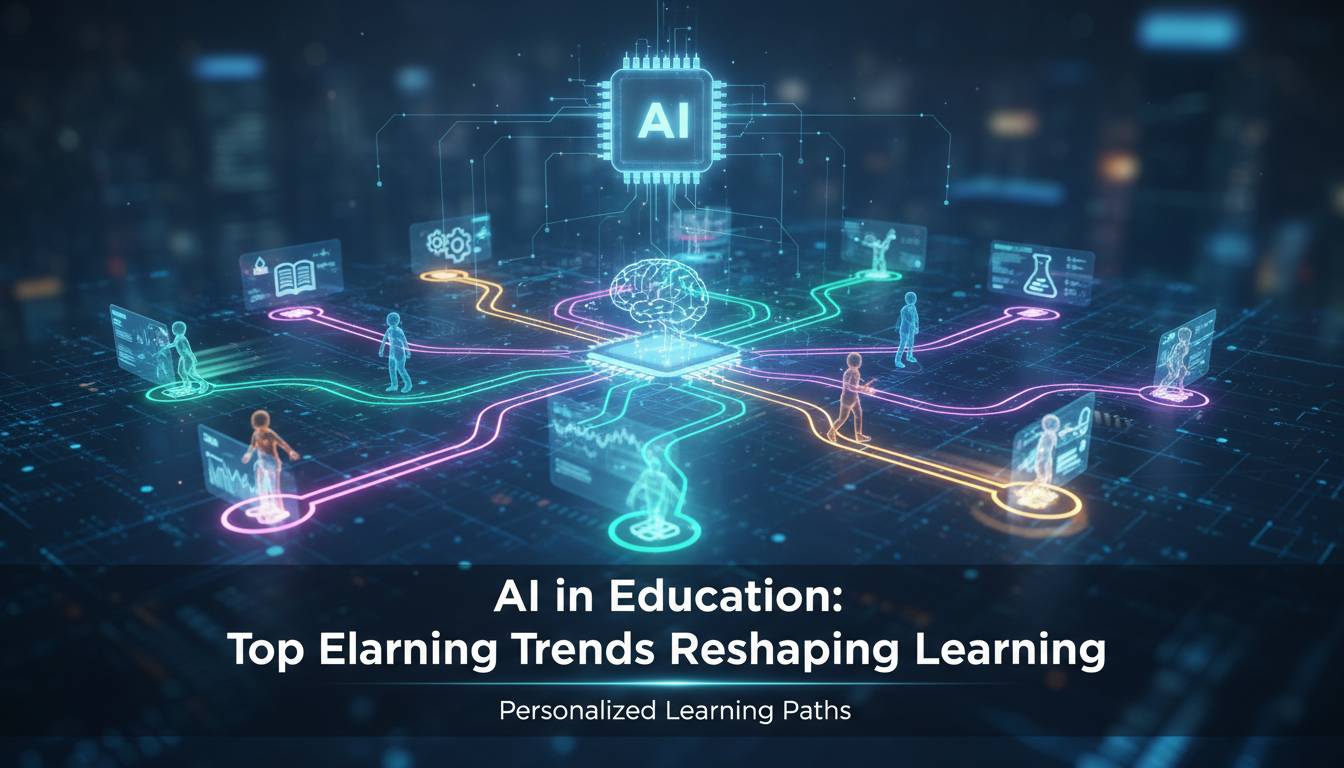
“`html
The integration of artificial intelligence into American classrooms has accelerated significantly, fundamentally altering how learning platforms and digital learning environments function across K-12 and higher education sectors. Schools are deploying AI-powered tools to personalize instruction, automate administrative workflows, and support teacher decision-making. This transformation gained considerable momentum during the COVID-19 pandemic when remote and hybrid learning became necessity rather than choice, prompting many institutions to expand AI implementations in subsequent years.
This comprehensive guide examines significant developments in AI-driven educational technology, explores practical applications currently operating in real classrooms, and considers implications for the future of American education.
The Current State of AI in Educational Technology
AI in education has moved decisively from experimental pilot programs to scaled implementation across the country. According to market research published by HolonIQ, the global AI in education market reached $3.8 billion in 2024 and is projected to grow at a compound annual growth rate of approximately 36% through 2030 (HolonIQ, 2024). Domestically, the U.S. Department of Education documented that 62% of public school districts have implemented at least one AI-powered instructional tool in 2024, compared to just 27% in 2020 (U.S. Department of Education, Office of Planning, Evaluation and Policy Development, 2024).
Major technology companies have developed learning management systems incorporating machine learning algorithms that continuously adapt to individual student performance patterns. These platforms analyze interaction data, assessment results, and engagement metrics to generate personalized content recommendations and identify knowledge gaps in real time. The result is an educational environment capable of responding dynamically to learner needs, adjusting difficulty levels and instructional approaches based on demonstrated understanding.
Generative AI technologies, particularly large language models, have created unprecedented opportunities for educational content development. Educators can leverage these tools to generate lesson plan drafts, create practice problem sets, and provide immediate feedback on student submissions. Based on documented case studies from school districts in Georgia, Texas, and California, AI-assisted content generation has reduced average lesson planning time by approximately 30% while maintaining quality standards established by curriculum coordinators (EdTech Magazine, 2023).
Key AI Trends Transforming eLearning Platforms
Several distinct patterns are emerging as defining characteristics of AI’s evolution in educational technology.
Adaptive Learning Systems represent some of the most widely deployed AI applications in education. These platforms continuously calibrate content difficulty, pacing, and presentation methods based on individual learner performance. Unlike conventional curricula following standardized progression, adaptive systems generate differentiated learning pathways that accelerate for students demonstrating rapid concept acquisition while providing additional scaffolding and review opportunities for those requiring more time. A 2023 meta-analysis published in the Review of Educational Research, examining 83 studies involving over 12,000 students, found that adaptive learning interventions produced a moderate positive effect on student achievement outcomes, with particularly strong results in mathematics and language learning contexts where concepts build sequentially (Pane, J. F., et al., 2023).
Intelligent Tutoring Systems have evolved substantially beyond basic question-and-answer functionality to deliver more sophisticated pedagogical support. Contemporary AI tutors engage in natural language dialogue, explain concepts through multiple representational approaches, and detect signs of confusion through analysis of student responses and question-asking patterns. These systems operate continuously without time constraints, providing immediate assistance whenever learners encounter difficulty—a capability that proves especially valuable for working adult students balancing educational pursuits with professional and family responsibilities.
Automated Assessment and Feedback technologies are transforming evaluation practices in educational settings. AI-powered grading systems can evaluate written compositions, computer code, mathematical solutions, and oral presentations with accuracy rates that have improved substantially through recent advances in natural language processing. A 2024 study by the Walton Family Foundation found that 58% of teachers reported spending 10 or more hours weekly on assessment-related tasks, with AI-assisted tools reducing this time by an average of 4 hours per week (Walton Family Foundation, 2024). While human educators maintain essential oversight responsibilities, these tools dramatically reduce time expenditure on routine evaluation tasks, freeing instructor capacity for meaningful mentorship, individualized coaching, and curriculum development work.
Predictive Analytics capabilities enable educational institutions to identify students at elevated risk of academic difficulty before performance problems materialize. By analyzing patterns in attendance records, assignment submission rates, platform engagement metrics, and other behavioral indicators, AI systems can generate early warning flags for learners who may benefit from targeted intervention. Research from the Education Data Initiative indicates that institutions implementing early warning systems have reduced course failure rates by 15-22% among identified at-risk students (Education Data Initiative, 2023).
Statistical Overview and Market Dynamics
Quantitative indicators reveal both the momentum driving AI adoption in education and the obstacles requiring attention. Investment data from EdSurge and HolonIQ documents substantial capital flowing toward companies developing AI-powered learning solutions, with global venture funding for ed-tech companies reaching $18.2 billion in 2022 before moderating to approximately $12 billion in 2024 (EdSurge & HolonIQ, 2024). The Federal Communications Commission’s E-Rate program and various state-level initiatives have contributed to improved connectivity, with the Pew Research Center reporting in 2023 that 93% of American households with school-age children now have home internet access, up from 73% in 2015 (Anderson, M., & Kumar, M., 2023).
Attitudes toward AI among students and educators demonstrate considerable variation across demographic groups and institutional contexts. National surveys conducted by the EdWeek Research Center in 2024 found that 71% of K-12 students reported regular use of AI tools for academic purposes, while only 34% of teachers expressed confidence in their ability to evaluate AI-generated content for accuracy (EdWeek Research Center, 2024). Concerns about overreliance on technology, potential for algorithmic bias, and impacts on critical skill development remain prominent among educators, particularly those in older age cohorts.
The COVID-19 pandemic functioned as an unplanned large-scale pilot for digital learning technology adoption. Emergency remote instruction forced rapid implementation of platforms and tools that many institutions had previously avoided. This experience generated valuable implementation knowledge while simultaneously revealing persistent gaps in infrastructure, digital literacy, and pedagogical preparation for technology-mediated instruction. Post-pandemic data from the National Center for Education Statistics indicates that 78% of public schools have maintained or expanded their educational technology investments compared to pre-pandemic levels (NCES, 2024).
Benefits for Educators and Students
AI-powered educational tools offer demonstrable advantages across multiple stakeholder groups. For educators, AI assistance can substantially reduce administrative burden, generate data-informed insights into student learning patterns, and support instructional design through rapid content generation. A 2024 survey of 1,200 teachers conducted by the Learning Agency Lab found that 67% of educators using AI-assisted planning tools reported reduced preparation time, with 54% indicating they could create more differentiated materials as a result (Learning Agency Lab, 2024). The capacity to generate differentiated materials efficiently addresses one of the most persistent resource constraints in teaching practice.
Students benefit from personalized learning experiences that adapt to individual needs, preferences, and demonstrated competency levels. AI-driven recommendation systems suggest relevant resources, practice activities, and enrichment materials aligned with each learner’s established knowledge state and learning trajectory. For students with disabilities, AI-powered accessibility features including text-to-speech conversion, real-time closed captioning, and interface customization options create meaningfully more accessible learning experiences. Research from the National Deaf Center on Postsecondary Outcomes documented improvements in academic outcomes when AI accessibility tools are properly implemented for deaf and hard-of-hearing students (National Deaf Center on Postsecondary Outcomes, 2023).
Educational institutions achieve operational efficiencies through automated workflows and data-driven resource allocation. Student success teams can deploy predictive analytics to concentrate intervention efforts on learners demonstrating elevated risk indicators, while administrative offices streamline enrollment processes, academic advising, and student support services. These efficiency gains translate to cost savings and improved resource utilization—benefits that prove particularly significant for institutions operating under constrained budgets.
Addressing Challenges and Ethical Considerations
Despite considerable promise, AI implementation in educational contexts raises substantial concerns requiring thoughtful attention. Data privacy and security represent primary concerns, as educational AI systems necessarily collect extensive sensitive information about minor students. The Family Educational Rights and Privacy Act (FERPA) establishes federal requirements for student data protection, and compliance demands robust governance frameworks, transparent data practices, and clear policies regarding data retention and sharing. Institutions must carefully evaluate vendor data handling practices and establish contractual protections before deploying AI tools.
Algorithmic bias presents serious equity concerns that can perpetuate or amplify existing educational inequalities. Research published in proceedings from the Association for Computing Machinery has documented instances where educational AI systems demonstrated differential performance across demographic groups, with recommendation engines occasionally reinforcing patterns of historical disadvantage (ACM Conference on Fairness, Accountability, and Transparency, 2023). Addressing these risks requires diverse development teams conducting rigorous bias auditing, transparent documentation of training data sources, and ongoing monitoring of system performance across different demographic categories.
The digital divide continues to generate equity challenges for AI implementation. The National Assessment of Educational Progress has documented correlations between household income and student access to technology, with students from lower-income families less likely to have reliable home internet connectivity or appropriate devices for intensive digital learning (NAEP, 2023). Equitable AI implementation demands concurrent investment in infrastructure and access programs to ensure technological advances reduce rather than widen achievement gaps.
Faculty preparation and institutional acceptance present practical implementation challenges. Survey data from the EDUCAUSE Center for Analysis and Research indicates that only 31% of faculty members reported feeling prepared to integrate AI tools into their teaching practice as of 2024 (EDUCAUSE, 2024). Successful implementation requires substantive professional development opportunities, meaningful educator input in technology selection processes, and clear communication establishing that AI serves to augment rather than replace human pedagogical expertise.
Emerging Tools and Technologies
The market for AI-powered educational tools continues expanding with new products and capabilities emerging regularly. Learning management system providers have integrated increasingly sophisticated AI features, while specialized applications address specific functional areas including writing assistance, mathematical reasoning support, and language learning. Generative AI has particularly transformed content creation workflows, enabling rapid development of instructional materials across subjects and grade levels.
Conversational AI and virtual assistants are deploying across student support services, handling routine inquiries regarding registration, financial aid, and campus resources. These systems operate continuously without staffing constraints, providing immediate responses to common questions while escalating complex issues requiring human judgment to appropriate staff members. Institutions deploying AI support assistants have reported improved service availability and response times without proportional increases in support staff expenditures.
AI-powered accessibility tools are supporting institutional compliance with Americans with Disabilities Act requirements while creating more inclusive learning environments. Real-time transcription services, automatic alternative text generation for images, and adaptive interface options support learners with diverse needs. These capabilities benefit not only students with documented disabilities but also learners who prefer varied content formats or whose primary language differs from instructional materials.
Future Directions and Implementation Considerations
AI’s role in education appears poised for continued expansion as technologies mature and institutional familiarity increases. Emerging developments in multimodal AI systems capable of processing and generating text, images, video, and audio simultaneously promise new possibilities for creating rich, immersive educational experiences. The integration of AI with virtual and augmented reality technologies could enable learning environments offering experiential dimensions previously impossible in traditional instructional settings.
Institutions planning AI implementation should adopt strategic approaches beginning with clearly defined objectives and measurable success indicators. Pilot programs allow for practical knowledge development before scaled deployment, while ongoing evaluation processes ensure investments produce anticipated benefits. Meaningful participation from diverse stakeholders—educators, students, support staff, and administrators—in planning and implementation processes builds institutional support while identifying potential concerns during manageable early phases.
Professional development remains critical to successful AI adoption. Survey data from the International Society for Technology in Education (ISTE) indicates that educators who complete 20+ hours of AI-focused professional development are 3.5 times more likely to report confident integration of these tools into instructional practice (ISTE, 2024). Training programs should address both practical operational skills and broader considerations including ethical implications, equity concerns, and pedagogical implications for teaching practice.
Conclusion
Artificial intelligence is demonstrably reshaping educational practice throughout the United States, offering genuine opportunities for learning personalization, operational efficiency, and enhanced student support. The trends examined throughout this article—adaptive learning systems, intelligent tutoring, automated assessment, and predictive analytics—represent meaningful advances in educational technology supported by growing evidence bases documenting benefits for learners and educators. Realizing this potential requires thoughtful implementation addressing persistent challenges around privacy protection, equitable access, and educator preparation. As AI capabilities continue advancing, educational institutions must maintain adaptability, embracing innovation while preserving focus on foundational educational mission: cultivating student success in an increasingly complex knowledge environment.
Frequently Asked Questions
What are the main benefits of AI in education and eLearning?
AI-powered educational tools deliver personalized learning experiences adapted to individual learner needs, automate time-consuming administrative tasks, provide continuous support through intelligent tutoring systems, and enable early identification of struggling students through predictive analytics. According to the U.S. Department of Education’s Office of Educational Technology, AI tools have demonstrated measurable improvements in student engagement and learning outcomes when properly implemented (U.S. Department of Education, 2023).
How is AI changing the way students learn online?
AI enables individualized learning pathways that adjust to each student’s demonstrated understanding and learning pace, delivers immediate feedback on assignments, and creates interactive support experiences through conversational AI and virtual learning assistants. Students receive content recommendations and assistance tailored to their specific needs and learning patterns.
What are the biggest challenges of implementing AI in classrooms?
Primary implementation challenges include protecting sensitive student data, preventing algorithmic bias from perpetuating inequities, ensuring equitable technology access across socioeconomic groups, providing adequate professional development for educators, and managing deployment costs. Institutions also require clear governance policies establishing responsible AI use parameters.
Are AI tools replacing teachers?
AI serves augmentative rather than replacement functions in educational contexts. While AI effectively handles routine tasks including grading and content delivery, the human dimensions of teaching—mentorship, emotional support, critical thinking facilitation, and relationship building—remain essential and irreplaceable. The World Economic Forum’s Future of Jobs Report 2023 identifies teaching as among the professions least likely to be displaced by AI, emphasizing that human educators continue serving crucial roles developing competencies that extend beyond technical knowledge acquisition.
What AI tools are most commonly used in education?
Frequently deployed AI applications include adaptive features embedded within learning management systems, intelligent tutoring software, automated assessment and grading tools, plagiarism detection systems, conversational AI assistants for student services, and predictive analytics platforms identifying at-risk learners. Solutions range from comprehensive integrated platforms to specialized tools addressing particular functional requirements.
Is AI in education effective for all age groups?
AI-powered learning tools demonstrate effectiveness across educational levels from early childhood through higher education and professional development contexts. Implementation approaches appropriately vary by age group—younger learners may benefit most from gamified AI experiences incorporating game-like elements, while adult learners typically prefer tools emphasizing productivity enhancement and seamless integration with professional responsibilities.
“`