

 February 24, 2026
  8 Min
8 Min  No Comment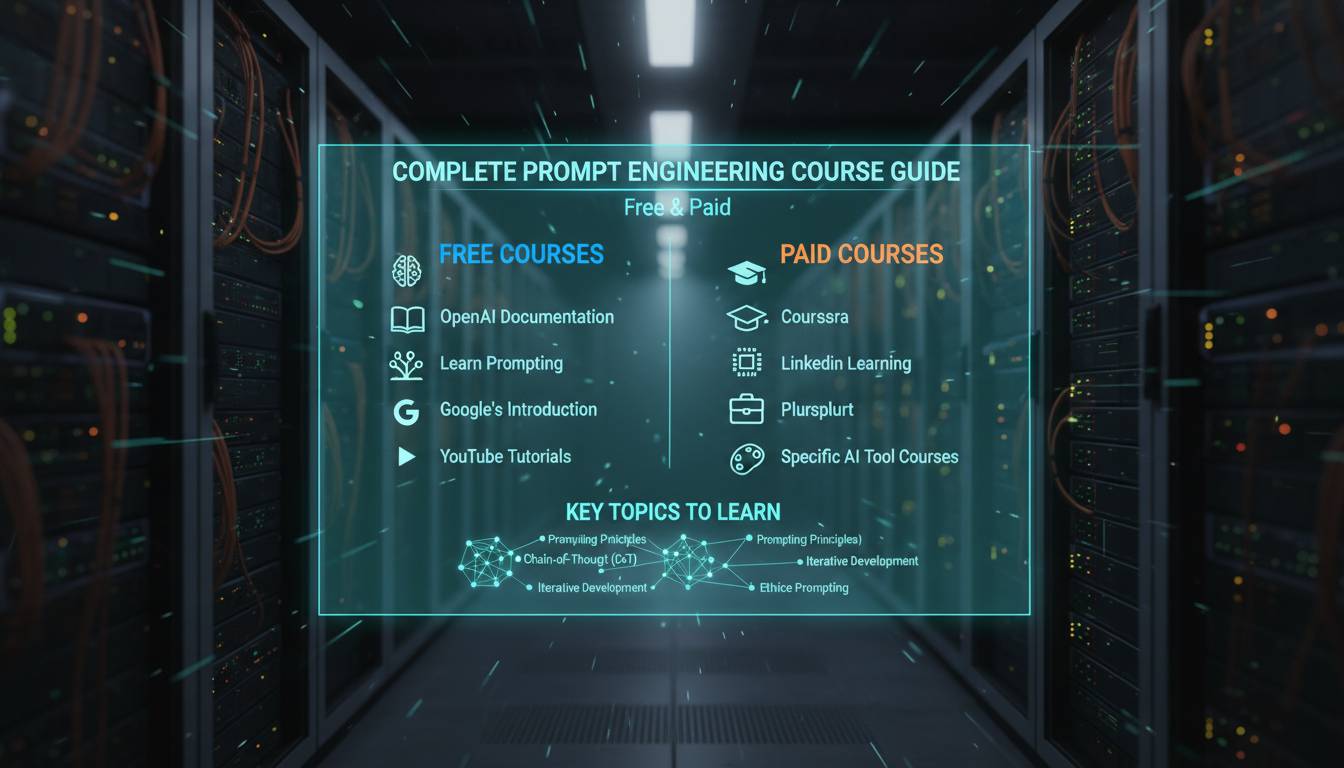
Prompt engineering has become a real skill that employers actually want. Whether you’re a developer trying to build AI into your apps, a marketer looking to speed up content creation, or just someone who wants to get better results from ChatGPT, knowing how to talk to these models matters. This guide breaks down what’s worth your time in 2024.
The quality gap between courses is huge. Some are genuinely useful. Others are cash grabs with outdated info. I’ve looked at what’s actually available and broke it down by what you’ll get for your money—or lack thereof.
What Makes a Course Worth Your Time
Here’s what actually matters when you’re picking a prompt engineering course:
Practical content beats theory. If you’re not actually writing prompts and getting feedback, you’re just reading about prompts. The best courses have you working through real examples—drafting, testing, iterating. Look for coverage of chain-of-thought prompting, few-shot examples, and handling the weird ways models can fail.
Instructor experience counts. Someone who’s actually built AI products or spent years experimenting with these models will notice things that textbooks miss. If an instructor’s background is just “I took an AI course,” keep looking.
Format matters for your schedule. Video lectures you can pause? Interactive notebooks? Community forums? Figure out how you actually learn. If you need accountability, a self-paced course might not work for you.
Credentials only matter if someone cares. If you’rejob hunting, check whether employers in your field actually look for specific certs. Sometimes they do, sometimes they don’t. And honestly, a solid portfolio of prompting work often speaks louder than a certificate.
Watch the price tags carefully. Some courses give lifetime access. Others want you on a subscription. Free courses exist and some are genuinely good—but they often lack support when you’re stuck.
Free Courses Worth Your Time
You can learn the fundamentals without spending anything. Here’s what’s actually good:
DeepLearning.AI’s ChatGPT Prompt Engineering for Developers
Andrew Ng teamed up with OpenAI for this one, and it’s the best free resource out there. It’s aimed at developers using the OpenAI API, but even if you don’t code, the conceptual stuff applies to any model.
You’ll learn how to write clear instructions, give models space to reason through hard problems, and structure prompts so outputs are actually usable. The Jupyter notebooks run right in your browser—no setup required.
Plan for about two hours to get through it, then more time to mess around with the techniques on your own.
Google’s Introduction to Prompt Engineering
Google’s take on prompt engineering covers the basics and shows how their models (Gemini specifically) respond to different approaches. It’s interesting to see how one of the biggest AI labs thinks about prompting.
The self-paced format works if you’ve got unpredictable schedule. Content updates as Google’s models change, which matters because prompting behavior shifts with each new model version.
Microsoft’s Prompt Engineering Basics
Microsoft’s free course is built for business users, not developers. If you want to write better prompts for emails, document summaries, and meeting notes—this is practical stuff.
It’s part of a bigger AI skills push from Microsoft, so it connects to their enterprise tools. Good for professionals who want productivity wins without building anything technical.
YouTube and Reddit
YouTube has plenty of prompt engineering tutorials. Quality ranges wildly—some are great, some are from people who just learned about prompting last week. Check who made the video and whether it’s recent. AI changes fast.
Reddit communities like r/ChatGPT and r/PromptEngineering are worth browsing. People share real problems and solutions there. It’s not structured learning, but you pick up stuff that never makes it into courses.
FreeCodeCamp has decent tutorials if you want prompting tied into bigger AI projects.
Paid Courses That Actually Deliver
If you want more depth, structure, or a credential to put on your resume, paid courses have advantages.
Coursera’s Prompt Engineering Options
Coursera has university-backed courses and specializations. The structure is solid—video lectures, projects, peer discussion. Certificates are verifiable, which some employers care about.
The AI courses from research institutions are especially good if you want the why behind the techniques, not just the how. Understanding how models work internally makes you better at prompting them.
Coursera charges for certificates, but financial aid exists if you qualify.
Udemy
Course quality on Udemy is all over the place. Stick to courses with thousands of ratings and read the recent reviews—stuff goes out of date fast.
The platform runs sales constantly, so you rarely pay full price. Lifetime access means you can reference materials later, which is useful.
LinkedIn Learning
LinkedIn’s AI courses lean toward business applications. Good if you’re a manager or knowledge worker, not ideal if you’re building AI products.
The nice part: completions show up on your LinkedIn profile automatically. Recruiters can see you’ve got AI skills without you having to bring it up.
Specialized AI Platforms
Newer platforms focus specifically on AI education. Content tends to be more current than marketplace courses—that matters when the field moves this fast.
These cost more than Udemy courses but often include mentorship, career help, and project portfolios. Worth considering if you’re trying to actually change careers into AI work.
Which Should You Pick
Your situation dictates the right choice:
On a budget? Start free. Complete DeepLearning.AI’s course, then decide if you want more. Most people don’t need to pay anything to get genuinely good at prompting.
Want credentials for your resume? Paid courses with certificates make sense—but only if employers in your field actually check for them. A quick LinkedIn search of job listings in your target role tells you a lot.
Need structure to stay motivated? Something with deadlines and community might be worth paying for. Self-directed learning isn’t for everyone.
Career switching? The more comprehensive paid programs with career support could pay off. But also: you can build a portfolio on your own. There’s nothing stopping you from prompting your way through real problems and showing that work.
Here’s the thing: the best course is the one you’ll finish. If free gets you started and paid keeps you going, that’s your answer.
Quick Answers
Is prompt engineering still worth learning?
Yes. AI tools aren’t going away, and better prompting means better outputs. It’s a skill that works alongside whatever else you do—coding, writing, managing, selling.
How long to learn the basics?
A few hours of focused learning gets you the fundamentals. Getting good at it—knowing when a prompt will fail before you run it—takes weeks of practice. Mastery is months away.
Need to know how to code?
Not necessarily. Developer-focused courses assume Python. Business-focused courses don’t. Pick based on your background and goals.
Best overall course?
DeepLearning.AI’s free course for fundamentals. Paid—depends on what you need. Coursera for credentials, specialized platforms for career switching.
Can you get hired as a “prompt engineer”?
The specific title is rare. But AI skills make you more valuable in almost any role. Position it as something you bring to whatever job you have.
The Real Talk
You don’t need to spend money to get good at this. The free resources cover 90% of what you’ll actually use day-to-day. The paid stuff matters more if you want credentials or structured support.
But here’s the secret that courses won’t tell you: the only way to actually get good is to use these tools. Constantly. On real problems. Get frustrated when prompts don’t work, figure out why, try again. That’s where the skill comes from.
Start with the free stuff. Build momentum. Then decide if you want to pay for more. The field’s moving fast enough that starting now beats waiting for the perfect course.
