

 February 24, 2026
  21 Min
  No Comment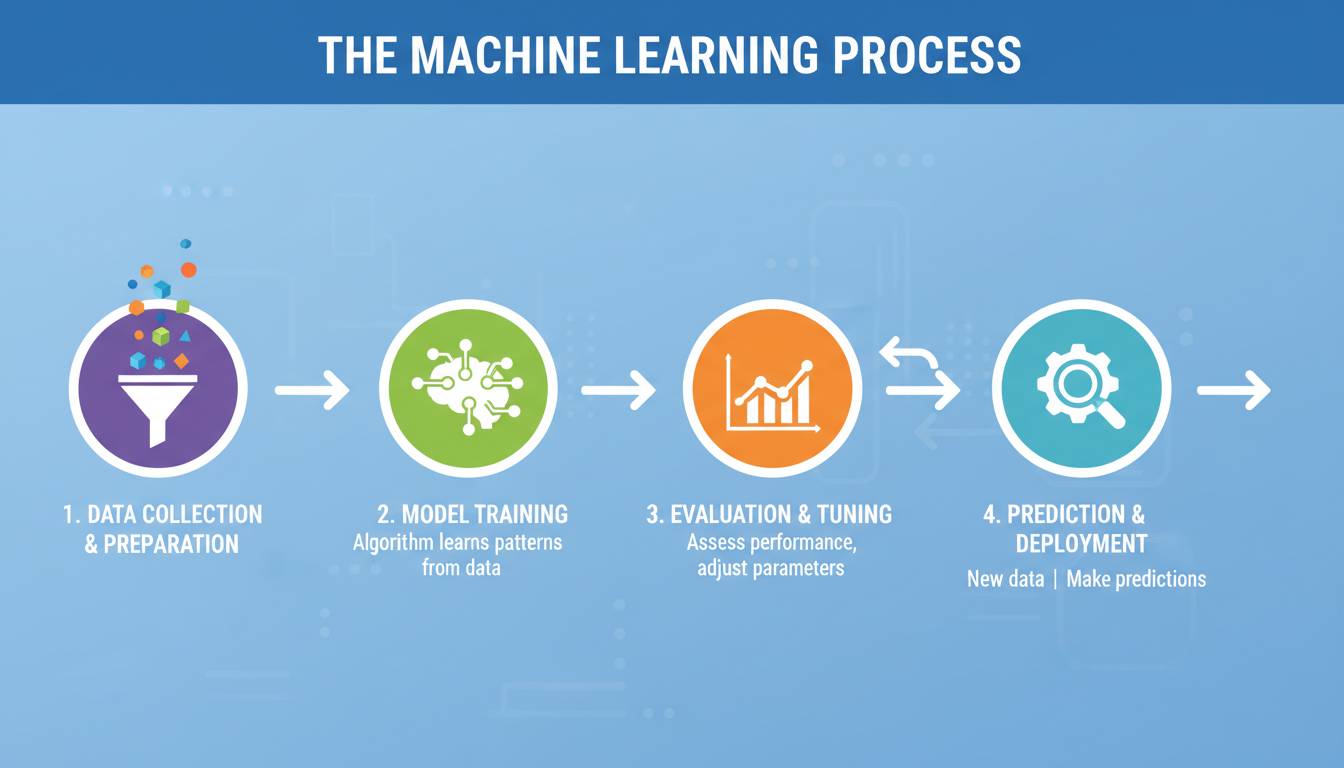
Machine learning has become one of the most valuable skills in today’s technology-driven job market. Whether you’re looking to switch careers, enhance your current skill set, or simply understand how algorithms shape our digital world, diving into machine learning opens doors to countless opportunities. The good news is that you don’t need to spend thousands of dollars on formal education to get started. A wealth of high-quality, free resources exists online, ranging from university-backed courses to interactive platforms where you can practice with real datasets. This guide curates the best free machine learning resources available in 2025, organized by learning style and skill level to help you build a solid foundation without spending a cent.
Why Learn Machine Learning in 2025
The demand for machine learning professionals continues to grow across virtually every industry. From healthcare and finance to entertainment and transportation, organizations are leveraging ML algorithms to analyze data, predict trends, and automate complex tasks. Learning machine learning isn’t just for aspiring data scientists anymore—it’s becoming essential for software engineers, product managers, analysts, and even marketers who want to stay competitive in their fields.
What makes this an ideal time to start is the democratization of education. Top universities like Stanford, MIT, and Harvard offer their machine learning courses for free online. Tech giants including Google, Microsoft, and IBM provide educational resources through their own platforms. The barrier to entry has never been lower, and the quality of free content often matches or exceeds expensive alternatives. The key is knowing which resources provide the best return on your time investment.
Before diving into specific resources, it’s worth understanding what you’re getting into. Machine learning sits at the intersection of computer science, statistics, and mathematics. While you don’t need a PhD to get started, you will need dedication, curiosity, and a willingness to work through challenging concepts. The learning curve can be steep, but the abundance of free resources means you can find an approach that matches your learning style and background.
Free Online Courses for Machine Learning Beginners
Stanford’s Machine Learning Course on Coursera
Andrew Ng’s machine learning course from Stanford University remains one of the most recommended starting points for beginners worldwide. Available on Coursera, this course covers the fundamental algorithms and concepts that form the backbone of machine learning. You can audit the course completely free, accessing all video lectures, readings, and programming assignments. The course uses MATLAB or Octave for practical exercises, which might feel dated but effectively teaches the underlying mathematics and implementation logic.
The curriculum progresses logically from simple linear regression through neural networks, providing a comprehensive foundation. Each module includes theoretical explanations followed by practical applications, helping you understand not just how algorithms work but why they’re designed that way. The community forums active around this course mean you can find help when you get stuck, and the peer-reviewed assignments provide valuable feedback on your understanding.
What makes this course particularly valuable is Ng’s teaching style—he explains complex concepts in an accessible way without oversimplifying the mathematics. You’ll learn about supervised learning, unsupervised learning, and best practices for implementing machine learning systems. The course typically takes 11 weeks to complete if you dedicate around 5-8 hours per week, though audit learners can move at their own pace.
Google’s Machine Learning Crash Course
Google developed its Machine Learning Crash Course as internal training for their engineers, then released it publicly for free. This course stands out for its practical, application-focused approach that emphasizes TensorFlow, Google’s popular machine learning framework. The curriculum covers machine learning fundamentals through a combination of video lectures, interactive exercises, and real-world case studies.
Unlike more theoretically heavy courses, Google’s Crash Course prioritizes getting you to build working models quickly. You’ll learn through doing, with programming exercises that let you implement concepts immediately. The course includes machine learning engineering best practices that Google has learned from deploying ML systems at scale—knowledge that’s directly applicable if you eventually work in industry.
The course spans approximately 15 hours of content, making it more compact than some alternatives. It’s particularly well-suited if you’re already comfortable with Python and want to understand how to apply machine learning rather than dive deep into underlying theory. The course also includes a glossary of machine learning terms and a set of machine learning flashcards for review, which help reinforce learning.
Fast.ai: Making Neural Networks Cool
Fast.ai has revolutionized how beginners approach deep learning with their free courses designed to make advanced machine learning accessible. Their Practical Deep Learning for Coders course takes a top-down approach—you’ll build working models in the first lesson before diving into underlying theory. This inverted teaching method helps maintain motivation by showing you impressive results quickly.
The courses are entirely free, with no hidden costs or upsells. Fast.ai also provides their library as open-source software, and the community maintains an active forum where learners help each other troubleshoot issues. The teaching philosophy emphasizes practical skills over mathematical perfection—you’ll learn to get results that work rather than getting stuck on theoretical foundations that may not matter for your specific application.
What sets Fast.ai apart is their commitment to democratizing AI education. Founder Jeremy Howard, a former Kaggle competition winner and University of San Francisco professor, brings industry experience directly into the curriculum. You’ll learn state-of-the-art techniques being used in production ML systems today, not just textbook algorithms from decades past.
Microsoft’s ML for Beginners Curriculum
Microsoft’s ML for Beginners curriculum takes a structured, 12-week approach to teaching machine learning. Available completely free on GitHub, this curriculum was designed specifically for beginners with basic Python knowledge. The course includes lesson plans, quizzes, hands-on labs, and supplementary materials—all professionally developed and maintained.
The curriculum covers not just machine learning algorithms but also the broader ecosystem of tools and practices. You’ll learn about data processing, model training, evaluation, and deployment. Each week includes multiple lessons with clear learning objectives and practical exercises. The course uses Python, scikit-learn, and TensorFlow, giving you experience with industry-standard tools.
Microsoft has designed this curriculum to be teachable in classroom settings, but it works equally well for self-directed learners. The hands-on labs use real datasets and practical scenarios, helping you build a portfolio of projects as you progress. With 24 lessons spread across 12 weeks, you can complete the curriculum in approximately 60-80 hours, depending on how deeply you engage with optional materials.
IBM’s AI Engineering Professional Certificate on Coursera
IBM offers a comprehensive Professional Certificate in AI Engineering through Coursera that you can complete entirely for free through audit mode. This six-course program covers machine learning, deep learning, TensorFlow, computer vision, and natural language processing. While the certificate itself requires payment, all course content—including videos, readings, and programming assignments—is available for free.
The curriculum takes approximately 4-6 months to complete at a moderate pace, with each course requiring 20-40 hours of engagement. You’ll build a solid foundation across multiple ML specializations, gaining exposure to different types of problems and approaches. The courses include hands-on labs using IBM Cloud and Watson, giving you experience with enterprise-grade tools.
What makes this program valuable is its breadth. Rather than focusing narrowly on machine learning fundamentals, you’ll gain exposure to the full AI engineering lifecycle—from data preparation through model deployment. This holistic view helps you understand how machine learning fits into larger technology ecosystems and prepares you for real-world work environments.
Interactive Learning Platforms
Kaggle: Learn by Doing
Kaggle hosts the world’s largest data science community with over 10 million members, and their free Learn section provides an exceptional platform for hands-on machine learning practice. Unlike passive course-watching, Kaggle emphasizes active learning through competitions, datasets, and code notebooks that you can run directly in your browser.
The Kaggle Learn courses cover Python, machine learning, data visualization, and feature engineering through a combination of micro-lessons and practical exercises. Each course includes interactive coding challenges that run in Kaggle’s cloud environment—no local setup required. This immediate feedback loop accelerates learning by letting you experiment freely without worrying about breaking your local environment.
Beyond structured courses, Kaggle offers an invaluable learning opportunity through its competitions. Even participating in competitions without expecting to win teaches you how to approach real machine learning problems. You can study kernels (shared solutions) from top performers, learn from discussion forums, and gradually build your skills in a competitive environment that motivates continued learning.
The platform also provides thousands of public datasets spanning industries from healthcare to sports. Working with these datasets gives you experience with the messy, imperfect data that characterizes real-world machine learning—experience that pure coursework often doesn’t provide. As you progress, you can enter competitions to test your skills against others and potentially win prizes while learning.
DataCamp’s Free Tier
DataCamp offers an interactive learning platform focused on data science and machine learning skills. While their full subscription includes expanded content, their free tier provides sufficient material for beginners to get started. The platform uses an interactive coding environment that runs in your browser, eliminating setup friction.
The machine learning track covers topics from basic supervised learning through advanced techniques, with each skill chunk taking 10-15 minutes to complete. This micro-learning approach fits well into busy schedules, letting you make progress in small increments. The courses use R and Python, giving you flexibility in language choice.
DataCamp’s strength lies in its structured progression. The platform carefully sequences concepts to build systematically, ensuring you master prerequisites before advancing. This scaffolded approach reduces frustration and helps maintain momentum as you work through increasingly complex material. The immediate feedback on exercises helps correct misunderstandings before they become entrenched.
W3Schools Machine Learning Tutorial
W3Schools, known for their web development tutorials, has expanded into machine learning with comprehensive, beginner-friendly guides. Their ML section covers fundamentals through practical implementation, with examples in Python, R, and TensorFlow. The tutorial format works well for learners who prefer reading to watching videos, with clear explanations and runnable code snippets.
The content progresses logically from basic concepts through advanced algorithms, with each section including both explanation and implementation. You can run code examples directly in the browser, making experimentation easy. The reference-style organization also makes W3Schools valuable as a resource you can return to when you need to refresh specific concepts.
While W3Schools may not provide the depth of a full course, it serves as an excellent quick reference and initial introduction. Many developers appreciate having a single resource they can quickly consult without navigating through course platforms. The consistent format and clear navigation make it easy to find exactly what you need when you need it.
YouTube Tutorials and Video Lectures
3Blue1Brown: Neural Networks Visualized
3Blue1Brown, created by Grant Sanderson, provides some of the most intuitive visualizations of neural network concepts available anywhere. His “Neural Networks” playlist uses stunning animations to explain how neural networks learn, what backpropagation actually does, and how these systems recognize patterns. These videos won’t teach you to code, but they’ll give you deep intuitive understanding of core concepts.
The strength of 3Blue1Brown’s content lies in making the abstract concrete. Understanding what happens mathematically during training becomes much easier when you can see vectors transforming through space in three dimensions. This visual intuition serves as a powerful foundation that makes subsequent learning more meaningful—you’re not just memorizing procedures but understanding why they work.
Each video in the neural network series takes approximately 20 minutes to watch, making them manageable even for busy schedules. The production quality is exceptional, with careful attention to both accuracy and accessibility. These videos work particularly well as supplements to more comprehensive courses, helping solidify understanding after you’ve encountered concepts elsewhere.
Sentdex: Practical Python Machine Learning
Sentdex provides practical, project-oriented machine learning tutorials that emphasize implementation over theory. Creator Harrison Kinsley teaches through building real applications, showing you exactly how to apply machine learning concepts in Python. The tutorials range from beginner basics through advanced deep learning projects.
The content covers the full machine learning pipeline: data collection, preprocessing, model training, evaluation, and deployment. You’ll learn to work with popular libraries including scikit-learn, TensorFlow, and Keras. Projects include stock prediction, game playing AI, image recognition, and natural language processing—giving you diverse experience across ML applications.
What makes Sentdex valuable is the emphasis on practical code. While understanding theory matters, being able to implement solutions matters more for most career applications. The tutorials show you real, working code that you can adapt for your own projects, accelerating your path to building deployable machine learning systems.
Lex Fridman’s MIT Lectures
Lex Fridman, an MIT researcher, has recorded and published his graduate-level machine learning lectures for free on YouTube. These comprehensive lectures cover deep learning, reinforcement learning, and artificial intelligence from a technical perspective. While more advanced than some beginner resources, they’re invaluable for learners who want rigorous, university-quality instruction.
The lectures span multiple courses, including Deep Learning, Reinforcement Learning, and AI. Each lecture runs approximately 75-90 minutes, providing deep coverage of topics. Fridman’s teaching style emphasizes both mathematical foundations and practical implementation, giving viewers a complete picture of how modern ML systems work.
These lectures work best for learners who already have some technical background and want comprehensive, technically rigorous content. The pace is faster than introductory courses, and the material assumes comfort with mathematics and programming. If you’re ready to move beyond surface-level introductions, Fridman’s lectures provide an exceptional free education in advanced machine learning topics.
Practice Resources and Datasets
UCI Machine Learning Repository
The UCI Machine Learning Repository, maintained at the University of California, Irvine, provides a collection of databases, domain theories, and data generators used by the machine learning community for empirical analysis. With over 650 datasets spanning classification, regression, clustering, and other ML tasks, this repository offers endless practice opportunities for beginners and experienced practitioners alike.
Each dataset includes documentation explaining its origin, variables, and recommended tasks. This context helps you understand not just how to apply algorithms but why certain approaches work for particular problems. Working through multiple datasets builds intuition about how different algorithms perform on different types of data—a crucial skill that courses often don’t adequately develop.
The repository includes datasets ranging from simple to complex, allowing you to progressively challenge yourself. Start with clean, well-structured datasets like Iris or Titanic, then advance to messier, higher-dimensional datasets as your skills develop. The variety ensures you can practice the full range of machine learning techniques without needing to source your own data.
Google Dataset Search
Google Dataset Search aggregates datasets from thousands of sources across the web, making it easy to find data for any project or interest area. Whether you’re interested in climate data, financial information, medical records, or social media trends, you can find relevant datasets to practice machine learning techniques. This tool dramatically reduces the time spent searching for appropriate practice data.
The search interface works similarly to regular Google search—you can query by topic, format, or specific attributes. Results include dataset descriptions, access information, and usage statistics. Many datasets are openly licensed, allowing you to use them freely for learning and portfolio development.
Beyond practice, these datasets can form the foundation of a portfolio that demonstrates your machine learning capabilities. Potential employers often want to see completed projects beyond coursework assignments. Having polished projects with real-world data significantly strengthens your job applications and interview performance.
GitHub Public Repositories
GitHub hosts countless public repositories containing machine learning projects, datasets, and educational resources. Beyond the specific course materials mentioned earlier, you can find implementations of papers, tutorials, and complete projects shared by the community. Studying well-documented repositories teaches you both machine learning implementation and software engineering best practices.
The key to learning from GitHub is selecting quality repositories. Look for projects with clear documentation, active maintenance, and good code organization. Star count provides a rough quality indicator, though smaller but well-organized projects can be equally valuable for learning. The goal is finding repositories that teach you something, not just collecting references.
You can also share your own learning projects on GitHub, building a public portfolio that demonstrates your capabilities. Even simple projects, when well-documented, show potential employers that you can translate learning into working code. Include README files explaining your approach, visualization of results, and discussion of what you learned—these details distinguish professional-quality submissions from amateur attempts.
Mathematics Foundations for Machine Learning
Khan Academy: Linear Algebra and Calculus
Strong mathematical foundations make machine learning concepts much more accessible. Khan Academy provides free, high-quality instruction in linear algebra, calculus, and statistics—all essential for understanding how machine learning algorithms work under the hood. You don’t need to master these subjects before starting ML, but having working knowledge accelerates comprehension.
The linear algebra course covers vectors, matrices, and operations that form the computational basis for most ML algorithms. Understanding matrix multiplication, eigenvalues, and vector spaces helps you comprehend why neural networks can efficiently process high-dimensional data. The course includes interactive exercises that provide immediate feedback.
Khan Academy’s calculus instruction covers derivatives and integrals, which become essential when understanding optimization—the process that allows models to learn from data. Gradient descent, the workhorse algorithm behind most machine learning training, becomes intuitive once you understand calculus concepts. The problem-solving approach builds genuine understanding rather than just procedures.
3Blue1Brown’s Essence of Linear Algebra
For learners who find traditional linear algebra courses overwhelming, 3Blue1Brown’s “Essence of Linear Algebra” provides an intuitive visual introduction. These approximately 15 videos total around three hours of content, yet provide deeper intuitive understanding than many semester-long courses. You’ll develop mental models that make subsequent ML learning much easier.
The series emphasizes geometric intuition—what matrices actually do to space—rather than computational procedures. This understanding proves essential when working with high-dimensional data in machine learning, where visualization isn’t possible but geometric intuition remains valuable. The animations make abstract concepts concrete in ways that textbooks rarely achieve.
Working through this series before or alongside machine learning courses transforms your experience. Concepts like eigenvectors become meaningful rather than abstract definitions to memorize. You’ll understand why certain operations work, which makes debugging and improving models much easier. This intuitive foundation complements more rigorous study without replacing it.
Paul’s Online Math Notes
Paul’s Online Math Notes, originally developed for Texas A&M mathematics courses, provides comprehensive free resources for calculus, algebra, and differential equations. These detailed notes work well as references when you encounter mathematical concepts in machine learning courses that need clarification. The explanations are clear and include numerous examples.
While the site covers mathematics comprehensively, the calculus and linear algebra sections prove most valuable for ML learners. The notes include practice problems with solutions, allowing you to test your understanding. The material aligns with standard university curricula, giving you confidence that your mathematical foundations match what’s expected in advanced ML courses.
FAQ: Common Questions About Learning Machine Learning
Is Machine Learning Hard for Beginners?
Machine learning presents genuine challenges, but calling it “hard” depends heavily on your background and approach. If you have strong programming skills and comfort with mathematics, you’ll find the learning curve manageable. If you’re newer to either programming or math, expect to spend extra time on foundations before machine learning concepts click.
The difficulty also varies by depth—building working models with scikit-learn is quite different from designing novel architectures or understanding research papers. Most beginners can achieve practical competence within 3-6 months of dedicated study. The key is maintaining patience through initial confusion and continuing even when concepts seem difficult.
Your learning approach significantly impacts perceived difficulty. Active learning through projects accelerates understanding far more than passive video-watching. Starting with practical applications before diving into theory often makes the journey more engaging and manageable. Don’t wait until you “feel ready”—jump in and learn as you go.
What Is the Best Way to Start Learning Machine Learning?
The best starting approach depends on your background and goals. For most beginners, Andrew Ng’s Stanford course provides an ideal introduction, offering rigorous fundamentals without overwhelming complexity. After completing that course or working through its early modules, you can specialize based on your interests.
If you prefer hands-on learning, starting with Fast.ai and building practical projects may keep you more engaged. Some learners thrive with project-based approaches while others need structured curriculum. Experiment with different approaches early to find what maintains your motivation.
Regardless of initial approach, ensure you code along with courses rather than just watching. Machine learning is a practical skill—you learn by doing, not by observing. Build the models yourself, debug your errors, and gradually develop intuition that no course can directly teach. The gap between watching someone solve a problem and solving it yourself is enormous.
Do I Need Advanced Mathematics to Learn Machine Learning?
You need mathematical comfort, but not mastery, to start learning machine learning. Basic linear algebra, calculus, and statistics concepts appear throughout ML, but most practical work doesn’t require advanced mathematical expertise. Libraries like scikit-learn and TensorFlow handle the heavy mathematical lifting—you mainly need to understand what the operations accomplish.
That said, mathematical understanding deepens your capabilities and helps you choose appropriate approaches, debug problems, and advance beyond basic applications. After learning practical skills, investing time in mathematical foundations pays dividends. Many resources explain ML concepts at multiple levels—you can start with practical implementation and add theoretical depth as you progress.
For most career applications, understanding when to apply which algorithm matters more than understanding mathematical proofs. However, if you aim toward research roles or advanced development, stronger mathematical foundations become essential. Begin with practical ML skills and let your interests guide mathematical depth.
How Long Does It Take to Learn Machine Learning Basics?
Achieving basic machine learning competency—understanding fundamental algorithms and building simple models—typically requires 2-4 months of consistent study. This timeframe assumes 10-15 hours weekly of focused learning. Those with strong programming backgrounds often progress faster, while those learning programming alongside ML naturally need more time.
Reaching professional competency where you can contribute to production ML systems takes 6-12 months of serious study and practice. This timeline includes building a portfolio of projects, gaining experience with real data, and understanding the complete ML development lifecycle. Learning never truly stops—technology evolves continuously.
Setting realistic expectations prevents discouragement. Machine learning is a deep field, and expertise develops over years rather than months. Focus on incremental progress rather than eventual mastery. Every concept you learn and project you complete advances your capabilities, even if the finish line seems far away.
Building Your Learning Path Forward
Machine learning education works best when you combine multiple resources rather than relying on any single source. Courses provide structured learning, while platforms like Kaggle provide practice. YouTube tutorials fill gaps in understanding, and projects cement knowledge. This multi-source approach exposes you to different perspectives and teaching styles, improving overall comprehension.
Creating a portfolio becomes essential as you develop skills. Potential employers want to see what you can create, not just what courses you’ve completed. Document your projects clearly, explaining your approach, challenges, and results. This portfolio demonstrates practical capability and separates you from learners who only complete coursework.
The machine learning community provides invaluable support. Engage with forums, attend local meetups, and participate in competitions. Asking questions and helping others accelerates learning for everyone involved. Many successful ML practitioners started exactly where you are now—they learned through persistence and community support.
Start today, not when you feel ready. The resources in this guide are free and accessible now. Your first model doesn’t need to be impressive—it just needs to work. That first success, however small, builds momentum that carries you through the inevitable challenges ahead. The journey of learning machine learning begins with a single step, and that step is available to you right now.
