

 February 15, 2026
  6 Min
6 Min  No Comment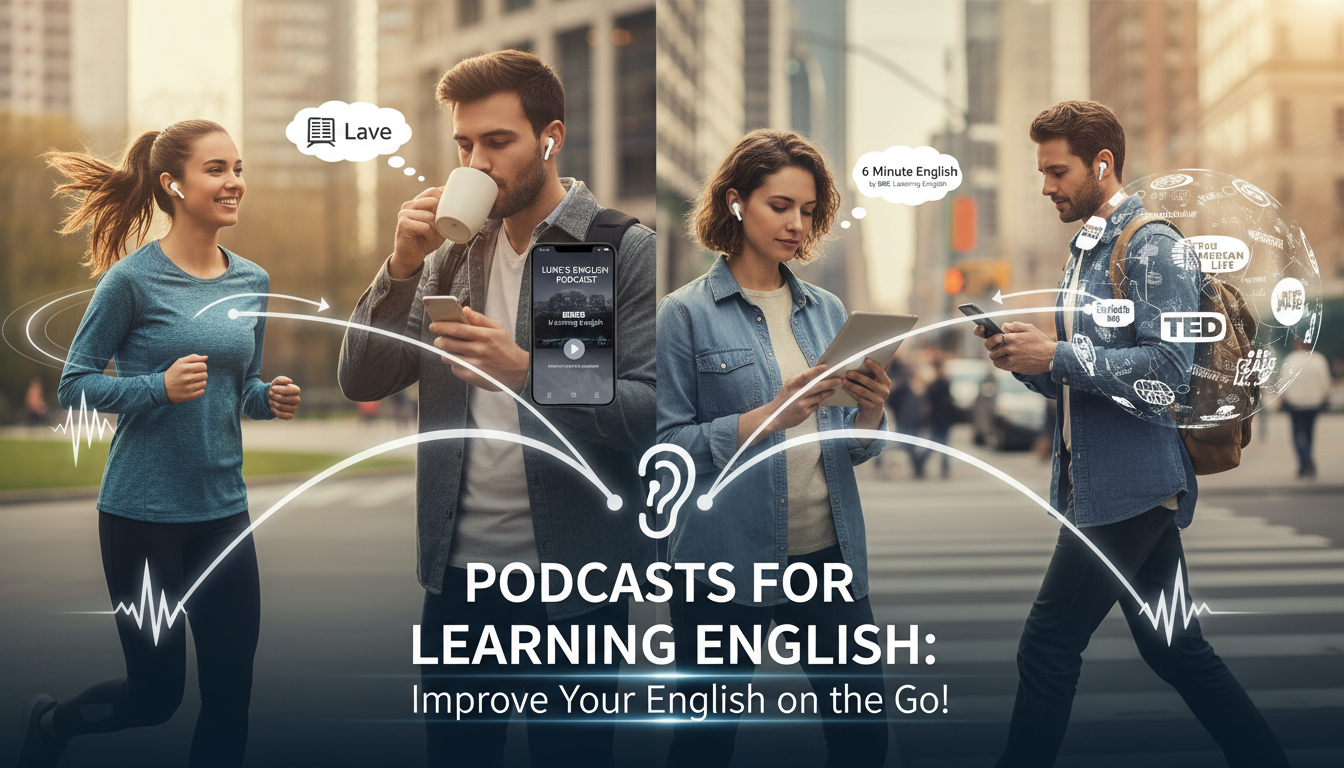
Podcasts have rapidly become a go‑to tool for learners aiming to sharpen their English skills while juggling busy lives. They offer flexibility, exposure to authentic language, and a natural learning rhythm—making them feel less like studying and more like eavesdropping on interesting conversations. Transitioning from textbooks to audio content often sparks a noticeable boost in listening comprehension and familiarity with everyday phrases. Learning at one’s own pace—whether during a morning commute or while washing dishes—adds a layer of ease that most traditional methods lack.
Beyond convenience, podcasts immerse listeners in diverse accents, slang, and cultural nuances, especially when paired with transcripts or show notes as reference guides . This multisensory blend of listening, repeating, and reflecting opens up a rich, real‑world learning path.
Top Podcasts That Make Learning English Feel Natural
All Ears English: Lively American English with a Real‑World Twist
All Ears English brings the zest of natural American English to learners. With energetic hosts, focus on idioms, slang, and real‑life scenarios, the podcast sparks confidence in conversational skills. It’s especially beloved by those needing to sound natural rather than just grammatically correct .
Luke’s English Podcast: Humor, Depth, and British Flair
Combining comedy, culture, and genuine British warmth, Luke’s English Podcast is ideal for learners reaching intermediate to advanced levels. The host’s long‑form episodes feel like chats with a friend—storytelling, idioms, and pronunciation tips all wrapped into a friendly voice .
BBC 6 Minute English: Short, Sharp, Brilliant
When time is tight, BBC’s 6 Minute English steps in. Offering quick, digestible episodes on varied topics, it’s perfect for daily doses of language exposure. Supportive features like transcripts and vocabulary lists make concepts stick fast .
VOA Learning English: Slow, Clear, Informative
Voice of America tailors content for learners who find natural speech too fast. It covers news, idioms, culture, and more—all delivered clearly and paced for comprehension. With structured levels, it supports gradual improvement .
Espresso English & Speak Better English with Harry: Bite‑Sized Lessons
Espresso English delivers ultra‑short, focused lessons—ideal for grammar, vocabulary, and pronunciation essentials. Similarly, Speak Better English with Harry targets practical pitfalls with clarity and brevity, great for learners under time constraints .
Business English Pod & Real Life English: Targeted Fluency for Work and Life
Need English for meetings or presentations? Business English Pod provides professional scenarios and vocabulary to help you communicate confidently in a business context . Meanwhile, RealLife English immerses you in everyday conversations, idioms, and natural usage patterns .
Benefits & Practical Tips Wrapped in Real‑World Insight
1. Accessibility Meets Flexibility
Podcasts enable learning anytime: on the bus, during chores, or while relaxing. This seamless integration encourages steady habit formation, even with short sessions . One learner shared:
“I take a topic I want to get better at… listen to one or two… read the captions after to catch stuff I missed… sentences come out more naturally without translating everything in my head.”
2. Real‑Life Language and Accent Variety
Podcasts expose listeners to idioms, casual speech, and the natural beats of English—from fillers like “um” to regional accents. This boosts fluency and cultural understanding faster than textbooks alone .
3. Transcript Power and Repeat Learning
Many podcasts include transcripts or show notes. Listening while following along helps cement comprehension, pronunciation, and vocabulary. Repetition becomes easy: replay difficult parts until they click .
4. Motivation through Variety and Community
With topics spanning news, grammar, business, culture, and humor, there’s always fresh content to explore—keeping motivation alive . Community features—like discussion forums or social media ties—also nurture engagement and accountability .
5. Affordability for All Learners
High-quality podcasts are often free or low-cost, breaking financial barriers that many traditional courses have. This democratizes access to language learning .
How to Make Podcasts Work for You
Choose Based on Your Level and Interests
- Beginners: Start with clear, slow-paced shows like VOA Learning English or Espresso English.
- Intermediate/Advanced: Try Luke’s English Podcast, All Ears English, or RealLife English to dive into real-world language.
- Specialized Goals: Use Business English Pod for workplace fluency or BBC 6 Minute English for quick daily learning.
Blend Listening with Active Practice
- Use transcripts to follow and repeat.
- Shadow hosts to improve pronunciation and rhythm.
- Pause to jot down new vocabulary and quiz yourself later.
Stay Consistent, Even with Short Sessions
Daily habits, even just 10 minutes, build momentum. Consistency trumps marathon sessions for long-term retention .
Mix and Match Styles for Variety
Alternate focused grammar episodes with fun, culture-led segments. This keeps learning balanced and engaging.
Real‑World Case: From Textbooks to Natural Speech
María, a learner from Colombia, shared that All Ears English boosted her TOEFL listening—and confidence. Meanwhile, Ben from Vietnam found Luke’s mini‑stories helped him transition from textbook rigidity to natural British English . These stories highlight how choice and style make real difference in fluency journey.
Conclusion: Empower Your Learning with Podcasts
Podcasts offer a uniquely flexible, authentic, and immersive path to mastering English. They blend real conversation with structured learning, and bring cultural nuance, pronunciation practice, and vocabulary into your daily routine. Start light, stay curious, and let learning flow naturally through your earbuds.
FAQs
Which podcasts are best for complete beginners?
Start with VOA Learning English or Espresso English. Both offer slow, clear speech and structured lessons ideal for building fundamentals.
How can I practice pronunciation with podcasts?
Use transcripts to shadow hosts. Pause, repeat what you hear, and mimic intonation and pace to improve natural speech rhythm.
Can I learn business English via podcasts?
Absolutely. Business English Pod tailors lessons to workplace scenarios like meetings or presentations, helping refine professional fluency.
What’s the advantage of mixing different podcast styles?
Varied content—grammar, news, culture, humor—keeps you engaged and introduces English from multiple angles, making learning dynamic and well-rounded.
How long should I listen each day?
Even 10–15 minutes daily can yield progress. Consistency is more impactful than length—short, regular sessions help build steady improvement.
Are podcasts really better than textbooks?
Podcasts complement textbooks: they offer pronunciation, idioms, accent exposure, and cultural context that written materials often lack—making English feel alive.
