

 February 8, 2026
  6 Min
6 Min  No Comment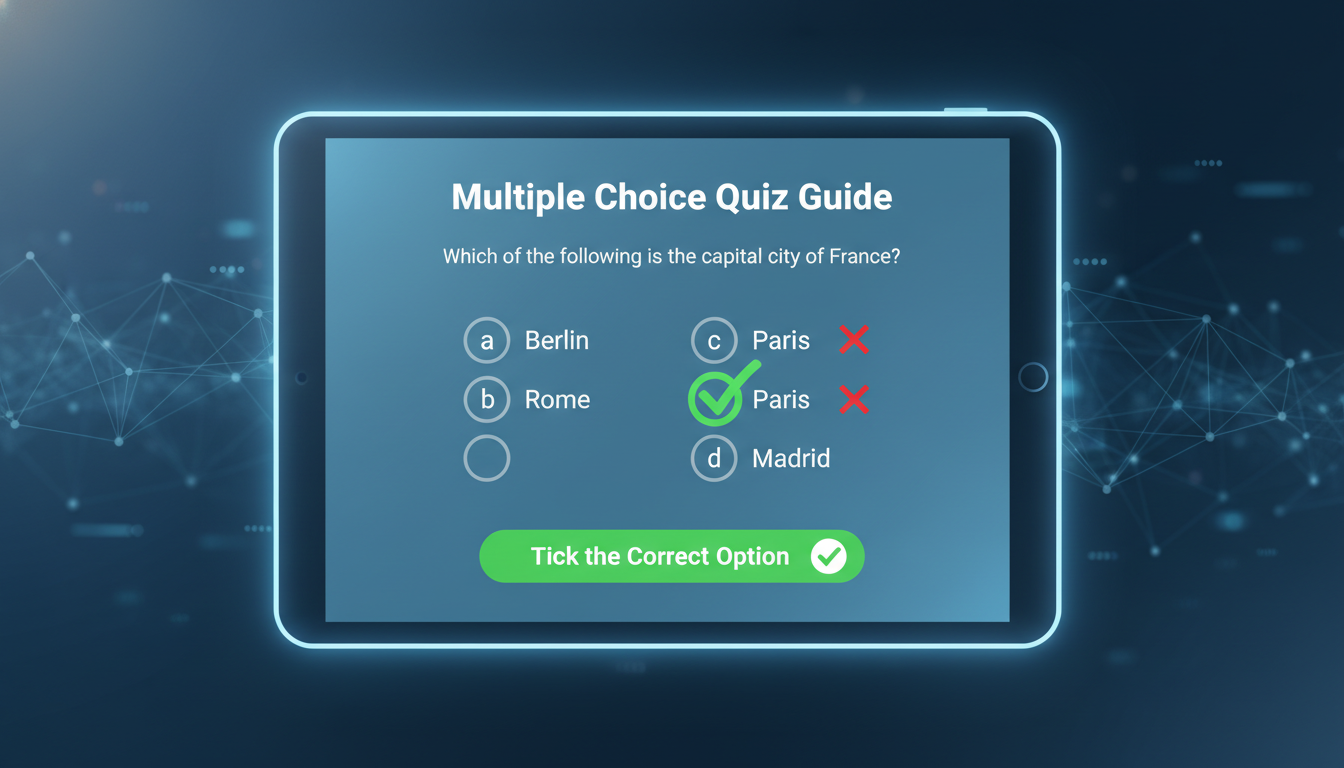
Most of us—students, professionals taking certifications, even casual quiz-takers—are all too familiar with that little instruction: “tick the correct option.” It sounds straightforward, but in practice, especially under time pressure or exam stress, selecting the right choice among deceptively similar alternatives becomes unexpectedly tricky. This guide peels back the layers of multiple-choice strategy and offers techniques grounded in real classroom dynamics, psychological insights, and test-design patterns. It’s not about hacks or gimmicks, but about informed thinking, little mental nudges, and yes—sometimes trusting that first instinct, even when your brain starts arguing otherwise.
Understanding the Multiple-Choice Frame
What “Tick the Correct Option” Really Means
At its core, tick the correct option typically implies a single correct answer among several—often four or five choices—which rely on precise wording, familiarity, or subtle differences to distinguish the best from the plausible .
But sometimes quizzes ask for the most correct option—particularly when more than one answer might technically fit, although one stands out as the strongest. That distinction, “best” vs “correct,” is key in academic and professional testing .
Why It’s Not as Easy as It Sounds
Despite familiarity, multiple-choice questions can be time-consuming. They’re engineered to mislead when designers include absolute words like always or never, or present distractors that are just plausible enough to confuse. Real-life examples show that reading carefully or eliminating wrong options can dramatically improve success .
Strategies for Mastering “Tick the Correct Option”
Read Carefully—but Don’t Overthink
Unsurprisingly, reading the stem fully is essential. Watch out for qualifiers like not, except, or always—they invert meanings in a snap. Some coaching centers recommend first reading the last sentence of a long question to glean context, then revisiting the whole stem with clarity .
Answer First, Then Check Options
This one’s surprisingly effective: try to answer the question in your head before scanning the options. If one matches your mental answer, that’s a good sign—but always read all options before finalizing your choice .
Use Elimination Ruthlessly
Spot and strike through obviously wrong choices. That alone can transform a 25% guess into 50% or better. Eliminate absolutes (usually wrong), grammatical mismatches, and answers that feel out of scope .
Beware of “All of the Above” and “None of the Above”
These aren’t dangerous traps exactly, but more clues—if two or more options seem correct, “all of the above” likely is; if any one choice is clearly wrong, strike both that and “all of the above.” And “none of the above” demands extra scrutiny—choose it only if you’re confident all other answers are incorrect .
Trust Your First Instinct—Mostly
Unless you find a substantial reason to change, your first answer is usually right. Overthinking can lead to incorrect switches . But do trust your gut if you spot a misread or new insight on review.
Leverage Length and Detail Cues
Interestingly, longer or more detailed options are often correct—test-writers tend to elaborate the right answer, while distractors are shorter or vague .
Watch for Mirrored or Similar Options
When two options appear nearly identical, one is almost certainly incorrect. Compare and pick the subtly better fit .
Time Management Is Part of Strategy
Budget time wisely: glance over all questions first to prioritize, don’t linger on hard ones, and return later if needed. Skipping and returning can be more effective than trap-jumping in the moment .
Clues in Question Design
Sometimes, other questions in the test hint at answers—particularly if the quiz has topic clusters. Keep a mental eye on that, but don’t assume patterns in answer distribution (like avoiding consecutive letters) are meaningful—they’re often red herrings .
A Small Scenario: The Psychology Entrance Test
Imagine a psychology prelim where multiple answers could technically be right, but only one ticks all the boxes. You start by reading the stem, sketching an answer in your head, then scanning all choices.
You spot two similar answers, eliminate one due to wording nuance. One option is “always,” making it a red flag. “All of the above” seems tempting, but one answer is clearly wrong, so you cross that out too. Now, two solid candidates remain—one is wordier and aligns best with class lectures, so you trust that.
Finally you trust your first instinct but give it one more look—sure enough, it’s right.
Real-World Supporting Voice
“Experienced test-takers often rely on process of elimination and trusting their gut, especially under time constraints. Clues like language patterns, length, and qualifiers are subtle but effective.”
— Exam Strategies Coach
Such insights reinforce that technique, reliability, and a bit of mental agility go a long way toward consistent success.
Conclusion
Choosing the correct option in a multiple-choice quiz isn’t just ticking a bubble—it’s a cognitive workflow that blends clarity, elimination, pattern awareness, and yes, a gut-level check. Reading carefully, filtering out red flags, and trusting your first answer usually pay off. Avoid the extreme answers, use qualifiers as flags, and manage your time smartly. Over time, these small tactics aggregate into a confident, efficient approach.
FAQs
How do I decide between two similar-looking answers?
First eliminate obvious wrong features, then compare phrasing, detail, or alignment with what you’ve studied. Usually one will lean slightly closer to accurate.
Should I always avoid options with “always” or “never”?
Generally yes—absolute terms are rarely true, but consider context. If one matches what you know perfectly, treat it carefully, not dismissively.
What’s a useful time-management trick during MCQs?
Skim the test first to gauge difficulty, answer easy ones immediately, mark tough ones to return to later, then allocate final minutes for review.
Is it better to trust my first answer or revise it?
Your first instinct tends to be correct, so don’t change it unless you find clear evidence you misunderstood the stem.
Are longer answers more likely to be correct?
Often, yes. Test-makers typically give more detail to correct answers and leave distractors shorter.
Can other questions help me answer tricky ones?
Sometimes. Subtle overlaps in content or phrasing may reinforce answers, but avoid pattern-traps—focus on each question independently.
