

 February 8, 2026
  5 Min
5 Min  No Comment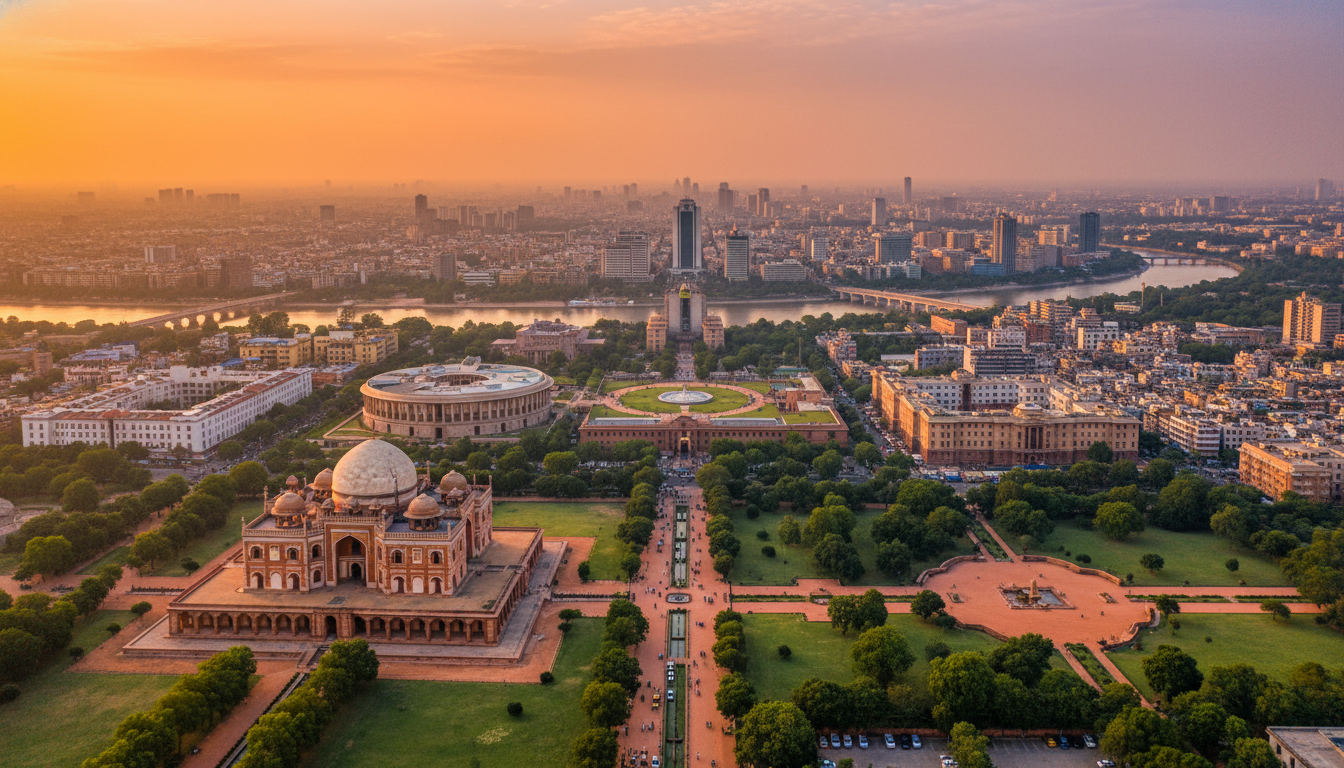
India’s federal architecture is a rich tapestry, blending states with their own governments and union territories (UTs) under more direct central administration. These eight union territories each bear distinctive narratives—be it through geography, history, or governance—that reflect broader lessons about how India balances autonomy and oversight. Let’s take a journey through the “8 Union Territories of India,” exploring their names, capitals, and key attributes with a tone that’s both journalistically sharp and humanly imperfect—yes, with a touch of conversational flair and an occasionally wandering thought.
What Defines a Union Territory in India
Union territories are regions administered, more often than not, directly by India’s central government, unlike the states which enjoy self-governance. Some—like Delhi and Puducherry—are given a legislative assembly for partial autonomy, though ultimate authority remains central .
Interestingly, while there are eight such territories today, three—Delhi, Puducherry, and Jammu & Kashmir—have legislative assemblies, setting them apart from the other UTs .
The Eight Union Territories: Names and Capitals
Here’s a detailed breakdown of each union territory, their capitals, and what makes them tick.
Andaman and Nicobar Islands
- Capital: Port Blair
- Highlights: A stunning archipelago nestled in the Bay of Bengal, known for coral reefs, lush biodiversity, and the historical Cellular Jail . Just picturing Port Blair’s waterfront can make one long for tropical breezes—and occasionally you catch yourself daydreaming of a forest trek instead of your daily grind.
Chandigarh
- Capital: Chandigarh
- Highlights: The first planned city in India, designed by Le Corbusier. It’s a model of modern architecture and urban planning, serving as capital for both Punjab and Haryana . That split management sometimes invites raised eyebrows—and a shrug—about “two bosses, one city.”
Dadra and Nagar Haveli and Daman and Diu
- Capital: Daman
- Highlights: Merged into a single UT in 2020, this coastal region blends Portuguese colonial heritage and tribal traditions, with beaches and greenery reminding visitors that history and ecology can coexist charmingly .
Lakshadweep
- Capital: Kavaratti
- Highlights: India’s smallest union territory by area—but its marine biodiversity is surprisingly vast. Crystal-clear lagoons, coral atolls, and turquoise waters make it a tantalizing spot for snorkelers and island lovers alike . You might almost forget the world’s chaos as you stare at that calm sea…almost.
Delhi (National Capital Territory of Delhi)
- Capital: New Delhi
- Highlights: The political and cultural heart of India, where history (Red Fort, India Gate) and power corridors (Parliament, Secretariat) coexist. A place where metro rides and Mughal-era stones are existentially entwined .
Puducherry
- Capital: Puducherry (formerly Pondicherry)
- Highlights: The “French Riviera of the East,” replete with colonial boutiques, boulevard promenades, and spiritual retreats like Auroville. It’s like France took a vacation in India—and left charming footprints .
Jammu & Kashmir
- Capitals: Srinagar (Summer), Jammu (Winter)
- Highlights: Formerly a state that was reorganized in 2019, it’s now a union territory with a rich tapestry of snowy landscapes, revered pilgrimage sites, and vibrant handicraft traditions .
Ladakh
- Capitals: Leh (Summer), Kargil (Winter)
- Highlights: Also carved out in 2019 from Jammu & Kashmir, this high-altitude desert boasts stark beauty, Buddhist monasteries, and otherworldly terrain. It’s the kind of place where silence is a visitor—and you end up listening to more than you expected .
Why These Eight? A Brief Contextual Arc
India had nine union territories previously, but structural changes in recent years reduced the number to eight. The reorganization in 2019 turned Jammu & Kashmir into two separate UTs (J&K and Ladakh), and in 2020 Daman & Diu merged with Dadra & Nagar Haveli .
Governance models vary: UTs with legislative assemblies (Delhi, Puducherry, J&K) allow limited self-rule, while others operate under centrally appointed Lieutenant Governors or Administrators .
Quick Visual Snapshot
- No legislature: Andaman & Nicobar Islands; Chandigarh; Dadra & Nagar Haveli and Daman & Diu; Lakshadweep; Ladakh.
- With legislature: Delhi; Puducherry; Jammu & Kashmir .
A Bloc of Insight
“Each union territory offers a distinct blend of governance and culture—some echo architectural marvels, others echo spiritual serenity—but they all tell the story of India’s diversity and its ability to adapt administratively.”
That quote could sound a bit lofty, but it rings true when you consider how differently a coral atoll in Lakshadweep compares with the political urgency of Delhi streets. Yet, both are under the central government’s umbrella—demonstrating range.
Conclusion
Whether it’s the beaches of Andaman, the modernism of Chandigarh, the colonial charm of Puducherry, or the peaks of Ladakh, India’s eight union territories offer glimpses into varied facets of the nation’s identity. They’re governed directly by the center, yet each pulses with its own rhythm—sometimes with legislative autonomy, other times not, but always with a story worth knowing.
FAQs
1. How many union territories does India currently have?
India presently comprises eight union territories, following the 2019 bifurcation of Jammu & Kashmir and the 2020 merger of two UTs .
2. Which union territories have their own legislative assemblies?
Three UTs—Delhi, Puducherry, and Jammu & Kashmir—have legislative assemblies that allow limited self-governance .
3. Why are Jammu & Kashmir and Ladakh separate union territories?
They were created as two distinct territories in October 2019 after the revocation of Article 370, restructuring the former state into UTs for governance reasons .
4. What’s special about the capital Chandigarh?
Chandigarh is a partitioned union territory that serves as the capital of both Punjab and Haryana. It’s also India’s first planned city, designed by Le Corbusier .
5. Which UT is smallest in area and which is largest?
Lakshadweep is the smallest by area, while Ladakh is the largest among union territories .
6. Do all union territories have the same administrative structure?
No. UTs like Delhi, Puducherry, and Jammu & Kashmir have elected assemblies, whereas others are administered directly by central appointees such as Lieutenant Governors or Administrators .
